eBook - ePub
UNEP Frontiers 2016 Report
Emerging Issues of Environmental Concern
- 74 pages
- English
- ePUB (mobile friendly)
- Available on iOS & Android
eBook - ePub
UNEP Frontiers 2016 Report
Emerging Issues of Environmental Concern
About this book
The UNEP Frontiers report emphasises the critical relationship between a healthy environment and healthy people, and how human activities often undermine the long-term health and ability of ecosystems to support human well-being. The report provides encouraging examples on how certain issues may be addressed by innovating and rethinking policy interventions, new solutions or adapting existing practices. The UNEP Frontier series will continue to link new science to outcome-oriented policies, and by extension, keep the public informed of the health of the environment and its sustainability.
Tools to learn more effectively

Saving Books

Keyword Search

Annotating Text

Listen to it instead
Information

Photo Credit: ILRI/ Nguyen Ngoc Huyen
Zoonoses:
Blurred Lines of Emergent Disease and Ecosystem Health
Emerging and neglected zoonotic diseases
The 20th century was a period of unprecedented ecological change, with dramatic reductions in natural ecosystems and biodiversity and equally dramatic increases in people and domestic animals. Never before have so many animals been kept by so many people—and never before have so many opportunities existed for pathogens to pass from wild and domestic animals through the biophysical environment to affect people causing zoonotic diseases or zoonoses. The result has been a worldwide increase in emerging zoonotic diseases, outbreaks of epidemic zoonoses as well as a rise in foodborne zoonoses globally, and a troubling persistence of neglected zoonotic diseases in poor countries.
Around 60 per cent of all infectious diseases in humans are zoonotic1 as are 75 per cent of all emerging infectious diseases.2 On average, one new infectious disease emerges in humans every four months.3 While many originate in wildlife, livestock often serve as an epidemiological bridge between wildlife and human infections. This is especially the case for intensivelyreared livestock which are often genetically similar within a herd or flock and therefore lack the genetic diversity that provides resilience: the result of being bred for production characteristics rather than disease resistance.4 An example of livestock acting as a “disease bridge” is the case of bird flu or avian influenza pathogens, which first circulated in wild birds, then infected domestic poultry and from them passed to humans. The emergence of zoonotic diseases is often associated with environmental changes or ecological disturbances, such as agricultural intensification and human settlement, or encroachments into forests and other habitats.5 Zoonoses are also opportunistic and tend to affect hosts that are already stressed by environmental, social, or economic conditions.6
Zoonoses threaten economic development, animal and human well-being, and ecosystem integrity. Over the last few years, several emerging zoonotic diseases made world headlines as they caused, or threatened to cause, major pandemics. These include Ebola, bird flu, Middle East respiratory syndrome (MERS), Rift Valley fever, sudden acute respiratory syndrome (SARS), West Nile virus, and Zika virus disease. The pathogens causing these diseases have wildlife reservoirs that serve as their long-term hosts. In the last two decades, emerging diseases have had direct costs of more than US$100 billion; if these outbreaks had become human pandemics, the losses would have amounted to several trillion dollars.7
Pathogen flow at the wildlife–livestock–human interface
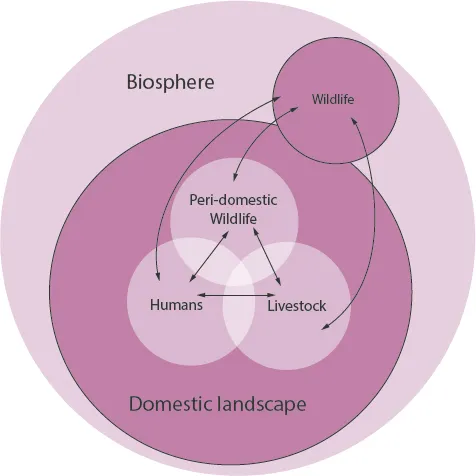
Source: Jones et al. (2013)5
Another important group of zoonotic diseases are caused by foodborne pathogens such as Salmonella and Listeria bacteria that are passed from animal to humans. In 2015, the first global assessment of foodborne disease found the overall burden of foodborne disease was comparable to malaria or tuberculosis.8
Emerging zoonotic disease
Emerging zoonotic diseases are those that newly appear in a population or have existed previously but are now rapidly increasing in incidence or geographical range. Fortunately, most new diseases are not highly lethal and most do not spread widely. But some emerging diseases have enormous impacts. Human immune deficiency virus (HIV and AIDS), highly pathogenic avian influenza (bird flu), bovine spongiform encephalopathy (mad cow disease), and Ebola are well-known examples of particularly harmful emerging zoonoses.
Epidemic zoonoses
Outbreaks of epidemic zoonoses typically occur intermittently. Epidemic zoonoses are often triggered by events such as climate changes, flooding and other climate events, and famines. Their overall health burden is much less than that of endemic zoonoses but because they cause ‘shocks’ to food production and other systems, they can reduce the resilience of the affected communities. Examples are anthrax, rabies, Rift Valley fever, and leishmaniasis.
Neglected zoonotic diseases
Neglected zoonotic diseases are continually present to a greater or lesser degree in certain populations, but are often marginalised by health systems at national and international levels. Examples are anthrax, brucellosis, cysticercosis (pig tapeworm), echinococcosis (hydatid disease), Japanese encephalitis, leishmaniasis, leptospirosis, Q fever, rabies, foodborne trematodiases, trypanosomiasis and cattle tuberculosis.
However, emerging diseases and those with the potential to cause pandemics are not the only problematic zoonoses. Neglected zoonotic diseases are endemic in affected poor populations, yet they receive much less international attention and funding than emerging diseases. Neglected zoonoses persist in communities with complex development problems.6 Global concern currently focuses on anthrax, bovine tuberculosis, brucellosis, human African trypanosomiasis, Taena solium cysticercosis (pig tapeworm), cystic echinococcosis (hydatidosis), leishmaniasis, and rabies.9 These diseases are common where poverty, the proximity of people and domesticated animals, low resilience, and people’s reliance on livestock or wildlife converge to enable transmission.10
Video: How can animals make you ill?
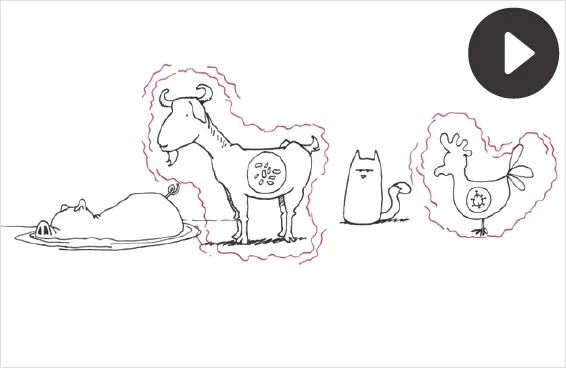
© RIVM/Government of the Netherlands
Video Link: https://www.youtube.com/watch?v=J5qLKWUTNM4
Video Link: https://www.youtube.com/watch?v=J5qLKWUTNM4
Emerging zoonotic disease events, 1940-2012

Source: International Livestock Research Institute (ILRI)
Impacts of zoonoses

Events of zoonotic disease emergence by type of animal hosts

Source: Grace et al. (2012)6
Drivers of zoonotic disease emergence
Researchers studying records that date from 1940 to 2004 detected an increase in the rate of emerging infectious disease over those years. Of the 335 documented events, 60.3 per cent were zoonotic an...
Table of contents
- Cover
- Copyright
- Title
- Table of contents
- Preface
- The Financial Sector: A Linchpin to Advance Sustainable Development
- Zoonoses: Blurred Lines of Emergent Disease and Ecosystem Health
- Microplastics: Trouble in the Food Chain
- Loss and Damage: Unavoidable Impacts of Climate Change on Ecosystems
- Poisoned chalice: Toxin accumulation in crops in the era of climate change
- The Latest Frontier Exotic Consumerism: IllegalTrade in Live Animals
- Acknowledgements
Frequently asked questions
Yes, you can cancel anytime from the Subscription tab in your account settings on the Perlego website. Your subscription will stay active until the end of your current billing period. Learn how to cancel your subscription
No, books cannot be downloaded as external files, such as PDFs, for use outside of Perlego. However, you can download books within the Perlego app for offline reading on mobile or tablet. Learn how to download books offline
Perlego offers two plans: Essential and Complete
- Essential is ideal for learners and professionals who enjoy exploring a wide range of subjects. Access the Essential Library with 800,000+ trusted titles and best-sellers across business, personal growth, and the humanities. Includes unlimited reading time and Standard Read Aloud voice.
- Complete: Perfect for advanced learners and researchers needing full, unrestricted access. Unlock 1.4M+ books across hundreds of subjects, including academic and specialized titles. The Complete Plan also includes advanced features like Premium Read Aloud and Research Assistant.
We are an online textbook subscription service, where you can get access to an entire online library for less than the price of a single book per month. With over 1 million books across 990+ topics, we’ve got you covered! Learn about our mission
Look out for the read-aloud symbol on your next book to see if you can listen to it. The read-aloud tool reads text aloud for you, highlighting the text as it is being read. You can pause it, speed it up and slow it down. Learn more about Read Aloud
Yes! You can use the Perlego app on both iOS and Android devices to read anytime, anywhere — even offline. Perfect for commutes or when you’re on the go.
Please note we cannot support devices running on iOS 13 and Android 7 or earlier. Learn more about using the app
Please note we cannot support devices running on iOS 13 and Android 7 or earlier. Learn more about using the app
Yes, you can access UNEP Frontiers 2016 Report by United Nations Environment Programme in PDF and/or ePUB format, as well as other popular books in Politics & International Relations & Ecology. We have over one million books available in our catalogue for you to explore.