- 128 pages
- English
- ePUB (mobile friendly)
- Available on iOS & Android
eBook - ePub
Fort Worth
About this book
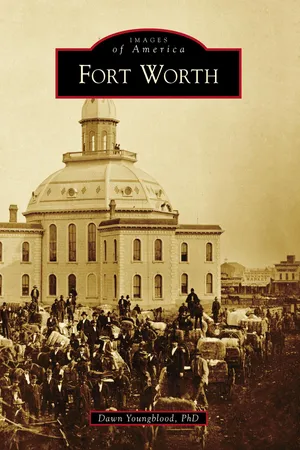
Fort Worth exudes a vivacious Western spirit founded upon a rich history. In 1849, four years after the Republic of Texas became the 28th state, the Army built a fort to keep native tribes west of the Trinity. That fort grew into a focal stop on the Chisholm Trail and later became the western terminus of the railroad. In World War I, Fort Worth housed one Army and three aircraft training bases, while Fort Worth Stockyards, which became one of the largest in the nation, provided multitudes of horses and mules. From pianos on dirt floors to the Van Cliburn Competition, from the earliest portraits by itinerant French artists to world-class art museums, Fort Worth has always been home to high culture. Groups such as the Woman's Wednesday Club made sure art and libraries stood in the old fort town once more famous for its saloons. No matter the era, and no matter the many reasons, Fort Worth will always be "where the West begins."
Trusted by 375,005 students
Access to over 1 million titles for a fair monthly price.
Study more efficiently using our study tools.
Information
One
FROM FORT TO FIRE
1849–1876

Prior to “the fort called Worth,” a few homesteads such as this 1840s dogtrot-style cabin dotted the landscape. In 1927, publisher and philanthropist Amon Carter moved Isaac Parker’s cabin to his Shady Oaks Farm near Lake Worth, where the cabin is shown here dusted with snow. Upon Carter’s death in 1955, the cabin was gifted and moved to Fort Worth’s Log Cabin Village, where it remains with other early homes. It was to this cabin that Cynthia Ann Parker, a captive of the Comanche and mother to Chief Quanah Parker, was forcibly returned in 1860.

The location of Fort Worth was selected as the site for a military post in 1849 and named for Gen. William Jenkins Worth. Sadly, Worth, following decades in battle from the War of 1812 through the Mexican War ending in 1849, died of cholera in San Antonio that year. The name was chosen by post commander Ripley Allen Arnold (1817–1853), who had served under Worth. Above is a rendering of the fort by artist and historian William B. Potter. The John Gambrell family lived in the house pictured below on the old fort property, north of current Belknap at Houston, long after the fort closed, preserving this remnant for many years. The fort was constructed using a portable mechanical saw.

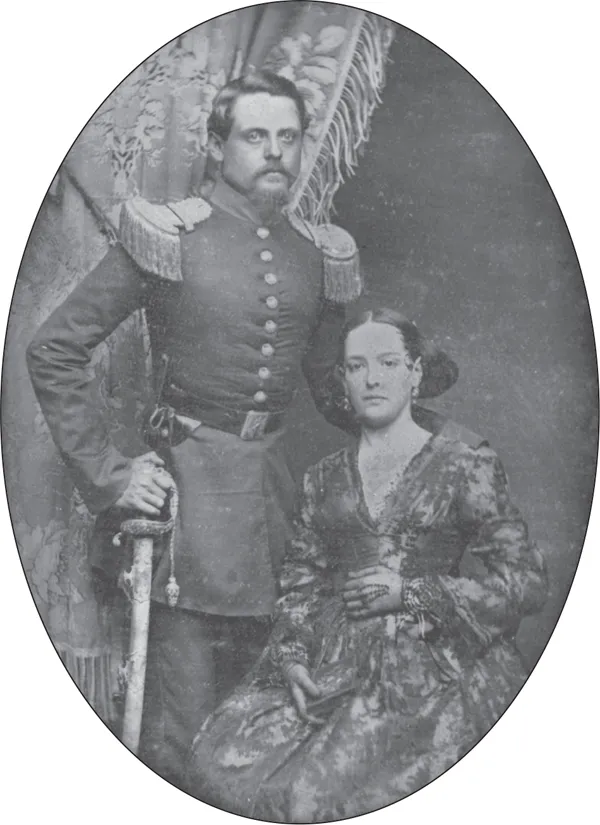
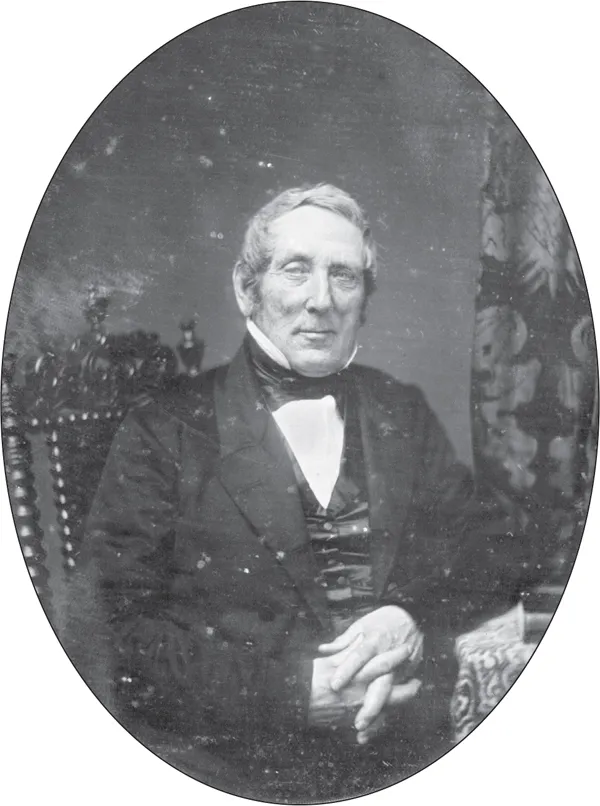
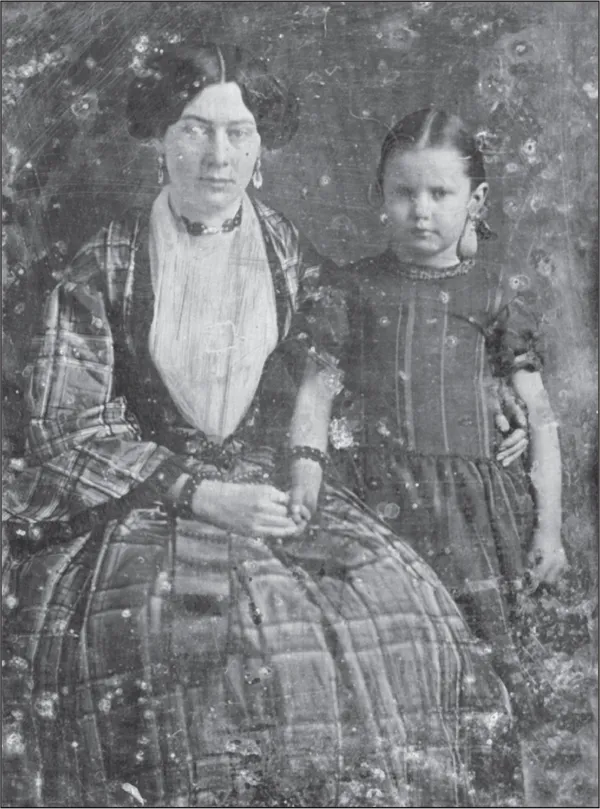
The daguerreotype at right, reputedly of Arnold with his bride, Catherine Bryant (1825–1894), is the only known image of the founder of Fort Worth. The couple wed in 1839 and had five children, but the 36-year-old father and husband was gunned down by his post surgeon at Fort Graham in 1853. Arnold was reinterred in the cemetery he founded upon the death of two of his children at Fort Worth: Sophia (1848–1850) and Willis (1838–1850), who was named after Ripley’s father, soldier and minister Willis H. Arnold (1790–1835). Pictured below, Willis Arnold was president of the Pearlington Academy in Pearlington, Mississippi, where son Ripley was born and educated on the banks of the Pearl River. From there, Ripley Arnold attended West Point.
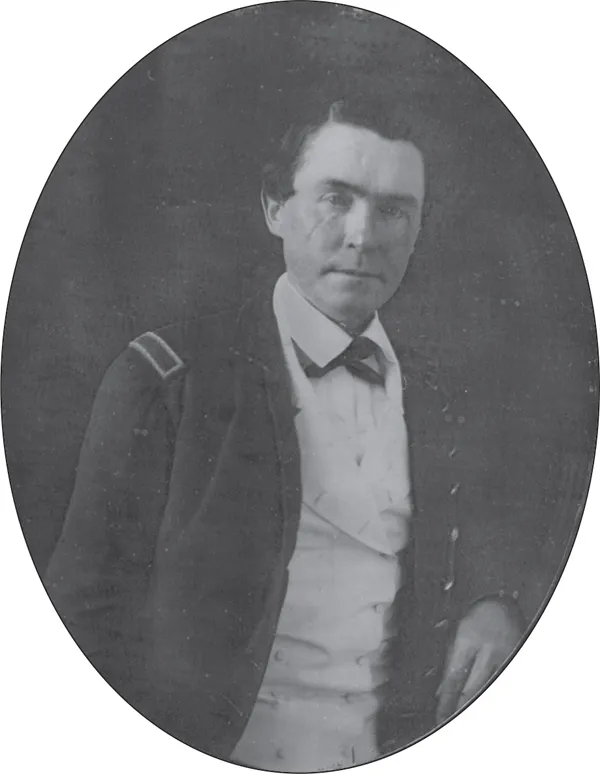
Lt. Samuel Starr served under Ripley Arnold for two years at Fort Worth until he left for Fort Mason on December 20, 1851, because a second line of forts was being established farther west. The first line, established in 1849, had Fort Worth as the northernmost point and Fort Graham just south of that, with a total of eight forts forming a line that reached to the Rio Grande. The second line farther west had Fort Belknap as the northernmost and Fort Mason west of Austin as one of 10 forts. When Lieutenant Starr made the move, he was married and had three daughters—with baby Jo having been born the month prior and little Annie the year before. Starr’s wife, Eliza, and eldest daughter, Kate, must have had quite a lot on their minds during that winter move. Eliza Starr and Catherine Arnold became close, continuing their friendship via letters expressing the hardships and joys of their lives.

In this rare outdoor daguerreotype believed to have been taken in 1852, George Preston “Press” Farmer (1825–1892) is shown with 2nd US Dragoon Christian Bohrman seated on a mule-drawn wagon. French revolutionary, utopian leader, and trained daguerreotypist Adolphe Gouhenant (Gounah), who was present at the fort, may have created this and other images. Press Farmer, wife Jane Woody Farmer (1827–1895), and daughter Susan Ann (1847–1917) were Fort Worth’s first family—settling on the bluff that is now downtown Fort Worth in May 1849, just three weeks prior to the arrival of Ripley Arnold. Arnold hired Farmer as the fort’s supplier and freighter. Provisions such as vegetables, biscuits, button polish, and tobacco were brought by wagon from Houston along with meat and hay purchased from local settlers. The Farmer log cabin, the first house in Fort Worth, was torn down in 1888. It was located near the corner of what is now First and Henderson Streets, where apartments are now located.
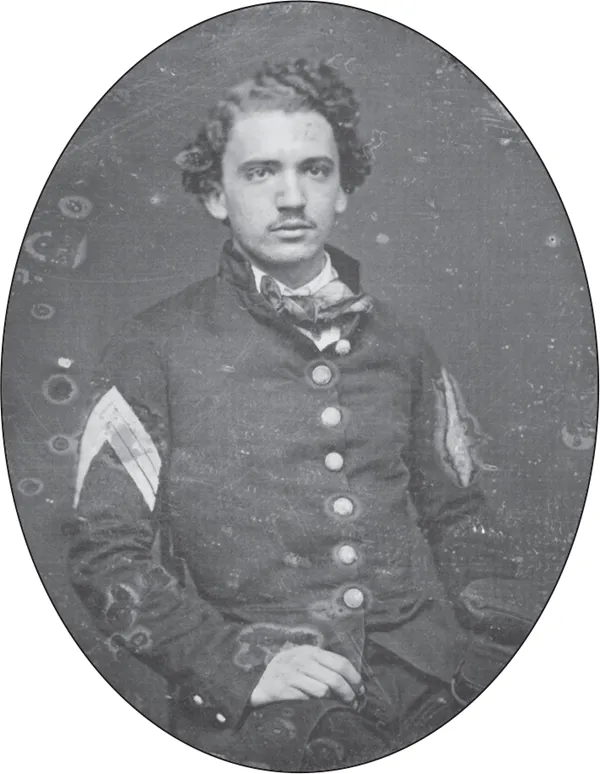
Originally from England and a cabinetmaker by trade, Sgt. Abraham “Abe” Harris (1824–1915) served at the fort under Maj. Ripley Arnold as his sergeant major. He also helped build the officers’ quarters and barracks. Harris mustered out of the service at the fort on January 20, 1852, and remained in what is now Tarrant County until his death. He married Margaret Conner, and the couple had five children. Harris continued his work in cabinetry, served as president of the Texas Association of Mexican War Veterans, and was hailed as the oldest surviving member of the original settlers who founded the city before he was buried in Pioneers Rest Cemetery near his old commander Ripley Arnold in 1915 at the age of 91. Throughout his adult life, he carried a family pocket Bible that is now housed at the Tarrant County Archives.
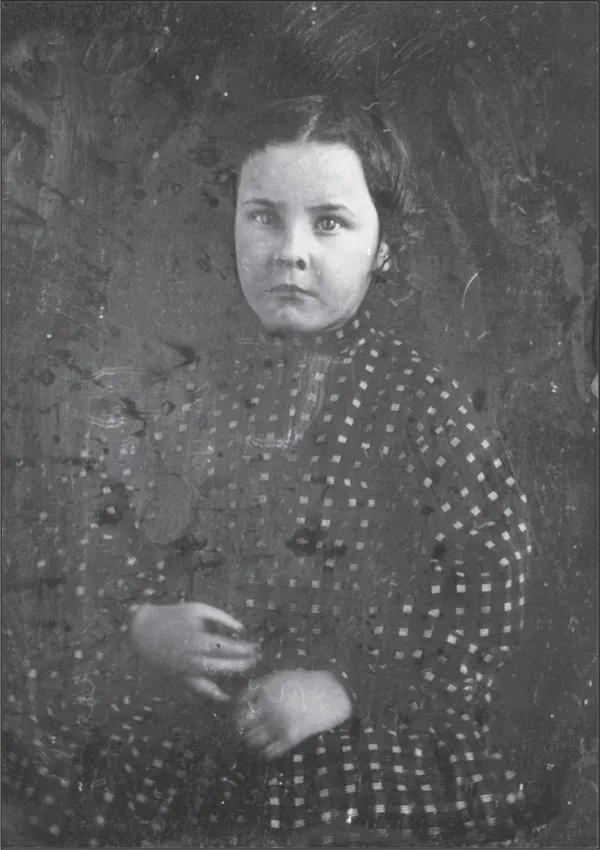
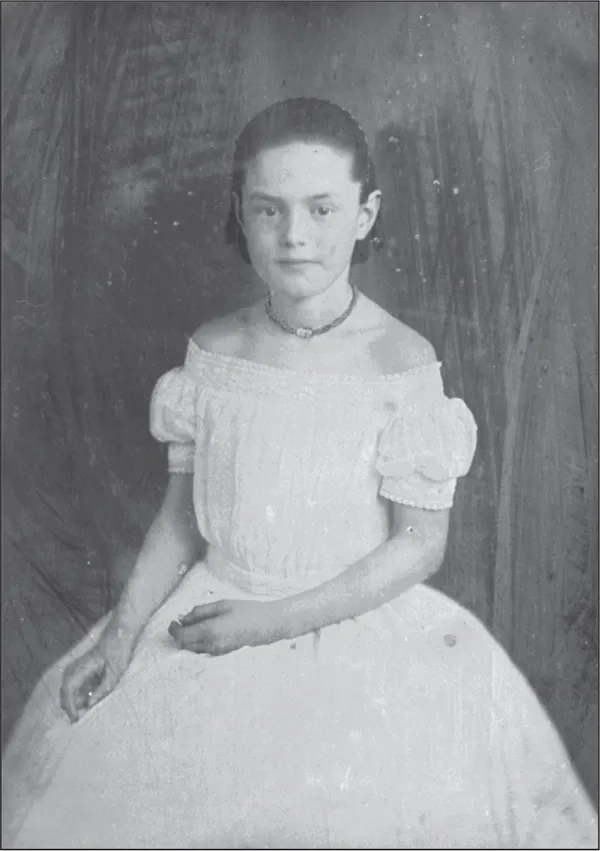
Pictured are two of the five Arnold children born to Catherine, who in 1839 married Ripley at the age of 14. Ripley may have had an additional son by a 20-year-old slave named Hagar. (The name Hagar is derived from the Biblical story of Abraham and Sarah: Hagar has a child before Sarah and is cast out once her mistress bears a son.) Shown are Arnold’s daughters Florida (left) and Kate. Born in Louisiana, Katherine Ann (1843–1912) married Samuel J. Parker (1841–1876) of Marlin, Texas, and had four children—Willis, Flora Belle, Samuel Penn, and Anne Mary Parker. Flora Belle (1840–1868), also called Florida (the location of her birth), died in Marlin. Two years later, her husband, Confederate veteran Thomas Bolling Manlove, was listed as an editor in Waco with four-year-old daughter Molly.

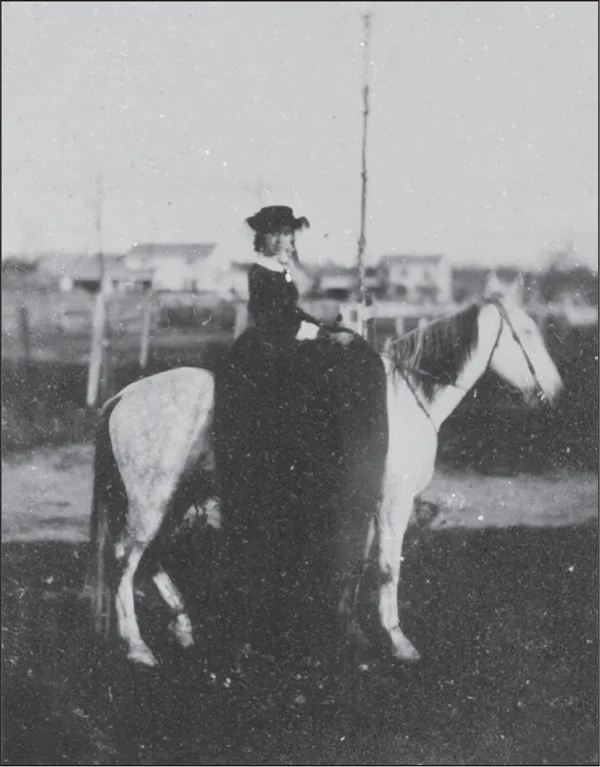
Two daguerreotypes survive of Kate Arnold on horseback. The one above is believed to have been taken around 1852 and the one at right several years later on the East Coast. The fort had 52 horses, but the quartermaster kept another 22, for a total of 74. Each horse was fed eight quarts of grain and 14 pounds of hay daily. In the summer of 1852, Major Arnold had five horses auctioned off in Fort Worth, netting $127.39 for the Quartermaster Department. That would be the equivalent of $3,821.70 today.
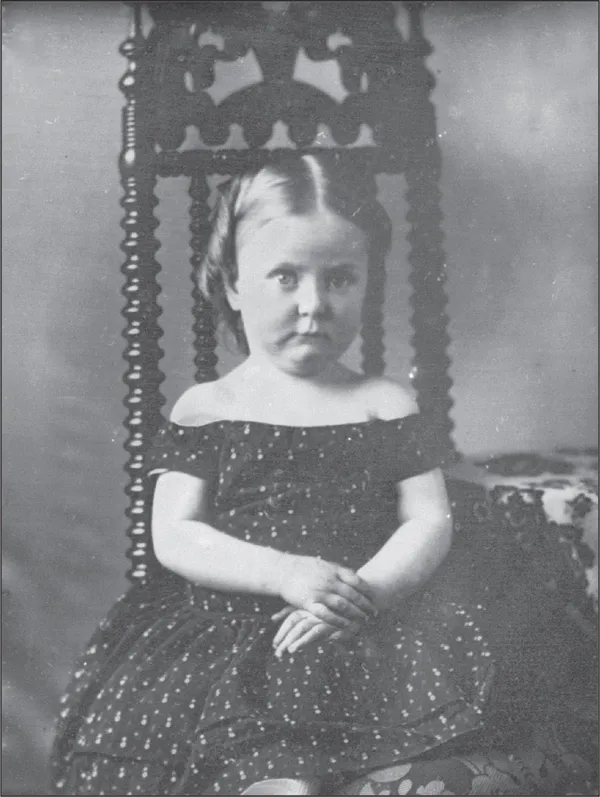
Nannie Ripley Arnold Hanrick (1851–1875) was born at the fort called Worth. She married Edward C. Hanrick. The couple named their son after her father, Ripley Arnold Hanrick (1872–1953). Their daughter she named for herself—Nannie Hanrick. According to the Baylor Bulletin Ex-Student’s Directory of 1920, daughter Nannie obtained a degree from Baylor University in 1896. She married Hugh M. Coleman and is buried at Elmwood Cemetery in Mineral Wells. Her son Ripley married Mary Louise Prescott, and they too named their son Ripley in 1904, so with Ripley Edward Hanrick the name was passed down until he died in 1969. He is buried at Oakwood Cemetery in Waco alongside his parents and grandparents. The rare ambrotype below is believed to depict the Fort Worth house used by the Arnold family in 1854 when the major’s body was returned to Fort Worth for burial.


Dug and covered in 1857, Frenchman’s Well was located where Taylor Street drops toward the Trinity River. Howard W. Peak, who was born in the garrison building of the fort in 1856 to the town’s first doctor, Dr. Carroll Peak, said it was dug by Frenchma...
Table of contents
- Cover Page
- Title Page
- Copyright Page
- Dedication
- Table of Contents
- Acknowledgments
- List of Donors to the Tarrant County Archives
- Introduction: Genesis of Fort Worth
- 1. From Fort to Fire: 1849–1876
- 2. From Fire to Fire: 1876–1909
- 3. From Fire to Flood: 1909–1949
- 4. From Flood to Fury: 1949–2000
- Bibliography
Frequently asked questions
Yes, you can cancel anytime from the Subscription tab in your account settings on the Perlego website. Your subscription will stay active until the end of your current billing period. Learn how to cancel your subscription
No, books cannot be downloaded as external files, such as PDFs, for use outside of Perlego. However, you can download books within the Perlego app for offline reading on mobile or tablet. Learn how to download books offline
Perlego offers two plans: Essential and Complete
- Essential is ideal for learners and professionals who enjoy exploring a wide range of subjects. Access the Essential Library with 800,000+ trusted titles and best-sellers across business, personal growth, and the humanities. Includes unlimited reading time and Standard Read Aloud voice.
- Complete: Perfect for advanced learners and researchers needing full, unrestricted access. Unlock 1.4M+ books across hundreds of subjects, including academic and specialized titles. The Complete Plan also includes advanced features like Premium Read Aloud and Research Assistant.
We are an online textbook subscription service, where you can get access to an entire online library for less than the price of a single book per month. With over 1 million books across 990+ topics, we’ve got you covered! Learn about our mission
Look out for the read-aloud symbol on your next book to see if you can listen to it. The read-aloud tool reads text aloud for you, highlighting the text as it is being read. You can pause it, speed it up and slow it down. Learn more about Read Aloud
Yes! You can use the Perlego app on both iOS and Android devices to read anytime, anywhere — even offline. Perfect for commutes or when you’re on the go.
Please note we cannot support devices running on iOS 13 and Android 7 or earlier. Learn more about using the app
Please note we cannot support devices running on iOS 13 and Android 7 or earlier. Learn more about using the app
Yes, you can access Fort Worth by Dawn Youngblood PhD in PDF and/or ePUB format, as well as other popular books in History & North American History. We have over one million books available in our catalogue for you to explore.