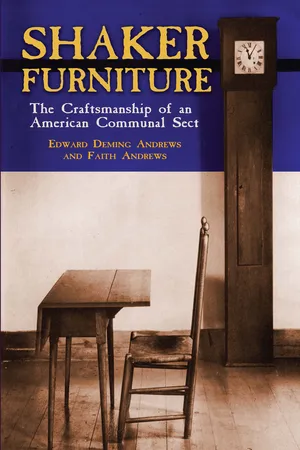
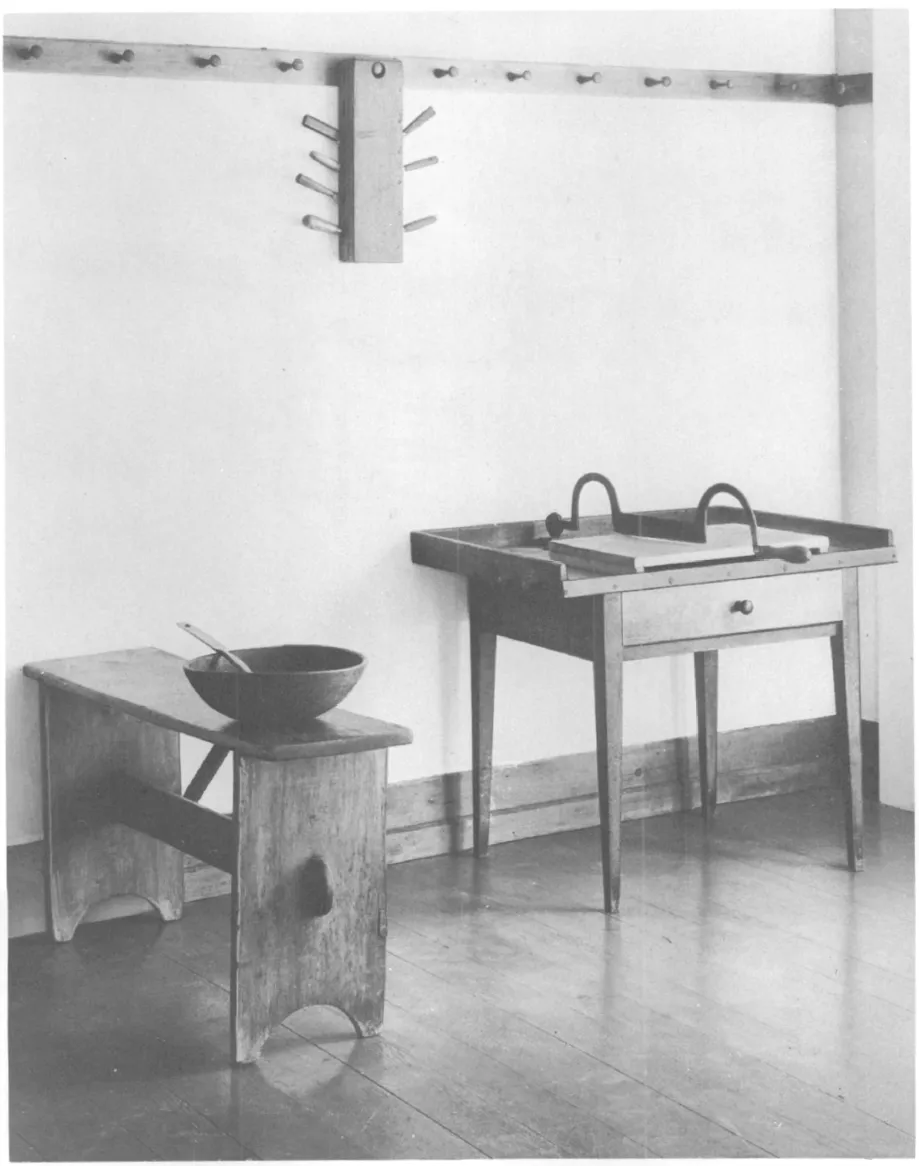
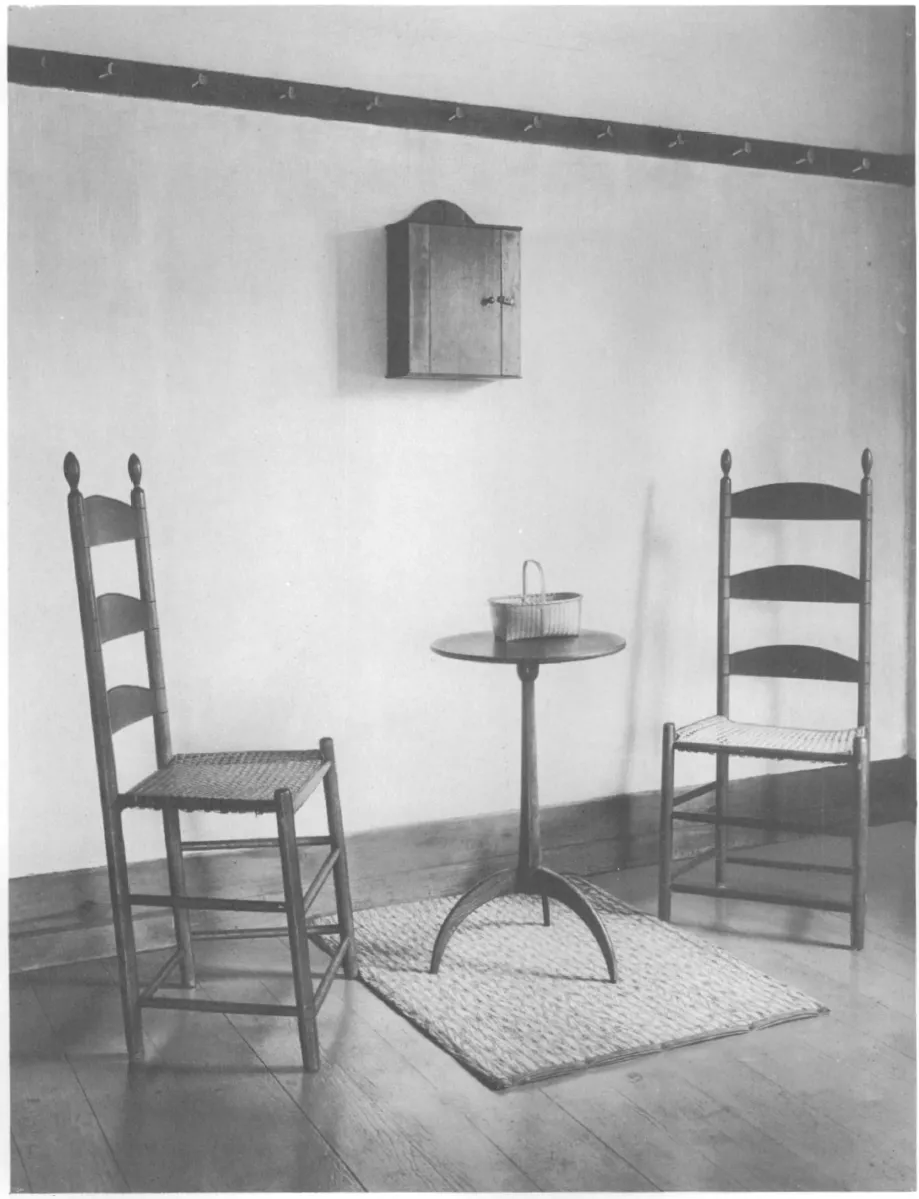
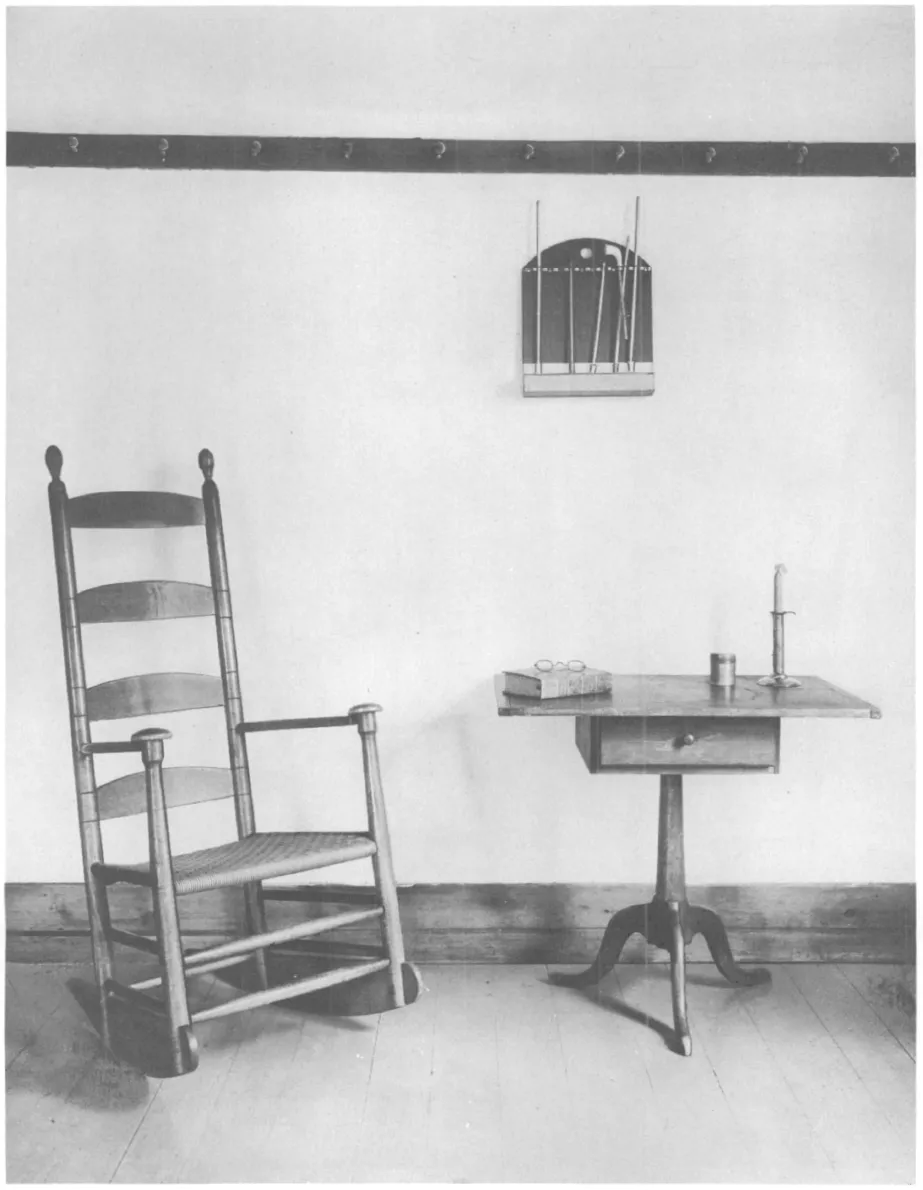
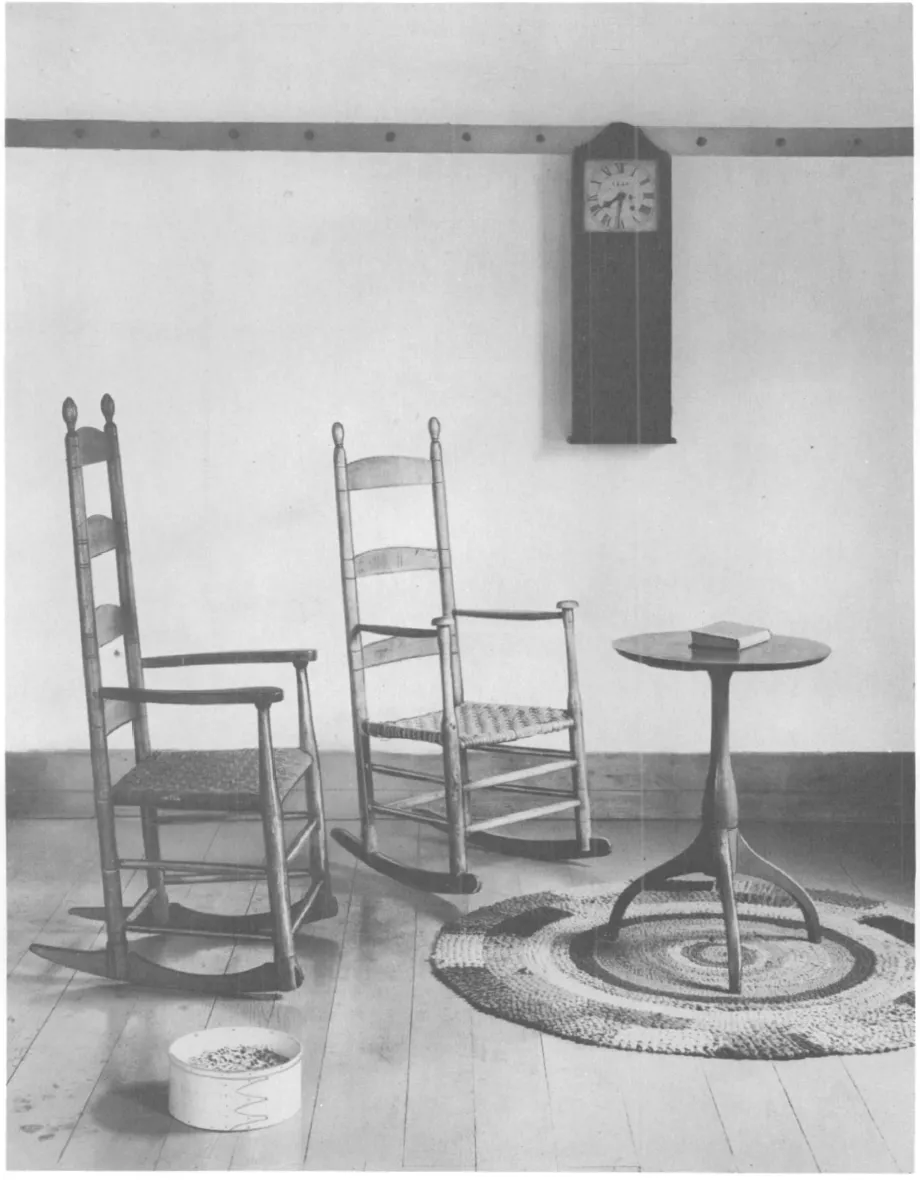
48 sharp photos show side chairs, long benches, rocking chairs, chests, cupboards, much more. Exact measurements given for each piece to aid in identification, reconstruction, restoration. Also—highly readable commentary on sect’s cultural background.
Trusted by 375,005 students
Access to over 1.5 million titles for a fair monthly price.
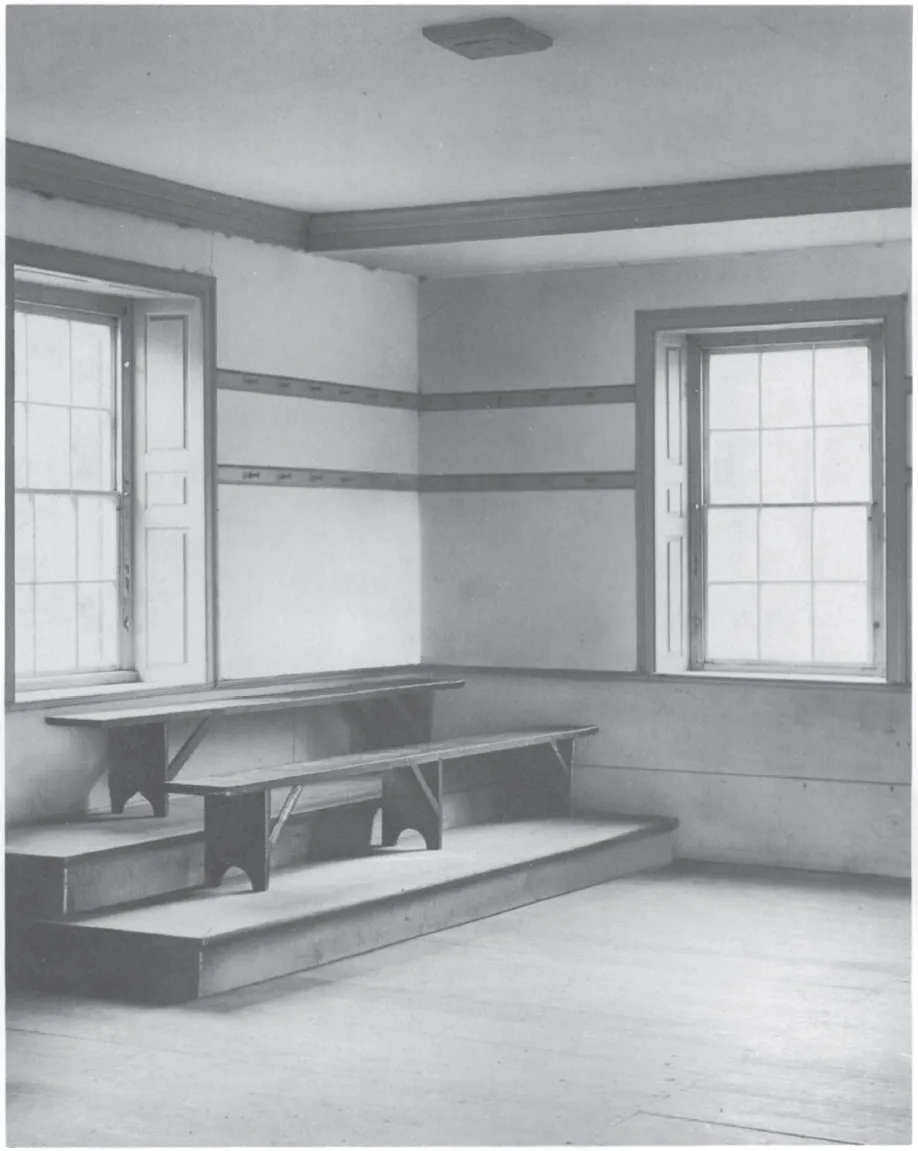
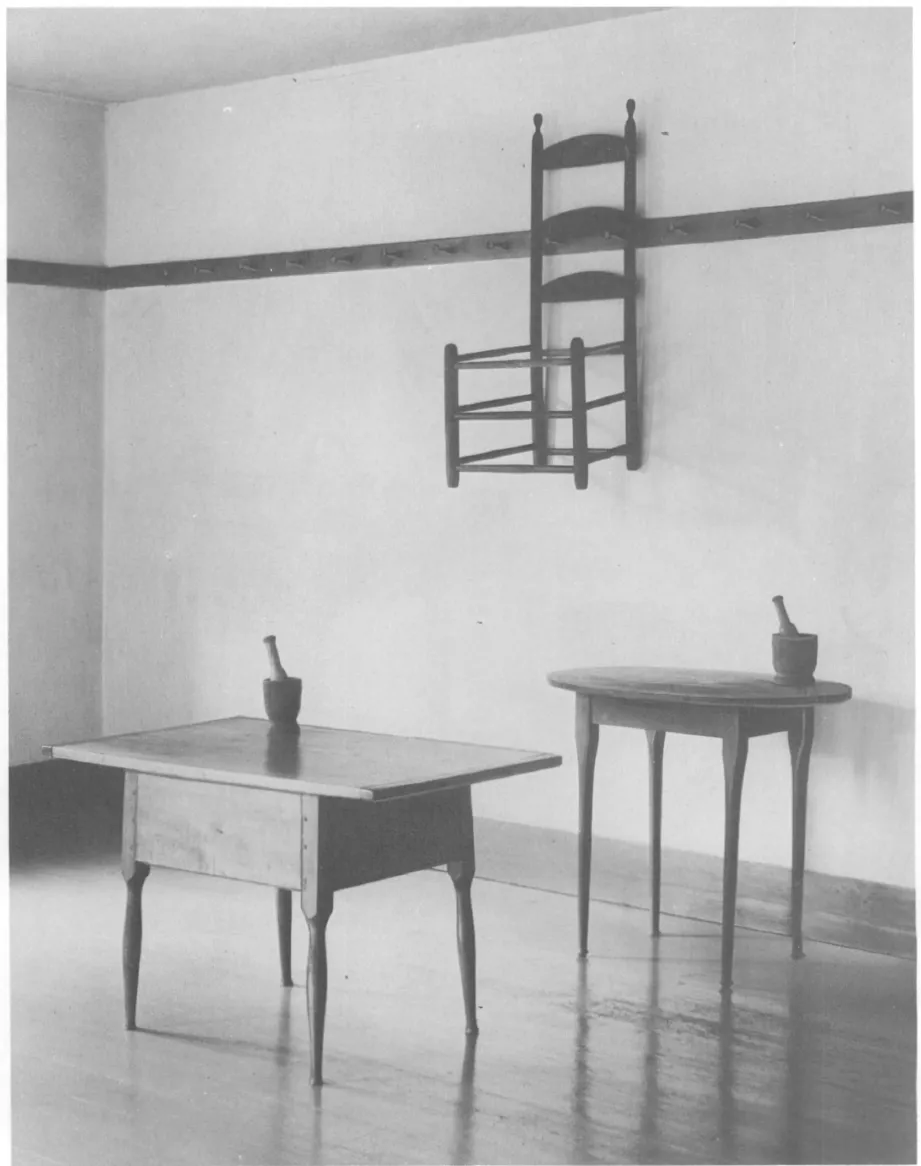
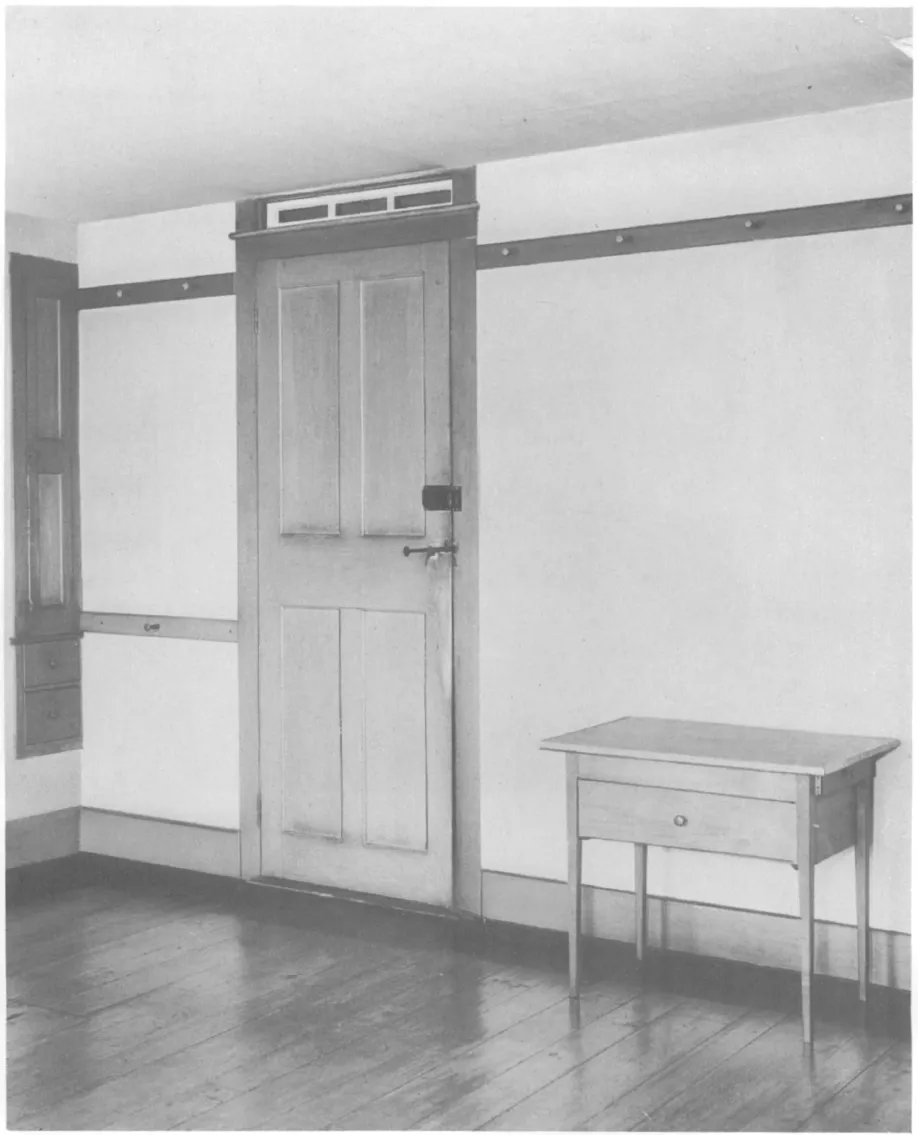
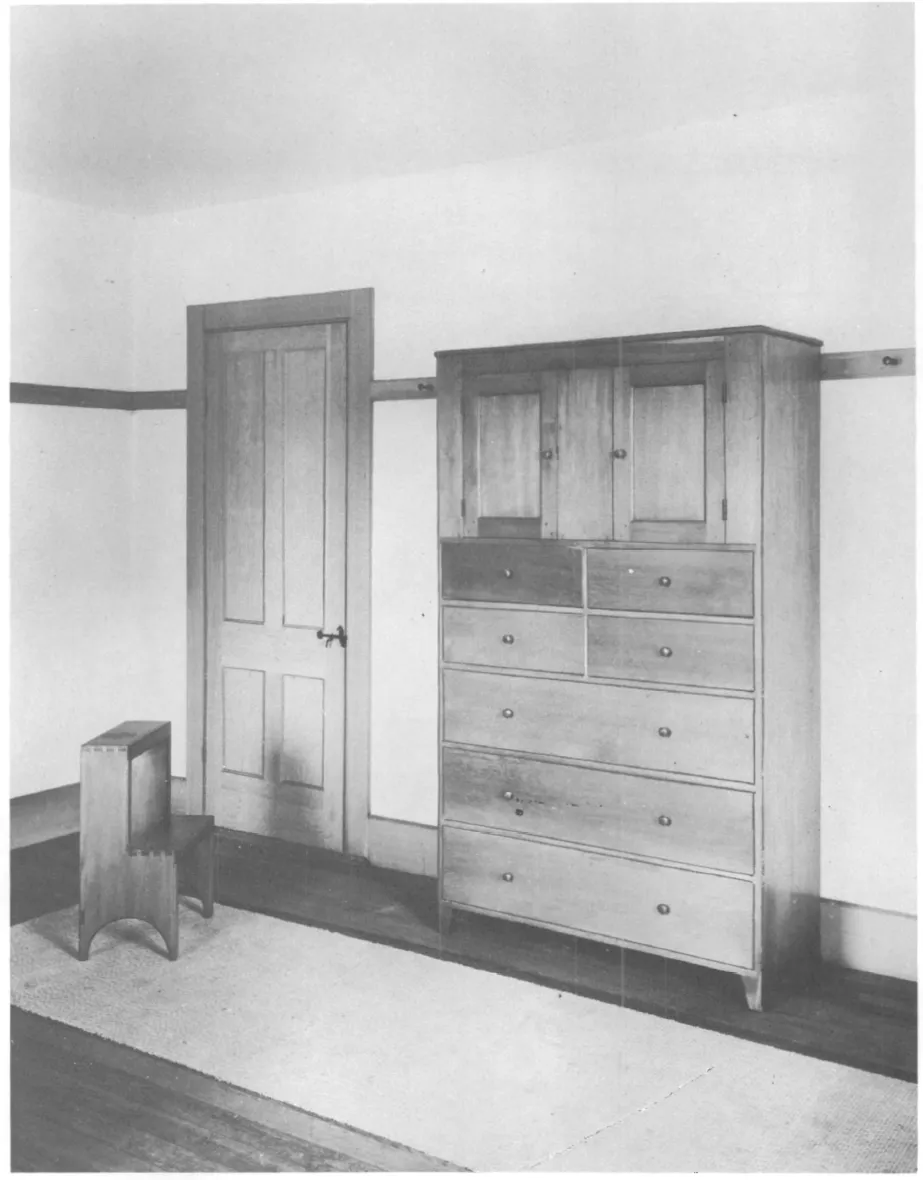
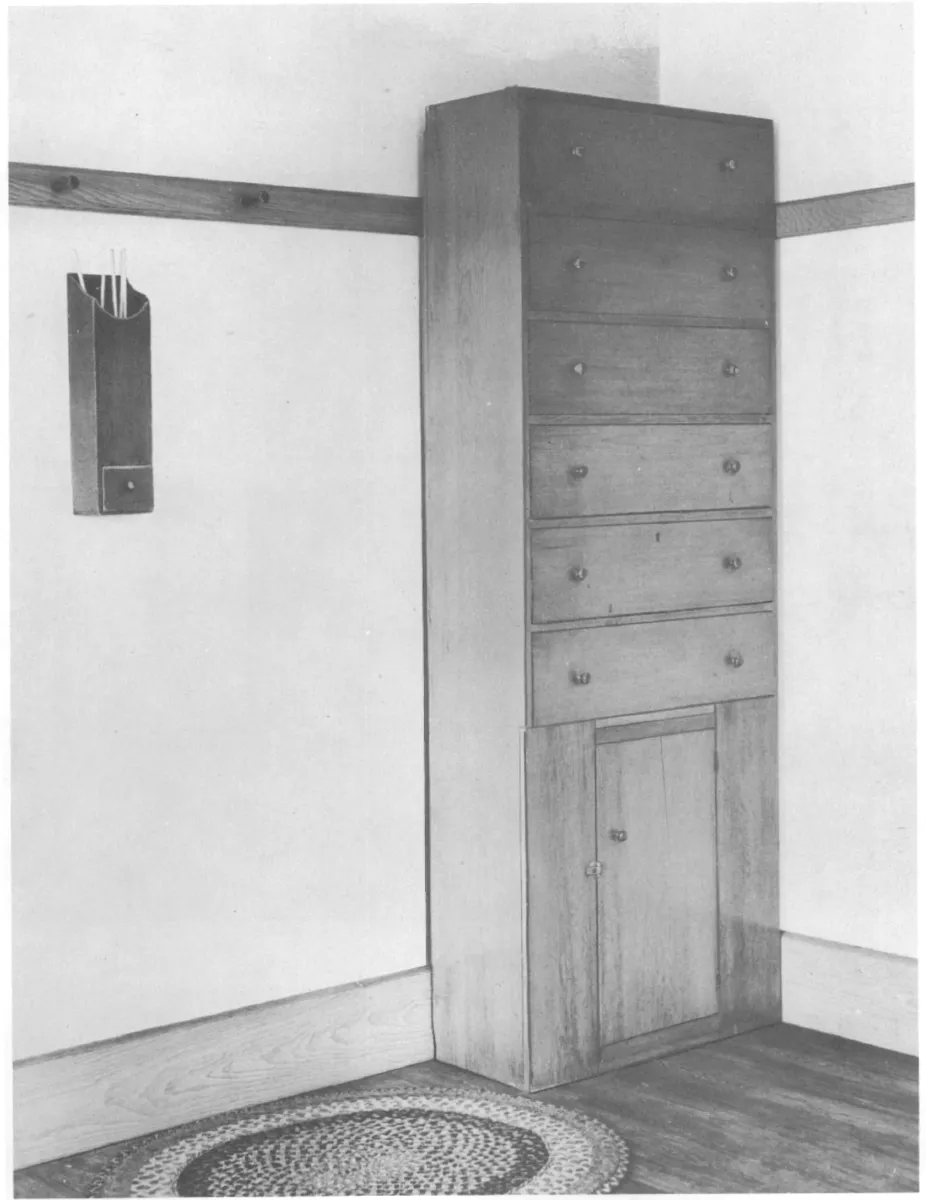
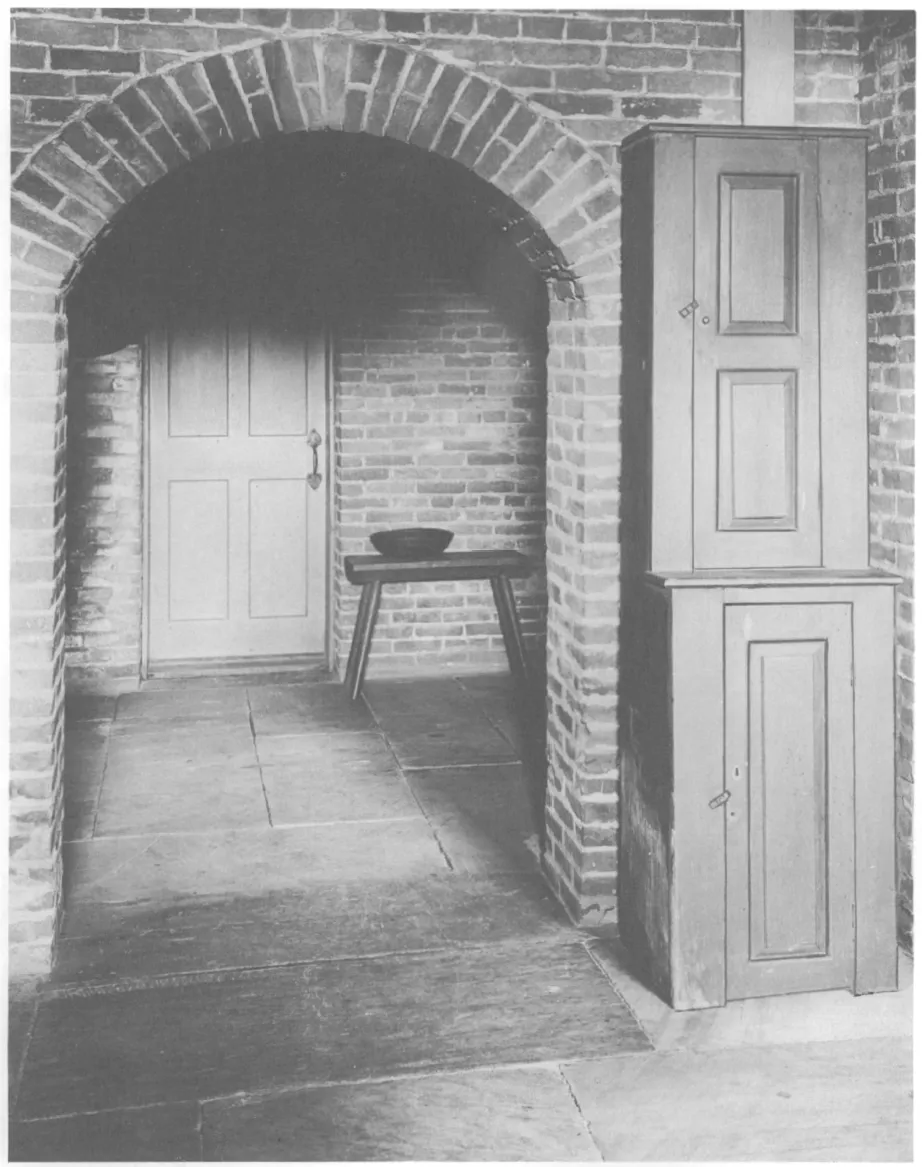
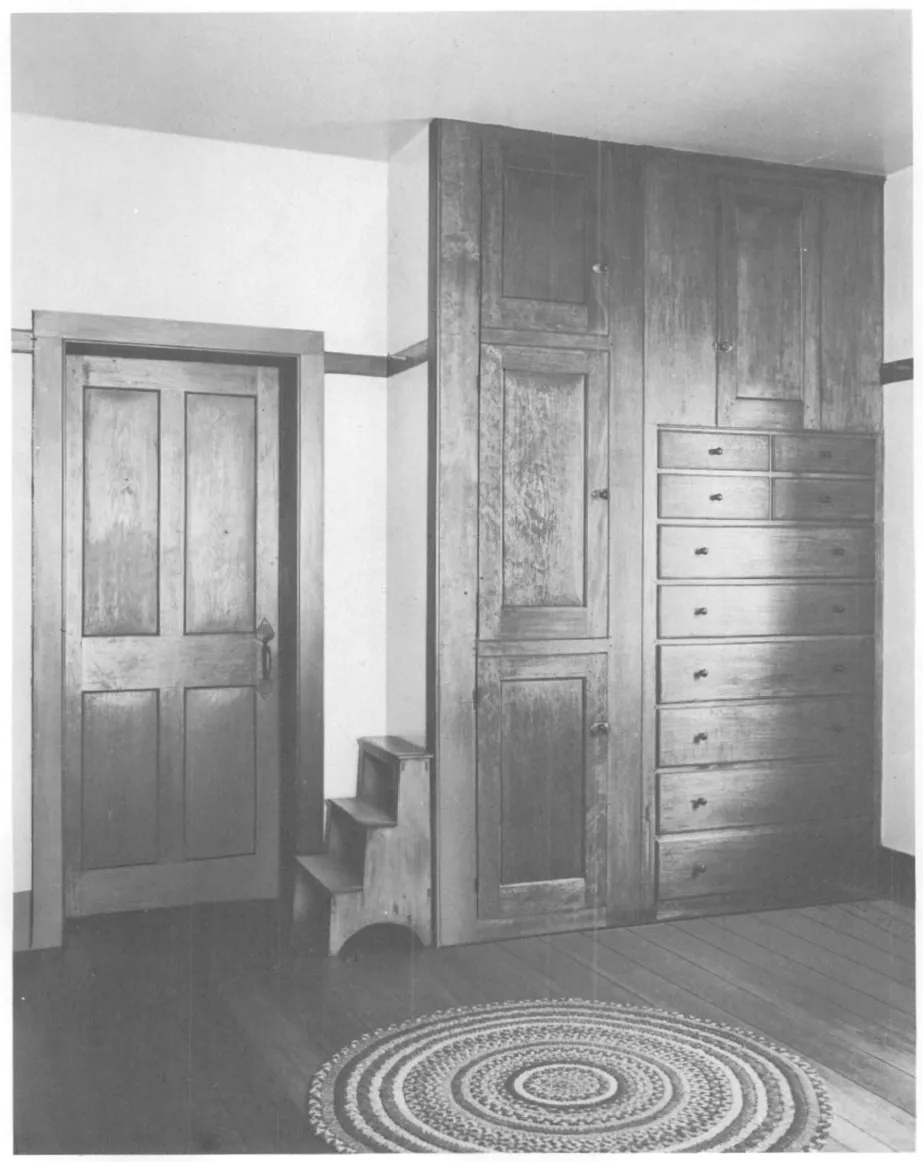
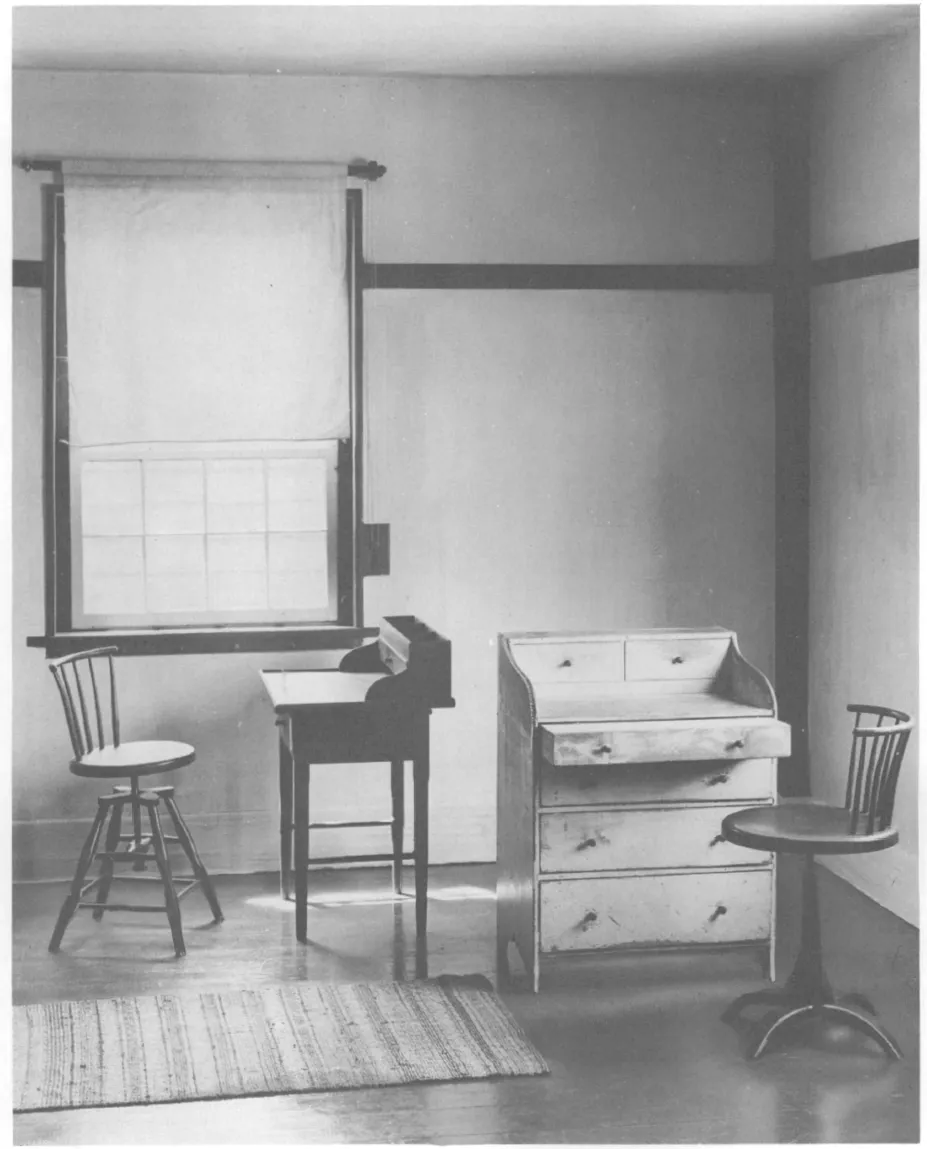
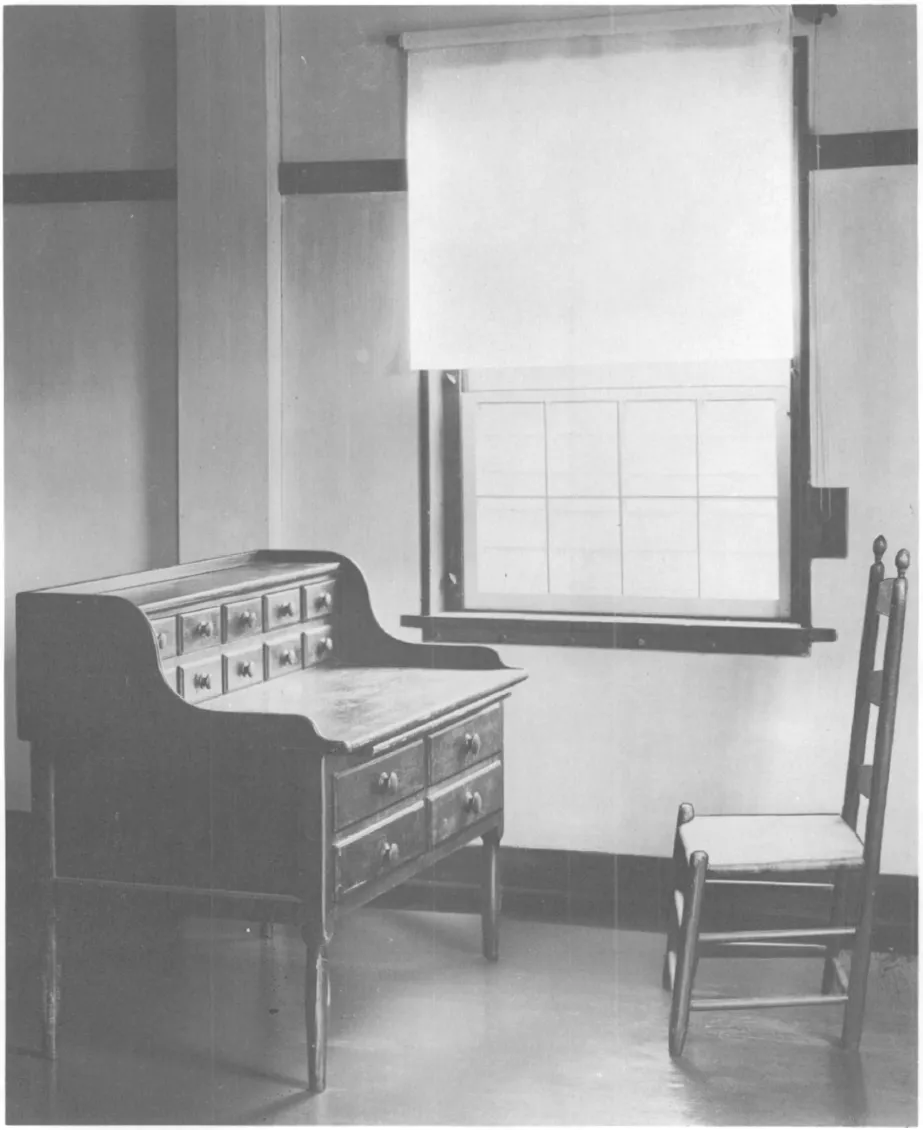
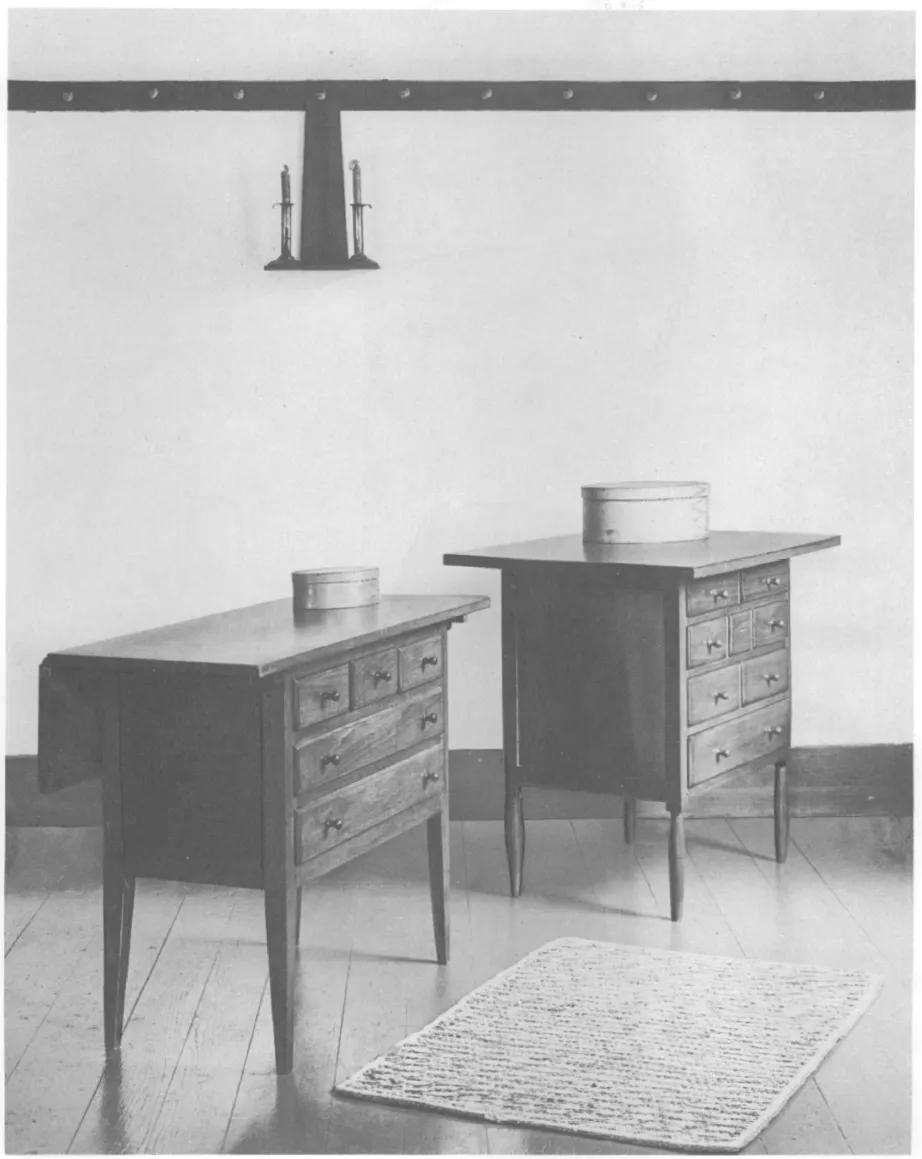
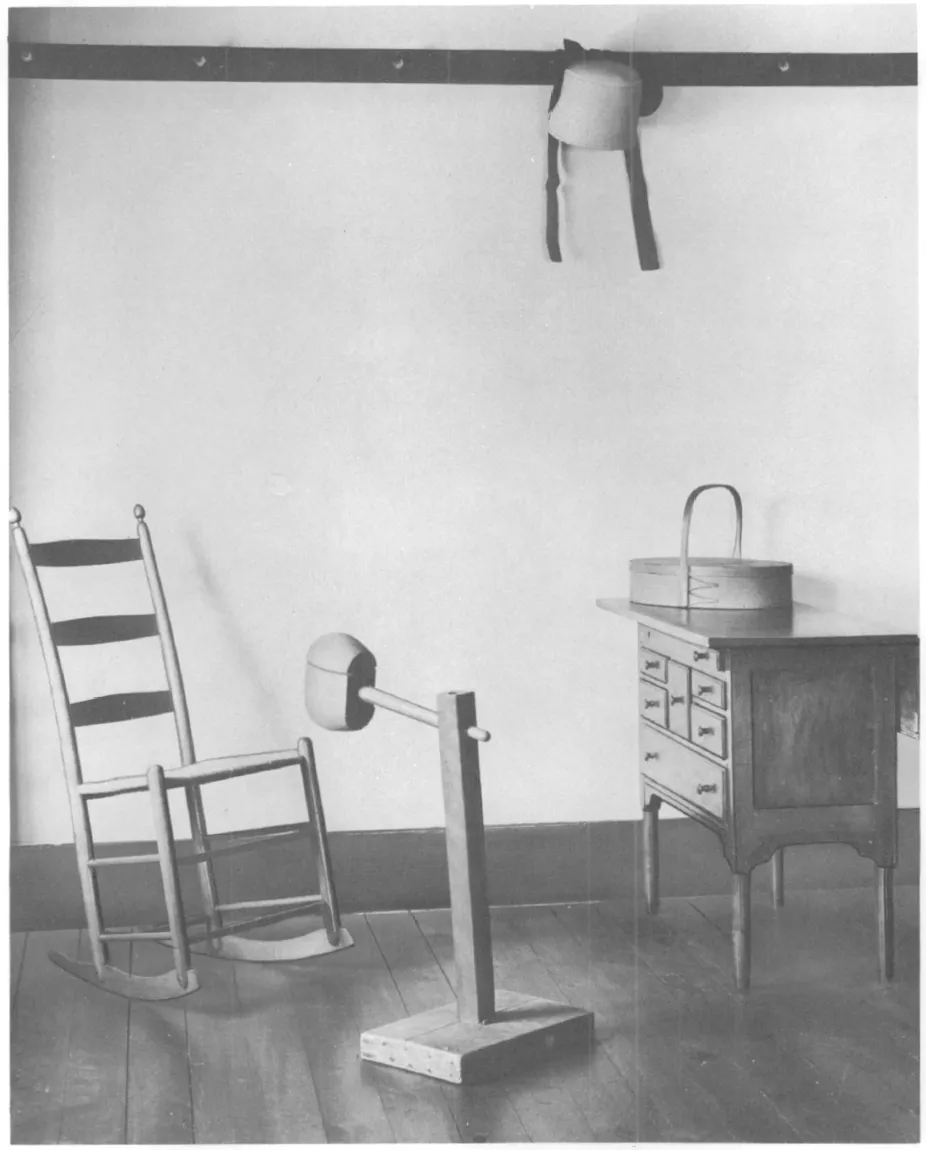
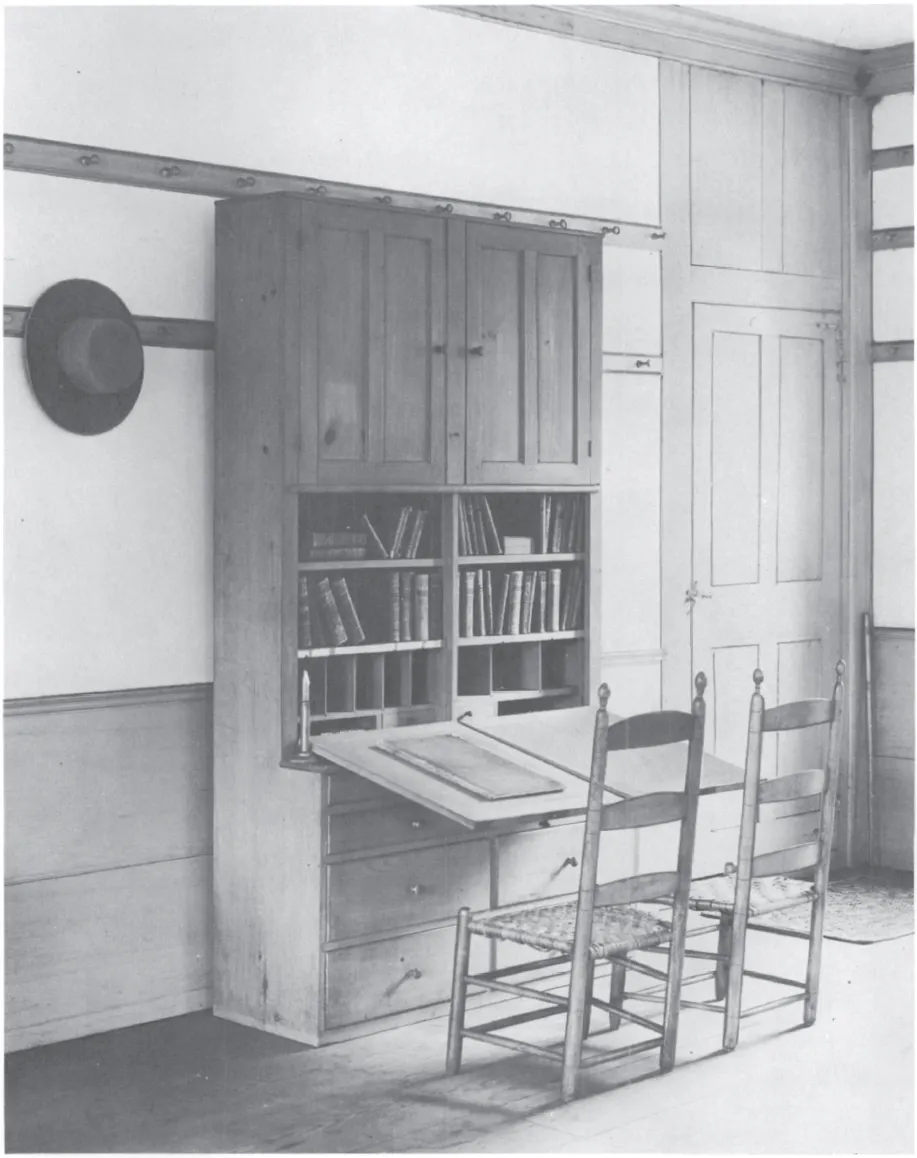
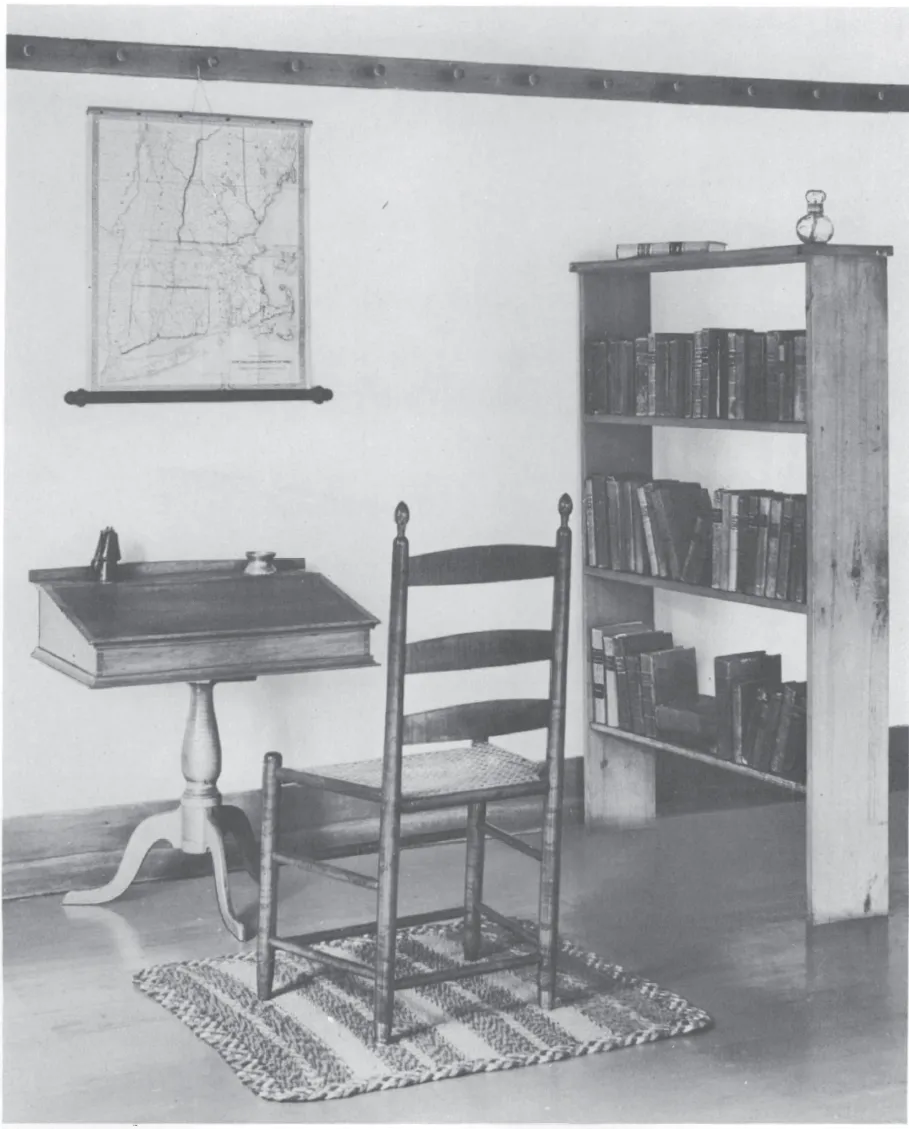
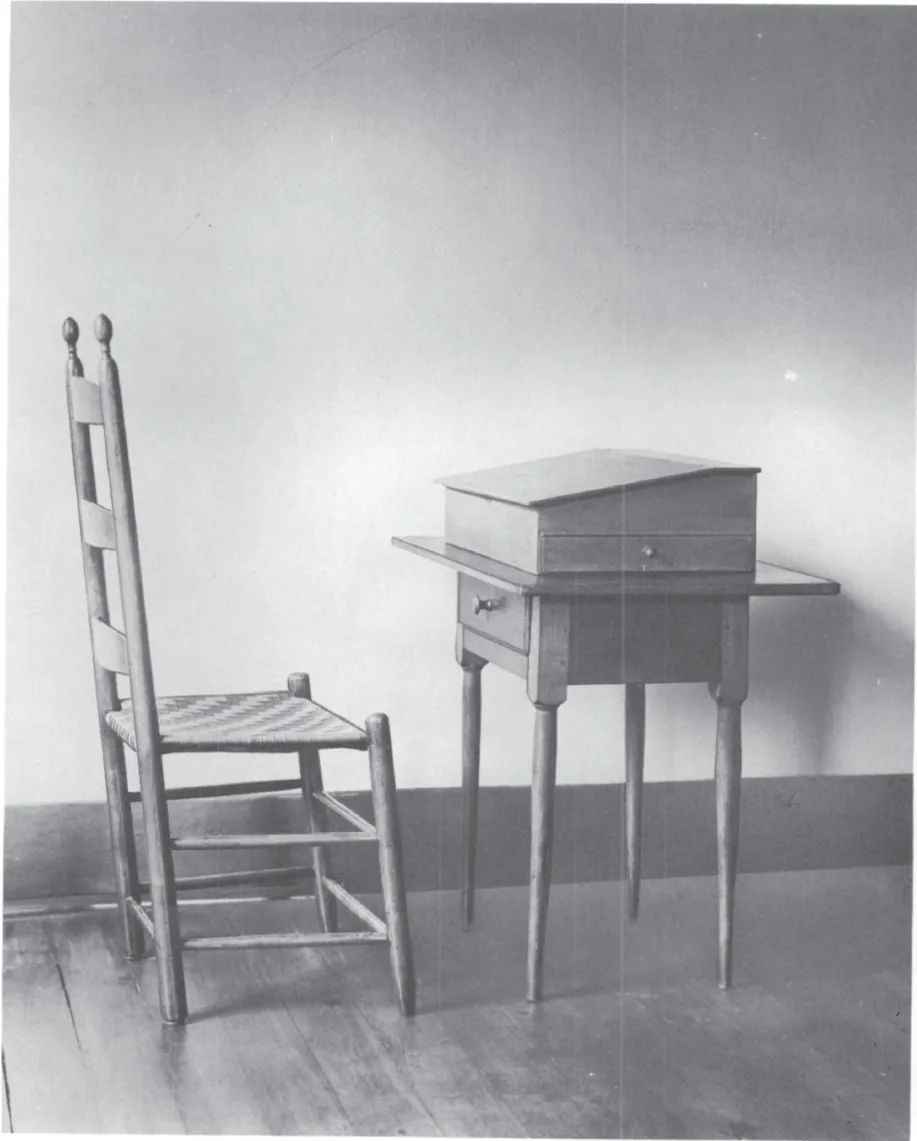
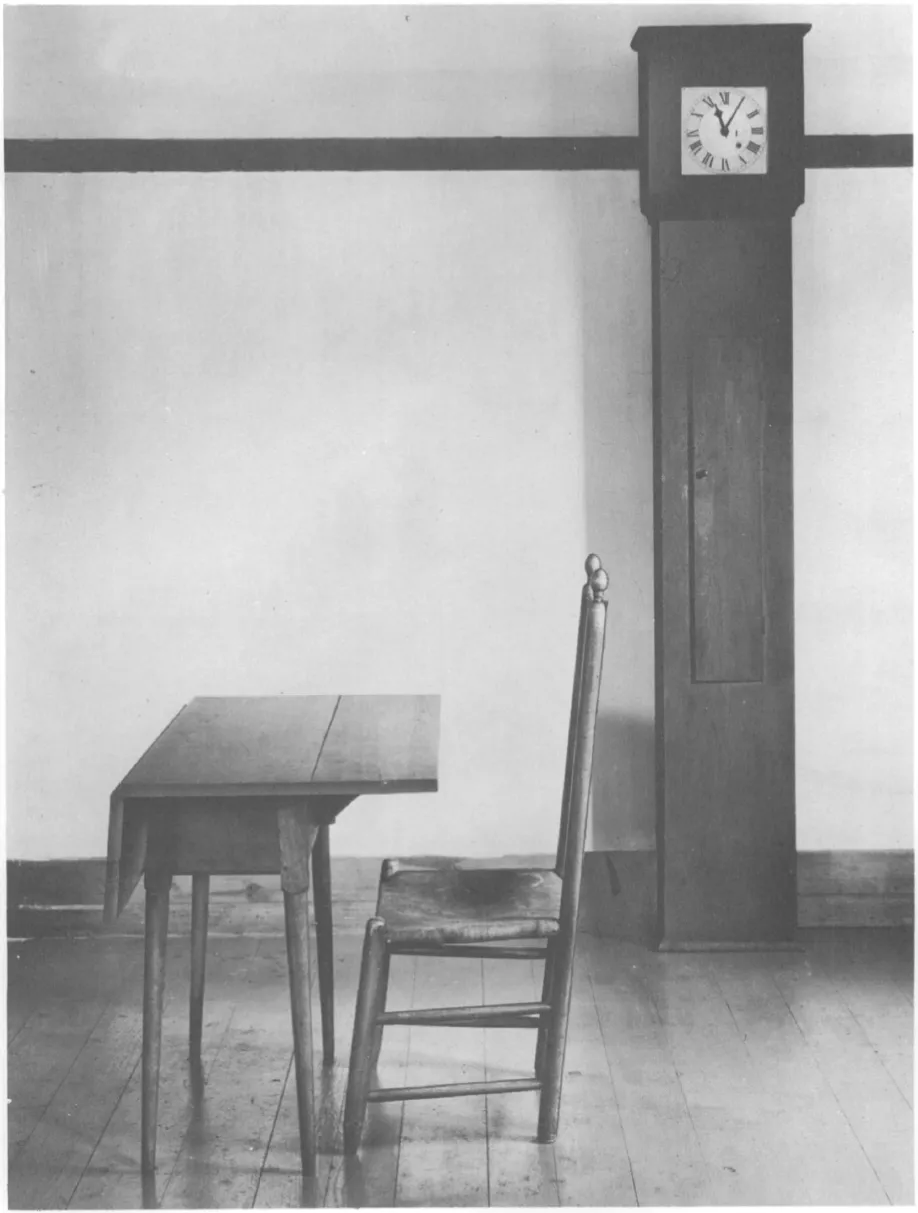
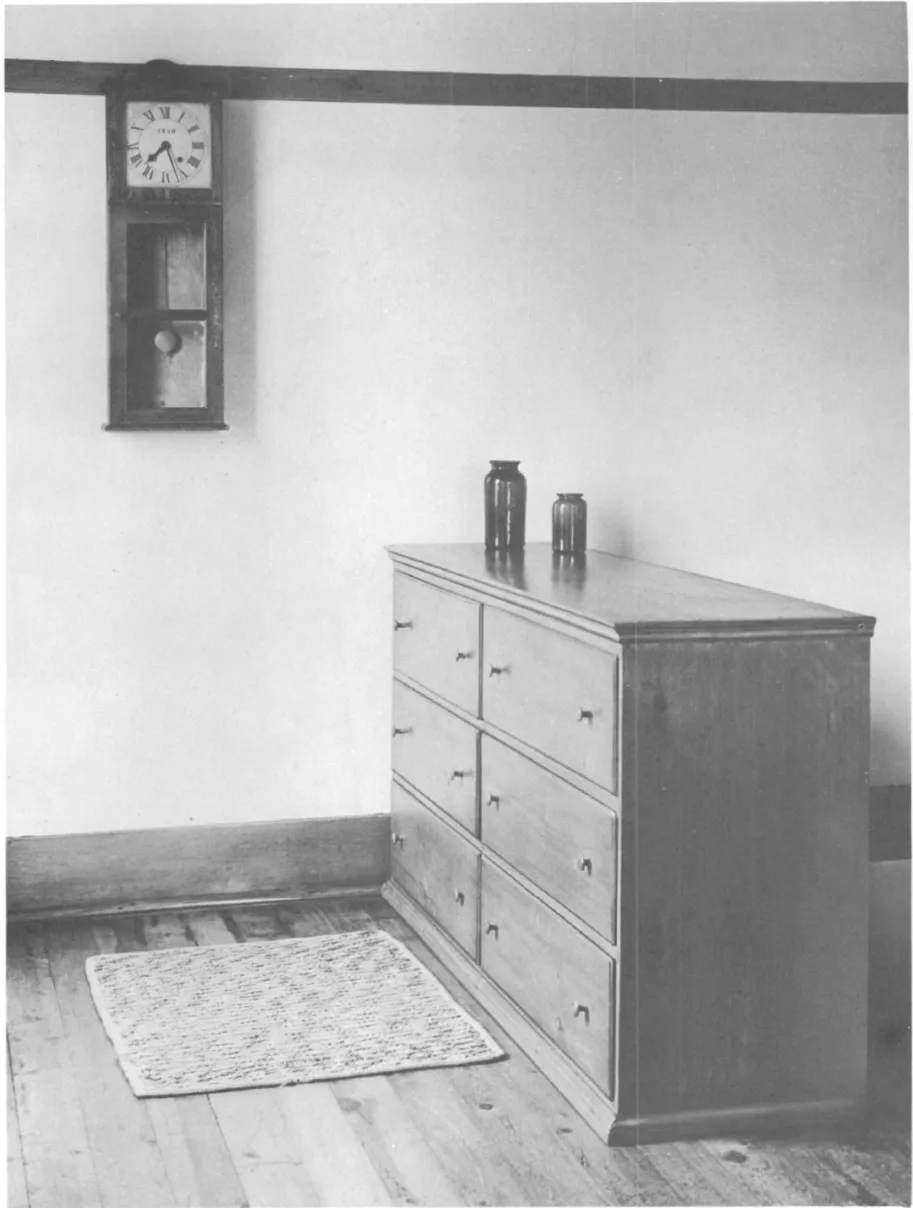
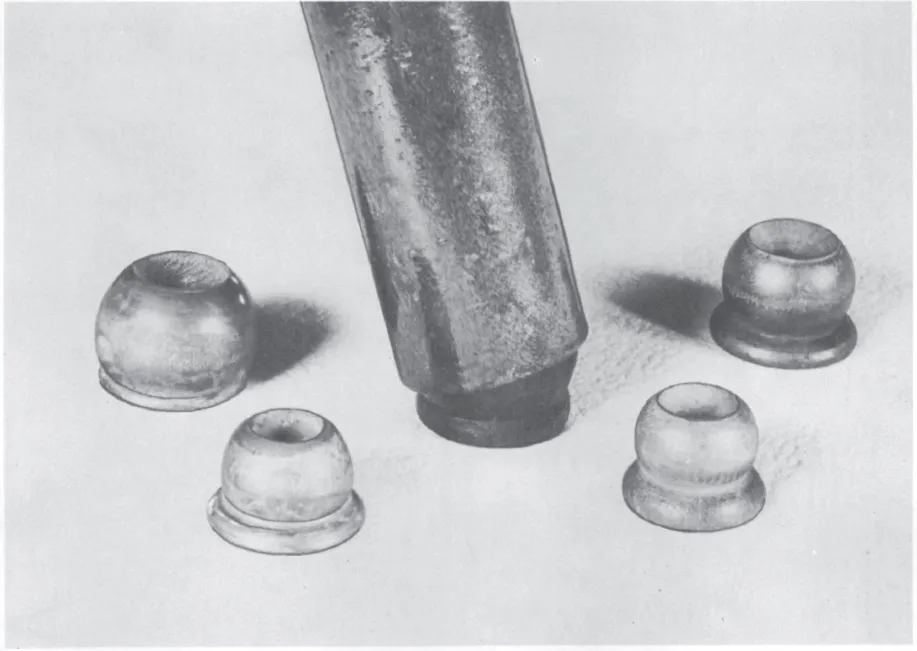
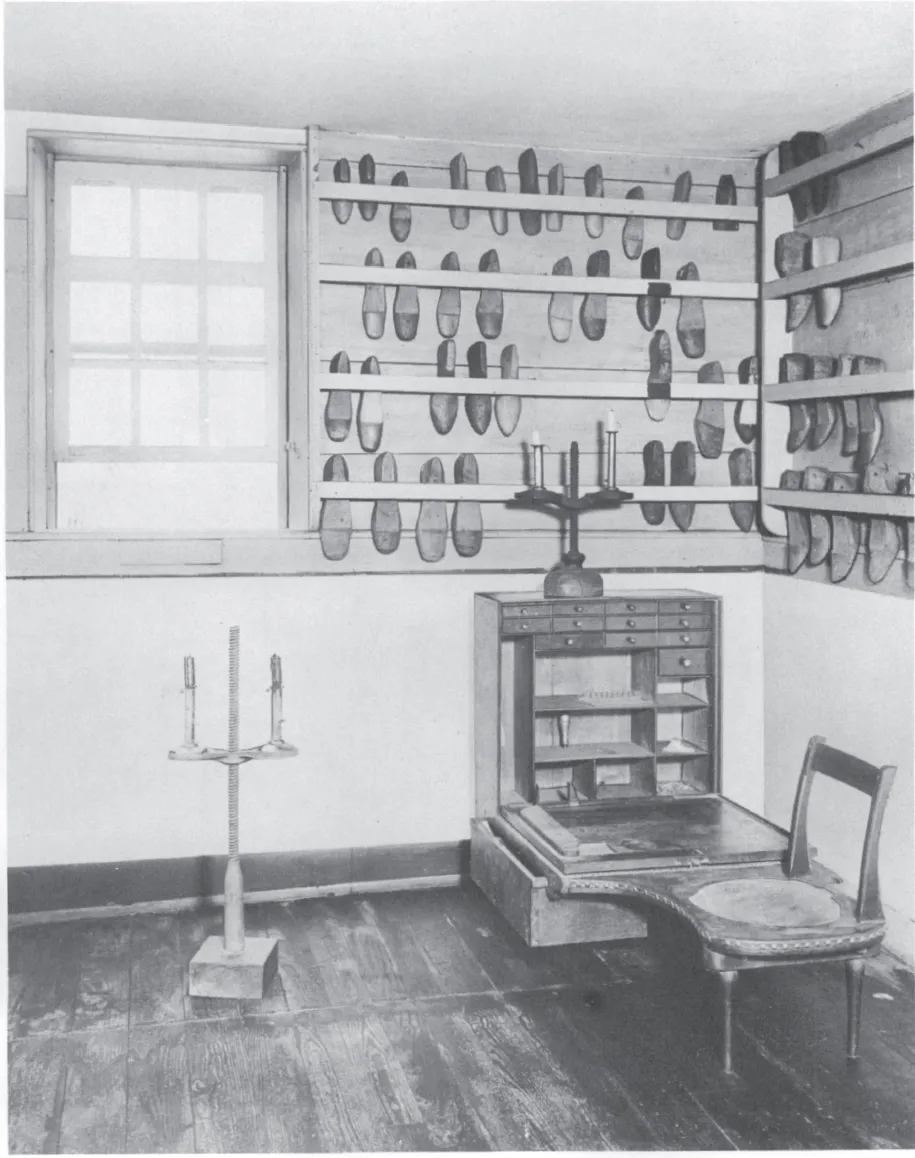
THE Shaker rooms in which the following photographs were prepared* belong to a period when furniture was none too common. Forced economy often predominated over convenience. Historic incorrectness, therefore, was not involved in eliminating from each composition extraneous material; nor do the formalities of arrangement conflict with the somewhat stark, austere effect which the early interiors must have presented. The selection of certain pieces for certain studies was indeed sometimes arbitrary. And though the placement of objects followed the ordinary rules of pictorial technique, every effort was made to evoke the spirit of the original scene, as we imagined it must be; to suggest in particular the historic order, cleanliness and spaciousness of the domestic scheme; to give a panorama of essential design, with a minimum of accessories; and in general to indicate both the atmosphere and practical economy of the Shaker home.
About half of the illustrations were taken in the sisters’ shop or wash-house at the Church family, New Lebanon, two rooms on the third loft of which were cleared and restored to their original appearance. The large, well-lighted rooms of this building, which was raised on May 22, 1806, offered a faithful background for the portrayal of the authors’ collection. The walls were rewhitened and the floors repainted. The pegboards and door and window casings were in good condition. Available also were the original window shades and rollers, with their ingenious fixtures. Under the sills were strips of tiny pegs on which tools, brushes or other objects were once hung. One of the rooms had a spacious anteroom or washroom, large enough to hold an extra cot and washstand. Various locations in the meeting-house at Hancock, and in the shops and dwellings at Hancock and New Lebanon, were utilized for the rest of the pictures, and are noted in the description of the Plates, pages 67 to 101.
2
3
4
5
6
7
8
9
10
11
12
13
14
15
16
17
18
19
20
21
22
23
24
25
26
27
28
29
30
31
32
33
34
35
36
37
38
39
40
41
42
43
44
45
46
47
48
DESCRIPTIONS
TABLES, CHAIRS AND BENCHES*
PLATES 1–11
WHEN Ann Lee visited various towns in Massachusetts and Connecticut in 1783, she must have entered many homes reflecting in their furniture and decoration the feeling of self-importance which marked the development of middle-class consciousness during the eighteenth century. In such houses were frequent evidences of imported English and Continental taste: carved, inlaid, veneered, lacquered and painted furniture; special-service pieces like tea, card or dressing tables, symbolical of social pleasures; fine appointments such as highboys, lowboys and chests-on-chests, desks and secretaries, settees or chaise longues, high-post beds, gilt mirrors and pier tables; chairs upholstered in velvets, damasks, satins and plushes; pretentious carpets, tapestries, wallpapers, table linens and silver. Ornament in many forms accompanied prosperity into the better New England homes, furnishing ready occasion for testimonials against the “worldly” temper of the age. At Petersham, in Massachusetts, Ann’s dissentmg spirit seized upon the subject of such “costly and extravagant furniture,” the possession of which she utterly condemned as sinful indulgence. “Never put on silver spoons for me nor tablecloths,” she directed in one of the homes of this town; “but let your tables be clean enough to eat on without cloths; and if you do not know what to do with them, give them to the poor.”†
PLATE 1 (Frontispiece)
Ministry’s dining room, with early trestle table and benches
SMALL trestle table from Enfield, Connecticut. The two-board top, of close-grained maple, measures 50 inches by 27 inches. Legs also of hard maple. Height: 24
inches.
The pine benches represent common types at New Lebanon. The one near the table measures 48 inches by 9
inches by 15
inches; the other: 40 inches by 9
inches by 18
inches. All boards are
inch thick, except those used for the top and braces of the lower bench, which are of
-inch stock. The tin candle sconce (from Hancock) is provided with a rack for matches or matchbox.
The Shaker search for purity of form is well exemplified in the trestle dining-room tables made at an early date in the history of the order. Well adapted to communal use, such pieces possess an elemental character of dignity and frankness enhanced by flawless construction. In contrast with their colonial analogues, which the Shakers probably never saw, the longitudinal under-braces of these tables usually run directly beneath the top, leaving an unobstructed space for legs and knees. The top is pinned or nailed to this piece as well as to the cross-strips, and the underbrace is tenoned through the top of the leg-posts and wedged for tightness. On the earliest tables, the uprights of the trestles are urn-shaped (as in Plate 1), square or rectangular posts (generally maple), while the foundation shoes (maple, oak or ash) rest flush with the floor or are slightly arched in a long, bow-shaped curve. Later types are usually distinguishable by turned leg-posts and narrower feet or shoes. Cherry took the place of maple and pine; the length became standardized at ten feet and the width at three; and the shoes were raised to a higher arch.
The short trestle tables were made for the two elders and two eldresses composing the ministry, who ate apart from the rest of the society. Special care was often taken in making furniture consigned to this highest order of Shakerdom.
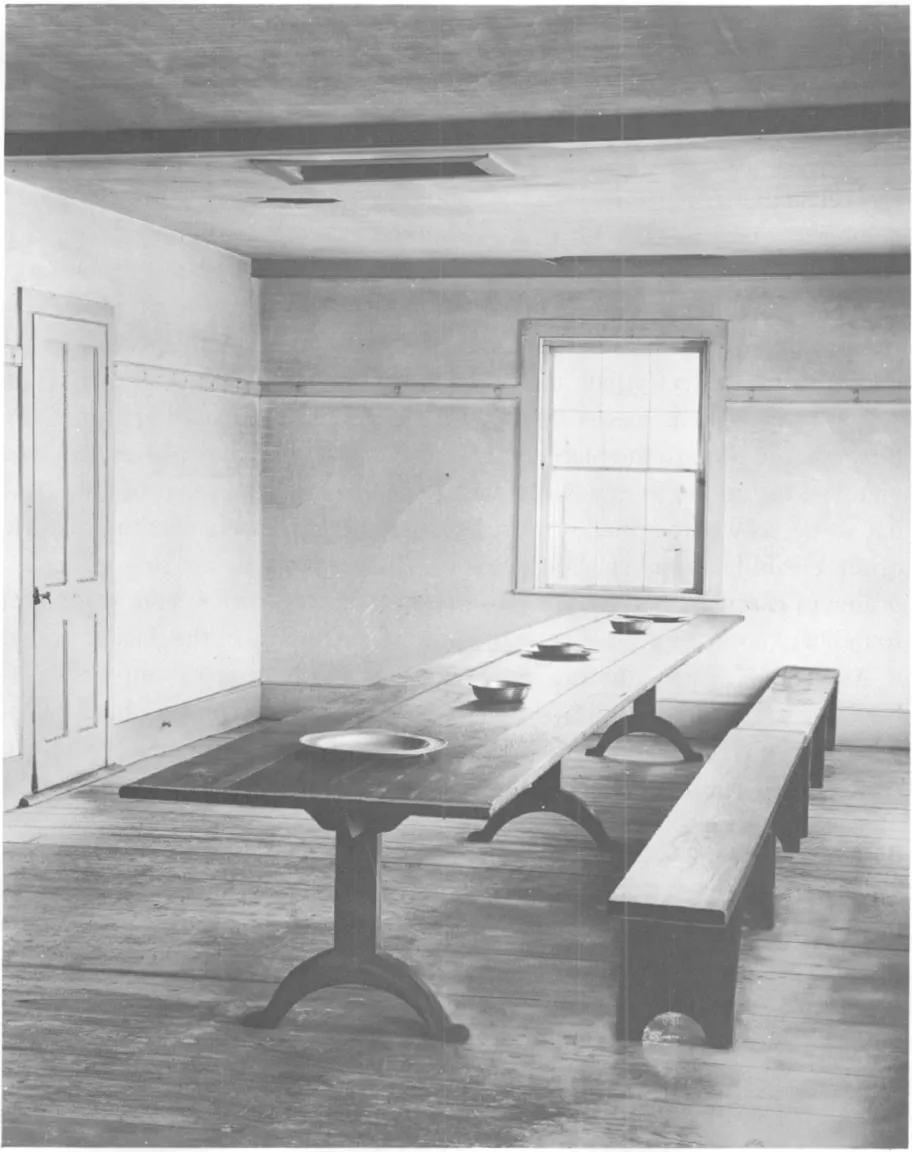
PLATE 2
Long communal dining table with benches
DIMENSIONS of table: 20 feet by 34 inches by 27
inches. The four-board top is pine; the trestles, birch. The ten-foot benches in the picture were more often used in the meeting-house than in the dining hall, where shorter benches were more convenient to move. (See Plate 1.) All pieces from New Lebanon.
To facilitate passing of dishes, Shaker dining tables were set to accommodate one or more “squares” of four persons each. Ten-foot tables usually served three squares. The twenty-foot trestle table in Plate 2, made at New Lebanon, could accommodate twenty person...