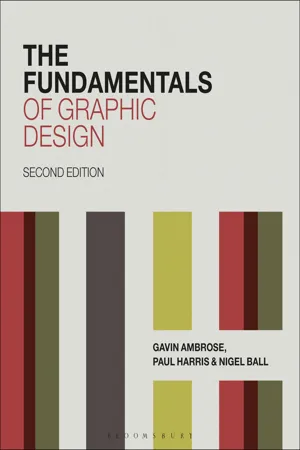
- 192 pages
- English
- ePUB (mobile friendly)
- Available on iOS & Android
eBook - ePub
The Fundamentals of Graphic Design
About this book
Introducing students to the field of graphic design through inspirational examples and clear, practical advice, The Fundamentals of Graphic Design has been fully updated to reflect the changes in today's technologies and graphic design practice. With a new section expanding the coverage of digital design tools and new material on social media, apps plus more on design for the Web, the book gives students a unique overview of what graphic designers do and how they work, historical influences on the field, and coverage of design thinking and the production process.
Information
Chapter 1
Graphic design as a discipline
Graphic design takes ideas, concepts, text and images and presents them in a visually engaging form through print, digital or other media. It imposes an order and structure to the content in order to facilitate and ease the communication process, while optimizing the likelihood that the message will be received and understood by the target audience. A designer achieves this goal through the conscious manipulation of elements; a design may be philosophical, aesthetic, sensory, emotional or political in nature.
Areas looked at in this chapter
What is graphic design? / What is a graphic designer? / Group structures and working methods / Graphic design today
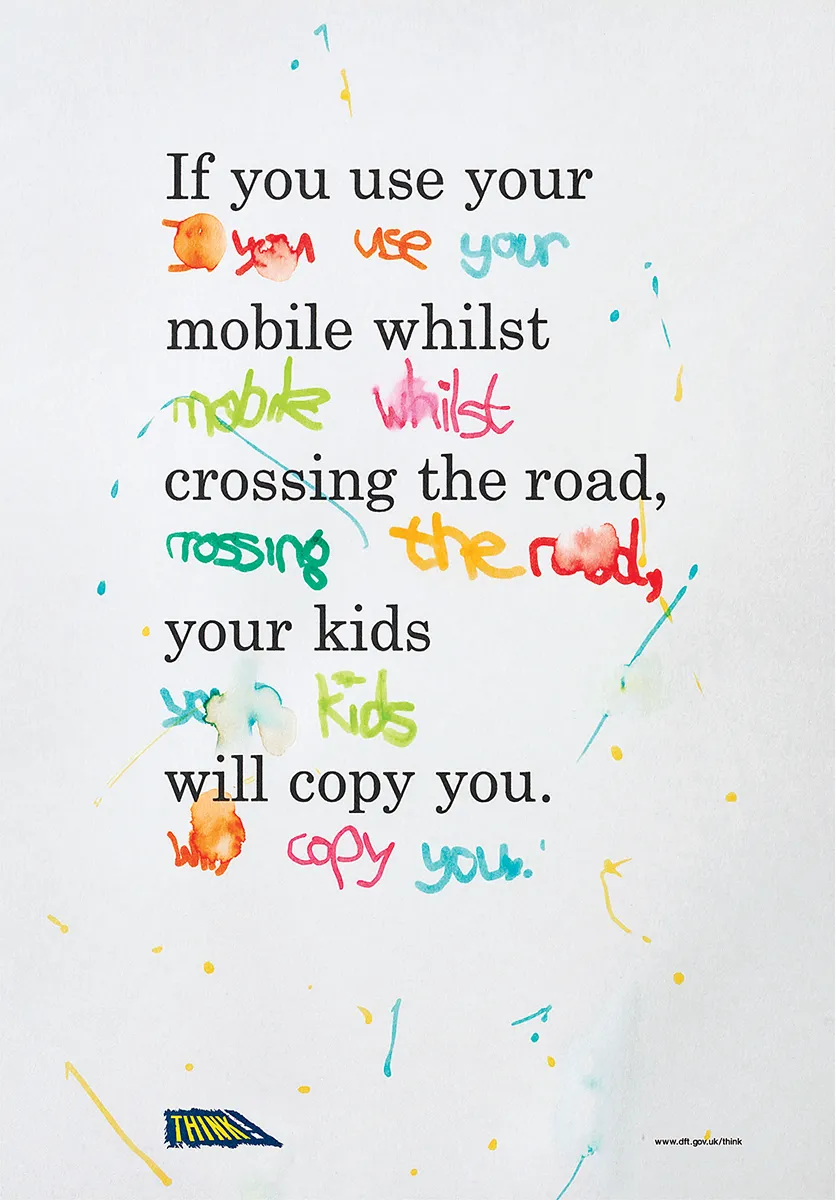
Think!
This poster was designed by Leo Burnett for the Think! Copycat Parents’ Campaign for the UK Department of Transport. The work highlights the importance of parents setting a good example for their children and is an example of design’s power to change people’s behaviour and make them question their actions. The message is presented in a child’s handwriting and the adult world is represented through the use of printed text. The child’s world is represented by the copying of the message in an uncertain hand in various bright colours.
What is graphic design?
Graphic design is a creative visual arts discipline that encompasses many areas. It may include art direction, typography, page layout, information technology and other creative aspects.
This variety means that there is a fragmented landscape for design practice within which designers may specialize and focus.
The evolution of graphic design
Graphic design developed from the printing and publishing industry, with the term itself first used in the 1950s. At that time there was a clear demarcation within the different stages of the print production process, with specialist professionals or trades performing each one. These stages involved printers, scanners, photographic reproduction, graphic design, typesetters, print buyers, film, proofreaders and production managers.
The consumer economy that emerged in the Western world following the Second World War brought with it the emergence of bright and attractive packaging as competition between products intensified. The number of magazines also began to increase, resulting in greater demand for visually appealing designs. These coincided with developments in print technology and opened up new production possibilities that designers were well placed to take advantage of. The success of graphic design helped to make it even more indispensable.
As the power of colourful visual communication became widely appreciated, graphic design grew from the need to provide visual communication to the consumer world and spread throughout different sectors of the economy, while continuing to harness the technological developments that progress brought forth.
Technological development, particularly in the digital age, has revolutionized and rationalized the processes of print production. Trades such as typesetting and artwork preparation have become obsolete, as they can now be performed by a designer. As a consequence, graphic design has developed into a multifunctional role that sees the designer playing a pivotal role in the production process. This demands great versatility and the need to communicate effectively with many different professionals. In the past, designers would have undertaken all aspects of a job, from the generation of ideas to hand-drawing type for headings and layout.
Technological development has placed designers at the heart of the creative process.
Often, a graphic designer manages the design process and coordinates the work undertaken by other creative disciplines as part of a job. As such, the scope of a designer’s responsibilities now includes print buying, website programming, photography, page layout, materials selection, art direction, freehand illustration, computer-generated illustration (CGI), project management, client account management, storyboarding, editing and pre-press production.
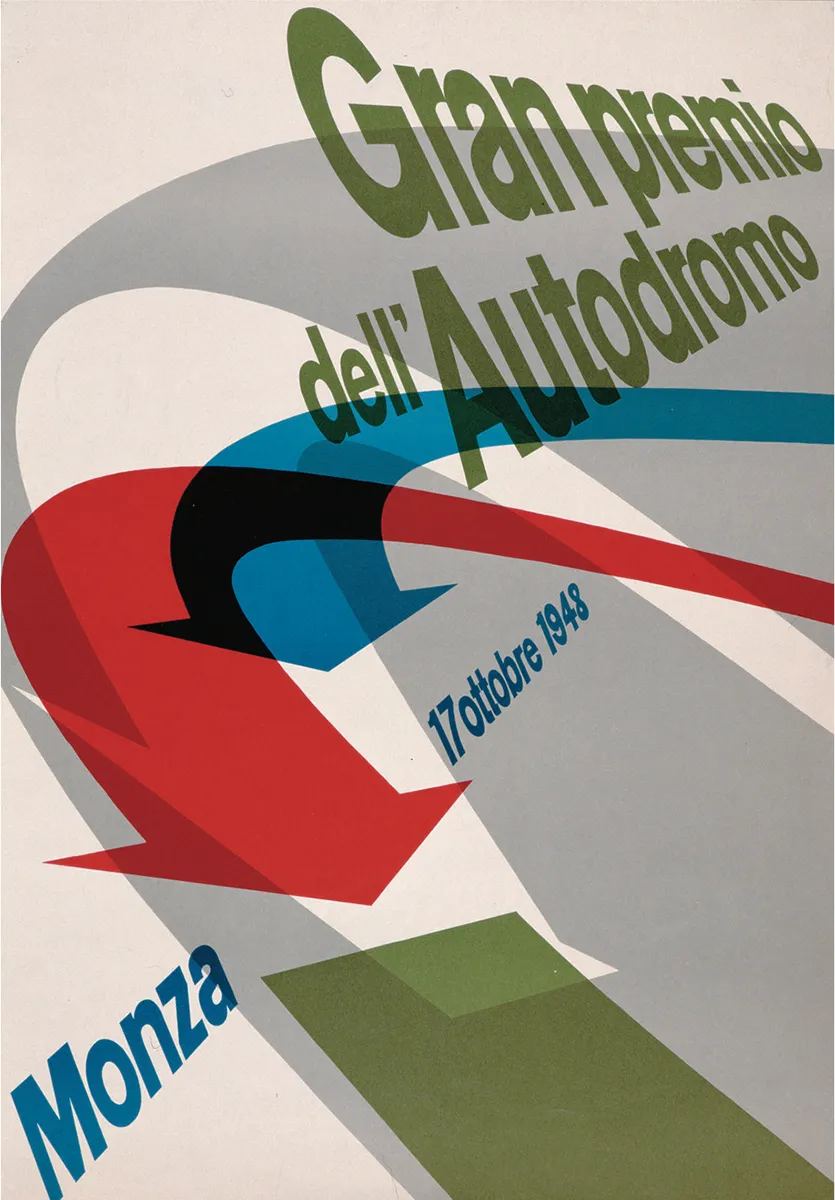
Monza 1948
Max Huber designed this poster to advertise motor racing at Monza, Italy in 1948. It incorporates various elements, such as typography, imagery and colour, to present the concept of motor racing. Although no car is pictured, the design captures the essence of speed and competition through the use of coloured arrows and angled, diminishing type.
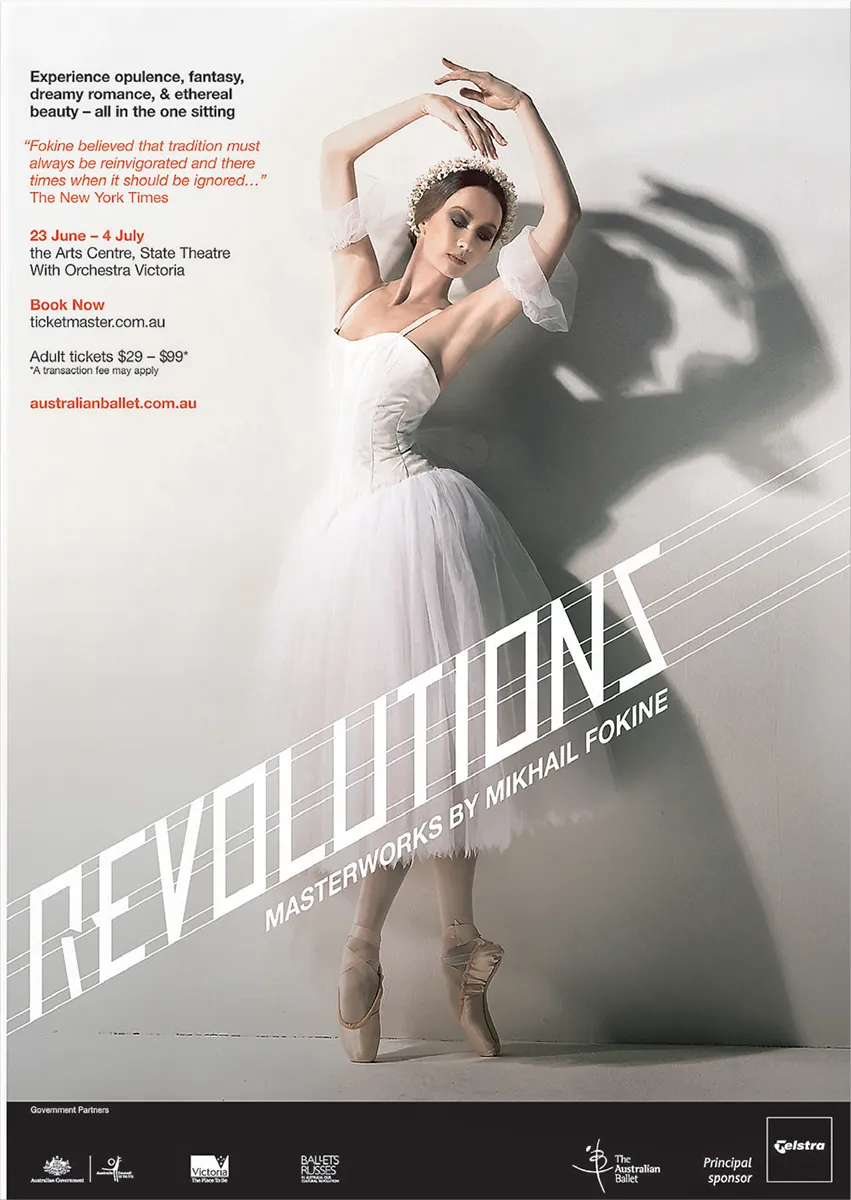
Revolutions
Pictured is a poster created by 3 Deep Design that has similarities to the adjacent Monza poster, made in the pre-computer age, despite the fact that they were created using different technology. Both feature type and images that tell a message and create visual impact. Technology may alter how designs are created and produced, but good design always goes beyond this via the effective application of design principles.
What is a graphic designer?
Thinking of graphic design as a trade is anachronistic and limited. It is more useful to look at the underlying approach to design that a graphic designer takes in order to understand his or her role in the print and digital production process. A designer essentially has two roles in the process: satisfying the design brief and executing the job.
Fulfilling the brief
The first task a graphic designer fulfils is to work out what has to be done in order to satisfy a design brief (here). This may involve conducting research into the subject matter and audience in order to generate preliminary ideas. Any project begins as a series of preliminary sketches, thoughts or ideas.
A graphic designer brings a sense of order to these concepts and arranges them in a way that gives them pace and meaning. In essence, a designer creatively structures and edits the job, and makes decisions regarding what is vital to communicate and how best to convey the message.
Executing the job
The designer’s next task is to execute the job. Designers may work with, and choose from, a varied selection of sources to conceive the final design – whether employing a philosophical viewpoint, such as modernism, or relying on pure aesthetics of current trends in typeface design or fashion, for example.
A valuable part of the design process is the final resolve, look and feel (aesthetic qualities) of the project. Aesthetic control is more far-reaching than selecting sizes and colours, as it brings order to a project, and aids communication and understanding. The implementation of a clear hierarchy can both enrich and simplify a project by making it easier for the user to locate and obtain information – whether the job is a complex signage system or a simple restaurant menu.
Aesthetics
Of or concerning the appreciation of beauty or good taste.
Deconstruction
A method of critical enquiry that examines how meaning is constructed by challenging prescribed values which are presented to us. For example, why should folio numbers be small and in the corner of a page?

For Reading Out Loud
This spread is from ‘For Reading Out Loud’, a collection of poems by Mayakovsky (1893–1930). It was designed by the constructivist El Lissitzky (1890–1941) and published in Berlin in 1923. The role of the graphic designer involves interpreting a brief and producing a design using skills that blur the boundaries between artist, designer, typographer and philosopher.
Communicating and conveying messages
A designer can arrange text and images in an infinite number of ways, but the ultimate aim is to communicate effectively rather than produce radical work for its own sake. Design actively develops, maintains and evolves conventions, axioms and clichés in order to convey important messages. For instance, why do most websites contain a home page and a consistent menu system across their many pages? Because this format has become the convention accepted by end users and anything drastically different may prevent them from effectively navigating different sites.
Conventions save designers from having to start from scratch with every job. However, this is not to say that there is no room for innovation. On the contrary, innovation tends to occur within the bounds of established convention. Design conventions are a useful and necessary element of society. For example, motorway signs function according to conventions as they communicate messages that can be instantly processed by motorists. If signs did not communicate effectively, there would be more accidents.
On the other hand, the deconstruction method of critical enquiry examines how meaning is constructed by challenging the prescribed values presented to us. The term ‘deconstruction’ was coined by French philosopher Jacques Der...
Table of contents
- Cover
- Title Page
- The Fundamentals of Graphic Design Contents
- Contents
- Introduction
- 1. Graphic design as a discipline
- 2. Influences and creative elements
- 3. The graphic design process
- 4. Delivering the message
- 5. Procuring work
- 6. The production process
- Appendix
- Glossary
- Organizations and online resources
- Index
- Acknowledgements
- Image credits
- eCopyright
Frequently asked questions
Yes, you can cancel anytime from the Subscription tab in your account settings on the Perlego website. Your subscription will stay active until the end of your current billing period. Learn how to cancel your subscription
No, books cannot be downloaded as external files, such as PDFs, for use outside of Perlego. However, you can download books within the Perlego app for offline reading on mobile or tablet. Learn how to download books offline
Perlego offers two plans: Essential and Complete
- Essential is ideal for learners and professionals who enjoy exploring a wide range of subjects. Access the Essential Library with 800,000+ trusted titles and best-sellers across business, personal growth, and the humanities. Includes unlimited reading time and Standard Read Aloud voice.
- Complete: Perfect for advanced learners and researchers needing full, unrestricted access. Unlock 1.4M+ books across hundreds of subjects, including academic and specialized titles. The Complete Plan also includes advanced features like Premium Read Aloud and Research Assistant.
We are an online textbook subscription service, where you can get access to an entire online library for less than the price of a single book per month. With over 1 million books across 990+ topics, we’ve got you covered! Learn about our mission
Look out for the read-aloud symbol on your next book to see if you can listen to it. The read-aloud tool reads text aloud for you, highlighting the text as it is being read. You can pause it, speed it up and slow it down. Learn more about Read Aloud
Yes! You can use the Perlego app on both iOS and Android devices to read anytime, anywhere — even offline. Perfect for commutes or when you’re on the go.
Please note we cannot support devices running on iOS 13 and Android 7 or earlier. Learn more about using the app
Please note we cannot support devices running on iOS 13 and Android 7 or earlier. Learn more about using the app
Yes, you can access The Fundamentals of Graphic Design by Gavin Ambrose, Paul Harris, Nigel Ball in PDF and/or ePUB format, as well as other popular books in Design & Graphic design. We have over one million books available in our catalogue for you to explore.