Just as nuclear fusion produces massive energy from combining two nuclei, a fusion in business, technology, and the arts can release massive value—creating whole new companies, industries, and human capabilities. Examples of the fusion technique for high-value, radical innovation are presented in this unique collection of stories about innovating across industries, fields, organizational silos, nations, social class, and more. This book is the result of a global research study of 30 world-class innovators who have collectively created billions of dollars' worth of business value, as well as new advances in the arts and sciences that bring joy to the world and can save millions of lives. Insights from the journeys of the innovators provided in this book will help leaders, organizations, and individuals succeed in their innovative endeavors. In addition, each chapter provides a link to a short video that provides further insights, mostly from the innovators themselves.
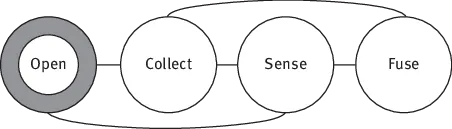
Innovation through Fusion is essential reading for individual innovators who would like to create the future; teams and organizations that need to craft radical or high-value innovations (especially across industries or organizational silos); and leaders concerned about declining returns on innovation efforts and uncertain about organizational survival in a disruptive world. The author provides a new model of lateral innovation—useful both as an innovation process and as a framework to assess your lateral innovation capabilities. The book is replete with value-creation examples of lives saved, billions of dollars of savings/growth, and new products, services, and companies, as well as stories of leading lateral innovators—who they are and how they succeeded.
“The most innovative solutions to problems have come from the cross-pollination of fields.”
— Neil deGrasse Tyson, astrophysicist1
“Innovation opportunities going forward will be at the cusps of different disciplines — biology and computer science, information technology and health care, semiconductors and medicine.”
— Richard Newton, former Dean of Engineering, University of California, Berkeley2
“Technology alone is not enough. It’s technology married with the liberal arts, married with the humanities, that yields us the results that make our hearts sing.”
— Steve Jobs3
Video
https://youtu.be/8gXa_YNy2bQ
In science, the fusion of two nuclei into a new, combined nucleus releases a massive amount of energy (nuclear fusion). Likewise, a fusion in business, technology, and the arts can release a massive amount of value and create whole new companies, industries, and human capabilities. But how?
Such fusions took place in the first half of the 15th century in Florence, Italy — a place well-known for architecture and art, piazzas and cafés, walkways and topiaries — propelled by a family that possessed and grew a business, political, and royal dynasty. Their influence spread throughout Europe and they provided support for gifted individuals who cross-fertilized ideas and inventions across business, science/technology, and the arts. The family was the Medici. The “mash-ups” that ensued from collecting, supporting, connecting, and engaging these gifted individuals produced an explosion of innovation at the intersections of their fields (Johansson, 2006, see Figure 1.1).
Figure 1.1: Art, technology, and business were the building-blocks of innovation during the Renaissance and now.
The Medici and similar families fostered the birth of the Italian Renaissance.
Today’s renaissance is fostered more democratically and electronically, fueled by information technology, communication, and globalization. As we’ve seen in past eras of creative productivity, fertile ground for high-value innovation lies in the spaces between domains of industry, country, field, function, social class, and more.
“The renaissance man,” supported by the Medici or other patrons, was a widely educated person across multiple domains. Today, we educate ourselves in functional silos with an industrial-age education system for jobs that may not exist in the future. However, with today’s mashed-up global economies and societies, a wealth of information at our Googling fingertips, and diverse sources of capital to launch good ideas into the marketplace, more and more of us are becoming cross-domain innovators and founders in a new renaissance that is surpassing the industrial revolution. It’s a new renaissance.
Martine Rothblatt (formerly Martin) is a good example. Martine combined satellite technology and radio service (completely separate technologies and industries at the time) into Sirius Satellite Radio, which became Sirius XM Holdings, with a market capitalization of $24Bn. Without a background in drug development, but with a feverish desire to save her daughter’s life, Martine also founded United Therapeutics to finish developing a shelved drug that could save her. UT now has a market capitalization over $6Bn, and Martine is one of the 25 highest-paid CEOs in the world. More importantly, her daughter’s life was saved — as were many others — by reaching outside her field, connecting, creating, and building — something the original drug-development corporation wouldn’t do.
Are there others like Martine who reach outside a field, industry, or company, make new connections, and create surprising value, surpassing today’s corporations? How do they do it? Can they do so within corporate contexts or only from outside? Why don’t others in the same circumstances create what they create (see Figure 1.2)?
Figure 1.2: Why do some “climb to new heights” and some do not?.
Throughout this book you will meet successful fusioneers in all types of pursuits. As a first step in our journey (Figure 1.2) toward answering these questions of who, how, where, and why, the chapters in this book contain inspiration and insights from journeys of new-renaissance innovators and what they created, including:
The world’s first digital music deal (the first contract between the music and mobile phone industries), which helped create a $2 billion market for ringtones.4 The same innovator also created Nokia Life Tools (another innovation based on fusion), which served 125 million of the world’s poor consumers with mobile “high-tech.”
“One of the 100 Most Innovative Firms in the World” (according to CIO Magazine), founded by an artist and quantum chemist, now a leading corporate anthropologist.
An advanced biopolymer cancer-treatment device that uses a design from the pocket watch, developed in 1893.
The highest 10-meter dive score in Olympic history, achieved through a fusion of athletics and mathematical modeling.
A billion-dollar+ company serving fast food in a notoriously “laid-back” country.
Silk fiber-injected vaccines aimed at bringing polio prevention to millions in the developing world — without refrigeration.
Harvard’s most popular course, taught by a squash champion turned positive psychologist pursuing the science of happiness.
“One of the 25 Coolest Companies in America” (according to Fortune Magazine), founded by a Time/Life/National Geographic photographer and big-data author.
Better lives for 450,000 people through a fusion of social programs and education, social castes, and rich and poor, with and without disabilities, led by a nun-cum-school-principal.
In fact, I am writing this chapter with a product that illustrates the value of fusion—an integration that transcends its pieces. When first introduced, users complained loudly about how Microsoft Word was not an advance over WordStar or WordPerfect — likewise PowerPoint over Harvard Graphics, Excel over Lotus 1–2–3, and Outlook over Lotus Notes. However, Microsoft Office did something far better than all the others. It seamlessly integrated words, pictures, numbers, and communication in a way people wanted. The integrated suite now dominates markets formerly held by siloed specialists (see Figure 1.3).
Figure 1.3: Microsoft Windows won ov...
Table of contents
Title Page
Copyright
Contents
Praise
Acknowledgments
Introduction
Part 1: Innovating How We Innovate
Part 2: Stories of Outward Openness
Part 3: Stories of Inward Openness
Part 4: Stories of Collecting
Part 5: Stories of Sensing
Part 6: Stories of Fusing
Part 7: Your Journey
Index
Frequently asked questions
Yes, you can cancel anytime from the Subscription tab in your account settings on the Perlego website. Your subscription will stay active until the end of your current billing period. Learn how to cancel your subscription
No, books cannot be downloaded as external files, such as PDFs, for use outside of Perlego. However, you can download books within the Perlego app for offline reading on mobile or tablet. Learn how to download books offline
Perlego offers two plans: Essential and Complete
Essential is ideal for learners and professionals who enjoy exploring a wide range of subjects. Access the Essential Library with 800,000+ trusted titles and best-sellers across business, personal growth, and the humanities. Includes unlimited reading time and Standard Read Aloud voice.
Complete: Perfect for advanced learners and researchers needing full, unrestricted access. Unlock 1.5M+ books across hundreds of subjects, including academic and specialized titles. The Complete Plan also includes advanced features like Premium Read Aloud and Research Assistant.
Both plans are available with monthly, semester, or annual billing cycles.
We are an online textbook subscription service, where you can get access to an entire online library for less than the price of a single book per month. With over 1.5 million books across 990+ topics, we’ve got you covered! Learn about our mission
Look out for the read-aloud symbol on your next book to see if you can listen to it. The read-aloud tool reads text aloud for you, highlighting the text as it is being read. You can pause it, speed it up and slow it down. Learn more about Read Aloud
Yes! You can use the Perlego app on both iOS and Android devices to read anytime, anywhere — even offline. Perfect for commutes or when you’re on the go. Please note we cannot support devices running on iOS 13 and Android 7 or earlier. Learn more about using the app
Yes, you can access Innovation through Fusion by C. J. Meadows,CJ Meadows in PDF and/or ePUB format, as well as other popular books in Business & Business General. We have over 1.5 million books available in our catalogue for you to explore.