Shadowing is a theoretically and empirically well-examined method to develop L2 learners' listening comprehension (input effect); enhance their subvocal rehearsal mechanism in the phonological working memory for learning new words, formula, and constructions (practice effect); simulate some stages of speech production (output effect); and develop metacognitive monitoring and control by their executive working memory (monitoring effect). In Japan and some other Asian countries, shadowing is a well-recognized, popular method of learning English and Japanese as L2, and this book offers the chance for anyone new to this method to benefit. Through the research contained within this book, readers will be armed with detailed and useful accounts of the four effects above (i.e. input, practice, output, and monitoring effects) from a theoretical and empirical viewpoint.
eBook - ePub
Shadowing as a Practice in Second Language Acquisition
Connecting Inputs and Outputs
- 200 pages
- English
- ePUB (mobile friendly)
- Available on iOS & Android
eBook - ePub
About this book
Trusted by 375,005 students
Access to over 1.5 million titles for a fair monthly price.
Study more efficiently using our study tools.
Information
1What is shadowing?
1.1 What is shadowing?
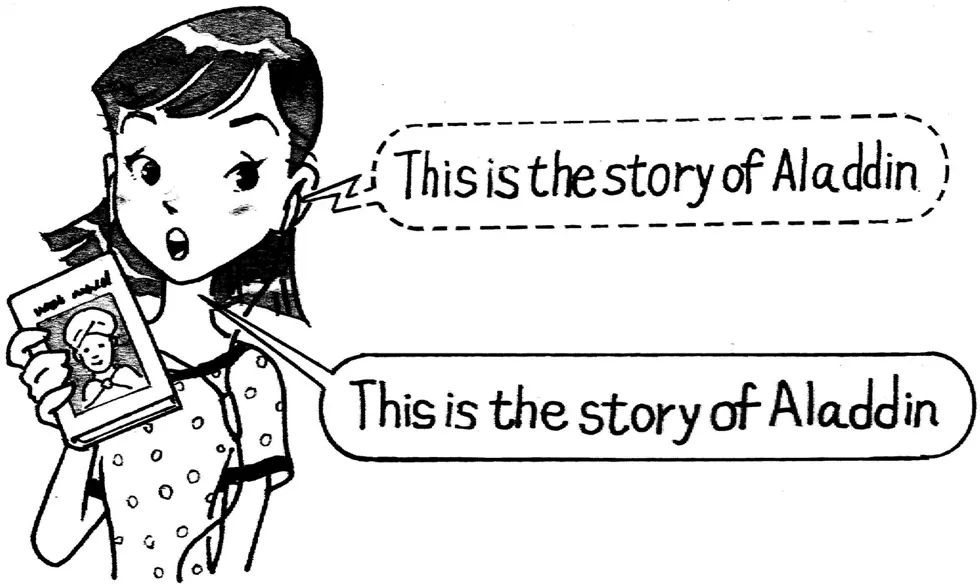
Shadowing has usually been considered a technique for improving listening ability in second language (L2), wherein learners track the heard speech and repeat it back verbally in as exact a manner as possible while continuing to listen attentively to incoming messages (see Tamai, 2005, p. 34; Hamada, 2017). An image of the technique is shown in Figure 1.1.
Shadowing was originally used as an experimental method in phonetics, particularly auditory phonetics on “selective attention,” to explore the mechanism underlying perception of human speech sounds. Typically, in such an experiment, the participants wear headphones while listening to two different messages – one in their right ear and one in their left – and are instructed to shadow (i.e., repeat verbally) the speech from the specified ear. Figure 1.2 depicts the typical shadowing experiment in auditory phonetics.
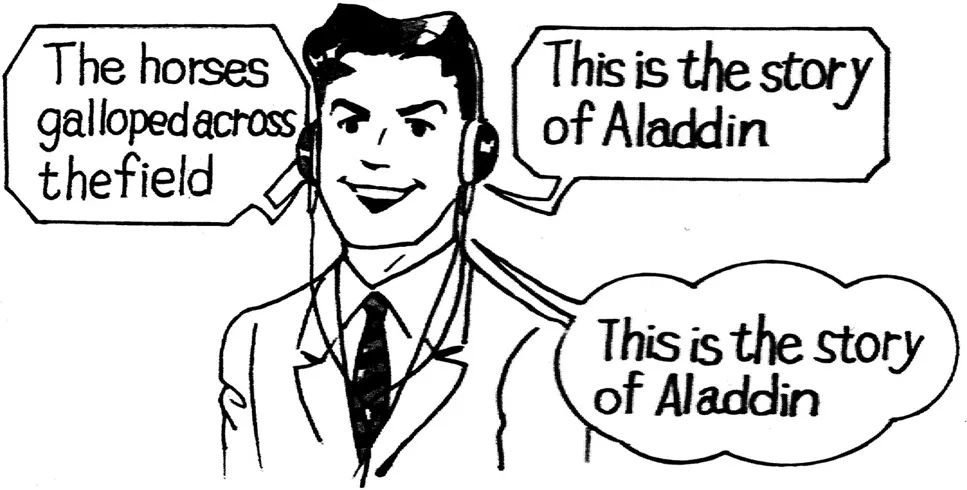
The purpose of such an experiment is to examine how shadowing performance is influenced by changes in the semantic content or sound quality (e.g., speed, pitch, loudness) of the message in the unattended ear. A typical finding from such experiments is that people do not completely ignore the unattended speech; instead, they process it roughly in a “gestalt-like” or holistic manner, even when focusing on shadowing the target message (Cherry, 1966; Kadota, 2007).
More practically, shadowing is used as a basic training method for simultaneous interpreters at schools of interpretation; beginner interpreters must first learn to listen and speak simultaneously before they begin to translate from one language to another.
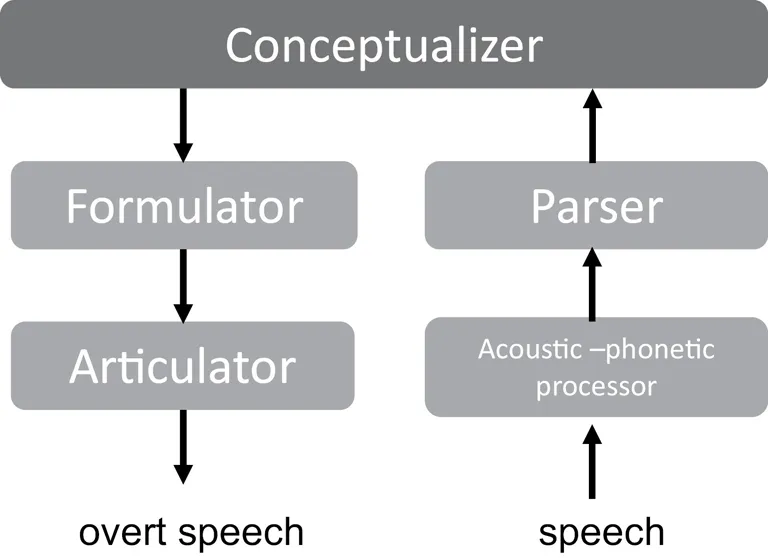
Recently, shadowing has been acknowledged as an effective task for enhancing L2 acquisition or learning, mainly by developing listening comprehension, and is widely employed by numerous language teachers and educators in Japan for that reason (Kadota, 2007). Thus its widespread use is because one of the more urgent problems for many learners of English as a second or foreign language in Japan – and in any other non-English-speaking country – is finding a good way of improving interactive oral language ability, such as listening and speaking. More specifically, in daily communication, we must almost simultaneously perform three tasks: 1) understand the message addressed to us; 2) conceptualize the response; and 3) respond to the message. And this multi-processing requires much more cognitive load than a single word processing, particularly for L2 learners. This can be well shown in Figure 1.3, a simplified diagram based on Levelt’s (1993) model of speech comprehension and production.
The following is an example illustrating this multiple processing in our daily communication (see Figure 1.4):
Speaker A:We have a party at my friend’s house next Saturday.Speaker B:Sorry, on that day I have plans to go out for dinner with my wife.
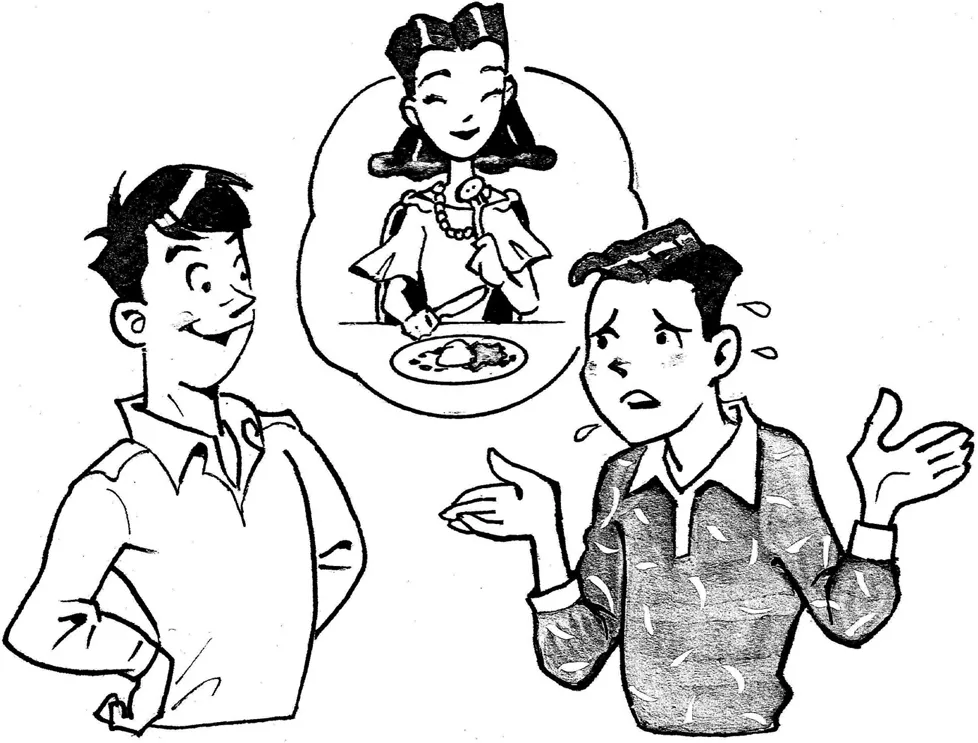
In responding to Speaker A, Speaker B must perform all three of the aforementioned tasks almost simultaneously and in a short period of time after Speaker A’s utterance. This shows how quick or automatic responses are highly necessary in real-time communication. Shadowing is assumed to be a good method of promoting the development of such automatic responses in L2 because it forces learners to practice the dual task of input speech perception and output production. Indeed, this cognitive duality of shadowing appears to create a situation similar to real-time human communication.
Relatedly, it is not so uncommon to find ourselves repeating in our mind the name of a person we just met or the name of a restaurant we have just entered in order to store them in our long-term memory. Although shadowing does not refer to this use of the “internal voice,” or subvocalization, but rather the practice of vocalized repetition, it does share some common features with subvocal speech for memorization. Furthermore, it seems very effective in promoting explicit and implicit memory formation of new words, chunks, and grammatical constructions.
Although English and Japanese are phonetically distinct languages both in terms of segmental (i.e., vowels and consonants) and nonsegmental sounds (i.e., speech rhythm, intonation), it is expected that shadowing can help Japanese learners overcome the many problems that they would encounter in L2 English acquisition.
1.2A sample of L2 shadowing
Again, shadowing involves repeating speech immediately after hearing it – in other words, it is the online, immediate process of perceiving speech and repeating it back. The following is an example dialog included in a shadowing textbook for beginners (Tamai, 2008, p. 40):
B is talking to A (Chris) who is driving a car:A:Wow, Chris, look at that house.B:Which one? I just can’t look away.A:There, the one on top of the hill. It has white and blue roof tiles. That’s cute.Could you get one like that for me?B:Of course, honey, if you could wait about 20 years. Or would you like to marry arich guy?
Figures 1.5 and 1.6 depict the sound wave and the results of a loudness and pitch analysis of the above sentence in bold (i.e., “There, the one on top of the hill.”) using Praat, which is a free software for acoustic phoneticians (Kadota, 2015, pp. 69, 338).


As we can see, the duration of the utterance of “There, the one on top of the hill” is almost the same between the original and shadowed speech, at 2.7s and 2.5s, respectively. The patterns of loudness (dB) change do not differ much either. However, the Hz ranges of pitch change differed remarkably: In the original CD speech, there is far greater intonational up-and-down variety in the Hz range than in the L2 shadowed speech. Interestingly, the very narrow pitch range of the latter speech is common to all Japanese learners of English, no matter how much conscious effort they put into imitating the original speech in their shadowing.
1.3Repeating, oral reading, and parallel reading
There are several L2 learning tasks related to shadowing. The following are perhaps the most frequently used in the classroom.
1.3.1Repeating
Repeating, like shadowing, is an oral repetition task often used in L2 learning classrooms; it involves having learners first listen to a message and then repeat it back during a sufficient pause (see Figure 1.7). It is often considered similar or essentially the same as shadowing.
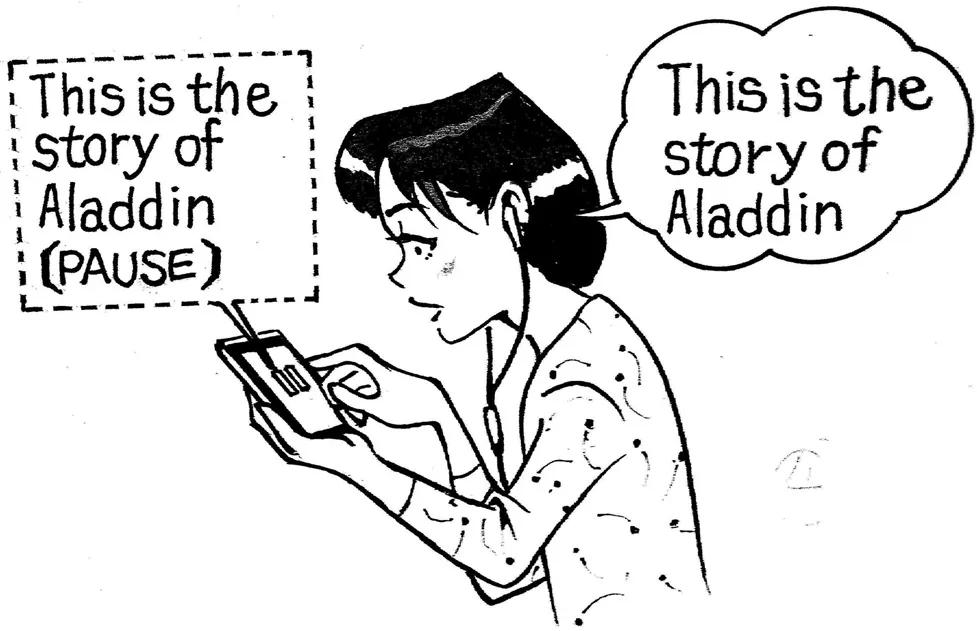
However, Kadota (2007) suggested that, from a psycholinguistic viewpoint, they are cognitively different: Shadowing is assumed to be the “online” or immediate process of repeating speech, and due to this time pressure, learners must always focus on the input speech sounds without thinking excessively about their grammatical structures or meaning (at least at the beginning level).
In contrast, during repeating, learners are given sufficient time to repeat the input speech during the provided silent pause, which ostensibly makes this process “off-line.” Thus, it is believed...
Table of contents
- Cover
- Half Title
- Series Information
- Title Page
- Copyright Page
- Contents
- Figures
- Tables
- Preface
- 1 What is shadowing?
- 2 Shadowing for L2 listening comprehension
- 3 Shadowing for promoting L2 learnability
- 4 Shadowing for L2 speech production
- 5 Metacognitive monitoring and control
- 6 Establishing a new concept of practice in L2 acquisition
- References
- Index
Frequently asked questions
Yes, you can cancel anytime from the Subscription tab in your account settings on the Perlego website. Your subscription will stay active until the end of your current billing period. Learn how to cancel your subscription
No, books cannot be downloaded as external files, such as PDFs, for use outside of Perlego. However, you can download books within the Perlego app for offline reading on mobile or tablet. Learn how to download books offline
We are an online textbook subscription service, where you can get access to an entire online library for less than the price of a single book per month. With over 1.5 million books across 990+ topics, we’ve got you covered! Learn about our mission
Look out for the read-aloud symbol on your next book to see if you can listen to it. The read-aloud tool reads text aloud for you, highlighting the text as it is being read. You can pause it, speed it up and slow it down. Learn more about Read Aloud
Yes! You can use the Perlego app on both iOS and Android devices to read anytime, anywhere — even offline. Perfect for commutes or when you’re on the go.
Please note we cannot support devices running on iOS 13 and Android 7 or earlier. Learn more about using the app
Please note we cannot support devices running on iOS 13 and Android 7 or earlier. Learn more about using the app
Yes, you can access Shadowing as a Practice in Second Language Acquisition by Shuhei Kadota in PDF and/or ePUB format, as well as other popular books in Languages & Linguistics & Linguistics. We have over 1.5 million books available in our catalogue for you to explore.