
Wireless Power Transmission for Sustainable Electronics
COST WiPE - IC1301
- English
- ePUB (mobile friendly)
- Available on iOS & Android
Wireless Power Transmission for Sustainable Electronics
COST WiPE - IC1301
About this book
Provides a collection of works produced by COST Action IC1301 with the goal of achieving significant advances in the field of wireless power transmission
This bookconstitutes together information from COST Action IC1301, a group of academic and industry experts seeking to align research efforts in the field of wireless power transmission (WPT). It begins with a discussion of backscatter as a solution for Internet of Things (IoT) devices and goes on to describe ambient backscattering sensors that use FM broadcasting for low cost and low power wireless applications. The book also explores localization of passive RFID tags and augmented tags using nonlinearities of RFID chips. It concludes with a review of methods of electromagnetic characterization of textile materials for the development of wearable antennas.
Wireless Power Transmission for Sustainable Electronics: COST WiPE - IC1301 covers textile-supported wireless energy transfer, and reviews methods for the electromagnetic characterization of textile materials for the development of wearable antennas. It also looks at: backscatter RFID sensor systems for remote health monitoring; simultaneous localization (of robots and objects) and mapping (SLAM); autonomous system of wireless power distribution for static and moving nodes of wireless sensor networks; and more.
- Presents techniques for smart beam-forming for "on demand" wireless power transmission (WPT)
- Discusses RF and microwave energy harvesting for space applications
- Describes miniaturized RFID transponders for object identification and sensing
Wireless Power Transmission for Sustainable Electronics: COST WiPE - IC1301 is an excellent book for both graduate students and industry engineers involved in wireless communications and power transfer, and sustainable materials for those fields.
Tools to learn more effectively

Saving Books

Keyword Search

Annotating Text

Listen to it instead
Information
1
Textile‐Supported Wireless Energy Transfer
1.1 Introduction
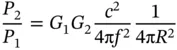
- In wired transmission, a plane wave is propagating with constant amplitude in a single direction (along a transmission line). Attenuation is therefore mainly caused by losses in metallic conductors and dielectrics.
- In wireless transmission, antennas radiate a spherical wave, which intensity is reciprocally proportional to the distance, to all directions in space. Attenuation caused by losses can be usually neglected.
- Whereas reciprocal proportion between the field intensity and the distance cannot be influenced, energy propagation can be limited to a selected subspace, and efficiency of the wireless energy transfer can be improved that way. If a half‐wavelength dipole is replaced by a quarter‐wavelength monopole (Figure 1.1), only the half‐space above the reflector is filled‐in by energy (radiation resistance of the antenna is half‐sized), and transmission can be improved for +3 dB.

- — The conductive shield of a coaxial line is projected into the plane;
- — The inner dielectric insulator is projected into the coating;
- — The conductive core is going to vanish.
- — Play the role of a microwave substrate for manufacturing transmission lines, antennas, and electronic circuits.
- — Be used for thermal insulation of vehicle interior.
- — Attenuate vibrations and other mechanical phenomena.
- — Provide functional properties of textile components (covers of seats, textile upholstery, etc.).
Table of contents
- Cover
- Table of Contents
- List of Figures
- List of Contributors
- Preface
- Acknowledgments
- 1 Textile‐Supported Wireless Energy Transfer
- 2 A Review of Methods for the Electromagnetic Characterization of Textile Materials for the Development of Wearable Antennas
- 3 Smart Beamforming Techniques for “On Demand” WPT
- 4 Backscatter a Solution for IoT Devices
- 5 Ambient FM Backscattering Low‐Cost and Low‐Power Wireless RFID Applications
- 6 Backscatter RFID Sensor System for Remote Health Monitoring
- 7 Robotics Meets RFID for Simultaneous Localization (of Robots and Objects) and Mapping (SLAM) – A Joined Problem
- 8 From Identification to Sensing: Augmented RFID Tags
- 9 Autonomous System of Wireless Power Distribution for Static and Moving Nodes of Wireless Sensor Networks
- 10 Smartphone Reception of Microwatt, Meter to Kilometer Range Backscatter Resistive/Capacitive Sensors with Ambient FM Remodulation and Selection Diversity
- 11 Design of an ULP‐ULV RF‐Powered CMOS Front‐End for Low‐Rate Autonomous Sensors
- 12 Rectenna Optimization Guidelines for Ambient Electromagnetic Energy Harvesting
- Index
- End User License Agreement
Frequently asked questions
- Essential is ideal for learners and professionals who enjoy exploring a wide range of subjects. Access the Essential Library with 800,000+ trusted titles and best-sellers across business, personal growth, and the humanities. Includes unlimited reading time and Standard Read Aloud voice.
- Complete: Perfect for advanced learners and researchers needing full, unrestricted access. Unlock 1.4M+ books across hundreds of subjects, including academic and specialized titles. The Complete Plan also includes advanced features like Premium Read Aloud and Research Assistant.
Please note we cannot support devices running on iOS 13 and Android 7 or earlier. Learn more about using the app