'This is the story of how your life shapes your brain, and how your brain shapes your life.'
Locked in the silence and darkness of your skull, the brain fashions the rich narratives of your reality and your identity.
Join renowned neuroscientist David Eagleman for a journey into the questions at the heart of our existence. What is reality? Who are 'you'? How do you make decisions? Why does your brain need other people? How is technology poised to change what it means to be human?
In the course of his investigations, Eagleman guides us through the world of extreme sports, criminal justice, facial expressions, genocide, brain surgery, gut feelings, robotics, and the search for immortality. Strap in for a whistle-stop tour into the inner cosmos. In the infinitely dense tangle of billions of brain cells and their trillions of connections, something emerges that you might not have expected to see in there: you.
- 304 pages
- English
- ePUB (mobile friendly)
- Available on iOS & Android
eBook - ePub
About this book
Trusted by 375,005 students
Access to over 1.5 million titles for a fair monthly price.
Study more efficiently using our study tools.
Information
Subtopic
NeuroscienceIndex
Biological Sciences1
WHO AM I?
Although neuroscience is my daily routine, I’m still in awe every time I hold a human brain. After you take into account its substantial weight (an adult brain weighs in at three pounds), its strange consistency (like firm jelly), and its wrinkled appearance (deep valleys carving a puffy landscape) – what’s striking is the brain’s sheer physicality: this hunk of unremarkable stuff seems so at odds with the mental processes it creates.
Our thoughts and our dreams, our memories and experiences all arise from this strange neural material. Who we are is found within its intricate firing patterns of electrochemical pulses. When that activity stops, so do you. When that activity changes character, due to injury or drugs, you change character in lockstep. Unlike any other part of your body, if you damage a small piece of the brain, who you are is likely to change radically. To understand how this is possible, let’s start at the beginning.
An entire life, lavishly colored with agonies and ecstasies, took place in these three pounds.

Born unfinished
At birth we humans are helpless. We spend about a year unable to walk, about two more before we can articulate full thoughts, and many more years unable to fend for ourselves. We are totally dependent on those around us for our survival. Now compare this to many other mammals. Dolphins, for instance, are born swimming; giraffes learn to stand within hours; a baby zebra can run within forty-five minutes of birth. Across the animal kingdom, our cousins are strikingly independent soon after they’re born.
On the face of it, that seems like a great advantage for other species – but in fact it signifies a limitation. Baby animals develop quickly because their brains are wiring up according to a largely preprogrammed routine. But that preparedness trades off with flexibility. Imagine if some hapless rhinoceros found itself on the Arctic tundra, or on top of a mountain in the Himalayas, or in the middle of urban Tokyo. It would have no capacity to adapt (which is why we don’t find rhinos in those areas). This strategy of arriving with a pre-arranged brain works inside a particular niche in the ecosystem – but put an animal outside of that niche, and its chances of thriving are low.
In contrast, humans are able to thrive in many different environments, from the frozen tundra to the high mountains to bustling urban centers. This is possible because the human brain is born remarkably unfinished. Instead of arriving with everything wired up – let’s call it “hardwired” – a human brain allows itself to be shaped by the details of life experience. This leads to long periods of helplessness as the young brain slowly molds to its environment. It’s “livewired”.
Childhood pruning: exposing the statue in the marble
What’s the secret behind the flexibility of young brains? It’s not about growing new cells – in fact, the number of brain cells is the same in children and adults. Instead, the secret lies in how those cells are connected.
At birth, a baby’s neurons are disparate and unconnected, and in the first two years of life they begin connecting up extremely rapidly as they take in sensory information. As many as two million new connections, or synapses, are formed every second in an infant’s brain. By age two, a child has over one hundred trillion synapses, double the number an adult has.
LIVEWIRING
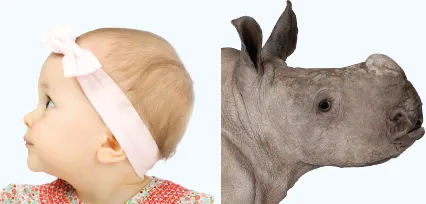
Many animals are born genetically preprogrammed, or “hardwired” for certain instincts and behaviors. Genes guide the construction of their bodies and brains in specific ways that define what they will be and how they’ll behave. A fly’s reflex to escape in the presence of a passing shadow; a robin’s preprogrammed instinct to fly south in the winter; a bear’s desire to hibernate; a dog’s drive to protect its master: these are all examples of instincts and behaviors that are hardwired. Hardwiring allows these creatures to move as their parents do from birth, and in some cases to eat for themselves and survive independently.
In humans the situation is somewhat different. The human brain comes into the world with some amount of genetic hardwiring (for example, for breathing, crying, suckling, caring about faces, and having the ability to learn the details of their native language). But compared to the rest of the animal kingdom, human brains are unusually incomplete at birth. The detailed wiring diagram of the human brain is not preprogrammed; instead, genes give very general directions for the blueprints of neural networks, and world experience fine-tunes the rest of the wiring, allowing it to adapt to the local details.
The human brain’s ability to shape itself to the world into which it’s born has allowed our species to take over every ecosystem on the planet and begin our move into the solar system.
It has now reached a peak and has far more connections than it will need. At this point, the blooming of new connections is supplanted by a strategy of neural “pruning”. As you mature, 50% of your synapses will be pared back.
Which synapses stay and which go? When a synapse successfully participates in a circuit, it is strengthened; in contrast, synapses weaken if they aren’t useful, and eventually they are eliminated. Just like paths in a forest, you lose the connections that you don’t use.
In a sense, the process of becoming who you are is defined by carving back the possibilities that were already present. You become who you are not because of what grows in your brain, but because of what is removed.
Throughout our childhoods, our local environments refine our brain, taking the jungle of possibilities and shaping it back to correspond to what we’re exposed to. Our brains form fewer but stronger connections.
In a newborn brain, neurons are relatively unconnected to one another. Over the first two to three years, the branches grow and the cells become increasingly connected. After that, the connections are pruned back, becoming fewer and stronger in adulthood.

As an example, the language that you’re exposed to in infancy (say, English versus Japanese) refines your ability to hear the particular sounds of your language, and worsens your capacity to hear the sounds of other languages. That is, a baby born in Japan and a baby born in America can hear and respond to all the sounds in both languages. Through time, the baby raised in Japan will lose the ability to distinguish between, say, the sounds of R and L, two sounds that aren’t separated in Japanese. We are sculpted by the world we happen to drop into.
Nature’s gamble
Over our protracted childhood, the brain continually pares back its connections, shaping itself to the particulars of its environment. This is a smart strategy to match a brain to its environment – but it also comes with risks.
If developing brains are not given the proper, “expected” environment – one in which a child is nurtured and looked after – the brain will struggle to develop normally. This is something the Jensen family from Wisconsin has experienced first-hand. Carol and Bill Jensen adopted Tom, John, and Victoria when the children were four years old. The three children were orphans who had, until their adoption, endured appalling conditions in state-run orphanages in Romania – with consequences for their brain development.
When the Jensens picked up the children and took a taxi out of Romania, Carol asked the taxi driver to translate what the children were saying. The taxi driver explained they were speaking gibberish. It was not a known language; starved of normal interaction, the children had developed a strange creole. As they’ve grown up, the children have had to deal with learning disabilities, the scars of their childhood deprivation.
Tom, John, and Victoria don’t remember much about their time in Romania. In contrast, someone who remembers the institutions vividly is Dr. Charles Nelson, Professor of Pediatrics at Boston Children’s Hospital. He first visited these institutions in 1999. What he saw horrified him. Young children were kept in their cribs, with no sensory stimulation. There was a single caretaker for every fifteen children, and these workers were instructed not to pick the children up or show them affection in any way, even when they were crying – the concern was that such displays of affection would lead to the children wanting more, an impossibility with the limited staffing. In this context, things were as regimented as possible. Children were lined up on plastic pots for toileting. Everyone got the same haircut, regardless of gender. They were dressed alike, fed on schedule. Everything was mechanized.
Children whose cries went unanswered soon learned not to cry. The children were not held and were not played with. Although they had their basic needs met (they were fed, washed and clothed), the infants were deprived of emotional care, support, and any kind of stimulation. As a result, they developed “indiscriminate friendliness”. Nelson explains that he’d walk into a room and be surrounded by little kids he’d never seen before – and they’d want to jump into his arms and sit on his lap or hold his hand or walk off with him. Although this sort of indiscriminate behavior seems sweet at first glance, it’s a coping strategy of neglected children, and it goes hand-in-hand with long-term attachment issues. It is a hallmark behavior of children who have grown up in an institution.
Shaken by the conditions they were witnessing, Nelson and his team set up the Bucharest Early Intervention Program. They assessed 136 children, aged six months to three years, who had been living in institutions from birth. First, it became clear that the children had IQs in the sixties and seventies, compared to an average of one hundred. The children showed signs of under-developed brains and their language was very delayed. When Nelson used electroencephalography (EEG) to measure the electrical activity in these children’s brains, he found they had dramatically reduced neural activity.
ROMANIA’S ORPHANAGES

In 1966, to increase the population and the work force, Romanian president Nicolae Ceauşescu banned contraception and abortion. State gynecologists known as “menstrual police” examined women of childbearing age to ensure they were producing enough offspring. A “celibacy tax” was levied on families who had fewer than five children. The birth rate skyrocketed.
Many poor families couldn’t afford to care for their children – and so they gave them over to state-run institutions. In turn, the state rolled out more institutions to meet the soaring numbers. By 1989, when Ceausescu was ousted, 170,000 abandoned children resided in institutions.
Scientists soon revealed the consequences of an institutional upbringing on brain development. And those studies influenced government policy. Over the years, most of the Romanian orphans have been returned t...
Table of contents
- Cover Page
- Title Page
- Copyright Page
- Contents
- Introduction
- 1 WHO AM I?
- 2 WHAT IS REALITY?
- 3 Who’s in Control?
- 4 How do I Decide?
- 5 DO I Need You?
- 6 Who Will we Be?
- Acknowledgments
- Endnotes
- Glossary
- Image Credits
Frequently asked questions
Yes, you can cancel anytime from the Subscription tab in your account settings on the Perlego website. Your subscription will stay active until the end of your current billing period. Learn how to cancel your subscription
No, books cannot be downloaded as external files, such as PDFs, for use outside of Perlego. However, you can download books within the Perlego app for offline reading on mobile or tablet. Learn how to download books offline
Perlego offers two plans: Essential and Complete
- Essential is ideal for learners and professionals who enjoy exploring a wide range of subjects. Access the Essential Library with 800,000+ trusted titles and best-sellers across business, personal growth, and the humanities. Includes unlimited reading time and Standard Read Aloud voice.
- Complete: Perfect for advanced learners and researchers needing full, unrestricted access. Unlock 1.5M+ books across hundreds of subjects, including academic and specialized titles. The Complete Plan also includes advanced features like Premium Read Aloud and Research Assistant.
We are an online textbook subscription service, where you can get access to an entire online library for less than the price of a single book per month. With over 1.5 million books across 990+ topics, we’ve got you covered! Learn about our mission
Look out for the read-aloud symbol on your next book to see if you can listen to it. The read-aloud tool reads text aloud for you, highlighting the text as it is being read. You can pause it, speed it up and slow it down. Learn more about Read Aloud
Yes! You can use the Perlego app on both iOS and Android devices to read anytime, anywhere — even offline. Perfect for commutes or when you’re on the go.
Please note we cannot support devices running on iOS 13 and Android 7 or earlier. Learn more about using the app
Please note we cannot support devices running on iOS 13 and Android 7 or earlier. Learn more about using the app
Yes, you can access The Brain by David Eagleman in PDF and/or ePUB format, as well as other popular books in Biological Sciences & Neuroscience. We have over 1.5 million books available in our catalogue for you to explore.