Electromagnetic induction (EM) techniques are used in recharge/discharge studies by providing measurements of the apparent electrical conductivity of soil profiles. This booklet provides a summary of EM techniques that are most widely used. A number of case studies are presented which demonstrate the applications of the techniques to field problems.
- 20 pages
- English
- ePUB (mobile friendly)
- Available on iOS & Android
eBook - ePub
Electromagnetic Induction Techniques - Part 8
About this book
Trusted by 375,005 students
Access to over 1 million titles for a fair monthly price.
Study more efficiently using our study tools.
Information
ABSTRACT
Groundwater recharge and discharge are two components of the hydrological cycle that are difficult to quantify. However, their measurement is often important in salinity investigations and for the development of predictive models. A part of this problem is the time and cost involved in making sufficient direct measurements to cover the inherent spatial variability of soils and landscapes. Consequently, there is an increasing reliance being placed on more rapid indirect methods for interpolating between sites of detailed investigation. A number of geophysical techniques, originally designed for mineral exploration, are now being used for this purpose. In particular, electromagnetic induction (EM) is proving to be a rapid and useful tool in recharge/discharge studies by providing measurements of the apparent electrical conductivity (ECa) of soil profiles.
It should be emphasised at the outset that ECa does not provide a direct measure of soil water flux. Rather, it reflects the result of the combined interactions of soil texture, soluble salt content, water content, and clay mineralogy of a soil profile. One or more of these factors may dominate the value of ECa obtained in particular situations. However, as long as we are aware of that situation, an EM survey can provide a rational basis for more detailed and quantitative measurements of recharge/discharge, as well as the distribution of soluble salts in landscapes.
Here we provide a summary of the EM techniques that are most widely used. A number of case studies are presented which demonstrate the applications of the techniques to field problems.
1 THE ELECTRICAL CONDUCTIVITY OF A SOIL
The electrical conductivity of a soil sample is a function of the soil structure, texture and mineralogy, as well as its water content and salt content (Nadler and Frenkel 1980; Shainbergr et al. 1980).
Sauer et al. (1955) represented the electrical conductivity of a soil by a three element model consisting of:
1. Conduction through the soil solution
2. Conduction through or along the surfaces of particles in contact with one another, and
3. Conduction through alternating layers of particles and solution (Figure 1).
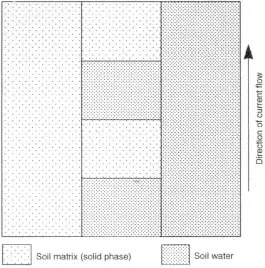
Figure 1. Three element model of electrical conductivity.
Nadler and Frenkel (1980) and Shainberg et al. (1980) have shown that when the electrical conductivity of the soil solution exceeds about 4 dS/m, the bulk soil conductivity (ECa) becomes directly proportional to the soil solution conductivity and may be approximated by
ECa = ECw. θv. T + ECs | (1) |
where ECwis the electrical conductivity of the soil solution, θv is the volumetric water content, T is the tortuosity, and ECs is the solid phase contribution to the apparent electrical conductivity.
This simple model has been validated by a range of empirical studies (e.g. Rhoades and Ingvalson 1971; Gupta and Hanks 1972). At low ECa values, however, the more sophisticated models of Sauer et al. (1955) and Rhoades et al. (1989) should be considered.
Electrical Conductivity of Soil Solution ECw
Pore water may be extracted from soil samples by a variety of centrifuge and non-polar liquid displacement techniques. However, these are time consuming and the more usual technique is to measure the electrical conductivity of a water extract of the soil (e.g. a 1:5 soil:water dilution) and then adjust that value for the initial soil water content.

Methods based on analyses of single ions (e.g. Cl) should be used with some caution because different salts have different electrical conductivities. It is a relatively uncommon situation to find just a single salt, such as NaCl, presenr in a soil solution alrhough there are siruarions where it has been shown to represent a very large proporrion of the soluble salts present (Johnston et al. 1982). NaCl, CaCl2, MgCI2, and Na2S04 have similar EC:concentration relationships, but MgS04, CaS04, and NaHC03 have lower EC values for equivalenr salr concenrrarions.
Volumetric water content (θv)
The paramerer θv is usually esrimared by multiplying the measured gravimertic warer content (grams of warer per gram of dry soil) by an assumed soil bulk density (g cm−3). Again, care needs ro be exercised in the choice o f values for bulk density as they may vary from as low as 1.15 g cm−3 to greater than 1.65 g cm–3 down a single profile.
Tortuosity (T)
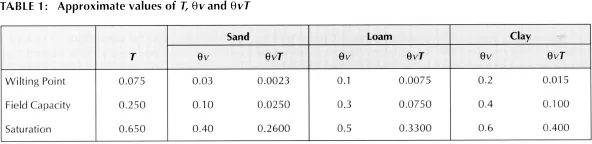
The tortuosity factor (0<T<1) is a function of the soil texture, structure and water content, and it is not easily measured. For a saturated soil it may be assumed to be constant at 0.65 (Penman 1940), and a linear relationship with water content is also often assumed (Johnston 1987). Table 1 provides a guide to commonly used values.
The parameter (T) represents the ratio of the length of the direct (straight line) path of an electric current through the soil, to the length of path the electric current must take as it travels through the interstitial solution. As the water content decreases, the path length for current flow increases, and hence the tortuosity decreases. The term ‘tortuosity’ is probably not particularly well chosen in the sense that a highly ‘tortuous’ path is represented by low values of T.
Solid phase conductivity (ECS)
The solid phase contribution to the total apparent electrical conductivity is due largely to the presence of exchangeable ions on the surface of clay particles (Nadler and Frenkel 1980). ECS can be estimated by extrapolating the linear portion of the ECa versus ECw relationship to ECw = 0. Rhoades (1981) carried out such an exercise for 12 Arizona and California soils, and found ECS to be well correlated with clay content. He determined the empirical relationship:
ECs = 0.0247 C − 0.0236 | (3) |
R2 = 94%
where C is the clay percentage and ECs has units of dS m−1.
If the component ECs is small in relation to the remainder of Equation 1, as is often the case in saturated systems, then (θvT)−1 is analogous to the formation factor (F) used by groundwater geophysicists (Park and Dickey 1989).
ECa = ECwF–1 | (4) |
Empirically derived values of F for a range of geological systems are given in most geophysical texts (e.g. Keller and Frischknecht 1966). However, these values generally pertain to consolidated rock materials, so for soils we prefer the less empirical approach embodied in Equation 1,
Relative effects of Equation 1 components
According to this model the apparent electrical conductivity of a soil will increase if the salt concentration of the soil solution, the volumetric water content, or the clay content of the soil increases. It will be noted that
salt concentration X water content = total salt
Hence, the use of ECa measurements for salinity surveys can also be appreciated (e.g. Williams and Baker 1982; Williams and Hoey 1987).
Using the conversion values for θv T and ECs discussed above, together with an ECw value of 5 dS m−1, the following approximate values of ECa could be expected (Table 2).
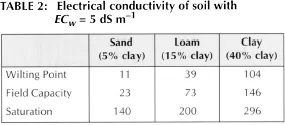
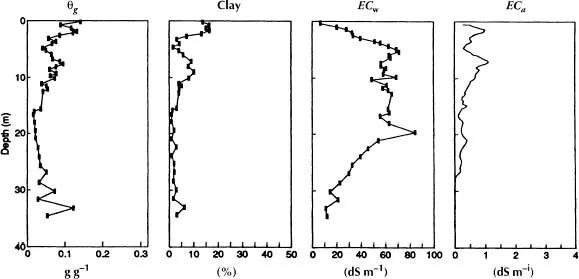
Figure 2. Profiles of measured soil properties.
Case study 1
Cook et al. (1992) measu...
Table of contents
- Cover
- Title
- Copyright
- Contents
- 1 The Electrical Conductivity of a Soil
Frequently asked questions
Yes, you can cancel anytime from the Subscription tab in your account settings on the Perlego website. Your subscription will stay active until the end of your current billing period. Learn how to cancel your subscription
No, books cannot be downloaded as external files, such as PDFs, for use outside of Perlego. However, you can download books within the Perlego app for offline reading on mobile or tablet. Learn how to download books offline
Perlego offers two plans: Essential and Complete
- Essential is ideal for learners and professionals who enjoy exploring a wide range of subjects. Access the Essential Library with 800,000+ trusted titles and best-sellers across business, personal growth, and the humanities. Includes unlimited reading time and Standard Read Aloud voice.
- Complete: Perfect for advanced learners and researchers needing full, unrestricted access. Unlock 1.4M+ books across hundreds of subjects, including academic and specialized titles. The Complete Plan also includes advanced features like Premium Read Aloud and Research Assistant.
We are an online textbook subscription service, where you can get access to an entire online library for less than the price of a single book per month. With over 1 million books across 990+ topics, we’ve got you covered! Learn about our mission
Look out for the read-aloud symbol on your next book to see if you can listen to it. The read-aloud tool reads text aloud for you, highlighting the text as it is being read. You can pause it, speed it up and slow it down. Learn more about Read Aloud
Yes! You can use the Perlego app on both iOS and Android devices to read anytime, anywhere — even offline. Perfect for commutes or when you’re on the go.
Please note we cannot support devices running on iOS 13 and Android 7 or earlier. Learn more about using the app
Please note we cannot support devices running on iOS 13 and Android 7 or earlier. Learn more about using the app
Yes, you can access Electromagnetic Induction Techniques - Part 8 by PG Cook,BG Williams in PDF and/or ePUB format, as well as other popular books in Technology & Engineering & Geology & Earth Sciences. We have over one million books available in our catalogue for you to explore.