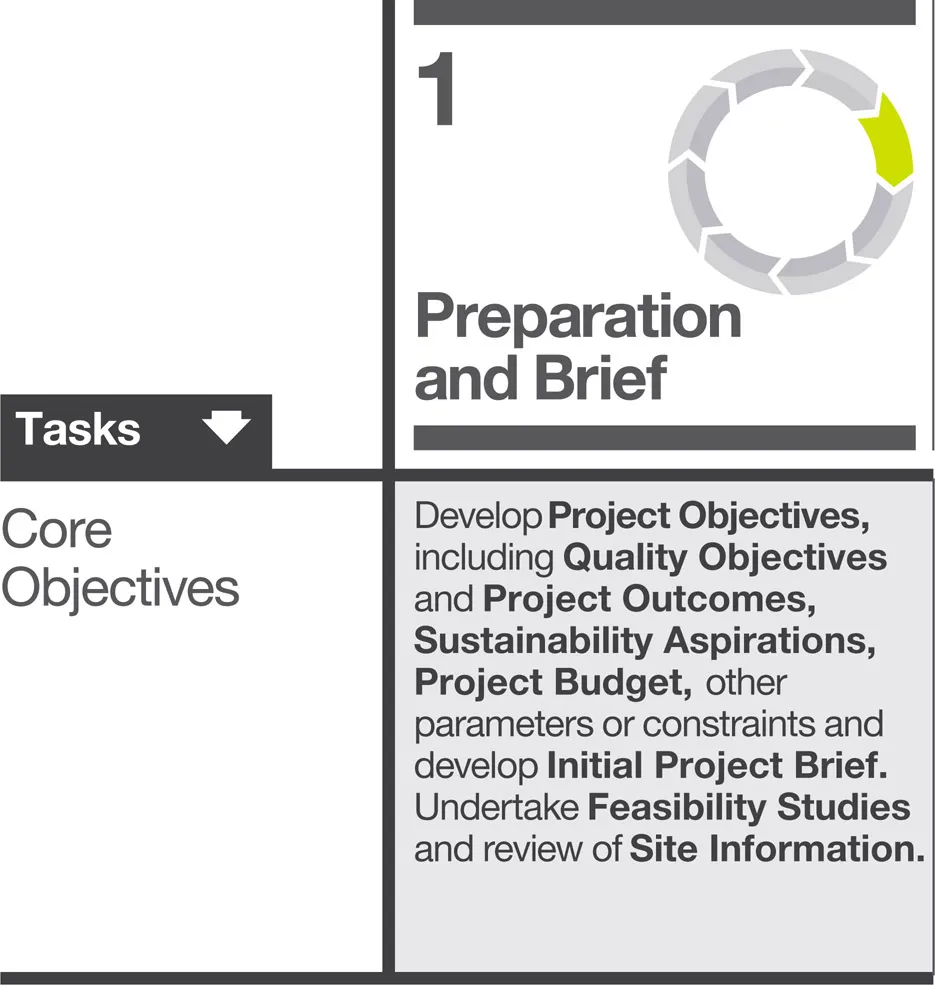
At this stage it is necessary to assemble a multidisciplinary project team with the right skills and attitude to address the sustainability goals. A willingness to share previous experience – good and bad – will contribute to delivering the best possible outcome. Transforming the needs established at Stage 0 into an understanding of the scale and relationship of types of spaces, their uses and the environmental conditions to be achieved will be necessary to inform the sustainable design progression and massing at Stage 2.
Considering Sustainability Aspirations in the Project Outcomes
Assembling Site Information – including specialist surveys
How does sustainability contribute to achieving Quality Objectives?
What are the implications for the Project Budget?
What are the implications for the Project Programme?
What are the implications for procurement?
How does sustainability impact on Key Support Tasks at Stage 1?
What considerations are important in assembling a committed project team?
What are the Sustainability Checkpoints at Stage 1?
What are the Information Exchanges at Stage 1?
What are the UK Government Information Exchanges at Stage 1?
Introduction
Sustainable design requires a better understanding of the relationship between a building’s functions, the internal layout, the client’s needs, community aspirations and wider stakeholder issues, such as climate change and pollution. This promotes fitnessfor-purpose while delivering beneficial impacts on the natural and social environment and a well-founded Business Case based on life-cycle costing.
Vigilance is required at all stages if the Project Outcomes are to be sustainable. Project team members need to commit themselves and the appropriate resources to a sustainable approach that extends to a planned handover period and beyond.
Having to consider each project team member’s ability to understand and integrate sustainable design as part of the design process may influence the types of appointment, roles, responsibilities and any specialist consultants and/or requirements. While specialist advice may be required and the appointment of a Sustainability Champion is advocated at Stage 0, sustainability must be recognised as the responsibility of everyone and not an isolated issue.
Any agreed tools and or certification may introduce the need for additional requirements to be scheduled at this stage, such as community consultation or specialist surveys (noise, biodiversity, airtightness, thermal imaging, transport etc), which may require the appointment of sub-consultants. The timing of these requirements may be critical. Site Information should be collated to inform the Initial Project Brief, and planning policies relating to biodiversity, travel and community need to be addressed.