- 192 pages
- English
- ePUB (mobile friendly)
- Available on iOS & Android
About this book
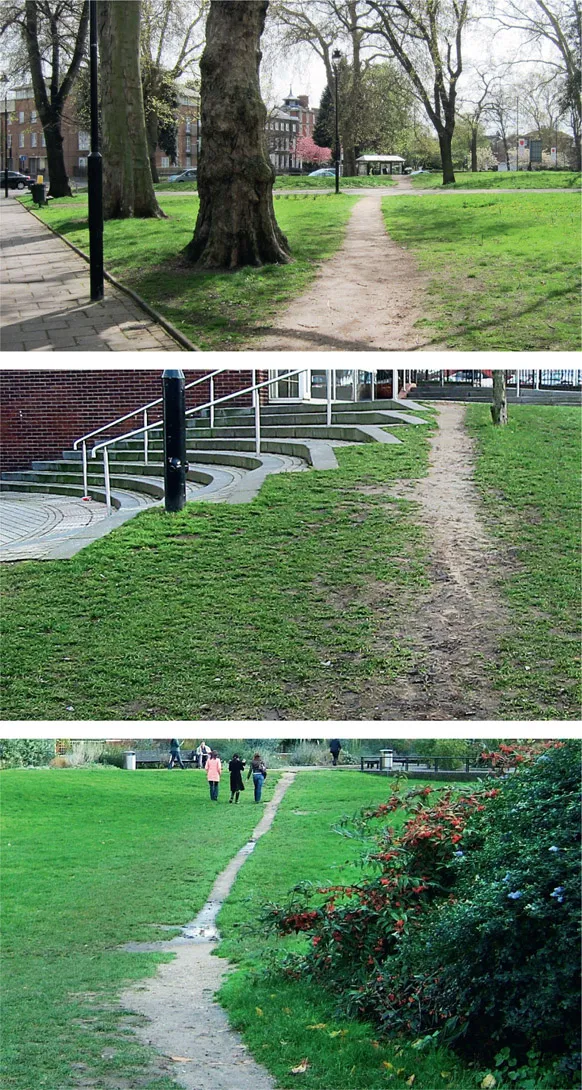
Desire lines are the paths that people create through regular usage. They appear where people repeatedly choose to walk and usually signify a route from A to B that's quicker than the formal path provided. In most cases they indicate the mismatch between what local people want and what designers think people want. By employing some social research basics in the design development process, placemakers can work more meaningfully with local communities to meet their needs and aspirations.
This is a practical guide to running public consultations, co-design and community engagement to help practitioners make the most of local knowledge and insight for the benefit of design. It offers guidance on managing community participation, and unapologetically aims to encourage designers to start thinking like social researchers when they undertake these programmes.
It's intended for placemakers - architects, urban designers, landscape architects, and other built environment professionals involved in the planning and design of public realm - who want to develop more people-centred, community-led design approaches.
Tools to learn more effectively

Saving Books

Keyword Search

Annotating Text

Listen to it instead
Information
1
Introduction
1.1 What this Book is About
What it covers
- What do we need to know?
- Who can provide the information we need?
- How shall we gather and analyse this information?

Who it’s for
1.2 What it Offers
1.3 Why Community Participation Matters
The project benefits
The community benefits
Table of contents
- Cover
- Title
- Copyright
- Biographical information
- Contents
- 1. Introduction
- 2. Research essentials for community participation
- 3. Observation
- 4. Diary studies
- 5. Exhibitions and public meetings
- 6. Survey methods
- 7. Focus groups
- 8. Collaborative approaches
- 9. Ethical and inclusive practice
- 10. Participants’ experiences
- Glossary
- Bibliography
- Appendix | Types of bias
- Index
- Image credits
Frequently asked questions
- Essential is ideal for learners and professionals who enjoy exploring a wide range of subjects. Access the Essential Library with 800,000+ trusted titles and best-sellers across business, personal growth, and the humanities. Includes unlimited reading time and Standard Read Aloud voice.
- Complete: Perfect for advanced learners and researchers needing full, unrestricted access. Unlock 1.4M+ books across hundreds of subjects, including academic and specialized titles. The Complete Plan also includes advanced features like Premium Read Aloud and Research Assistant.
Please note we cannot support devices running on iOS 13 and Android 7 or earlier. Learn more about using the app