![]()
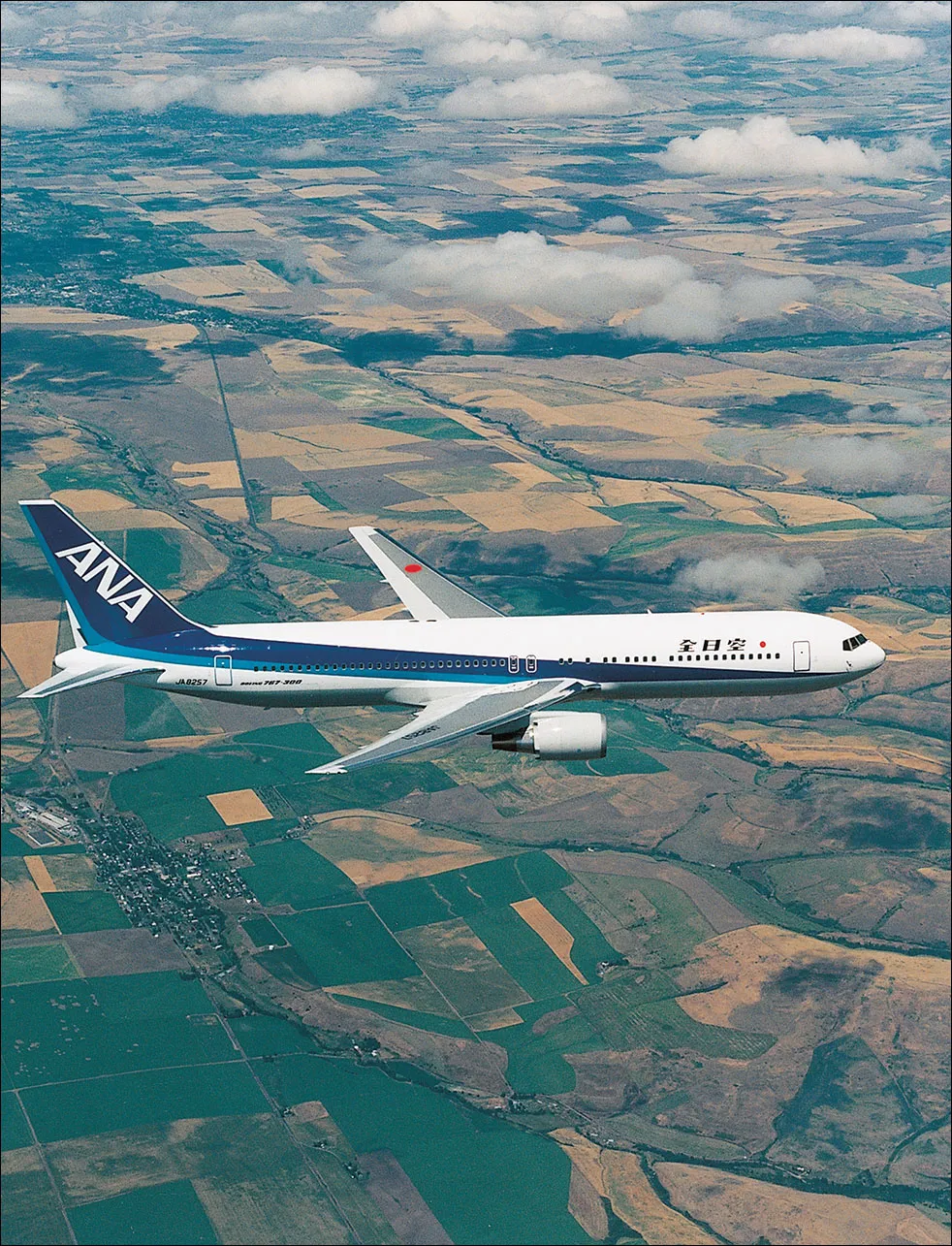
The Boeing 767 epitomises the medium/long-haul widebody, as well as encapsulating the family approach to airliner design. Using the 767-200 airframe as its starting point, Boeing offered the 767 with multiple engine choices, a variety of weight options and in stretched variants for more passengers.
The Modern Era
With Boeing and Douglas building fine medium and long-haul jets, the competition was on to bring similar standards of service to short-haul and regional sectors. Europe led the way, the Sud-Est Caravelle establishing the viability of short-range jets, while BAC looked set to dominate with the One-Eleven. But Douglas created its DC-9 masterpiece in record time, taking the market with a programme so ambitious it broke the company. Boeing’s latecomer to the short-haul sector, the 737 remains in production and set for major upgrade, its huge success only latterly challenged by the Airbus consortium and its A320 family. By the mid-1960s, jet technology had matured sufficiently for the first widebody airliners to evolve, epitomised by the Boeing 747, challenged for passenger capacity only recently by Airbus, with the A380. The supersonic airliner also came and went, while another new genre of aircraft emerged, the small capacity regional jet.
![]()
BAC One-Eleven (1963)
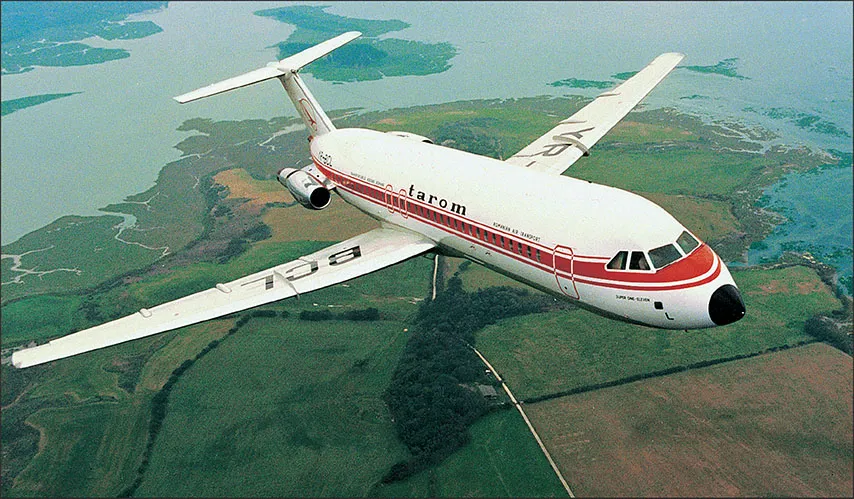
The One-Eleven was an excellent short-haul jet that struggled to find meaningful orders in spite of breaking through into the U.S. market. It faced stiff competition from the Douglas DC-9 and Boeing 737, its British manufacturer unable to match American might.
The UK’s Percival company produced a number of successful lightplanes during the interwar period, applying much of the experience gained to produce more than 1000 training and liaison aircraft during World War II. In 1944 it became part of the Hunting Group, continuing in operation as Hunting Percival and producing the Percival Prince, a small piston-engined airliner, among other designs. In 1957 the ‘Percival’ title was dropped, aircraft design and production continuing under the Hunting title. Hunting had long considered the potential for a small jet-powered airliner, working through turbojet and turbofan concepts as powerplant technologies evolved. In September 1960 it came under the control of BAC before any of its jet airliner designs had reached fruition, although its H.107 concept for a 48-seat machine was adopted and enlarged to become the 65-seat BAC.111, to be powered by Rolls-Royce Spey turbofans. British United Airways (BUA) ordered the type in May 1961, marking it out as the first British airliner built against a launch order from an independent airline.
West Germany’s Bavaria Fluggesellschaft bought four Series 400s for use on holiday flights.
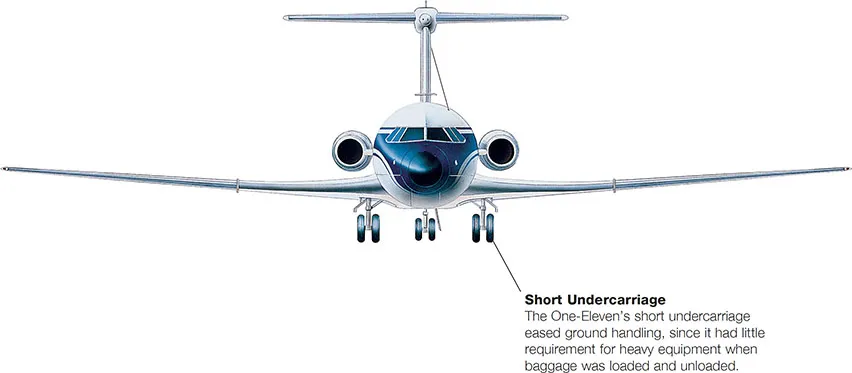
BAC stuck to the formula of rear-mounted engines for a clean wing of maximum aerodynamic efficiency around the airfield and when cruising. It also chose a T-tail configuration and an unusually short undercarriage, which allowed easy loading and unloading of baggage from holds that were little more than 1m (3ft 3in) above the ground. An APU allowed a degree of freedom from airport services and the potential for single-point pressure refuelling also shortened turnaround times, as did the integral airstair in the underside of the rear fuselage and a second optional stair at the forward passenger door.
Romania’s Romaero established a production line that delivered nine Series 516RC aircraft. These brought One-Eleven production to 245 aircraft.
These excellent qualities were insufficient to tempt BEA, however, which remained firmly committed to the Trident. The new BAC airliner emerged as the One-Eleven, designated Series 200 in its initial form and flying for the first time on 20 August 1963. A deep-stall accident, similar to that which claimed the penultimate Series 1 Trident, ended its carer on 22 October, but BAC handled the crisis well and sales were unaffected. The One-Eleven Series 200 entered BUA service on 9 April 1965, further customers bringing production to 56 airframes.
Specification (One-Eleven Series 500)
| Type: | short-haul airliner |
| Dimensions: | wing span 28.50m (93ft 6in), length 29.67m (97ft 4in), height 7.47m (24ft 6in) |
| Maximum take-off weight: | 47,400kg (104,500lb) |
| Powerplant: | two 55.60kN (12,550lb) thrust Rolls-Royce Spey Mk 512DW turbofan engines |
| Maximum cruising speed: | 871km/h (541mph) |
| Maximum range: | 3484km (2165 miles) |
| Maximum cruising altitude: | 10670m (35,000ft) |
| Flight crew: | 2 |
| Passengers: | up to 119 in single-class accommodation |
Developing the One-Eleven
Nine Series 300 aircraft followed, with more power and a greater fuel load, while the Series 400 was essentially similar, but suited to the U.S. regulations governing two-crew operation through an enforced weight restriction and with slightly modified control actuation. BAC had a heavyweight rival in the form of Douglas and its DC-9, especially in the U.S. market, but nevertheless managed to sell 30 out of 69 Series 400s built to American Airlines, also selling One-Elevens to Braniff, Mohawk and Aloha.
When BEA announced that it needed a replacement for the Vickers Viscount, BAC offered the One-Eleven Series 500, with a wider wing span and yet more power. The type flew for the first time on 17 February 1968 and BEA was sufficiently impressed to buy 18 out of the run of 89 produced. The Series 500 spawned the Series 475, which used the former’s wings and powerplant, allied to the short fuselage of the Series 400 to produce an aircraft optimized for hot-and-high operation. In fact, the Series 475 was far more than a hot-and-high One-Eleven, because it was also protected against damage caused by debris striking the airframe, suiting it to semi-prepared strips of the type used by Faucett, a Peruvian carrier that took all nine of the aircraft.
Five further One-Eleven iterations failed to progress into production. After BOAC and BEA merged to form British Airways (BA), the airline called for a new short-haul jet. BAC initially offered the Series 600 with a developed Spey producing 81kN (18,000lb), but ultimately put a less ambitious type forward, but BA seemed to have adopted BOAC’s Boeing policy and opted for the 737-200.
The Series 600 had used a revised high-lift wing flown on the Series 670 prototype, which had been developed as a replacement for the Japanese NAMC YS-11 twin turboprop, but failed to find customers. British Airways subsequently turned down a second 81kN (18,000lb) Spey-engined One-Eleven, the Series 700, while the same designation was applied to an equally unsuccessful stretch. Another stretch was the Series 800, with longer wings and powered by CFM56 engines, which morphed into the wider X-Eleven of 1976. British Aerospace abandoned the latter after its formation by combining Hawker Siddeley and BAC in 1977, when the decision was made to join the Airbus Industrie consortium.
British Airways Service
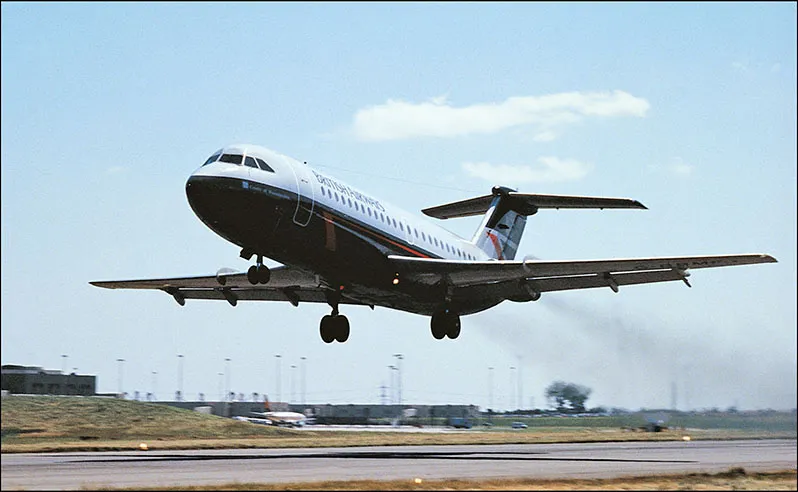
British Airways never bought new One-Elevens, but took on BEA’s fleet when the airline merged with BOAC. The new carrier subsequently added second-hand examples, raising its fleet to more than 30 machines at its peak during the late 1980s, the majority of them Series 500s. British Airways retired its last One-Eleven in 1993.
![]()
Douglas DC-9, MD-80/90 and Boeing 717 (1965)
Douglas beat Boeing to the short-haul jet market and for a while its DC-9 was the world’s best-selling jetliner. But the company overstretched itself and it was left to McDonnell Douglas to develop the even more successful MD...