Applied Anatomy for Clinical Procedures at a Glance
- English
- ePUB (mobile friendly)
- Available on iOS & Android
Applied Anatomy for Clinical Procedures at a Glance
About this book
Applied Anatomy for Clinical Procedures at a Glance is a concise resource combining high-quality images and step-by-step instructions to provide expert guidance on the major core training pathways in medicine, surgery and anaesthesia. Written by an experienced team of Foundation Training programme directors and clinical skills examiners, this unique revision and learning guide aligns with training pathways rather than anatomical area to support Foundation doctors and core trainees master these vital clinical procedures.
Succinct yet thorough descriptions of each procedure include photographs of surface anatomy, line diagrams of the anatomy, instructions on the procedural techniques, and practical tips for performing the procedures safely whilst minimising risks of complications. All major aspects of Foundation procedures and Core training in applied anatomy are covered, including catheterisation, ECGs, central venous cannulation, basic suturing and anastomotic techniques, endotracheal intubation, epidural injection and spinal injection, defibrillation, and many others.
- Helps Foundation doctors and Core trainees apply their medical school knowledge in clinical settings
- Explains the common anatomical pitfalls of invasive clinical procedures
- Features practice questions on anatomy and clinical aspects to aid in preparing for clinical skills examinations
- Includes sections on aftercare and on specific equipment, including manometers and underwater seals
Applied Anatomy for Clinical Procedures at a Glance is ideal for Foundation doctors and Core trainees, as well as medical students, physician's assistants and surgical scrub practitioners.
Tools to learn more effectively

Saving Books

Keyword Search

Annotating Text

Listen to it instead
Information
1
Scrubbing up
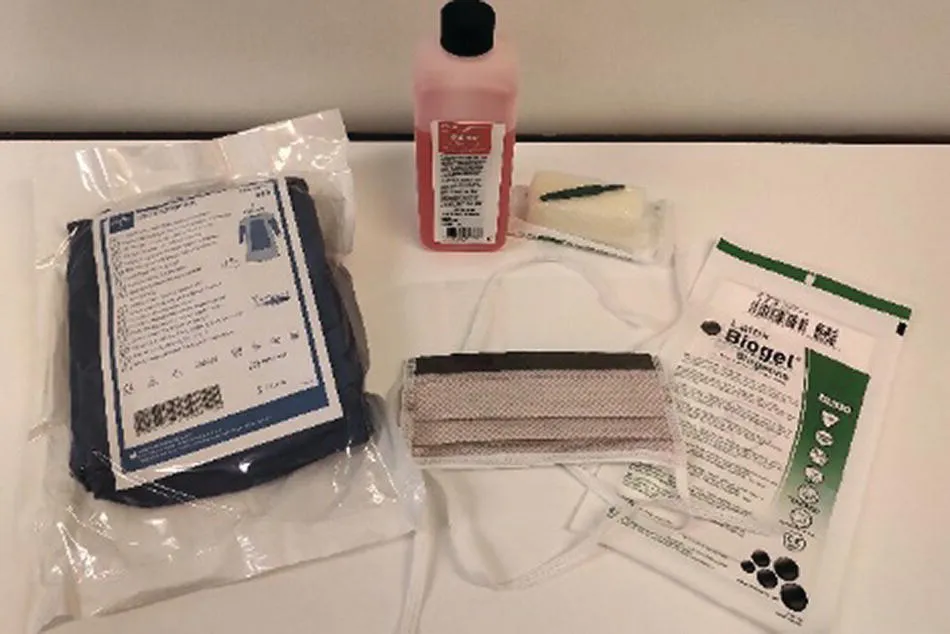

Equipment (Figure 1.1)
- Antiseptic solution [either povidone iodine (Betadine) or chlorhexidine]
- Gown
- Gloves
- Face mask
- Nail brush
Antiseptic solutions
Procedure (Figure 1.4)
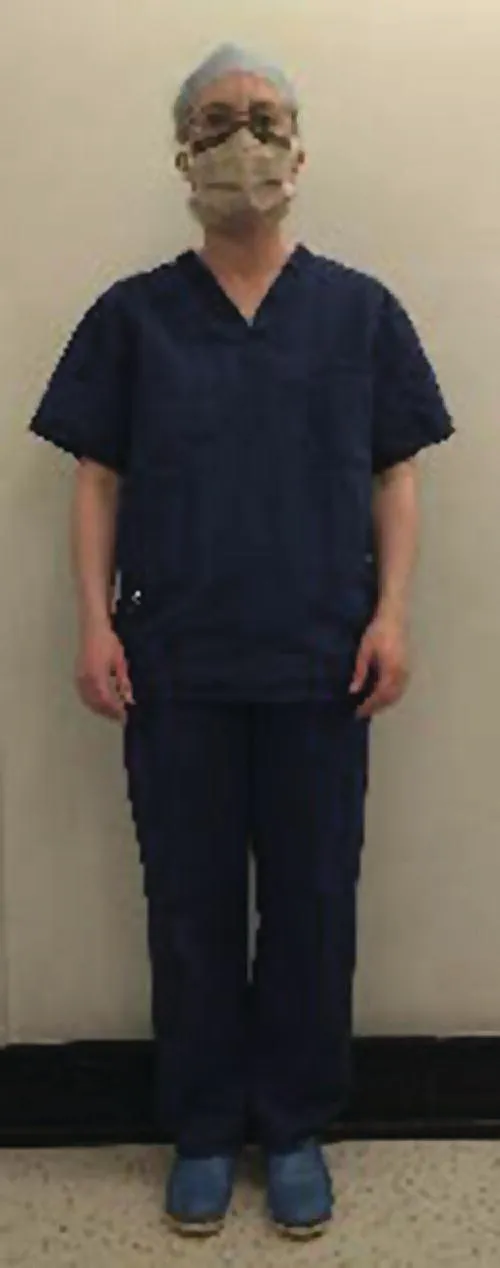
- The hair is first covered by a hat and a mask is worn. Depending on the procedure protective eye goggles may be used. For specific procedures, a hooded surgical gown can be used (Figure 1.2).
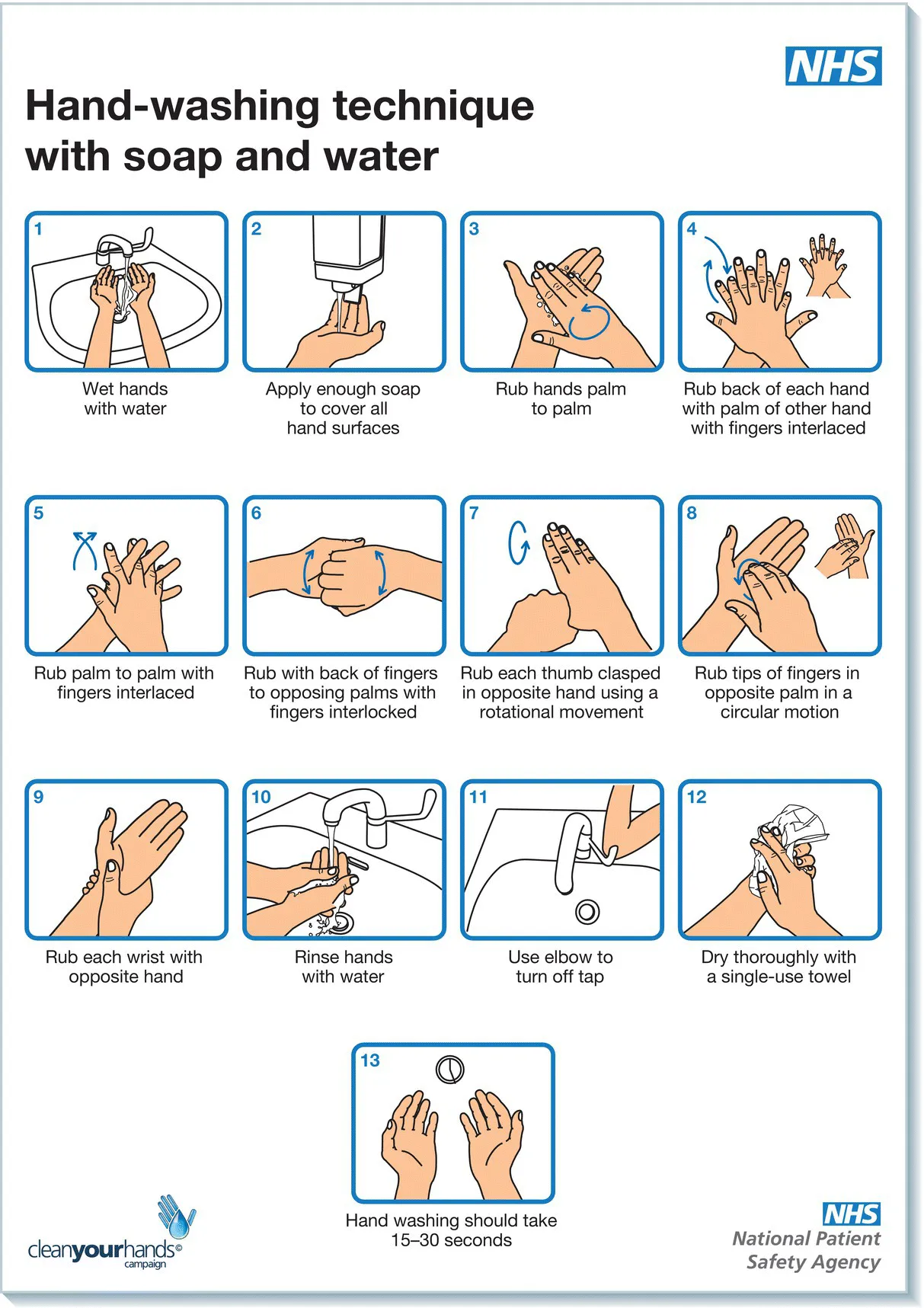
- For the first scrubbing in of the day, handwashing should last for 5 minutes, and subsequent handwashing should allow 3 minutes each, following the recommended handwashing procedure (Figure 1.3).
- Any breach of the procedure requires recommencing of the cycle.
- Antiseptic washing must cover all aspects of the skin of the hands and forearms, extending to the elbows. Particular attention should be paid to the interdigital spaces and under the nails. A brush may be used to apply the antiseptic solution to the skin under the nails but is best avoided elsewhere to avoid causing superficial skin abrasions with more vigorous scrubbing as that would expose underlying cutaneous bacteria.
- During handwashing, ensure that hands and forearms remain elevated, allowing the water to drip from the elbow to avoid contamination as a result of water running from unsterile regions to areas already cleaned. Shaking should also be avoided for the same reason.
- Throughout the handwashing cycles, ensure enough time is allowed for contact of the antiseptic with the skin before running it under water.
- The skin is then dried with sterile towels while avoiding contact with unsterile regions (Figure 1.4c).
- As contact with non‐sterile surroundings is prevented, the gown is then delivered from its sterile wrapping and donned (Figure 1.4d).
- The arms and hands are kept within the sleeves until gloves are worn without touching their outer surface. This can be achieved by initially avoiding protruding the fingers through the gown sleeves. Alternatively, the surgeon is helped by an assistant or a scrub nurse holding open each pair of gloves.
Table of contents
- Cover
- Table of Contents
- Contributors
- 1 Scrubbing up
- 2 Setting up a sterile field and draping the patient
- 3 Three‐way tap
- 4 Common equipment for core clinical procedures
- 5 Local anaesthetic infiltration
- 6 Obtaining consent
- 7 Manometer for central venous pressure and lumbar puncture
- 8 Bladder irrigation sets
- 9 Underwater seal for chest drains
- 10 Male catheterisation
- 11 Female catheterisation
- 12 Arterial blood gases
- 13 Performing an electrocardiogram
- 14 Oropharyngeal airway
- 15 Nasopharyngeal airway
- 16 Laryngeal mask airway
- 17 Central venous cannulation (high approach internal jugular)
- 18 Central venous cannulation (low approach internal jugular)
- 19 Central venous cannulation (subclavian)
- 20 Direct current cardioversion
- 21 Intercostal drains
- 22 Pleural tap
- 23 Inserting a nasogastric tube
- 24 Lumbar puncture
- 25 Bone marrow aspirate
- 26 Ascitic tap
- 27 Paracentesis
- 28 Knee aspiration
- 29 Skin biopsy
- 30 Basic suturing
- 31 Basic anastomotic techniques
- 32 Abscess drainage and debridement
- 33 Bag mask ventilation (adults)
- 34 Endotracheal intubation (adults)
- 35 Needle cricothryoidotomy (adults)
- 36 Surgical cricothyroidotomy
- 37 Defibrillation
- 38 Spinal injection
- 39 Epidural injection
- 40 Procedure‐related safety
- Index
- End User License Agreement
Frequently asked questions
- Essential is ideal for learners and professionals who enjoy exploring a wide range of subjects. Access the Essential Library with 800,000+ trusted titles and best-sellers across business, personal growth, and the humanities. Includes unlimited reading time and Standard Read Aloud voice.
- Complete: Perfect for advanced learners and researchers needing full, unrestricted access. Unlock 1.4M+ books across hundreds of subjects, including academic and specialized titles. The Complete Plan also includes advanced features like Premium Read Aloud and Research Assistant.
Please note we cannot support devices running on iOS 13 and Android 7 or earlier. Learn more about using the app