Demystifying working in Azure Ecosystem for.NET Core Developers Key Features
Discover and put to use the latest features in.NET Core 3.1 and Azure Functions V3
Learn how to debugging Azure Functions from Production, hosted on Cloud
Understand the working of Application Key Management with Security aspects
Description Every developer is striving hard to up-skill oneself from a developer to a Cloud developer and with the growing pace of cloud programming, this up-gradation is not simple. This book will help.NET Core developers to seamlessly cover this said journey. It covers the newly released.Net Core 3.0 / 3.1 features including, Azure Function V3. The book not only focusses on one way of working with Azure Cloud services but also includes another viable way of managing Azure resources with the software application. The book also touches base on some Azure products and services. From exploring the most used Azure services to touching the newest version of offerings, this book is aimed to cover everything from a developer perspective. Code exercise, Code blocks, azure service implementation, application secrets keys management, free super-fast hosting options along with live debugging of code hosted on Cloud, are some of the key take-aways from this book. What you will learn
Develop a.NET core application with Azure App service
Use Azure CosmosDB to manage database services
Explore & work with Microsoft Azure Storage
Able to have the best hosting option for Static Content web application
Able to work with Azure Functions V3 using Visual Studio 2019
Able to implement best Key Management in the app on Azure
Who this book is for This book is for aspiring Cloud developers with some experience in Microsoft cloud services. It is also for.NET Core developers who wish to learn and use Azure solutions. Table of Contents 1. Azure Ecosystem 2. My App on Cloud – Microsoft Azure 3. Application Backend - Azure CosmosDB 4. Working with Microsoft Azure Storage 5. Working with Microsoft Azure Storage as Hosting option 6. Securing Application secrets keys with Azure 7. Step towards Serverless approach About the Author Kasam Shaikh is Microsoft Azure AI Enthusiast, a certified Cloud Solution Architect, Global AI Speaker, a published author, and a community MVP. He also contributes to Microsoft Docs for Azure AI services and the product. He has more than 12 years of experience in the IT industry and is a regular speaker at various events on Microsoft Azure. He is also a founder of Dear Azure | AZ-INDIA online AzureAI community for learning Microsoft Azure and AI products and 'Let Start Learning' YouTube Channel. He has authored the very first book on Azure Bot service. Along with authoring, he is part of a technical reviewer panelist for various bestsellers book on Microsoft Azure. LinkedIn Profile: https://www.linkedin.com/in/kasamshaikh/ Blog links: https://www.kasamshaikh.com/
Trusted by 375,005 students
Access to over 1 million titles for a fair monthly price.
Firstly, big congratulations to you for selecting Azure in your career path and having your professional skills upgrading with the super cool, intelligent cloud, Microsoft Azure. From here to the end of this book, I will be your partner in the journey of enhancing your skillset from .NET technologies to NET Core with Microsoft Azure. In this chapter, I will give you an eagle view about Azure Ecosystem. What a developer should know about Azure along with the subject’s exercise, which you will be learning in the coming chapters.
Structure
Azure and its components
Azure services
Working with Azure
ARM templates
Azure CLI
Azure PowerShell
Objective
The objective of this chapter is to understand the following:
Services developer should know
What we will cover at the end of the book
Prerequisite and setup to start with
Azure and its components
Let us study Azure and its components in detail in the following sections.
What is Azure?
As Microsoft says, Microsoft Azure is an ever-expanding set of cloud services to help your organization meet your business challenges. It is the freedom to build, manage, and deploy applications on a massive, global network using your favorite tools and frameworks.
As mentioned, Azure does come with flexibility and ease to work with different operating systems such as Windows, Linux, with multiple language support such as C#, JAVA, Python, and so on. Along with different developers’ tools such as Visual Studio, Visual Code, and so on. When it comes to the backend, it does support not only different databases such as SQL, MongoDB, Cassandra, PostgreSQL, but also different types of databases such as Relational, NoSQL, Graph, and so on. It comes with a wide range of scalable infrastructure offerings as well as serverless offerings. And same goes when it comes for pricing, with fixed monthly plans to per execution plan.
The reason behind this amazing Ecosystem is to empower you to have the liberty to go for the desired technology stack in terms of the operating system, compute database, language, tools, and pricing. You should focus more on working on solutions to meet the business goals, and the underline technology should never be constrained. Working with Microsoft Azure brings you in pleasure to work with world-class technology stack. In short, Azure is very much compatible with your designed stack.
As you may have knowledge of their different key areas in the software development process. Now, here I am more specifically, talking with the developer’s perspective.
To list it:
Networking
Storage
Servers
Virtualization
Operating System
Middleware
Runtime
Data
Application
Considering the preceding nine points, let the responsibility of each area be shared as follows:
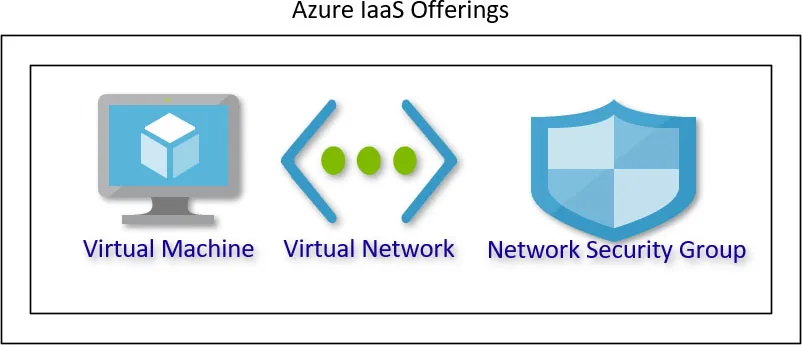
Infrastructure as a Service (IaaS): Azure gains the responsibility or control for points 1 to 4 in the preceding list, and the rest are managed by you. To name, Azure Virtual Machine.
Figure 1.1
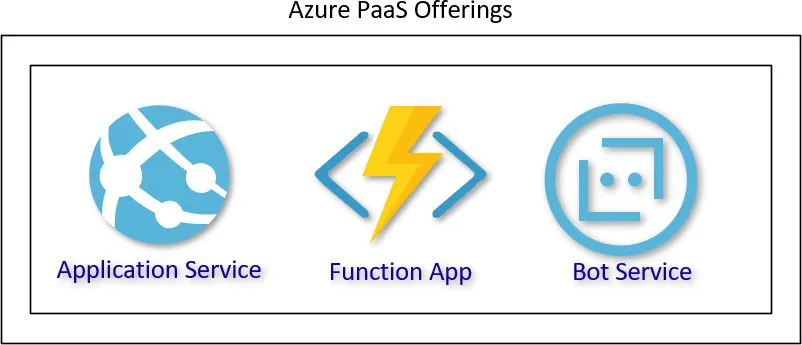
Platform as a Service (PaaS): To name, Azure gains the responsibility or control for points 1 to 7 in the preceding list, and the rest are managed by you. To name, Azure Web App Service:
Figure 1.2
Software as Service (SaaS): To name, Azure gains the responsibility or control for points 1 to 9 in the preceding list, and the rest are managed by you. To name, cloud-based programs available in Office 365, such as Microsoft Office Tools, Email.
Azure further categorizes into:
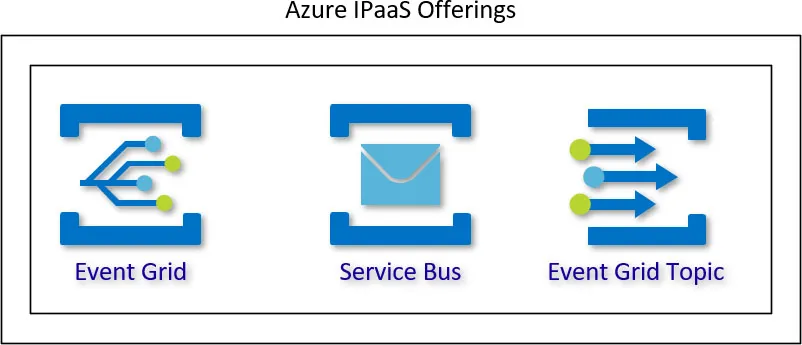
Integration Platform as a Service (IPaaS): Services involved in integration architecture, to name, Azure Event Grid:
Figure 1.3
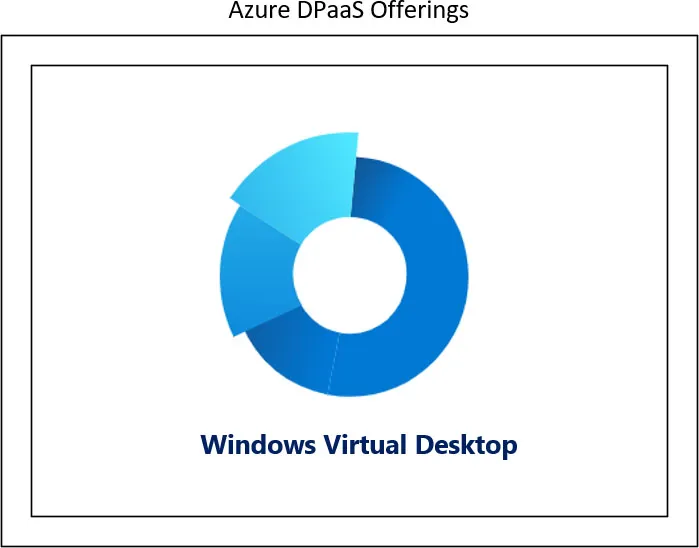
Desktop as a Service (DaaS): To name, Windows Virtual Desktop:
Figure 1.4
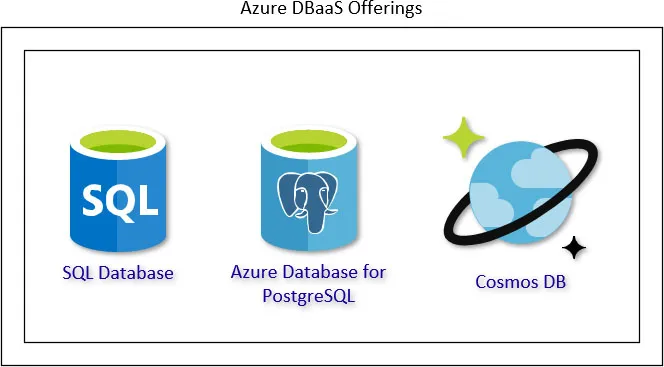
Database as a Service (DBaaS): As the name suggests, offerings about serve backend. To name, Azure CosmosDB:
Figure 1.5
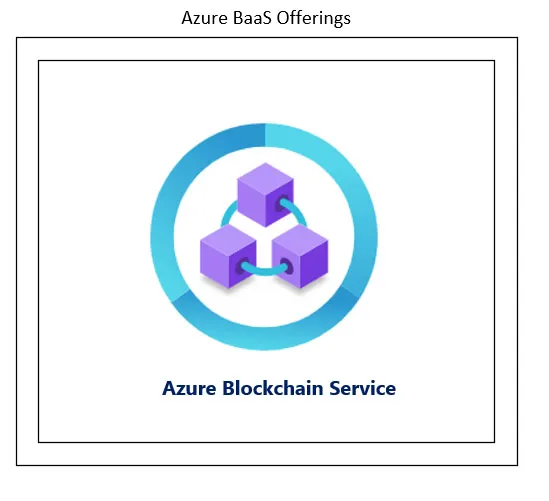
Blockchain as a Service (BaaS): To name, Azure Blockchain Service, few to be listed among. This later got globally adopted by all other Cloud vendors in the race. And interestingly for all the categories of Cloud Computing, Microsoft Azure offers different services and products:
Figure 1.6
At the time of writing this book, Azure offers 100+ services ready to work with, as can be seen in the following screenshot:
Figure 1.7
Azure has data centers across the globe. Azure combines these data centers into regions. Now, each region has multiple data centers to ensure that recovery from disasters is quick and efficient. Again, when I talk about regions, Azure has more global regions than any other cloud provider—offering the scale needed to bring applications closer to users around the world, preserving data residency, and offering comprehensive compliance and resiliency options for customers.
At the time of writing this book, Azure is spread across 55 regions worldwide and is growing at a faster rate. The recent I read the news was in the country of Israel.
Figure 1.8
There are many topics that could get covered as part of fundamentals, but my objective in this book is to target the development aspect.
I would strongly recommend you to learn and target Azure Fundamentals certification. I always advised any aspiring Azure developer, with novice Cloud skills, to start with the Fundamentals learning path.
At the time of writing this book, the exam number for Azure Fundamentals is AZ-900. Go to the following link to learn how to prepare and pass Az-900 certifications. This exam course will introduce you to the wide world of Azure Ecosystem in a broader way.
Kudos! If you are already done with this certification!
Azure services – every developer must know
Widely discussed topic it is. Azure has multiple offerings in different areas such as compute, serverless, AI, and so on. As a developer, it’s not necessary to know all the services, but important is how to talk with these services. And to talk, you must learn them by diving more into it. Satya N. said, Don’t be know-it-all, be a learn-it-all, albeit it does refer to the company, but it can be implied to any course path.
But in my opinion, to list, following services such as Azure Apps, Azure Storage, Azure CosmosDB, Azure KeyVault are among the few that every developer must be aware of.
Working with Azure
Among many, one of the cool things about Azure is that there are multiple choices about how you go about dealing with your Azure resources. Whether you want to create a new web app, add Secrets in KeyVaults, configure the identity of app services, or stop any service on demand, there have many choices for how to achieve the same.
Let’s discuss what the ways are. To start with:
Azure portal
It is an amazing user interface to view, control, and manage your Azure r...
Table of contents
Cover Page
Title Page
Copyright Page
Dedication
About the Author
About the Reviewer
Acknowledgement
Preface
Errata
Table of Contents
1. Azure Ecosystem
2. My App on Cloud - Microsoft Azure
3. Application Backend with Azure Cosmos DB
4. Working with Microsoft Azure Storage
5. Working with Microsoft Azure Storage as Hosting Option
6. Security Application Secrets Keys with Azure
7. Step Towards Serverless Approach with Azure Functions
Frequently asked questions
Yes, you can cancel anytime from the Subscription tab in your account settings on the Perlego website. Your subscription will stay active until the end of your current billing period. Learn how to cancel your subscription
No, books cannot be downloaded as external files, such as PDFs, for use outside of Perlego. However, you can download books within the Perlego app for offline reading on mobile or tablet. Learn how to download books offline
Perlego offers two plans: Essential and Complete
Essential is ideal for learners and professionals who enjoy exploring a wide range of subjects. Access the Essential Library with 800,000+ trusted titles and best-sellers across business, personal growth, and the humanities. Includes unlimited reading time and Standard Read Aloud voice.
Complete: Perfect for advanced learners and researchers needing full, unrestricted access. Unlock 1.4M+ books across hundreds of subjects, including academic and specialized titles. The Complete Plan also includes advanced features like Premium Read Aloud and Research Assistant.
Both plans are available with monthly, semester, or annual billing cycles.
We are an online textbook subscription service, where you can get access to an entire online library for less than the price of a single book per month. With over 1 million books across 990+ topics, we’ve got you covered! Learn about our mission
Look out for the read-aloud symbol on your next book to see if you can listen to it. The read-aloud tool reads text aloud for you, highlighting the text as it is being read. You can pause it, speed it up and slow it down. Learn more about Read Aloud
Yes! You can use the Perlego app on both iOS and Android devices to read anytime, anywhere — even offline. Perfect for commutes or when you’re on the go. Please note we cannot support devices running on iOS 13 and Android 7 or earlier. Learn more about using the app
Yes, you can access Azure for .NET Core Developers by Kasam Ahmed Shaikh in PDF and/or ePUB format, as well as other popular books in Computer Science & Cloud Computing. We have over one million books available in our catalogue for you to explore.