- 216 pages
- English
- ePUB (mobile friendly)
- Available on iOS & Android
eBook - ePub
Statistics for Toxicologists
About this book
This book explains how the computer programs work and why and when they can be applied to problems in toxicology. It discusses the statistical models used and their applications in a general fashion. The book overviews the problems that can arise from the blind use of the statistical models.
Information
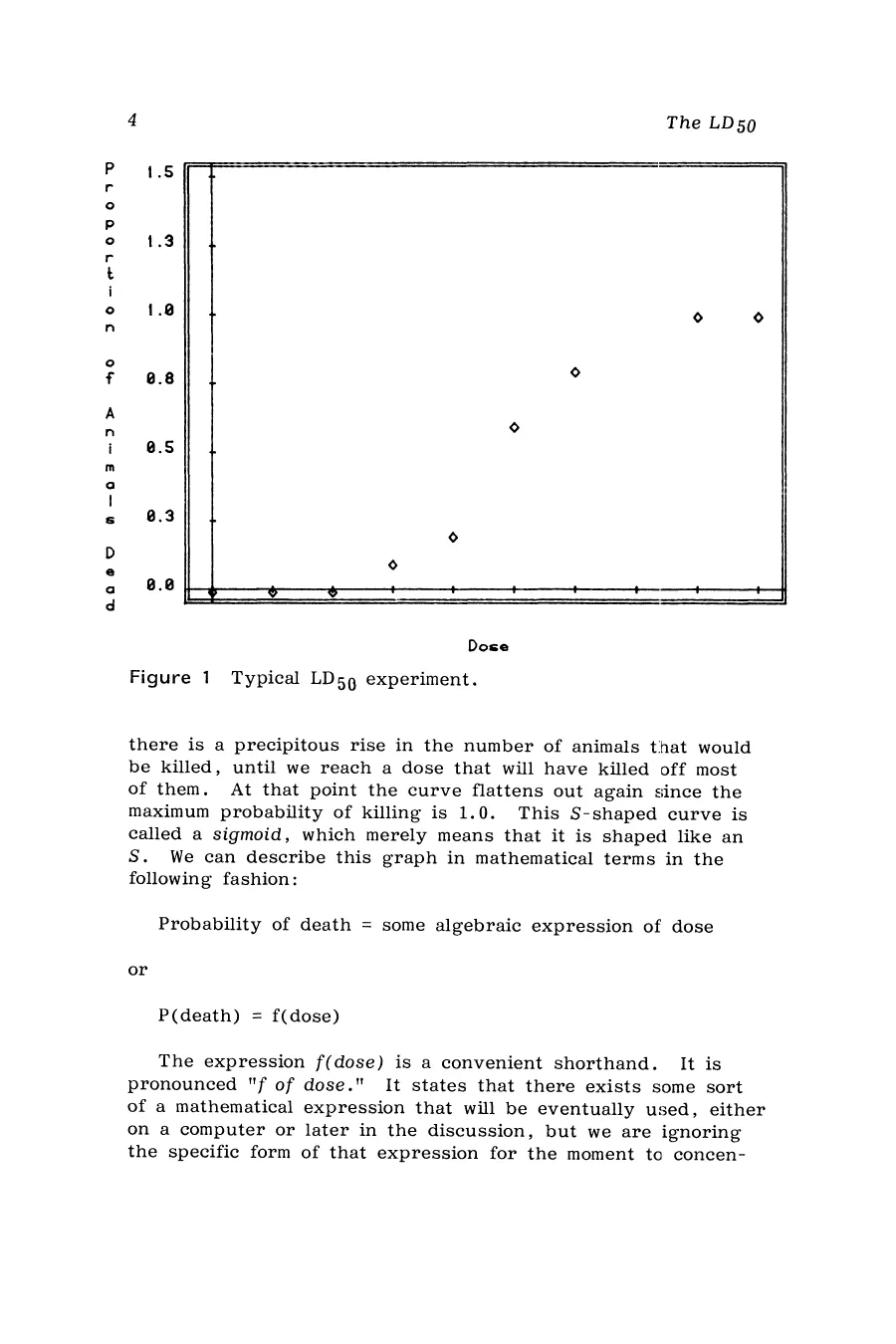
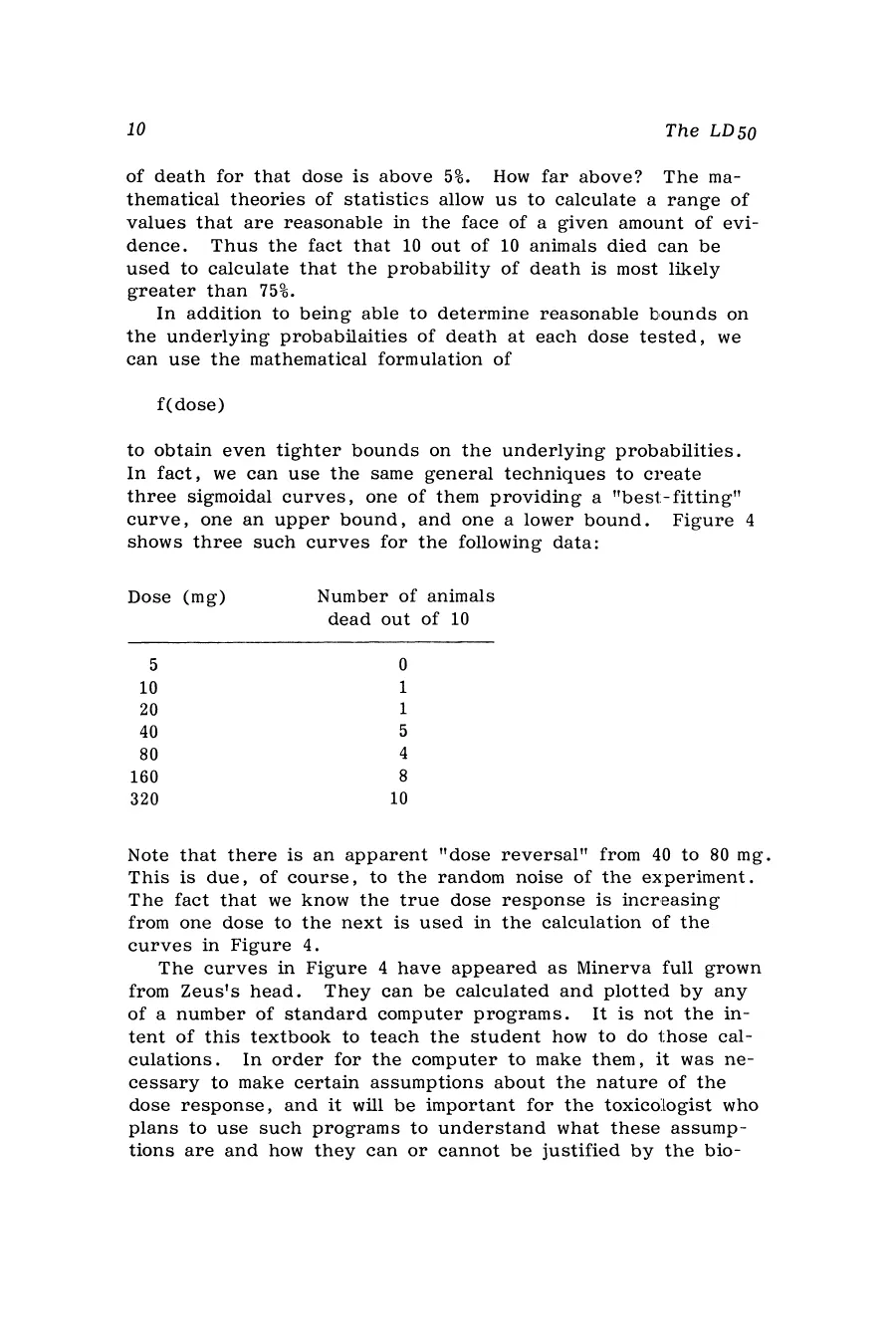
Table of contents
- Cover
- Half Title
- Series Page
- Title Page
- Copyright Page
- Dedication Page
- About the Series
- Preface
- Introduction
- Contents
- Unit I The LD50
- 1 The LD50
- First Principles
- Introducing Uncertainty
- More Uncertainty
- Models of Sigmoid Curves
- Alternative Mathematical Models
- What Is Wrong with It All?
- 2 Lessons from the LD50
- Overview
- Consequences of Bliss’s Formulation
- Comparative LD50 Values
- Some Comments on Confidence Bounds on the LD50
- 3 Theory Behind the LD50
- Concept of a Probability Distribution
- Gaussian or Normal Distribution
- Beyond the Gaussian Distribution
- Estimating Parameters
- Finding Consistent Estimators of the LD50
- The Spearman--Karber Solution
- Computing Confidence Bounds
- More on Confidence Bounds
- Testing Goodness of Fit
- Unit II Subchronic Toxicity Studies
- 4 Subchronic Toxicity Studies
- Overview
- Random Assignment of Animals to Treatment
- Observations on the Growth of Living Animals
- More Observations on Living Animals
- Statistical Tests of Hypothesis Reexamined
- Directing Statistical Tests
- Confidence Bounds on Comparisons
- Other Observations on Living Animals
- Observations Made on Organ Weights at the Time of Death
- Other Observations Made at the Time of Death
- The Overall Aim of the Study
- 5 Lessons from Subchronic Studies
- Looking for the Car Keys
- What Is "Significant"?
- 6 Theory Behind Statistical Tests
- Kurskal--Wallis Nonparametric ANOVA
- Fisher’s ANOVA
- Neyman--Pearson Formulation of Hypothesis Tests
- Neyman--Pearson Hypothesis Testing
- One- and Two-Sample Tests
- Analysis of Covariance
- Improper Uses of Hypothesis Tests
- Unit III Chronic Toxicity Studies
- 7 Chronic Toxicity Studies
- Comparing the Incidence of a Single Well-Defined Lesion
- Adjusting Incidence for Time on Study
- Analyzing a Single-Graded Lesion
- Comparing Multiple Lesions
- Use of Historical Controls
- 8 Lessons from Chronic Toxicity Studies
- Asking the Right Questions
- Biology Versus Statistics
- 9 Theory Behind Chronic Toxicity Studies
- 2 × K Contingency Tables
- Adjusting for Time and Other Covariates
- Scaling Severity of Lesions
- Clustering Techniques
- Bayesian Analysis
- Measures of Risk
- Estimating Effects in a Multivariate Setting
- More on Linear Combinations
- Clustering and Directed Graphs
- References
- Index
Trusted by 375,005 students
Access to over 1.5 million titles for a fair monthly price.
Study more efficiently using our study tools.
Frequently asked questions
Yes, you can cancel anytime from the Subscription tab in your account settings on the Perlego website. Your subscription will stay active until the end of your current billing period. Learn how to cancel your subscription
No, books cannot be downloaded as external files, such as PDFs, for use outside of Perlego. However, you can download books within the Perlego app for offline reading on mobile or tablet. Learn how to download books offline
Perlego offers two plans: Essential and Complete
- Essential is ideal for learners and professionals who enjoy exploring a wide range of subjects. Access the Essential Library with 800,000+ trusted titles and best-sellers across business, personal growth, and the humanities. Includes unlimited reading time and Standard Read Aloud voice.
- Complete: Perfect for advanced learners and researchers needing full, unrestricted access. Unlock 1.5M+ books across hundreds of subjects, including academic and specialized titles. The Complete Plan also includes advanced features like Premium Read Aloud and Research Assistant.
We are an online textbook subscription service, where you can get access to an entire online library for less than the price of a single book per month. With over 1.5 million books across 990+ topics, we’ve got you covered! Learn about our mission
Look out for the read-aloud symbol on your next book to see if you can listen to it. The read-aloud tool reads text aloud for you, highlighting the text as it is being read. You can pause it, speed it up and slow it down. Learn more about Read Aloud
Yes! You can use the Perlego app on both iOS and Android devices to read anytime, anywhere — even offline. Perfect for commutes or when you’re on the go.
Please note we cannot support devices running on iOS 13 and Android 7 or earlier. Learn more about using the app
Please note we cannot support devices running on iOS 13 and Android 7 or earlier. Learn more about using the app
Yes, you can access Statistics for Toxicologists by David S. Salsburg,Salsburg in PDF and/or ePUB format, as well as other popular books in Medicine & Probability & Statistics. We have over 1.5 million books available in our catalogue for you to explore.