![]()
1
AUTHORS
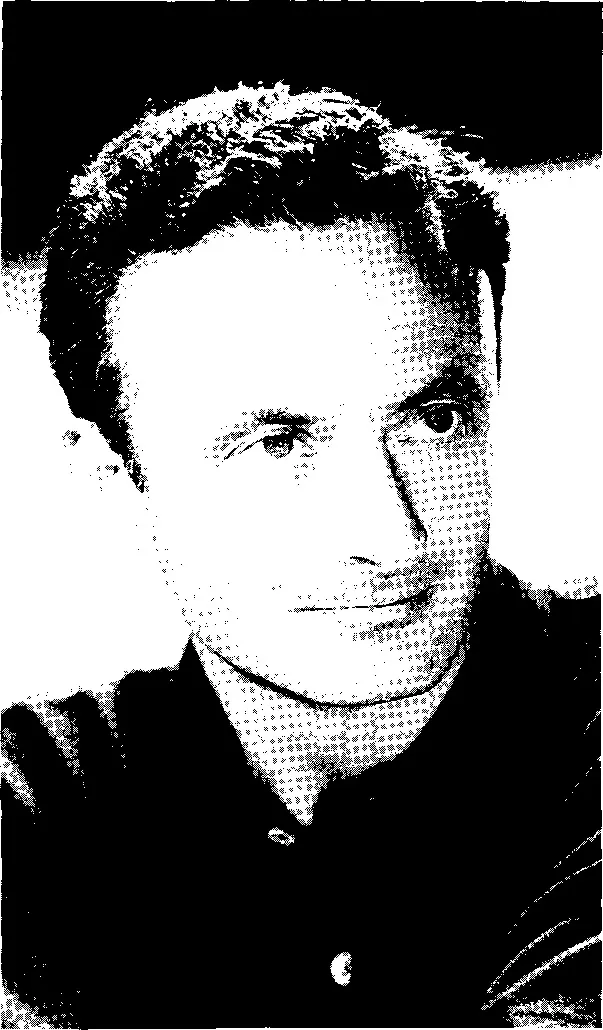
Fred Zinnemann
Fred Zinnemann, the director of High Noon, was born in Vienna in 1907, where he studied law at the university. Abandoning the prospect of a legal career, he trained at the Technical School of Cinema in Paris and became a cameraman in Paris and Berlin, working on a number of films, including Robert Siodmak's People on Sunday (1929). He emigrated to the US in October 1929, arriving on the day of the Wall Street crash. He found work as an extra on Milestone's All Quiet on the Western Front (1930), as a cutter, and as an assistant to Robert Flaherty (on an uncompleted project), Berthold Viertel (on The Man from Yesterday, 1932) and Busby Berkeley (The Kid from Spain, 1932). He made his debut as director on The Wave (1934), produced by Paul Strand, a Flaherty-influenced documentary about the lives of fishermen on the Gulf Coast of Mexico. In 1937 he was signed by MGM as a director of shorts, where he contributed eighteen items to such series as Crime Does Not Pay and Historical Mysteries, many characterised by innovatory optical effects. In 1938 he won the studio an Oscar for That Mothers Might Live.1
He became a feature director in the 1940s, turning out a number of B-pictures under a seven-year contract with MGM. These included Kid Glove Killer (1942) with Van Heflin, Marsha Hunt and Lee Bowman, a police procedural in which crime-lab workers pit their forensic skills against the forces of political corruption; Eyes in the Night (1942), about a blind detective who uncovers and destroys a Nazi spy-ring; and two 1947 vehicles for the child-star 'Butch' Jenkins, Little Mister Jim and My Brother Talks to Horses. Zinnemann's next four films dealt with the run-up to and aftermath of war. His first A-picture was The Seventh Cross (1944), a film starring Spencer Tracy set in prewar Nazi Germany about a group of prisoners on the run from a concentration camp, all failing to escape but one. Zinnemann remembered this as a fore-shadowing of High Noon: 'in a country gone berserk a man is running for his life, unable to trust anyone except former friends who are endangered by his mere presence'.2 In the course of WWII Zinnemann was loaned by MGM to the Swiss producer Lazar Wechsler to make The Search (1948), filmed in Germany and Switzerland, centring on a war orphan's quest to find his mother and to regain the power of speech. Introducing Montgomery Clift, The Search won Oscars for its screenplay and for its child star, Ivan Jandl. Act of Violence (1948) was Zinnemann's last contract picture for MGM, a post-war film noir in which a former POW (Robert Ryan) hunts down a former fellow inmate (Van Heflin) who has sacrificed his comrades to save his own skin. The Men (1950), Zinnemann's intimate account for Stanley Kramer and United Artists of the tribulations of wounded veterans, introduced Marlon Brando, fresh from the Broadway success of A Streetcar Named Desire, as the paraplegic soldier who must face the task of rebuilding his marriage and his life. It was followed by Teresa (1951), made for Arthur Loew at MGM. Teresa is a film about the 'war bride' issue of the post-war period in which a young American soldier brings home an Italian wife. It stars Pier Angeli and John Ericsson, and introduces Rod Steiger. As in The Search, the film's troubled European locations – in this case Livergnano, Siena and the mountains between Florence and Bologna – are highly expressive. As with The Men, 'There was to be an open ending ... the traditional wish-dream of marriage as a guarantee of permanent happiness would be put in question'.3
The Search: Zinnemann with Montgomery Clift and Ivan Jandl
Masculinity impaired and under scrutiny: Marlon Brando and Everett Sloane in The Men
The intercultural couple: John Ericsson and Pier Angeli in Teresa
High Noon, with its own discourse on marriage between a man and a woman from different cultures, was made in 1951, released in 1952 and in 1953 earned four Oscars and made Zinnemann the New York Critics' director of the year. In 1953, Zinnemann completed his three-picture deal with Kramer by directing The Member of the Wedding, based on Carson McCullers' Deep South novel and subsequent Broadway hit about a lonely young girl (Julie Harris) and her subjective involvement in her brother's wedding. In the same year, From Here to Eternity, his critical drama about life in the US military during the period of Pearl Harbour, projected Frank Sinatra to stardom and garnered a total of eight Oscars. This major box office success catapulted Zinnemann into the front rank of major American directors.
Adult rituals, childhood fantasies: Julie Harris and Ethel Waters in Member of the Wedding 1 3
The spectacle of film production: Zinnemann shooting From Here to Eternity
Zinnemann thus brought distinctive authorial experience and preoccupations to High Noon. His long training in the studio-bound industry of the 1930s and 1940s, particularly his work on the MGM shorts, gave him a conscious commitment to density and economy. At the same time, he was drawn to the freedom of post-war independent cinema, and to the very different kind of production platform provided by Kramer: low-budget, intensive, small-scale. Independent production also provided him with the opportunity for a new kind of social and aesthetic realism; with his intimate use of location and non-professional actors his work comes close at moments to the concerns of contemporary European neo-realism. A dramatist of moral crisis, his varied subject-matter – from High Noon to A Nun's Story (1959) and onwards to A Man for All Seasons (1966) – cohered around what Richard Schickel was to call 'unblinking studies in threatened integrity'.4
Stanley Kramer
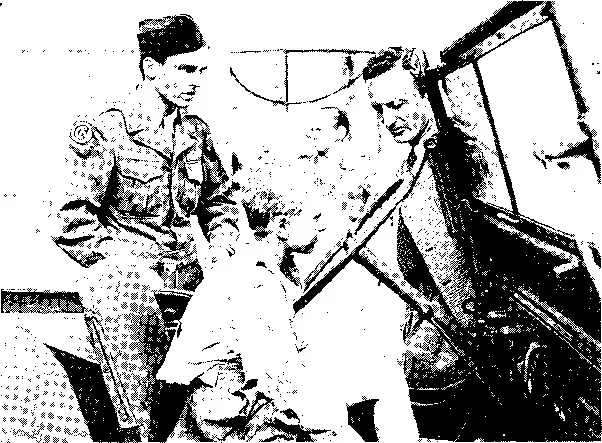
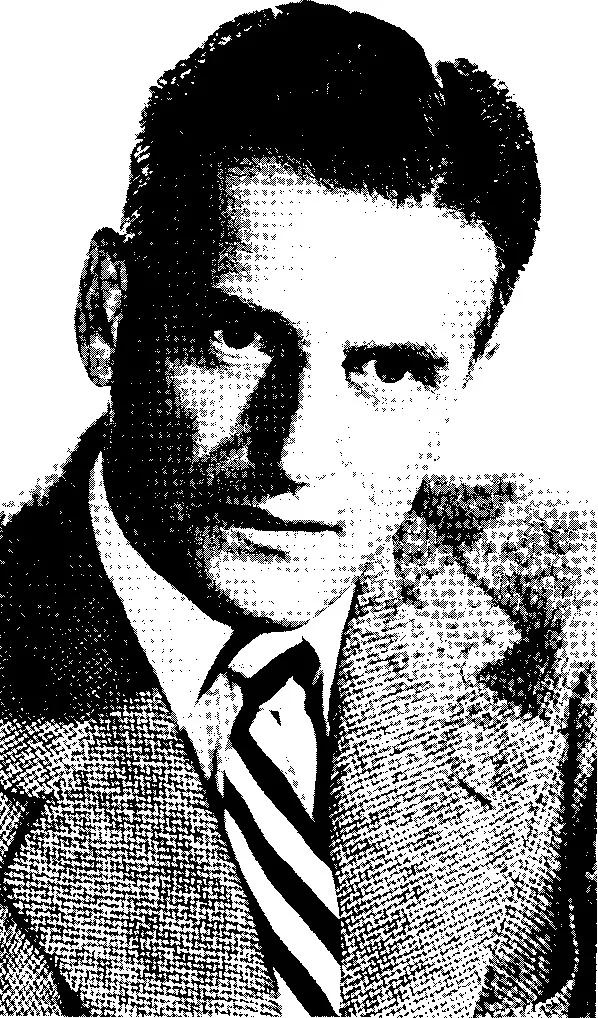
Born in New York in 1913, Kramer had worked in films since the mid-1930s as a researcher, film editor and writer. Following war service with the US Army Signal Corps, he began his cycle of low-budget but prestigious 'message' pictures. He was to become the key innovatory new producer in the post-war drive for independence as the studio system underwent massive change and upheaval. A total of seventeen films were to follow between 1948 and 1954 as Kramer created his own mini-studio at the Motion Picture Center, based on a small team of regular contributors. Ralph Sternad served as production designer on all seventeen films; Dimitri Tiomkin scored almost half; Franz Planer shot nearly a third. Thirteen of the films were directed by just five directors – Edward Dmytryk (four), Fred Zinnemann (three), Laszlo Benedek, Richard Fleischer and Mark Robson (two each). Scripts for six were created by Carl Foreman prior to his rift with Kramer during High Noon in Autumn 1951.5
A low-budget ethos, combined with liberal social values, were to be the hallmarks of Kramer's approach. A commitment to experiment was balanced by a frank reliance on the tried and tested stage-play; nearly half the seventeen films came straight from the theatre, a strategic choice which Kramer openly attributed to a distrust of writers and a preference for the security of the dramatic text. Intensive methods for production involved preparation for as long as a year per picture, culminating in short bursts of intensive rehearsal with players and technicians. Shooting schedules were usually as short as three to six weeks. High Noon rehearsed for a week and was shot in a month, whilst Home of the Brave, bought in mid-January 1949, was shot in a mere eighteen days, and the first print was ready at the beginning of April for release in late May, creating something of a record for the independent cinema. Profits could be substantial for Kramer's backers: in 1950 Robert Stillman was happy to report a profit of $500,000 on his investment of $347,000 in Champion and Home of the Brave.6
Kramer's first film, Fleischer's So This Is New York (1948), starred Henry Morgan in a social comedy about inherited wealth, marriage, and the differing life styles of Indiana and New York. It was followed by Robson's Champion, a film noir about boxing, which starred Kirk Douglas and, nominated for five Academy Awards, won an Oscar for its editor Harry Gerstad. Robson's Home of the Brave, made in secrecy in two months in the Spring of 1949, turned Arthur Laurents' play about anti-Semitism in the US Army into a groundbreaking account of army racism, focusing on the psychological history of a wounded black GI, played by James Edwards. The theme of the traumatised male was further explored in Zinnemann's The Men (1950), and in Gordon's Cyrano de Bergerac, starring José Ferrer and released some six weeks before the start of High Noon. Masculinity in crisis was the persistent theme of Kramer's early career.
Kramer now moved from the margin to the centre by taking on a multi-picture deal with Columbia that would commit him to the hectic schedule of producing thirty films within five years, heralding a major change from the serial production practices of his earlier period. The first film in the deal, Benedek's screen version of Arthur Miller's Death of a Salesman, starring Frederic March, was released in Spring 1952, quickly followed by Fregonese's prison film My Six Convicts. High Noon was previewed at the end of April 1952, followed in May by The Sniper, a crime drama about a serial murderer (Arthur Franz), directed by Edward Dmytryk, just back from a HUAC jail sentence. Fleischer's The Happy Time, a comedy of manners chronicling the coming of age of a teenage boy (Bobby Driscoll) in the 1920s, Reis' The Four Poster, a two-hander based on Jan de Hartog's play about the progress of a married couple (Rex Harrison and Lilli Palmer) between the 1890s and the roaring twenties, and Dmytryk's Eight Iron Men, a war film about a group of soldiers who risk their lives to rescue a trapped comrade, were released in quick succession between December 1952 and January 1953.
Zinnemann's The Member of the Wedding was followed by Dmytryk's The Juggler, the story of the emotional and psychological recuperation of an entertainer (Kirk Douglas) who, after losing his wife and child in the concentration camps of the 1930s, goes to Israel as a post-war refugee. Rowland's The 5,000 Fingers of Doctor T, a technicolour musical fantasy in which a young boy (Tommy Rettig) falls asleep over his piano practice and dreams his way into a hellish underworld presided over by the fiendish Dr. Terwilliker (Hans Conreid), also appeared in 1953. Benedek's The Wild One (1954), one of several fifties pictures about youth in rebellion, and the generation gap, reintroduces Marlon Brando, this time as the leader of a motorcycle gang that disturbs the peace of a middle American town. Kramer's final film purely as producer was Dmytryk's The Caine Mutiny (1954), starring Humphrey Bogart as Captain Queeg in a story of power and delusion leading to a wartime mutiny aboard the USS Caine. Although the deal with Columbia was dissolved, ...