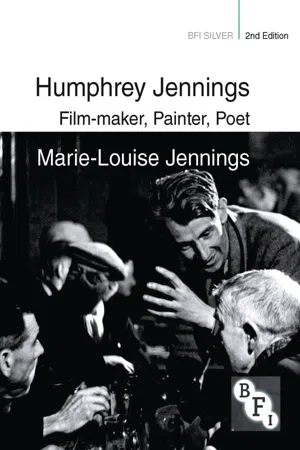
Humphrey Jennings was one of Britain's greatest documentary film-makers, described by Lindsay Anderson in 1954 as 'the only real poet the British cinema has yet produced'. A member of the GPO Film Unit and director of wartime canonical classics such as Listen to Britain (1942) and A Diary for Timothy (1945), he was also an acclaimed writer, painter, photographer and poet.
This seminal collection of critical essays, first published in 1982 and here reissued with a new introduction, traces Jennings's fascinating career in all its aspects with the aid of documents from the Jennings family archive. Situating Jennings's work in the world of his contemporaries, and illuminating the qualities by which his films are now recognised, Humphrey Jennings: Film-Maker, Painter, Poet explores the many insights and cultural contributions of this truly remarkable artist.
- 136 pages
- English
- ePUB (mobile friendly)
- Available on iOS & Android
eBook - ePub
About this book
Trusted by 375,005 students
Access to over 1 million titles for a fair monthly price.
Study more efficiently using our study tools.
Information
Chronology and Documents
Note on Presentation
In making this selection from my father’s papers, I have tried first to give some idea of where he was and on what he was working throughout his life. Secondly, I have attempted to link up ideas and images which have appeared and reappeared in his work. Thirdly, I have brought together material which, as much as possible, reflects his thoughts and concerns during the production of a particular piece of work.
Essays on my father’s life and work over the past thirty years have been based on memories of colleagues and friends which, valuable though they are (and that is why some of them have been republished here), nevertheless were written often with little knowledge of what my father himself was thinking about his work and in some cases there were factual inaccuracies. Again and again friends have said that it has been impossible for them to convey his presence and ideas because what marked him out was the way in which he conveyed them, talking and arguing vigorously with those around him. One feature of this selection is that it begins to show the energy with which his thoughts were conveyed.
I have divided his life up into five sections which deal first with childhood and his education in Cambridge; then Paris and painting; the GPO Film Unit, surrealism and Mass Observation; the war and the war-time films; and post-war work up to his death in 1950. I have selected from letters and from work in progress from film scripts and treatments and notebooks and poetry as I think that they show the development of his ideas between 1930 and 1950. Admirers of his films will find it helpful to look also at his paintings and read his poetry. Last, the letters between 1940 and 1944 in particular are important as reports on Britain at war.
I have made minimal spelling corrections and marked gaps in the excerpts [...].
Marie-Louise Jennings, Hammersmith, 1981
Family/Childhood/School/Cambridge/Marriage
1907
Frank Humphrey Sinkler Jennings was born on 19 August 1907 at The Gazebo, Walberswick, Suffolk. His parents were Frank Jennings and Mildred Jessie Hall. Frank Jennings was an architect and born in Newmarket, Suffolk in 1877, the youngest of fourteen children. His father, Thomas Jennings, trained racehorses, notably Gladiateur, known as the Avenger of Waterloo, the first French horse to win the Derby, in 1865. Mildred Jessie Hall was the daughter of a solicitor and born in Lewisham, London in 1881. She was a talented painter and later ran a shop, first at Walberswick and later in Holland Street, London, selling imported French pottery and textiles.

With his parents (1908)
1916–26
Jennings went to the Perse School, Cambridge at that time under the headmastership of the redoubtable Dr W. H. Rouse. The Perse was noted for its progressive teaching of English and drama, classics and modern languages. Jennings took part in and designed scenery for a large number of plays while at the Perse and later while an undergraduate at Pembroke College.
1926
He won a scholarship to Pembroke College, Cambridge to read English, where his tutor was Aubrey Attwater, friend of Robert Graves during the 1914–1918 War. In March he designed the scenery and costumes for a production of Thomas Heywood’s The Fair Maid of Perth for the Marlowe Society. He also designed sets for the Amateur Dramatic Club’s Christmas revue and took part in sketches.
1927
Jennings gained a First Class in Part I of the English Tripos and the Parkin Scholarship at Pembroke. He acted in a Cambridge Amateur Dramatic Club production of At the Same Time by A. P. Herbert. In December he designed the sets for a production at the Perse School and played a small part and he designed scenery for Dennis Arundell’s production of Henry Purcell’s King Arthur with enormous success.
1928
Jennings designed The Soldier’s Tale by Stravinsky for its first public performance in Britain with Lydia Lopokova and Michael Redgrave, produced by Dennis Arundell and conducted by Boris Ord.
1929
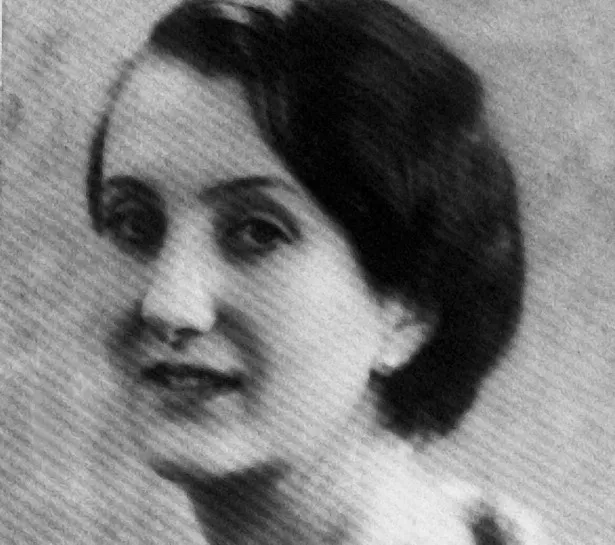
In May he designed the scenery and costumes for a production of Honegger’s King David produced by the Cambridge University Musical Society – its first production as a dramatic pageant in Britain. In June he gained Double First Honours in the English Tripos with a mark of Distinction in Part II. During this year he also designed costumes and scenery for the London Opera Festival productions of Cupid and Psyche and Dido and Aeneas. Some time early in the year he met Cicely Cooper, the sister of Edward Cooper, a younger contemporary of his at the Perse.
Cicely Cooper was born in 1908, the daughter of Richard Synge Cooper, a civil engineer who at his retirement was engineer for New Works for the London Midland and Scottish Railway at Euston. Both her parents were Anglo-Irish and she and her brothers were widely read and gifted in languages. In October he and Cicely Cooper married at Kensington Register Office. By then, Jennings had gained a bursary from the Goldsmiths Company for postgraduate research, in addition to the Foundress Scholarship from Pembroke, and began work on Thomas Gray.
1930
In March, Jennings designed the sets and costumes for The Bacchae of Euripides produced by J. T. Sheppard. He edited Venus and Adonis from the Quarto of 1593 for the Experiment Press and acted Bottom in a production of Purcell’s The Fairy Queen which was produced by Dennis Arundell in early 1931.
Childhood
When I was a child, there was a curious relation of horses and trains at Newmarket like this: My grandmother had a house up the Bury Road on the way to the heath. If you slept in the front of the house you were woken up in the morning by the sound of strings’ hooves going out to exercise and then again, as they came back. Running along the bottom of the garden behind the house was a railway cutting and on the left was a tunnel mouth where the trains came out of Warren Hill. On the far side of the line there were long deserted platforms – Warren Hill Station; only used on race days. Out of the mouth of the tunnel there was a permanent lock of black smoke twisting upwards.
Beyond the Life of Man/unpublished n.d.
Blythburgh 1910
It was a time of artists and bicycles and blue and white spotty dresses.
They had a little boy who was carried in the basket of his mother’s bicycle and they used to picnic on the common between Walberswick and Blythburgh.
In the summer the gorse on the Common bright yellow and a spark from the train as it passed would set the dry bushes on fire.
How hot those flames of gorse, how hot even the day itself!
How cool the inside of Blythburgh Church – the shade of a great barn, from whose rafters and king-posts the staring angels outspread wooden wings.
The solemnity of a child.
The intensity of the sea-bird.
1943

Blythburgh Church; (right) photograph by H. J.
War and Childhood
I remember as a child by the ferry watching the soldiers testing horses for France. Farm-horses – chasing them naked down to the river while the men on the banks hallooed and shot off guns in the air. I remember the Scots fisher girls on Blackshore gutting the herring and singing in Gaelic. Scaly hands running in fish-blood, the last vessel dropping her sail at the pier’s end, the last fish kicking the net. But today there is nothing – nothing of the girls or the boats or the nets or the songs or even the fishmarket itself. Utterly gone – only the wind and broken glass and rough tiles made smooth by the sea. Only still visions of bloodshot eyes brimming over with fear.
1943
To Walberswick
All the memorials of this part of the world, as far back as the written word stretches, are reports of disaster – fire, flood, encroachments of the sea, poverty, oppression, decline, war and the military, destruction of common rights.
To the east is the sea. The sea-coast consist of sand-dunes, shingle, clayey cliffs, which are continually eaten away by the waves at their base and so slide into the main. Then the winds and the tides will silt up the river’s mouth or break down the dykes and inundate the marshes and meadows and farmsteads far inland with winters of great flood. Then storms at sea will cast vessels on the banks of the Ness and batter them to pieces. Then fire will catch the dry grass on the common and spread from roof to roof. Then the townsfolk will come out on the marsh with billhooks and flails and defend the commons against the Lord’s men.
Unwritten the story of the people’s resistance, uncelebrated in word their struggle and labour. But the church towers from the past, the jetties and piers, the mills and lighthouses, the farms and cottages, the roads and the ridiculous railway – in whatever state they may be now – we must never forget that they were made and built and created and tended by the people – not by those powers for whom they were put up or whose names they bear or whose money allowed them to call them theirs – into the actual making they had little or no part – it wa...
Table of contents
- Cover
- Title Page
- Contents
- Foreword to the 2nd Edition
- Publisher’s Note (1982)
- Foreword to the 1st Edition
- Chronology and Documents
- A Note on Images
- Humphrey Jennings
- Only Connect: Some Aspects of the Work of Humphrey Jennings
- More Than a Shadow: Humphrey Jennings and Stewart McAllister
- Sketch for an Historical Portrait of Humphrey Jennings
- Notes
- Filmography
- Bibliography
- Index
- List of Illustrations
- eCopyright
Frequently asked questions
Yes, you can cancel anytime from the Subscription tab in your account settings on the Perlego website. Your subscription will stay active until the end of your current billing period. Learn how to cancel your subscription
No, books cannot be downloaded as external files, such as PDFs, for use outside of Perlego. However, you can download books within the Perlego app for offline reading on mobile or tablet. Learn how to download books offline
Perlego offers two plans: Essential and Complete
- Essential is ideal for learners and professionals who enjoy exploring a wide range of subjects. Access the Essential Library with 800,000+ trusted titles and best-sellers across business, personal growth, and the humanities. Includes unlimited reading time and Standard Read Aloud voice.
- Complete: Perfect for advanced learners and researchers needing full, unrestricted access. Unlock 1.4M+ books across hundreds of subjects, including academic and specialized titles. The Complete Plan also includes advanced features like Premium Read Aloud and Research Assistant.
We are an online textbook subscription service, where you can get access to an entire online library for less than the price of a single book per month. With over 1 million books across 990+ topics, we’ve got you covered! Learn about our mission
Look out for the read-aloud symbol on your next book to see if you can listen to it. The read-aloud tool reads text aloud for you, highlighting the text as it is being read. You can pause it, speed it up and slow it down. Learn more about Read Aloud
Yes! You can use the Perlego app on both iOS and Android devices to read anytime, anywhere — even offline. Perfect for commutes or when you’re on the go.
Please note we cannot support devices running on iOS 13 and Android 7 or earlier. Learn more about using the app
Please note we cannot support devices running on iOS 13 and Android 7 or earlier. Learn more about using the app
Yes, you can access Humphrey Jennings by Marie-Louise Jennings in PDF and/or ePUB format, as well as other popular books in Media & Performing Arts & Film Direction & Production. We have over one million books available in our catalogue for you to explore.