eBook - ePub
Single-Cell Omics
Volume 2: Technological Advances and Applications
- 384 pages
- English
- ePUB (mobile friendly)
- Available on iOS & Android
eBook - ePub
Single-Cell Omics
Volume 2: Technological Advances and Applications
About this book
Single-cell Omics, Volume 2: Advances in Applications provides the latest single-cell omics applications in the field of biomedicine. The advent of omics technologies have enabled us to identify the differences between cell types and subpopulations at the level of the genome, proteome, transcriptome, epigenome, and in several other fields of omics. The book is divided into two sections: the first is dedicated to biomedical applications, such as cell diagnostics, non-invasive prenatal testing (NIPT), circulating tumor cells, breast cancer, gliomas, nervous systems and autoimmune disorders, and more. The second focuses on cell omics in plants, discussing micro algal and single cell omics, and more.
This book is a valuable source for bioinformaticians, molecular diagnostic researchers, clinicians and several members of biomedical field interested in understanding more about single-cell omics and its potential for research and diagnosis.
- Covers the diverse single cell omics applications in the biomedical field
- Summarizes the latest progress in single cell omics and discusses potential future developments for research and diagnosis
- Written by experts across the world, it brings different points-of-view and study cases to fully give a comprehensive overview of the topic
Trusted by 375,005 students
Access to over 1.5 million titles for a fair monthly price.
Study more efficiently using our study tools.
Information
Section I
Single-Cell Omics: Biomedical Applications
Chapter 1
Single-Cell Diagnostics, Prognosis, and Therapy
Dipali Dhawan PanGenomics International Pvt Ltd, Ahmedabad, India
Abstract
Single-Cell omics technologies have multiple applications in various fields. The applications of single-cell technologies in diagnostics, prognosis, and therapeutics play important roles in clinical practice. This chapter briefly highlights the role of single-cell omics in various areas, including oncology and gynecology, enabling better patient management.
Keywords
Diagnosis; Prognosis; Therapy; Cancer; Preimplantation genetic screening
1.1 Introduction
Disease biomarkers have gained importance in a number of applications over the past few years, including diagnosis and response to treatment (Wu and Wang, 2015; Tiberti et al., 2013; Fang et al., 2012), intermolecular interactions and the role of molecules in their pathways (Wu et al., 2014; Liu et al., 2014; Villar et al., 2014), prediction of treatment outcomes as prognostic biomarkers (Chen and Ware, 2015; Graves et al., 2014; Frantzi et al., 2014), identification of the function of genetic variants (Oh et al., 2015; Carper and Claudio, 2015), and pharmacodynamics and toxicity prediction (Kiseleva et al., 2015; Cruz et al., 2015; Stansfield and Ingram, 2015). Single-cell omics technologies have various applications in the clinic in terms of diagnostics, prognosis, and therapeutics. However, the field is growing gradually with advances in technologies. More progress is needed in methods for high-resolution image capture (in terms of both time and scale), single-cell molecule analysis on-site, and mathematical algorithms, in addition to the fields of genomics, proteomics, transcriptomics, and epigenomics (Battich et al., 2013; Itzkovitz and van Oudenaarden, 2011; Passarelli and Ewing, 2013; Brazda et al., 2014). These are pertinent for obtaining satisfactory coverage and high measurement accuracy. Single-cell analysis has many advantages in comparison with the traditional methods, especially related to accuracy after sample collection, amplification, and library construction.
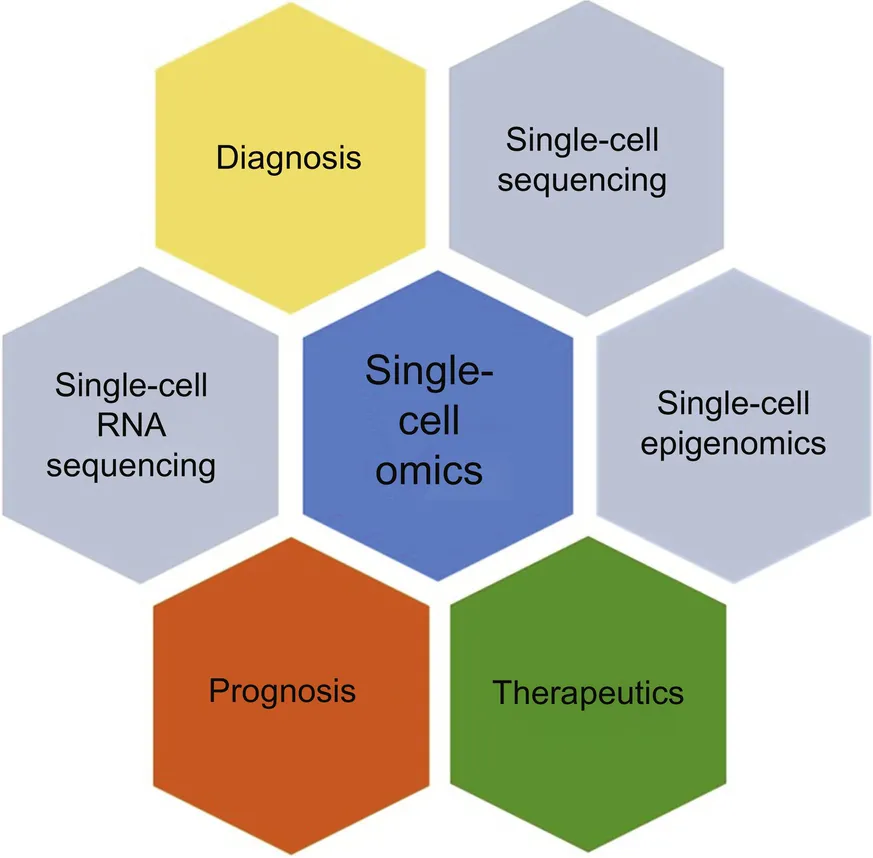
Single-cell analysis can be performed in cells of various origins, including fetal cells (Hahn et al., 2009; Lo and Chiu, 2008; Lun et al., 2008), white blood cells (WBCs) (Honda et al., 2010; Lewis and Pollard, 2006), nucleated red blood cells (NRBCs) (Lo et al., 2007), circulating tumor cells (Solmi et al., 2004; Li et al., 2005; Smith et al., 1991), induced pluripotent stem cells (iPSCs) (Narsinh et al., 2011), embryonic stem (ES) cells (Tang et al., 2008, 2010a; Tang, 2006), and oocytes (Tang et al., 2009, 2010b, 2011). These samples are heterogeneous and some have a stochastic nature (Marinov et al., 2014), leading to single-cell analysis as the best option to study such sample types. A classic example to explain the importance of single-cell analysis is the identification of a rare event such as a somatic mutation affecting gene expression or a functional protein; single-cell analysis also enables the classification of a small subpopulation of cells like cancer stem cells, which play an important role in progression of disease. Also, availability of a large quantity of cells for disease diagnosis is a major constraint that can be overcome by single-cell analysis technologies (Speicher, 2013; Sandberg, 2014). This chapter discusses some applications of single-cell analysis in diagnosis, prognosis, and therapeutics (Fig. 1.1).
1.2 Applications of Single-Cell Omics
1.2.1 Diagnostics
One of the major diagnostic applications of single-cell omics is in oncology. A number of reports highlight the role of this technology in different cancer types when using DNA sequencing, RNA sequencing, or both. Researchers have used this technology in single-cell sequencing of primary human cancer cells and also sequencing of circulating tumor cells (CTCs). Some studies also elucidate the interactions between the tumor microenvironment and tumor cells (Tirosh et al., 2016a). Single-cell omics technology has enabled identification of intratumor heterogeneity and classification of cancer cells into different groups based on their expression profiles (Tirosh et al., 2016b). With the advancement of liquid biopsy testing, it is possible to collect biopsies from cancer patients in a minimally invasive way and process the samples for sequencing of CTCs. It has become possible to characterize tumors on the basis of molecular phenotype with better resolution. Studies have shown that more than half of the mutations responsible for primary and metastatic tumors can be identified in CTCs of lung cancer patients (Ni et al., 2013), colorectal cancer patients (Heitzer et al., 2013), and prostate cancer patients (Lohr et al., 2014).
Preimplantation genetic screening and diagnosis (PGS/PGD) has progressed remarkably due to advances in single-cell genomics technologies. Fig. 1.2 gives a brief overview of PGS using single-cell sequencing. Array comparative genomic hybridization (array CGH) and single nucleotide polymorphism (SNP) arrays help in the rapid identification of inherited or de novo copy number variations across all chromosomes in single cells. Previous methods like fluorescence in situ hybridization (FISH) will be replaced by these newer methodologies, as they offer better resolution and more information. One of the major advantages of single-cell SNP genotyping is the genome-wide identification of inheritance patterns of disease-causing haplotypes (Handyside et al., 2010; Altarescu et al., 2013). Genome-wide haplotyping of single cells is a newer method that is not currently being offered commercially. Single blastomere biopsies from cleavage-stage embryos or trophectoderms from human blastocysts are currently offered in clinical practice for preimplantation genetic screening and diagnosis (PGS/PGD) (Yin et al., 2013; Treff et al., 2013).

Fiorentino and colleagues screened single blastomeres using a next-generation sequencing (NGS)-based method for single-cell analysis (Fiorentino et al., 2014a). The accuracy of this method was compared to array CGH-based methods in further studies by the group Fiorentino et al. (2014b). Better resolution and accuracy are the main advantages of single-cell genome sequencing over microarrays. Further, sequencing of single cells allows detection of mitochondrial DNA variations. Another study was aimed at observing segmental aneuploidies in trophectoderm biopsies using a single-cell NGS method (Vera-Rodriguez et al., 2016). NGS-based methods are also used for noninvasive prenatal screening to identify aneuploid fetuses before birth. One of the studies successfully detected copy number variations (CNVs) in four cells by low-coverage massively parallel sequencing from blood, with a sensitivity of 99.63% and specificity of 97.71%, respectively (Zhang et al., 2013).
RNA-seq has been used to sequence single neurons from different regions of the human cerebral cortex and has enabled identification of neuronal subtypes from the transcriptome profiles (Lake et al., 2016). Single-cell DNA sequencing has been used for identification of CNVs in brain diseases. Numerous mosaic CNVs have been reported in human neurons (McConnell et al., 2013). Somatic CNVs have been identified in hemimegalencephaly (HMG) (Cai et al., 2014).
1.2.2 Prognosis
In order to plan an effective treatment, it is crucial to have a precise prognosis. Single-cell omics methodologies have enabled characterization of many cancer types and identified new prognostic factors. Lindholm et al. (1990) have identified a nuclear area as a prognostic factor for Stage I malignant melanomas using single-cell DNA cytophotometry. Single-cell sequencing of PTEN in prostate cancer can predict prognosis (Heselmeyer-Haddad et al., 2014). Another stud...
Table of contents
- Cover image
- Title page
- Table of Contents
- Copyright
- Contributors
- About the Editors
- Preface
- Section I: Single-Cell Omics: Biomedical Applications
- Section II: Single-Cell Omics in Plants
- Index
Frequently asked questions
Yes, you can cancel anytime from the Subscription tab in your account settings on the Perlego website. Your subscription will stay active until the end of your current billing period. Learn how to cancel your subscription
No, books cannot be downloaded as external files, such as PDFs, for use outside of Perlego. However, you can download books within the Perlego app for offline reading on mobile or tablet. Learn how to download books offline
Perlego offers two plans: Essential and Complete
- Essential is ideal for learners and professionals who enjoy exploring a wide range of subjects. Access the Essential Library with 800,000+ trusted titles and best-sellers across business, personal growth, and the humanities. Includes unlimited reading time and Standard Read Aloud voice.
- Complete: Perfect for advanced learners and researchers needing full, unrestricted access. Unlock 1.5M+ books across hundreds of subjects, including academic and specialized titles. The Complete Plan also includes advanced features like Premium Read Aloud and Research Assistant.
We are an online textbook subscription service, where you can get access to an entire online library for less than the price of a single book per month. With over 1.5 million books across 990+ topics, we’ve got you covered! Learn about our mission
Look out for the read-aloud symbol on your next book to see if you can listen to it. The read-aloud tool reads text aloud for you, highlighting the text as it is being read. You can pause it, speed it up and slow it down. Learn more about Read Aloud
Yes! You can use the Perlego app on both iOS and Android devices to read anytime, anywhere — even offline. Perfect for commutes or when you’re on the go.
Please note we cannot support devices running on iOS 13 and Android 7 or earlier. Learn more about using the app
Please note we cannot support devices running on iOS 13 and Android 7 or earlier. Learn more about using the app
Yes, you can access Single-Cell Omics by Debmalya Barh,Vasco Ariston De Car Azevedo,Vasco Azevedo in PDF and/or ePUB format, as well as other popular books in Medicine & Pharmaceutical, Biotechnology & Healthcare Industry. We have over 1.5 million books available in our catalogue for you to explore.