eBook - ePub
Handbook of Fire and Explosion Protection Engineering Principles for Oil, Gas, Chemical, and Related Facilities
- 522 pages
- English
- ePUB (mobile friendly)
- Available on iOS & Android
eBook - ePub
Handbook of Fire and Explosion Protection Engineering Principles for Oil, Gas, Chemical, and Related Facilities
About this book
Handbook of Fire and Explosion Protection Engineering Principles for the Oil, Gas, Chemical, and Related Facilities, Fourth Edition, discusses high-level risk analysis and advanced technical considerations, such as process control, emergency shut-downs, and evaluation procedures. As more engineers and managers are adopting risk-based approaches to minimize risk, maximize profits, and keep operations running smoothly, this reference encompasses all the critical equipment and standards necessary for the process industries, including oil and gas. Updated with new information covering fire and explosion resistant systems, drainage systems, and human factors, this book delivers the equipment standards needed to protect today's petrochemical assets and facilities.
- Provides tactics on how to revise and upgrade company policies to support safer designs and equipment
- Helps readers understand the latest in fire suppression and explosion risks for a process plant in a single source
- Updates on how to evaluate concerns, thus helping engineers and managers process operating requests and estimate practical cost benefit factors
Trusted by 375,005 students
Access to over 1.5 million titles for a fair monthly price.
Study more efficiently using our study tools.
Information
Chapter 1
Historical Background, Legal Influences, Management Responsibility, and Safety Culture
Abstract
An examination of the history of the petroleum industry from its earliest beginnings to the present day, which is a general look at the relative lack of process safety features that lead to numerous major incidents, is given in this chapter. General safety observations from the beginning of the industry in 1859 to the present day multibillion dollar losses are highlighted. The beginning of US safety laws are traced from 1900 to the present day, including workmen’s compensation, Occupational Safety and Health Administration establishment, PSM regulation, Chemical Safety Board, and the latest DHS, SVA Uptown/Riverbend house and Executive Order impacts. The role of the fire protection engineer is highlighted, along with the responsibility and accountability of an organization’s senior management. Finally, how to achieve a proper safety culture within an organization is explained with its interface in safety management/operational excellence management systems.
Keywords
Business interruption; Chemical Safety Board (CSB); cost influence curve; Department of Homeland Security; design; EPA; fire protection engineering; historical fires; legal influences; management responsibility; negligence; NIOSH; Occupational Safety and Health Administration; risk acceptance; risk avoidance; risk insurance; risk reduction; root causes; safety culture
Fire, explosions, and environmental pollution are amongst the most serious “unpredictable” life events with business losses having an impact on the petroleum, petrochemical, and chemical industries today. These issues have essentially existed since the inception of industrial-scale petroleum and chemical operations during the middle of the 20th century. These issues occur with increasing financial impacts, highly visible news reports, and increasing governmental concern. Management involvement in the prevention of these incidents is vital if they are to be avoided. Although in some perspectives “accidents” are thought of as nonpreventable, in fact, all “accidents,” more correctly referred to as incidents, are preventable. This book is about examining process facilities and measures to prevent such incidents from occurring.
In-depth research and historical analyses have shown that the main causes of incidents or failures can be categorized into the following basic areas:
- Ignorance:
- • Assumption of responsibility by management without an adequate understanding of risks;
- • Supervision or maintenance occurs by personnel without the necessary understanding;
- • Incomplete design, construction, or inspection occurs;
- • There is a lack of sufficient preliminary information;
- • Failure to employ individuals to provide guidance in safety with competent loss prevention knowledge or experience;
- • The most prudent and current safety management techniques/operational excellence (OE) (or concerns) are not known or applied; or advised to senior staff.
- Economic considerations:
- • Operation, maintenance, or loss prevention costs are reduced to a less than adequate level;
- • Initial engineering and construction costs for safety measures appear uneconomical.
- Oversight and negligence:
- • Contractual personnel or company supervisors knowingly assume high risks;
- • Failure to conduct comprehensive and timely safety reviews or audits of safety management systems and facilities;
- • Unethical or unprofessional behavior occurs;
- • Inadequate coordination or involvement of technical, operational, or loss prevention personnel, in engineering designs or management of change reviews;
- • Otherwise competent professional engineers and designers commit errors.
- Unusual occurrences:
- • Natural disasters—earthquakes, floods, tsunamis, weather extremes, etc., which are out of the normal design range planned for the installation;
- • Political upheaval—terrorist activities;
- • Labor unrest, vandalism, sabotage.
These causes are typically referred to as “root causes.” Root causes of incidents are typically defined as “the most basic causes that can reasonably be identified which management has control to fix and for which effective recommendations for preventing reoccurrence can be generated.” Sometimes it is also referred to as the absence, neglect, or deficiencies of management systems that allow the “causal factors” to occur or exist. The most important key here to remember is that root causes refer to failure of a management system. Therefore, if your investigation into an incident has not referred to a management action or system, it might be suspect of not identifying the root cause of it. There are many incident reviews where only the immediate cause, or commonly referred to as the causal factors, is identified. If the incident review only identifies causal factors, then it is very likely the incident has a high probability of occurring again as the root cause has not been addressed. Helpful root cause mapping/identificaiton tools are available from most incident investigation consultants to aid in the identification of casual and root causes.
The insurance industry has estimated that 80% of incidents are directly related or attributed to the individuals involved. Most individuals have good intentions to perform a function properly, but it should be remembered that where shortcuts, easier methods, or considerable (short-term) economic gain opportunities present themselves, human vulnerability usually succumbs to the temptation. Therefore it is prudent in any organization, especially where high-risk facilities are operated, to have a system in place to conduct considerable independent checks, inspections, and safety audits of the operation, maintenance, design, and construction of the installation. Safety professionals have realized for many decades that safety practices and a good safety culture are good for business profitability.
This book is all about the engineering principles and philosophies to identify and prevent incidents associated with hydrocarbon and chemical facilities. All engineering activities are human endeavors and thus they are subject to errors. Fully approved facility designs and later changes can introduce an aspect from which something can go wrong. Some of these human errors are insignificant and may never be uncovered. However, others may lead to catastrophic incidents. Recent incidents have shown that any “fully engineered” and operational process plants can experience total destruction. Initial conceptual designs and operational philosophies have to address the possibilities of a major incident occurring and provide measures to prevent or mitigate such events. Thorughout this book the term incidents are used instead of accidents, as accidents implies the event is considered not preventable, which in reality almost all accident are preventable.
1.1 Historical Background
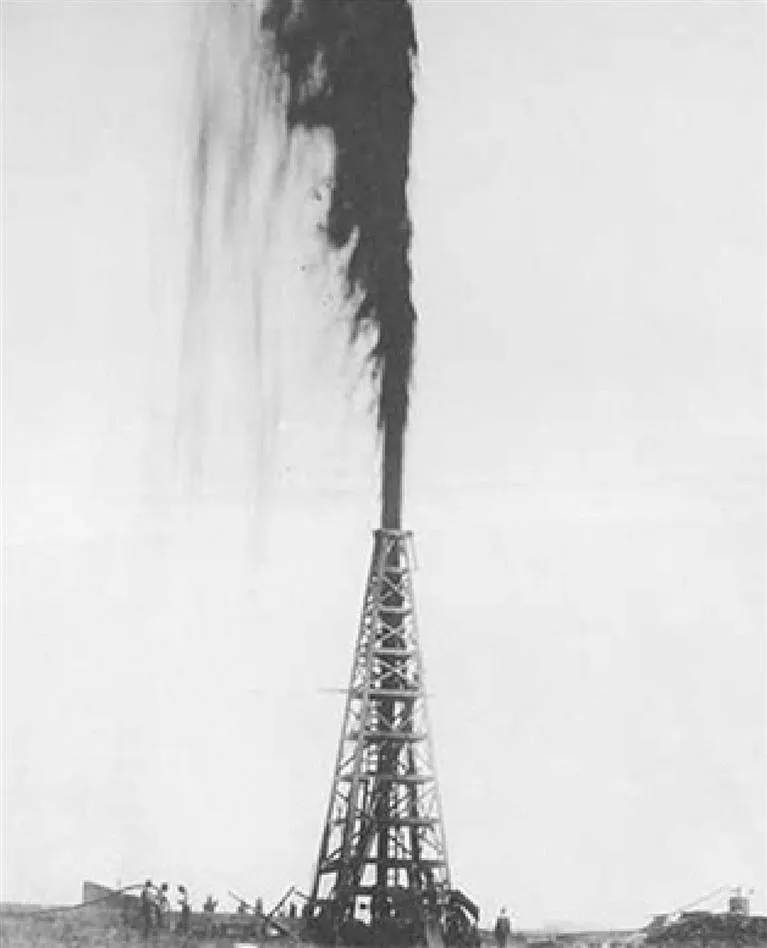
The first commercially successful oil well in the United States was drilled in August 1859 in Titusville (Oil Creek), Pennsylvania, by Colonel Edwin Drake (1819–80). Few people realize that Colonel Drake’s famous first oil well caught fire and some damage was sustained to the structure shortly after its operation. Later in 1861, another oil well at “Oil Creek,” close to Drake’s well, caught fire and grew into a local conflagration that burned for 3 days causing 19 fatalities. One of the earliest oil refiners in the area, Acme Oil Company, suffered a major fire loss in 1880, from which it never recovered. The state of Pennsylvania passed the first antipollution laws for the petroleum industry in 1863. These laws were enacted to prevent the release of oil into waterways next to oil production areas. At another famous and important early US oilfield named “Spindletop” (discovered in 1901) located in Beaumont, Texas, an individual smoking set off the first of several catastrophic fires, which raged for a week, only 3 years after the discovery of the reservoir. Major fires occurred at Spindletop almost every year during its initial production. Considerable evidence is available that hydrocarbon fires were a fairly common sight at early oil fields. These fires manifested themselves as either from manmade, natural disasters, or from deliberate and extensive unlawful acts of individuals of the then “unmarketable” reservoir gas. Hydrocarbon fires were accepted as part of the early industry and generally little effort was made to stem their existence (see Figs. 1.1 and 1.2).

Offshore drilling began in 1897, just 38 years after Colonel Edwin Drake drilled the first well in 1859. H.L. Williams is credited with drilling a well off a wooden pier in the Santa Barbara Channel in California. He used the pier to support a land rig next to an existing field. Five years later, there were 150 “offshore” wells in the area. By 1921, steel piers were being used in Rincon and Elwood (California) to support land-type drilling rigs. In 1932, a steel-pier island (60×90 ft with a 25-ft air gap) was built half a mile offshore by a small oil company, Indian Petroleum Corporation, to support another onshore-type rig. Although the wells were disappointing and the island was destroyed in 1940 by a storm, it was the forerunner of the steel-jacketed platforms of today.
Offshore ultra-deepwater wells now cost more than $50 million, and some wells have cost more than $100 million. It is very difficult to justify wells that cost this much given the risks involved in drilling the unknown. The challenge to the offshore industry is to drill safely and economically, which means “technology of economics,” with safety, environment, security, and personnel all playing a large role.
The first oil refinery in the world was built in 1851 in Bathgate, Scotland, by Scottish chemist James Young (1811–83), who used oil extracted from locally mined torbanite, shale, and bituminous coal to distill naphtha and lubricating oils that could light lamps or be used to lubricate machinery. Shortly afterwards, Ignacy Łukasiewicz (1822–82), a pharmacist, opened an “oil distillery,” which was the first industrial oil refinery in the world, around 1854–56, near Jasło, then Galicia in the Austrian Empire, and now Poland. These refineries were initially small as there ...
Table of contents
- Cover image
- Title page
- Table of Contents
- Copyright
- Dedication
- About the Author
- Preface
- Chapter 1. Historical Background, Legal Influences, Management Responsibility, and Safety Culture
- Chapter 2. Overview of Oil, Gas, and Petrochemical Facilities
- Chapter 3. Philosophy of Protection Principles
- Chapter 4. Physical Properties of Hydrocarbons and Petrochemicals
- Chapter 5. Characteristics of Hazardous Material Releases, Fires, and Explosions
- Chapter 6. Historical Survey of Major Fires and Explosions in the Process Industries
- Chapter 7. Risk Analysis
- Chapter 8. Segregation, Separation, and Arrangement
- Chapter 9. Grading, Containment, and Drainage Systems
- Chapter 10. Process Controls
- Chapter 11. Emergency Shutdown
- Chapter 12. Depressurization, Blowdown, and Venting
- Chapter 13. Overpressure and Thermal Relief
- Chapter 14. Control of Ignition Sources
- Chapter 15. Elimination of Process Releases
- Chapter 16. Fire- and Explosion-Resistant Systems
- Chapter 17. Fire and Gas Detection and Alarm Systems
- Chapter 18. Evacuation Alerting and Arrangements
- Chapter 19. Methods of Fire Suppression
- Chapter 20. Special Locations, Facilities, and Equipment
- Chapter 21. Human Factors and Ergonomic Considerations
- Appendix A: Testing Firewater Systems
- Appendix B: Reference Data
Frequently asked questions
Yes, you can cancel anytime from the Subscription tab in your account settings on the Perlego website. Your subscription will stay active until the end of your current billing period. Learn how to cancel your subscription
No, books cannot be downloaded as external files, such as PDFs, for use outside of Perlego. However, you can download books within the Perlego app for offline reading on mobile or tablet. Learn how to download books offline
Perlego offers two plans: Essential and Complete
- Essential is ideal for learners and professionals who enjoy exploring a wide range of subjects. Access the Essential Library with 800,000+ trusted titles and best-sellers across business, personal growth, and the humanities. Includes unlimited reading time and Standard Read Aloud voice.
- Complete: Perfect for advanced learners and researchers needing full, unrestricted access. Unlock 1.5M+ books across hundreds of subjects, including academic and specialized titles. The Complete Plan also includes advanced features like Premium Read Aloud and Research Assistant.
We are an online textbook subscription service, where you can get access to an entire online library for less than the price of a single book per month. With over 1.5 million books across 990+ topics, we’ve got you covered! Learn about our mission
Look out for the read-aloud symbol on your next book to see if you can listen to it. The read-aloud tool reads text aloud for you, highlighting the text as it is being read. You can pause it, speed it up and slow it down. Learn more about Read Aloud
Yes! You can use the Perlego app on both iOS and Android devices to read anytime, anywhere — even offline. Perfect for commutes or when you’re on the go.
Please note we cannot support devices running on iOS 13 and Android 7 or earlier. Learn more about using the app
Please note we cannot support devices running on iOS 13 and Android 7 or earlier. Learn more about using the app
Yes, you can access Handbook of Fire and Explosion Protection Engineering Principles for Oil, Gas, Chemical, and Related Facilities by Dennis P. Nolan in PDF and/or ePUB format, as well as other popular books in Business & Energy Industry. We have over 1.5 million books available in our catalogue for you to explore.