- 622 pages
- English
- ePUB (mobile friendly)
- Available on iOS & Android
eBook - ePub
About this book
Designing new nuclear facilities is an extraordinarily complex exercise, often requiring teams of specialists several hundred strong. Nuclear Facilities: A Designer's Guide provides an insight into each of the main contributors and shows how the whole design process is drawn together.
Essential reading for all nuclear professionals: those already involved in the industry will gain knowledge that enables them to interact more effectively with colleagues in other disciplines. Its wealth of information will assist students and graduates in progressing more rapidly into fully rounded contributors to the nuclear facility design process. Whilst those joining nuclear from other industries will find a structured introduction to the nuclear world and discover what differentiates it from other spheres of engineering.
- A single, comprehensive text on nuclear facility design which covers all major aspects of the process
- Packed full of essential information, its complex subject matter is explained in a logical and comprehensible style
- Valuable to those involved in both new build and decommissioning projects
- Written by a highly respected expert in the nuclear industry
Trusted by 375,005 students
Access to over 1.5 million titles for a fair monthly price.
Study more efficiently using our study tools.
Information
1
Nuclear fuel cycle
Abstract
This first chapter sets the scene for the whole book by providing the context within which all civil nuclear activities take place. It begins with mining uranium and fabricating nuclear fuel, and concludes with describing how radioactive waste is disposed of. Along the way it examines, for example, how the enrichment process improves fuel efficiency, and the fission process that occurs inside nuclear reactors. From leaving a reactor it follows the journey of irradiated fuel, which may be stored or alternatively reprocessed and largely reused. In following the reprocessing route, it covers the various waste forms that are created: namely high level waste (HLW), intermediate level waste (ILW), low level waste (LLW), and very low level waste (VLLW). Finally, the chapter examines how these wastes are conditioned, packaged, and dispatched to either an interim store, or a permanent near surface or deep geological disposal facility.
Keywords
Fuel cycle; Atom; Uranium; Plutonium; Enrichment; Nuclear fuel; Control rods; Fission; Activation; Reprocessing
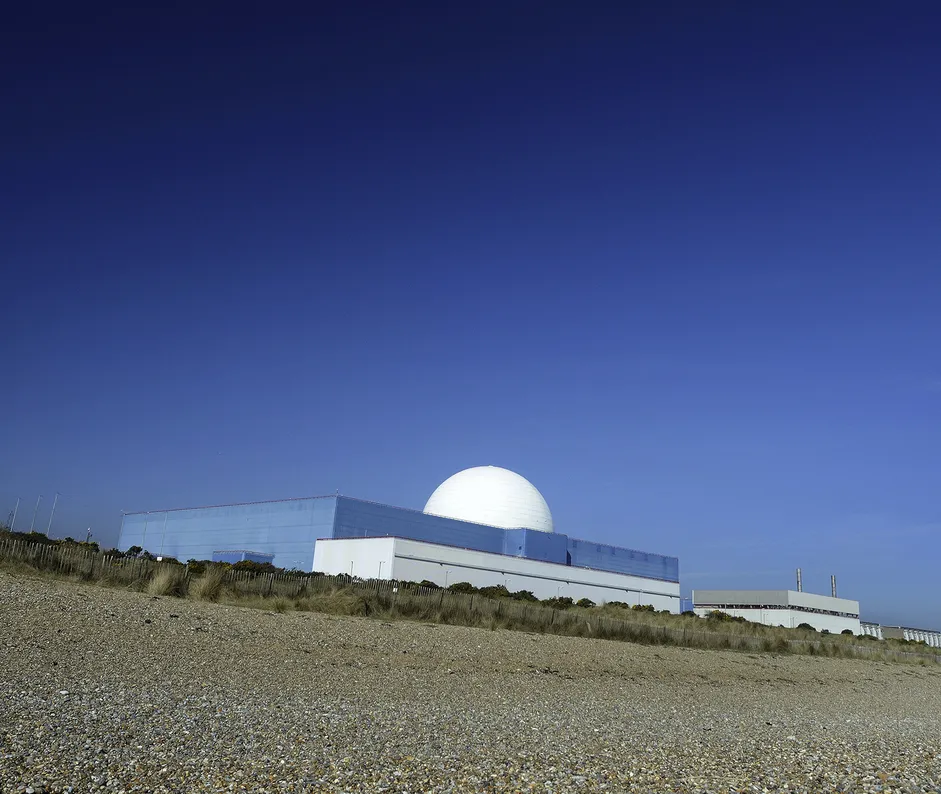
If there is any image that can justifiably claim to represent the nuclear industry, then it must be that of a dome-topped reactor building such as that shown in Fig. 1.1. On the face of it their trademark profile seems to epitomize all things nuclear, but in truth it is just one building, one step in a long process known as the nuclear fuel cycle.
To appreciate the breadth of facilities involved and the role each of them plays, we need to start by examining the entire cycle, then with the scene set in later chapters we can delve into a closer look at how such facilities function and what it takes to put them together. To help us keep track, Fig. 1.2 captures this entire chapter in diagrammatic form and, surprisingly enough for such a hi-tech industry, we shall see that it all begins with some very rough and tumble engineering.

It is quite improbable, isn’t it, to think that rock which is mined in a conventional way and begins its journey on trucks the size of a house, will one day find itself in a nuclear reactor giving off fierce heat and generating the electricity that powers our lives, but unlikely as it may seem, there it is. So how does the transformation take place?
1.1 Uranium mining and purification
Just as some rock bears gold, silver, copper, and so on, others contain uranium; in fact, it can be found pretty much all over the globe, particularly in granite but also to some extent in all soils and even in seawater. Ordinarily the amounts present in rock are measured in just a handful of parts per million, so mining is not a realistic proposition. However, there are areas of the world, such as Australia, Canada and Namibia, along with several others, where uranium exists in sufficient quantities to make its extraction economically viable.
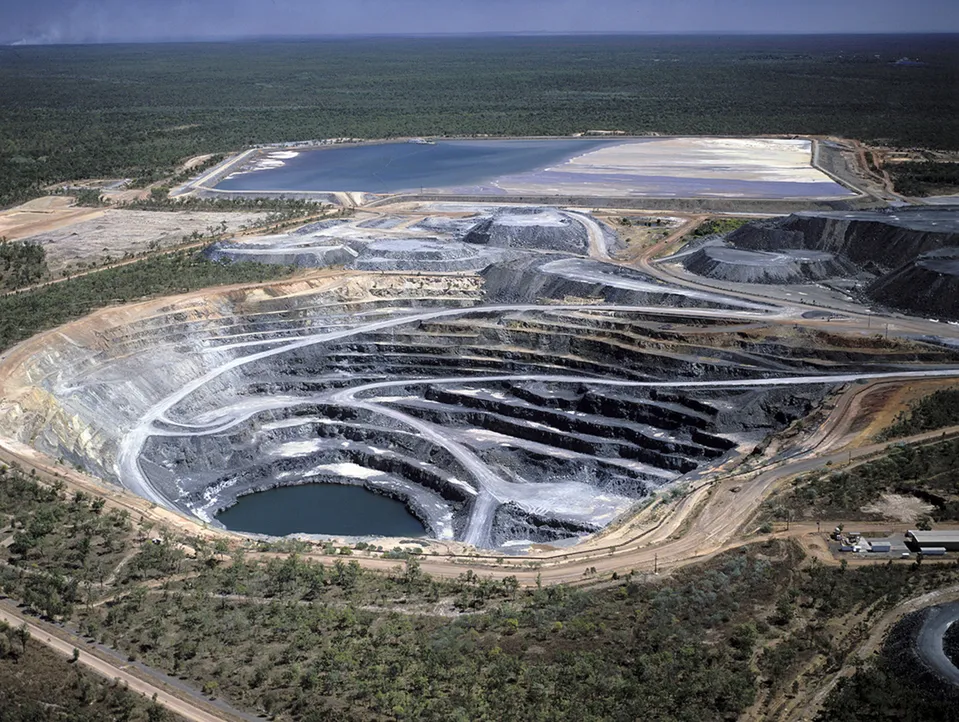
The depth at which suitable rock exists varies, to the extent that while some is deep underground, most uranium is recovered from in-situ leaching or extracted from opencast mines (Fig. 1.3). Whatever its origin, once mined the uraninite ore, or pitchblende, is crushed and milled, and conventional metal extraction techniques used to liberate the uranium bound up within it. The resulting product is uranium oxide, also known as uranium ore concentrate but more commonly referred to as yellowcake.
During these early stages of the nuclear fuel cycle, there is no risk from penetrating radiation, although there is some radiological hazard due to uranium dust and the presence of radon gas. Such hazards are discussed in the next chapter, so I will just say here that dust masks and a mine's ventilation systems are employed to protect the workforce. Other hazards arise as a result of regular mining operations, but these are of a more conventional nature.
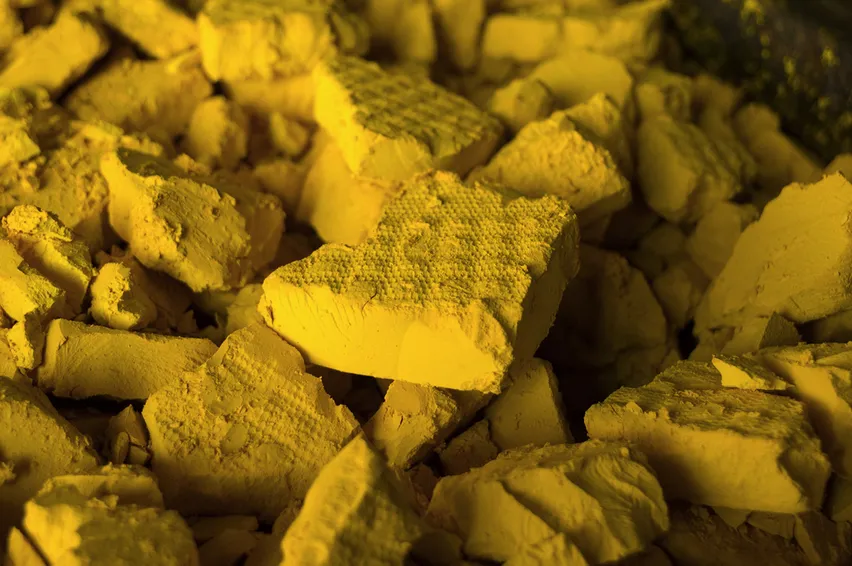
Once produced, the yellowcake (Fig. 1.4) is loaded into drums and transported to a uranium processing and fuel fabrication facility, where the first process is to remove any remaining contaminants by dissolving the yellowcake in nitric acid and turning it into a purified liquid solution called uranyl nitrate. The uranyl nitrate then undergoes a chemical process which converts it into uranium dioxide (UO2). However, as we shall see later, there are several variations of UO2, a bit like the way coffee is coffee but comes in different strengths, so at this stage we can refer to it as refined uranium dioxide.
Now that we have a refined uranium product, the next step depends on the particular fuel being fabricated. Magnox fuel, for example, which powered many of the UK's older reactors, was made from purified natural uranium, so required no additional treatment other than to convert the solution back into the uranium metal from which Magnox fuel was manufactured. Incidentally, if you ever get the opportunity to pick up a Magnox fuel rod (Fig. 1.5) brace yourself. Uranium is more than one and a half times the weight of lead, so these fuel rods, which are about a meter in length, take a bit of lifting.
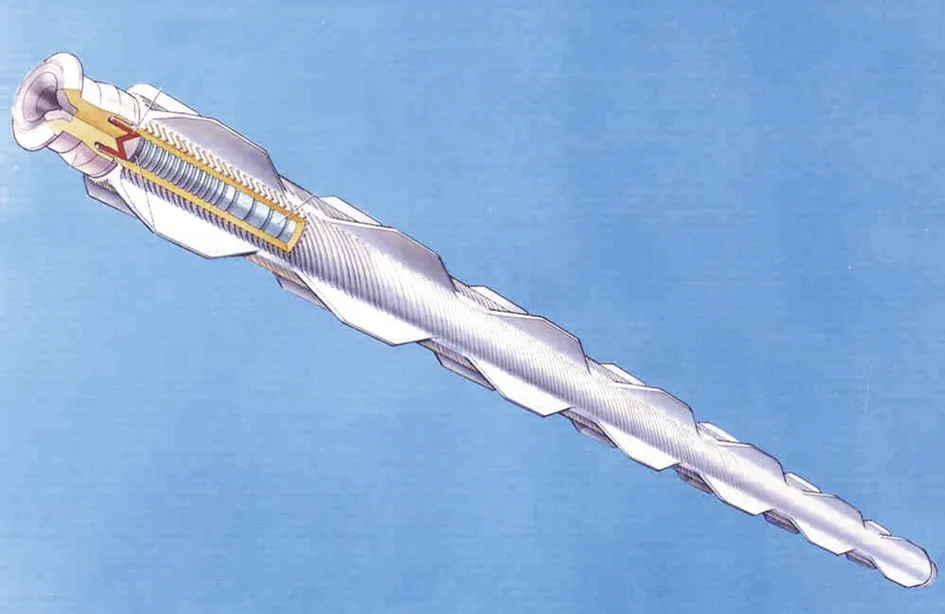
Unlike Magnox, uranium for modern fuels such as those used in an advanced gas-cooled reactor (AGR), pressurized water reactor (PWR), and boiling water reactor (BWR), needs some additional processing before it is ready to be manufactured. However, before we get to that I need to explain something of the composition of purified natural uranium then we can look at how it is adjusted to produce a more efficient fuel.
1.2 The atom
From here on there will be some reference to elements, isotopes and parts of the atom so we need to take a brief tour of what the different terms mean (Fig. 1.6).

If you were to take a small block of sandstone, place it on a table and have a good look at it, it would quite clearly be one object, a solid lump so to speak. But then if you scraped it hard enough with a tough steel chisel small particles, or grains of sand, would come off and settle beside it. Moreover, if you happened to have a powerful microscope handy and were to analyze the individual grains, you would find that they were all different: their color, shape, size, and weight would vary a little. Well, at an atomic level something very similar is going on.
Everything around us, whether it be solid, liquid, or gas, is actually made up from billions of infinitely microscopic components that we know as atoms (Fig. 1.7) and just as with our grains of sandstone the atoms that make up solid objects are, in most cases, not all identical. Furthermore, all pure substances, such as co...
Table of contents
- Cover image
- Title page
- Table of Contents
- Copyright
- Dedication
- List of figures
- Author biography
- Acknowledgments
- Author's note
- Woodhead Publishing Series in Energy
- Introduction
- 1: Nuclear fuel cycle
- 2: Radiation
- 3: Radiological zoning
- 4: Radiological changerooms
- 5: Structural
- 6: Process engineering
- 7: Mechanical engineering
- 8: Ventilation
- 9: Cranes
- 10: Electrical
- 11: Radiometric instruments
- 12: Project planning
- 13: Waste management
- 14: Safety
- 15: Decommissioning planning
- 16: Future-proofing
- 17: Design development
- Index
Frequently asked questions
Yes, you can cancel anytime from the Subscription tab in your account settings on the Perlego website. Your subscription will stay active until the end of your current billing period. Learn how to cancel your subscription
No, books cannot be downloaded as external files, such as PDFs, for use outside of Perlego. However, you can download books within the Perlego app for offline reading on mobile or tablet. Learn how to download books offline
We are an online textbook subscription service, where you can get access to an entire online library for less than the price of a single book per month. With over 1.5 million books across 990+ topics, we’ve got you covered! Learn about our mission
Look out for the read-aloud symbol on your next book to see if you can listen to it. The read-aloud tool reads text aloud for you, highlighting the text as it is being read. You can pause it, speed it up and slow it down. Learn more about Read Aloud
Yes! You can use the Perlego app on both iOS and Android devices to read anytime, anywhere — even offline. Perfect for commutes or when you’re on the go.
Please note we cannot support devices running on iOS 13 and Android 7 or earlier. Learn more about using the app
Please note we cannot support devices running on iOS 13 and Android 7 or earlier. Learn more about using the app
Yes, you can access Nuclear Facilities by Bill Collum in PDF and/or ePUB format, as well as other popular books in Technology & Engineering & Mechanical Engineering. We have over 1.5 million books available in our catalogue for you to explore.