Dielectric Polymer Materials for High-Density Energy Storage begins by introducing the fundamentals and basic theories on the dielectric behavior of material. It then discusses key issues on the design and preparation of dielectric polymer materials with strong energy storage properties, including their characterization, properties and manipulation. The latest methods, techniques and applications are explained in detail regarding this rapidly developing area. The book will support the work of academic researchers and graduate students, as well as engineers and materials scientists working in industrial research and development.
In addition, it will be highly valuable to those directly involved in the fabrication of capacitors in industry, and to researchers across the areas of materials science, polymer science, materials chemistry, and nanomaterials.
- Focuses on how to design and prepare dielectric polymer materials with strong energy storage properties
- Includes new techniques for adjusting the properties of dielectric polymer materials
- Presents a thorough review of the state-of-the-art in the field of dielectric polymer materials, providing valuable insights into potential avenues of development
Trusted by 375,005 students
Access to over 1.5 million titles for a fair monthly price.
Zhi-Min Dang1,2, 1Tsinghua University, Beijing, China, 2Xi’an University of Science and Technology, Xi’an, China
Abstract
This book is named Dielectric Polymer Materials for High-density Energy Storage. It is well known that the film dielectric capacitor has a very high-power density but a low energy density, which limits its application as an energy storage device. Recently, the dielectric polymer materials have attracted wide attention internationally, and more excellent works show some advanced dielectric polymer materials with both high energy density and high-power density by designing different composition, microstructure, and preparation processing so that some materials are used to produce the high-density energetic film capacitors. In this chapter, we will simply introduce the request for high-performance dielectric polymer materials in order to develop the high-density energetic film capacitors. Furthermore, some research achievements are reviewed simply on the basis of present works, including different methods in order to solve key science issues. The detail contents can be introduced in each chapter subsequently.
Keywords
Dielectric polymer materials; high-density energy storage; capacitor; development; review
Acknowledgment
The authors gratefully acknowledge support from the National Basic Research Program of China (973 Program) (No. 2015CB654603) and the National Natural Science Foundation of China (Nos. 51425201, 51622701, 51377010). Z. M. D. also thanks the Postgraduate Education Reform Project of Tsinghua University (53812000216) for financial support.
1.1 Film Dielectric Capacitors
Though fossil fuels made an important contribution to the rapid development of society in recent years, it resulted in severe climate change so that we must find a sustainable route to replace the use of fossil fuels [1,2]. As a result, scientists pay more effort to explore renewable energy from the sun and wind in order to produce “green” power energy directly from nature. It is also well known that the power energy will be one very crucial consumption mode among many kinds of energies because the power energy can be transmitted over a large scale over a long distance via a transmission system, and this kind of energy can be stored by employing different types of energy-storage equipment. The development of power energy storage technology will accelerate its wide use in many fields. For example, many countries have worked out a timetable to prohibit the use of oil fuel automobiles. The development of electric vehicles or hybrid electric vehicles with low CO2 emissions becomes the first choice in many countries. Therefore, one of the great challenges in the 21st century is unquestionably energy storage. In order to make good use of “green” power from the beginning, the manufacture of the power energy storage device/equipment with high energy density is a crucial. Due to the requirement of energy storage techniques, advanced batteries and capacitors with high energy density are researched by global scientists widely. In the present state, we need to improve their performance further to meet the higher requirements of future systems, ranging from portable electronics to hybrid electric vehicles and large industrial equipment, by developing new materials and improving our understanding of nanoscale interfaces in advanced functional materials [3–5].
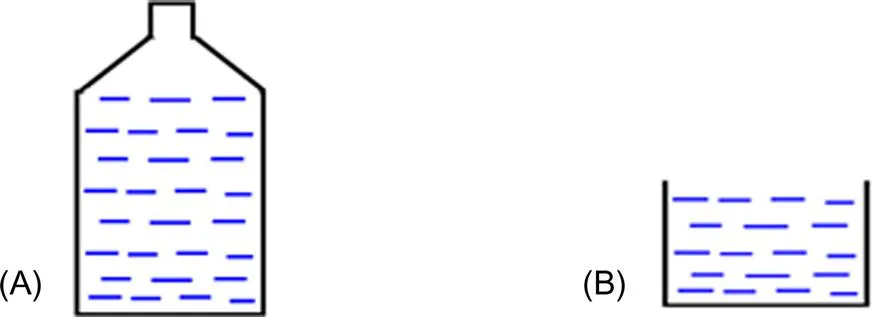
Among the currently available power energy storage devices, each kind of device has its advantages and disadvantages. Fig. 1.1 shows the plot of energy against power density, also called a Ragone plot [1], for the most important energy storage systems. These systems can often be classified in two categories. They include all kinds of batteries and capacitors. It is well known that the batteries often have a high energy density, but a low power density due a low discharge rate, which is often limited to the electrode chemical reaction. Comparison to the lithium ion battery, though the dielectric capacitors possess the highest power density because of their fast charge–discharge capability [5,6], the energy density of the dielectric capacitors is very low. Fig. 1.2 shows a schematic picture, in which a narrow bottle neck limits the charge–discharge rate of batteries. However, an open bottle structure of dielectric capacitors supports a very short charge–discharge rate. Therefore, if a high-energy density polymer material can be realized, polymer film capacitors would remarkably help to reduce the volume, weight, and cost of the electric power system in hybrid electric vehicles.
Figure 1.1 Power density again energy density of all kinds of power energy storage equipment [1].
Figure 1.2 Schematic energy storage and release processes, (A) battery and (B) dielectric film capacitor.
High-power and high-energy density capacitors are one of the major enabling technologies for the development of commercial, consumer, and military systems with ever-increasing demands for compact, reliable, and efficient electrical power systems [1,6–8]. Electrostatic capacitors would supply higher power density, lower loss, and higher operating voltage than do other types of capacitors such as electrolytic capacitors and supercapacitors. Examples of important applications include high-frequency inverters, insulated-gate bipolar transistor snubbers, power factor correction, and pulsed-power generation. However, the low energy density of these dielectric capacitors (<2.0 J/cm3) leads to high capacitor volume and weight. For instance, DC bus capacitors in power inverters of electrical vehicles occupy ~35% of the inverter volume and ~23% of the inverter weight [6,9]. Therefore, it is imperative to develop novel technologies that can significantly increase the energy density of electrostatic dielectric capacitors.
In this book, we focus on introducing all kinds of dielectric polymer materials with a high energy storage density, which can be used to design and fabricate advanced film dielectric capacitors with both high-power and high-energy density at the same time.
1.2 Key Science Issues
Though a very high-power density of polymer dielectric capacitors, the dielectric capacitors are limited by energy densities that are at least an order of magnitude lower than those of electrochemical devices such as batteries [10] and electrochemical capacitors [11,12]. For instance, the energy densities of most commercially available electrochemical capacitors to date are in the range of 18–29 J/cm3[13], while that of the best commercial capacitor film represented by biaxially-oriented polypropylenes (BOPP) is only about 1.2 J/cm3[14,15]. Since dielectric capacitors can occupy more than 25% of the volume and weight-to-power electronics and pulsed-power systems, dramatic enhancement of the energy density of dielectric capacitors would be essential to realize their full potential as an enabling technology.
The energy density of dielectric capacitors is governed by the dielectric material that separates the opposite static charges between two electrodes and is given in Eq. (1.1).
(1.1)
(1.1)
where U represents the total stored energy density, E represents the applied electric field, and D is the electric displacement. A schematic picture is shown in Fig. 1.3. For linear dielectrics, the energy storage density of the capacitor is given in Eq. (1.2).
(1.2)
(1.2)
where
is the vacuum permittivity and k is the dielectric constant (the
also often denotes the dielectric constant in many reports). Therefore, U is strongly dependent on both k and E, with E limited by the breakdown strength (Eb). Compared with ceramic and electrolytic capacitors, polymer capacitors are easily processed at a low temperatures or with an organic solvent so that they can be operated under high voltages and fail gracefully with an open circuit, making them the preferred high-energy density capacitors [16–19]. However, the state-of-the-art dielectric polymers such as BOPP often have a low value of k (c.2.2), which substantially limits U value to, e.g., less than 4 J/cm3 even though the dielectric material has a high breakdown level. To raise k, a...
Table of contents
Cover image
Title page
Table of Contents
Copyright
List of Contributors
1. Introduction
2. Fundamentals of Dielectric Theories
3. Preparation, Structure and Properties of Fluorine-containing Polymers
4. Manipulating Dielectric Properties by Modifying Molecular Structure of Polymers
5. High Energy Storage Dielectric Polymer Materials With Hierarchical Microstructures
6. Core-Shell Structural Fillers to High Energy Storage Dielectric Polymer Materials
7. Multiphase/Multicomponent Dielectric Polymer Materials With High Permittivity and High Breakdown Strength
8. Electrospinning Functional Fillers/Polymer Composites With High Energy Storage
9. Thermally Conductive Dielectric Polymer Materials for Energy Storage
10. Charging and Discharging Characteristics of Dielectric Polymer Materials
11. Dielectric Polymer Materials with High Thermal Stability
12. Processing of Polymeric Dielectrics for High Energy Density Capacitors
13. Future Perspectives
Index
Frequently asked questions
Yes, you can cancel anytime from the Subscription tab in your account settings on the Perlego website. Your subscription will stay active until the end of your current billing period. Learn how to cancel your subscription
No, books cannot be downloaded as external files, such as PDFs, for use outside of Perlego. However, you can download books within the Perlego app for offline reading on mobile or tablet. Learn how to download books offline
Perlego offers two plans: Essential and Complete
Essential is ideal for learners and professionals who enjoy exploring a wide range of subjects. Access the Essential Library with 800,000+ trusted titles and best-sellers across business, personal growth, and the humanities. Includes unlimited reading time and Standard Read Aloud voice.
Complete: Perfect for advanced learners and researchers needing full, unrestricted access. Unlock 1.5M+ books across hundreds of subjects, including academic and specialized titles. The Complete Plan also includes advanced features like Premium Read Aloud and Research Assistant.
Both plans are available with monthly, semester, or annual billing cycles.
We are an online textbook subscription service, where you can get access to an entire online library for less than the price of a single book per month. With over 1.5 million books across 990+ topics, we’ve got you covered! Learn about our mission
Look out for the read-aloud symbol on your next book to see if you can listen to it. The read-aloud tool reads text aloud for you, highlighting the text as it is being read. You can pause it, speed it up and slow it down. Learn more about Read Aloud
Yes! You can use the Perlego app on both iOS and Android devices to read anytime, anywhere — even offline. Perfect for commutes or when you’re on the go. Please note we cannot support devices running on iOS 13 and Android 7 or earlier. Learn more about using the app
Yes, you can access Dielectric Polymer Materials for High-Density Energy Storage by Zhi-Min Dang in PDF and/or ePUB format, as well as other popular books in Technology & Engineering & Engineering General. We have over 1.5 million books available in our catalogue for you to explore.