eBook - ePub
American Trypanosomiasis Chagas Disease
One Hundred Years of Research
- 844 pages
- English
- ePUB (mobile friendly)
- Available on iOS & Android
eBook - ePub
American Trypanosomiasis Chagas Disease
One Hundred Years of Research
About this book
American Trypanosomiasis, Chagas Disease: One Hundred Years of Research, Second Edition, provides a comprehensive overview of Chagas disease and discusses the latest discoveries concerning the three elements that compose the transmission chain of the disease, the host, the insect vectors, and the causative parasite.
In addition, new insights on the molecular biology and diagnostics of Chagas diseases, the persistence of infections in the host, and the interaction of the parasite and host metabolism are now included in this new and updated edition.
- Provides a thoroughly revised, updated, and streamlined new edition with contributions from leading authorities and industry experts
- Informs and updates on all the latest developments of Chagas disease, covering biology, clinical aspects, and human sciences
- Includes a summarizing chapter that provides key insights of practical significance for prevention efforts
Trusted by 375,005 students
Access to over 1.5 million titles for a fair monthly price.
Study more efficiently using our study tools.
Information
1
History of the discovery of the American Trypanosomiasis (Chagas disease)
T. Araujo-Jorge1, J. Telleria2,3 and J.R. Dalenz4, 1Fundação Oswaldo Cruz, Rio de Janeiro, Brazil, 2Institute for Research for Development (IRD), Montpellier, France, 3Pontifical Catholic University of Ecuador, Quito, Ecuador, 4Universidad Mayor de San Andrés, La Paz, Bolivia
Abstract
American Trypanosomiasis was named Chagas disease in honor of its discoverer, Carlos Chagas (1878–1934). In 1909 he produced a unique and exceptional work in the history of medicine. He discovered a new species of flagellated protozoa (1) in the intestines of hematophageous insects, (2) in the blood of various domestic animals, and (3) in the blood of a little girl. This new species was called “Trypanosoma cruzi” in honor of Professor Oswaldo Cruz. His discovery gradually spread among different Latin America countries. Salvador Mazza (Argentina) profoundly marked this history. Cecilio Romanha discovered the early pathognomonic sign of Chagas disease (the Romanha sign) and Rafael Torrico is considered to be the father of Chagas disease in Bolivia. Chagas disease, 100 years later, is still the most neglected of kinetoplastid diseases, but affected people actively argue for their rights for diagnosis and treatment through new associations in many countries.
Keywords
History of science; parasitic disease; vectorial disease; biography; treatment
A beautiful history of life and work
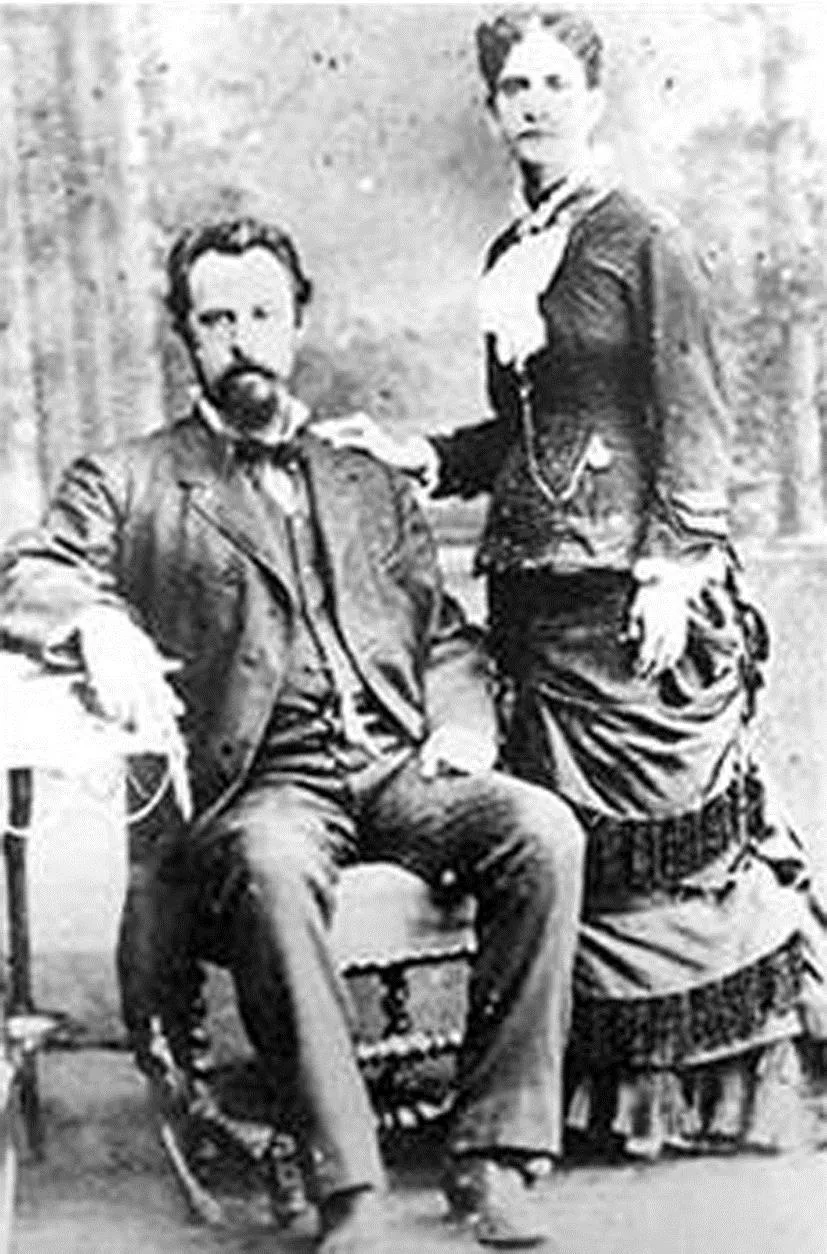
American Trypanosomiasis was named Chagas Disease in honor of its discoverer Carlos Ribeiro Justiniano Chagas,1 who was born in a coffee farm at Oliveira (Fig. 1.1), state of Minas Gerais, on July 9, 1878.1–4 His father was a tradesman named José Justiniano Chagas and his mother was Maria Ribeiro de Castro, born into a traditional family of coffee producers (Fig. 1.2).

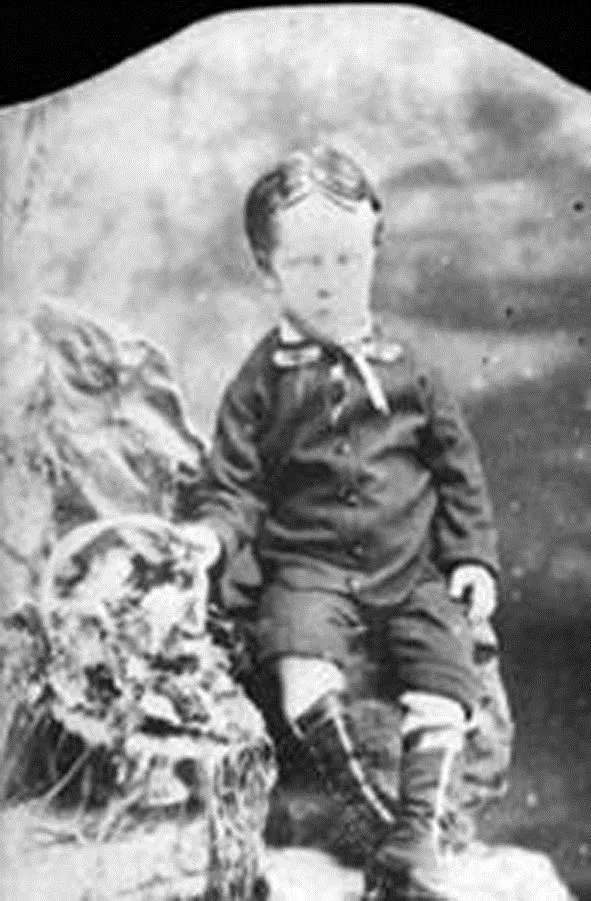
Carlos Chagas suffered three important family losses: his father and his two brothers. Soon, he assumed the responsibility as the head of the family, helping his mother and sister. He spent his childhood (Fig. 1.3) in the farm and his youth in a catholic school in São João del Rey, where the priest João Sacramento exerted an enormous influence on his education.2,3
His mother wanted him to be an engineer but he did not pass the entrance exams, and in consequence, he experienced a severe depression. Carlos Chagas then decided to break with his mother’s expectations and settled in Rio de Janeiro to study medicine, 3 years before the end of the 19th century. Two uncles from his mother’ family profoundly influenced him in finding his medical vocation.
During his childhood and youth, his curiosity was awakened; moreover, Sacramento introduced him to the delights of the discovery of the natural world and the art world.
Carlos Chagas exercised all the important mental tools for educating his imagination, as summarized in 1999 by Robert and Michelle Root-Bernstein5: to observe, to evoke images, to abstract, to recognize and to form patterns, to think with the body, to empathize, to think in a dimensional way, to establish analogies, to create models, to play, to transform, and to synthesize. These are some of the tools that explain how creative thinking emerges and we can recognize them in his scientific work.
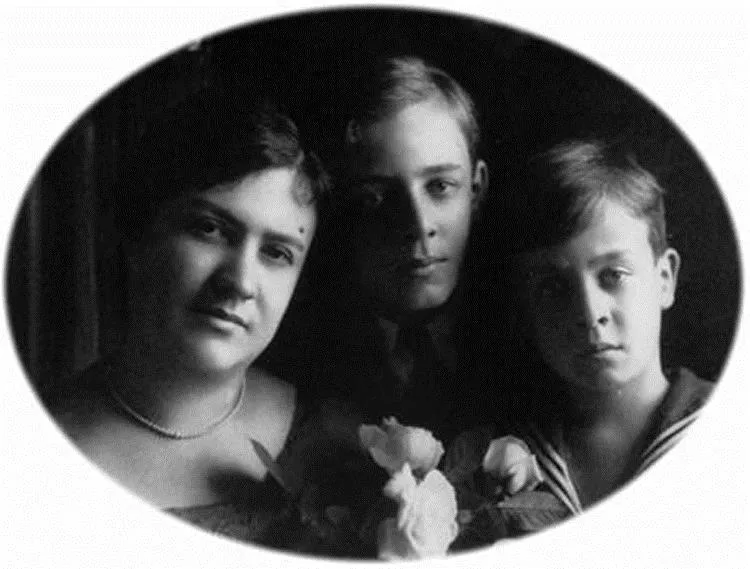
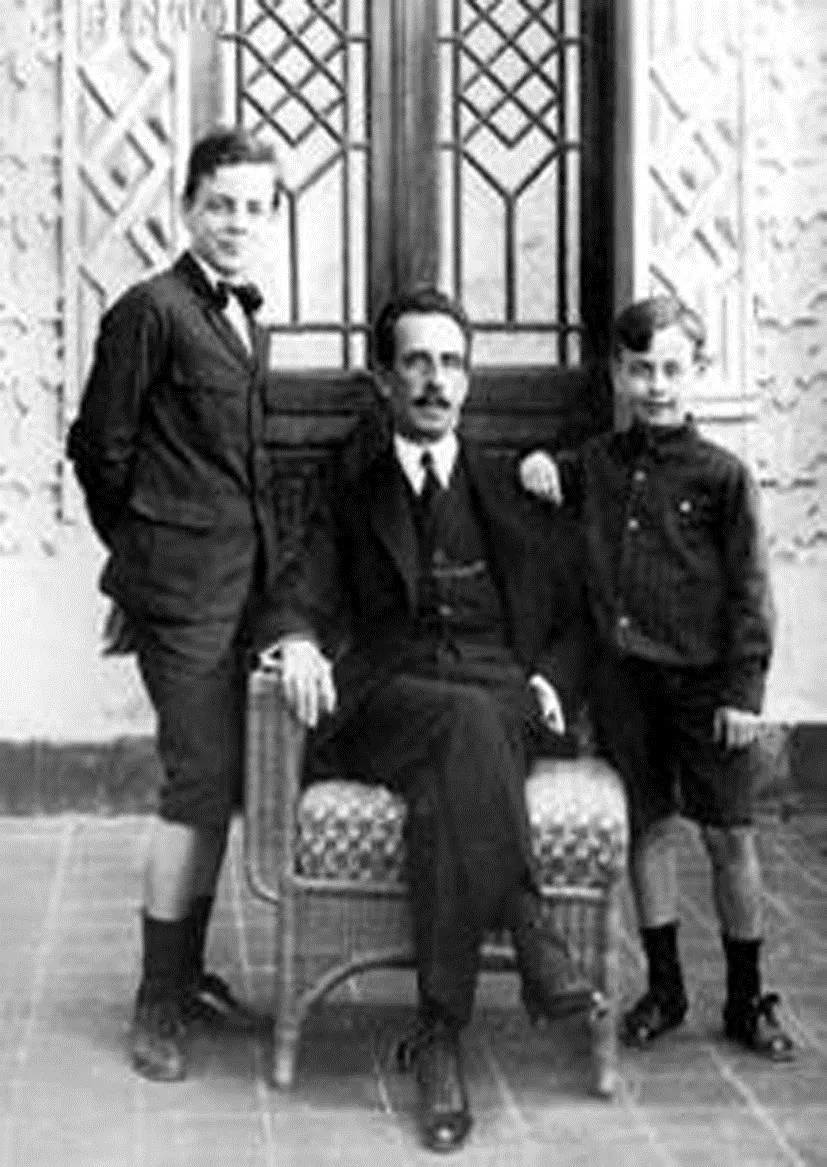
Carlos Chagas graduated in Medicine in 1903, concluding his clinical training under the influence of Professor Miguel Couto and with a well-grounded laboratory experience in the Manguinhos Institute, where he studied malaria. He accepted the invitation of Oswaldo Cruz and got a contract to work as a doctor at the Hygiene and Public Health Office/Ministry, because of his expertise in malaria and also because he needed to take a job with a fixed salary to marry the woman he had fallen in love with, Miss Iris Lobo (Fig. 1.4) from a rich family in Rio de Janeiro. With her he had his two sons, Evandro and Carlos (Figs. 1.4 and 1.5).
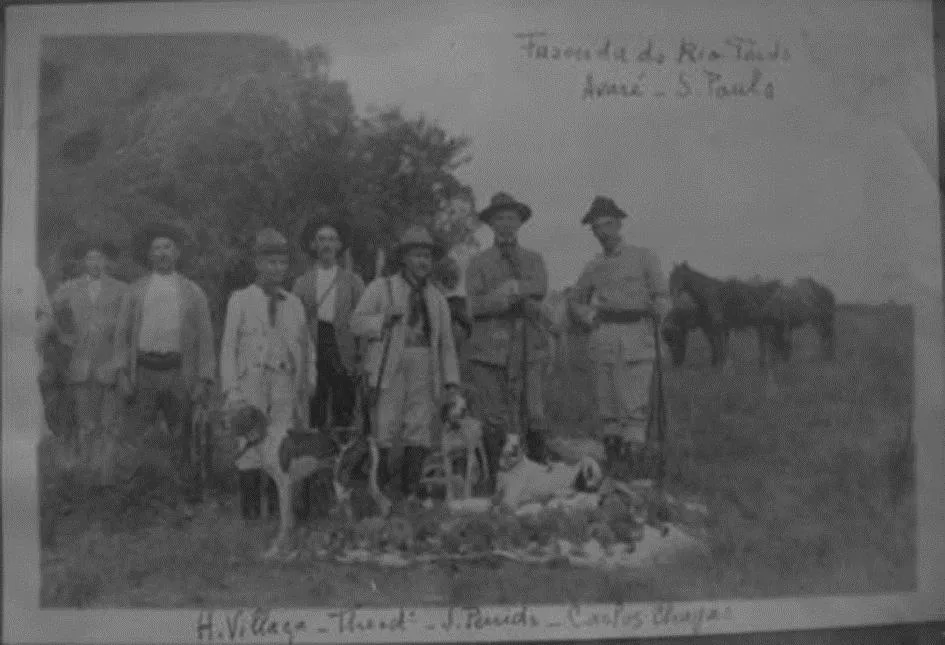
He was then commissioned by Oswaldo Cruz to lead a campaign against malaria in Itatinga, state of São Paulo. In this and other situations, he advocated a strategy of prevention based on the intrahousehold combat of the mosquito and succeeded in his goal of controlling malaria. Thereafter, a series of events characterize a successful scientific career. Carlos Chagas became member of the Brazilian National Academy of Medicine in a place especially created for him, received numerous awards and titles of Doctor Honoris Causa (including Harvard, Paris, Lima, and Belgium Universities), was nominated twice for the Nobel Prize (in 1913 and 1921), directed the Oswaldo Cruz Institute for 17 years, and coordinated the campaign against the epidemic of Spanish influenza in Brazil. Several biographers registered these stories, but we especially like two books written by his son, Carlos Chagas Filho,3 where the human and emotional aspects of the scientist do appear very clearly. Two picturesque aspects have been reported by his son: Chagas loved to hunt (Fig. 1.6) and enjoyed football, supporting the football club Botafogo in Rio de Janeiro.
The political, scientific, and cultural context in which Carlos Chagas was immersed and made his discovery was a very rich one. Politically, it was the end of the era of the Brazilian empire, with the abolition of slavery and the proclamation of the Republic of Brazil. Successive presidential elections and popular rebellions occurred.
The American Trypanosomiasis discovery also was determined by a peculiar health context in Brazil. In the Institute of Manguinhos, Oswaldo Cruz implanted a virtuous triad articulating assistance, research, and education. This public health model remains until now at the current Fiocruz, which continues today as an institution of science, technology, and innovation in health linked to the Ministry of Health. After the campaign against the Spanish flu in 1918, Chagas created the National Department of Public Health, giving rise to the future Ministry of Health, and implicating the presence of the State all over the Nation due to the creation of the Sanitary Code, thus expanding the assistance to other diseases such as tuberculosis, venereal diseases, and workers’ health, creating the School of Nursing and creating a program for prophylaxis in endemic areas with “endemic guards.” A strong cooperation with the Rockefeller Foundation was initiated. Formal science education started in 1911 with the first “Course of Application” at the Institute, and in 1925 Carlos Chagas began the first Special Course in Hygiene and Public Health. He became Professor of Tropical Medicine at the Faculty of Medicine in 1928.3
The history of a significant discovery
In 1987 the great science sociologist Bruno Latour6 said, “The more controversy we articulate, the broader becomes the world.” Carlos Chagas and his colleagues precisely articulated controversies and discovered a new world of research and of political action in public health.
The disease had already existed in the Americas for over 9000 years.7 Mummies were found in Peru with physical evidence of clinical signs of Chagas disease from which samples of Trypanosoma cruzi DNA were recovered. In Brazil, paleoparasitology studies conducted by Adauto Araujo, Luiz Fernando Ferreira, and his group have confirmed T. cruzi DNA in mummies dating back to 7000 years. These findings changed the assumptions about the emergence of Chagas disease in the Americas, dating it back to the contact of hunters and gatherers with mammalian reservoirs and insect vectors, much earlier than the period when Andean men started home breeding small animals, as it was thought previously. This means that the disease had already been in Latin America for 9000 years and that no one had seen or detected it before Carlos Chagas in 1909. Even Charles Darwin registered the presence of triatomines during his stay in South America in 1835 (Darwin 1899, cited in Neiva & Lent, 1943),8 but this was not associated to any specific disease: “The night I experienced an attack (for it deserves no less a name) of the Vinchuca (a species of Reduvius) the great black bug of the Pampas. It is most disgusting to feel soft wingless insects, about an inch long, crawling over one’s body. Before sucking, they are quite thin, but afterwards became round and bloated with blood, and in ...
Table of contents
- Cover image
- Title page
- Table of Contents
- Copyright
- List of Contributors
- Preface
- 1. History of the discovery of the American Trypanosomiasis (Chagas disease)
- 2. Chagas disease in pre-Colombian civilizations
- 3. Social and medical aspects on Chagas disease management and control
- 4. Current epidemiological trends of Chagas disease in Latin America and future challenges: epidemiology, surveillance, and health policies
- 5. Geographical distribution of Chagas disease
- 6. Classification and systematics of the Triatominae
- 7. Biology of Triatominae
- 8. Population genetics of Triatominae
- 9. Geographic distribution of Triatominae vectors in America
- 10. Control strategies against Triatominae
- 11. Ecological aspects of Trypanosoma cruzi: Wild hosts and reservoirs
- 12. Trypanosoma cruzi enzootic cycle: General aspects, domestic and synanthropic hosts and reservoirs
- 13. Veterinary aspects
- 14. Experimental studies of Chagas disease in animal models
- 15. Classification and phylogeny of Trypanosoma cruzi
- 16. Biology of Trypanosoma cruzi and biological diversity
- 17. Biochemistry of Trypanosoma cruzi
- 18. Ultrastructure of Trypanosoma cruzi and its interaction with host cells
- 19. Genetics of Trypanosoma cruzi
- 20. Experimental and natural recombination in Trypanosoma cruzi
- 21. Trypanosoma cruzi and the model of predominant clonal evolution
- 22. Vector transmission: How it works, what transmits, where it occurs
- 23. Maternal–fetal transmission of Trypanosoma cruzi
- 24. Other forms of transmission: Blood transfusion, organ transplantation, laboratory accidents, oral and sexual transmission
- 25. Protective host response to Trypanosoma cruzi and its limitations
- 26. Cell invasion by Trypanosoma cruzi and the type I interferon response
- 27. Human genetic susceptibility to Chagas disease
- 28. Clinical phases and forms of Chagas disease
- 29. Diagnosis of Trypanosoma cruzi infection
- 30. AIDS and Chagas’ disease
- 31. Treatment of Chagas disease
- 32. Vaccine development for Chagas disease
- Index
Frequently asked questions
Yes, you can cancel anytime from the Subscription tab in your account settings on the Perlego website. Your subscription will stay active until the end of your current billing period. Learn how to cancel your subscription
No, books cannot be downloaded as external files, such as PDFs, for use outside of Perlego. However, you can download books within the Perlego app for offline reading on mobile or tablet. Learn how to download books offline
Perlego offers two plans: Essential and Complete
- Essential is ideal for learners and professionals who enjoy exploring a wide range of subjects. Access the Essential Library with 800,000+ trusted titles and best-sellers across business, personal growth, and the humanities. Includes unlimited reading time and Standard Read Aloud voice.
- Complete: Perfect for advanced learners and researchers needing full, unrestricted access. Unlock 1.5M+ books across hundreds of subjects, including academic and specialized titles. The Complete Plan also includes advanced features like Premium Read Aloud and Research Assistant.
We are an online textbook subscription service, where you can get access to an entire online library for less than the price of a single book per month. With over 1.5 million books across 990+ topics, we’ve got you covered! Learn about our mission
Look out for the read-aloud symbol on your next book to see if you can listen to it. The read-aloud tool reads text aloud for you, highlighting the text as it is being read. You can pause it, speed it up and slow it down. Learn more about Read Aloud
Yes! You can use the Perlego app on both iOS and Android devices to read anytime, anywhere — even offline. Perfect for commutes or when you’re on the go.
Please note we cannot support devices running on iOS 13 and Android 7 or earlier. Learn more about using the app
Please note we cannot support devices running on iOS 13 and Android 7 or earlier. Learn more about using the app
Yes, you can access American Trypanosomiasis Chagas Disease by Jenny Telleria,Michel Tibayrenc in PDF and/or ePUB format, as well as other popular books in Medicine & Medical Microbiology & Parasitology. We have over 1.5 million books available in our catalogue for you to explore.