- 344 pages
- English
- PDF
- Available on iOS & Android
eBook - PDF
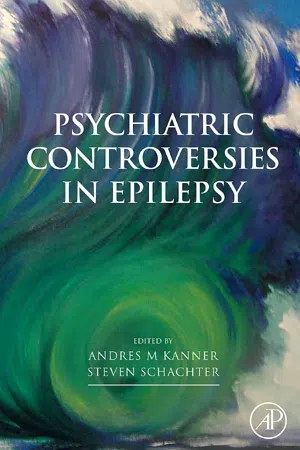
Psychiatric Controversies in Epilepsy
About this book
Psychiatric Controversies in Epilepsy addresses controversial clinical issues of the psychiatric aspects of epilepsy. The book explores the reasons behind the poor communication between psychiatrists and neurologists and suggests potential remedies to this important problem, and two chapters are devoted to examining whether psychiatrists and neurologists are properly trained to recognize and treat conditions that both disciplines commonly encounter in clinical practice. Identification of the causes behind the high rate of comorbidity between epilepsy and mood, anxiety, psychotic and attention deficit disorders is given high priority in the volume, and a specific review of the evidence of common pathogenic mechanisms that may be operant in epilepsy and these psychiatric disorders is included. Recently identified bidirectional relationship between mood disorders and epilepsy and its implication in the course and response to treatment of the seizure disorder are also explored. Several chapters are devoted to rectify common misunderstandings of the use of psychotropic drugs in patients with epilepsy, including the use of antidepressant and central nervous system stimulants. Finally, one chapter explores the possibility of organic causes of psychogenic non-epileptic seizures.
- Compiles into one source the important controversial issues of the psychiatric aspects of epilepsy, which have significant implications in clinical practice
- Authors are internationally recognized authorities in the field of psychiatric aspects of epilepsy
Information
Table of contents
- Front Cover
- Psychiatric Controversies in Epilepsy
- Copyright Page
- Contents
- Preface
- Contributors
- Chapter 1 Prevalence of Psychiatric Disorders in Patients with Epilepsy: What We Think We Know and What We Know
- Chapter 2 Why Do Neurologists and Psychiatrists Not Talk to Each Other?
- Chapter 3 Are Neurologists Trained to Recognize and Treat the Psychiatric Comorbidities of Epilepsy?
- Chapter 4 The Challenge of Teaching Psychiatry Residents About Psychopathology in Patients with Epilepsy
- Chapter 5 What Do We Know About Mood Disorders in Epilepsy?
- Chapter 6 Is Depression in Epilepsy the Expression of a Neurological Disorder?
- Chapter 7 Are Anxiety and Depression Two Sides of the Same Coin?
- Chapter 8 Does Psychosis of Epilepsy Differ from Primary Psychotic Disorders?
- Chapter 9 Are the Psychoses of Epilepsy a Neurological Disease?
- Chapter 10 Is ADHD in Epilepsy the Expression of a Neurological Disorder?
- Chapter 11 Are Psychogenic Non-epileptic Seizures an Expression of “Neurologic” Pathology?
- Chapter 12 Are Psychiatric Disorders a Risk for the Development of Neurological Disorders?
- Chapter 13 Do Peri-ictal Psychiatric Symptoms Account for the Differences between Depressive Disorders in Patients with and without Epilepsy?
- Chapter 14 Can Psychological Testing Replace Psychiatric Evaluations in Patients with Epilepsy? Or Can Psychiatric Evaluations Replace Psychological Testing in Patients with Epilepsy?
- Chapter 15 Should the Screening for Depression, Anxiety, Attention Deficit – Hyperactivity Disorder and Learning Disorders Be Part of Neurological Evaluations of All Patients with Epilepsy?
- Chapter 16 Should a Psychiatric Evaluation Be Included in Every Pre-surgical Work-up?
- Chapter 17 Do Antidepressants Improve or Worsen Seizures in Patients with Epilepsy?
- Chapter 18 Do Central Nervous System Stimulants Lower Seizure Threshold?
- Chapter 19 The Psychotropic Effects of Vagus Nerve Stimulation in Epilepsy
- Chapter 20 Do Psychological Therapies Alleviate Epileptic Seizures?
- Index
Trusted by 375,005 students
Access to over 1.5 million titles for a fair monthly price.
Study more efficiently using our study tools.
Frequently asked questions
Yes, you can cancel anytime from the Subscription tab in your account settings on the Perlego website. Your subscription will stay active until the end of your current billing period. Learn how to cancel your subscription
No, books cannot be downloaded as external files, such as PDFs, for use outside of Perlego. However, you can download books within the Perlego app for offline reading on mobile or tablet. Learn how to download books offline
Perlego offers two plans: Essential and Complete
- Essential is ideal for learners and professionals who enjoy exploring a wide range of subjects. Access the Essential Library with 800,000+ trusted titles and best-sellers across business, personal growth, and the humanities. Includes unlimited reading time and Standard Read Aloud voice.
- Complete: Perfect for advanced learners and researchers needing full, unrestricted access. Unlock 1.5M+ books across hundreds of subjects, including academic and specialized titles. The Complete Plan also includes advanced features like Premium Read Aloud and Research Assistant.
We are an online textbook subscription service, where you can get access to an entire online library for less than the price of a single book per month. With over 1.5 million books across 990+ topics, we’ve got you covered! Learn about our mission
Look out for the read-aloud symbol on your next book to see if you can listen to it. The read-aloud tool reads text aloud for you, highlighting the text as it is being read. You can pause it, speed it up and slow it down. Learn more about Read Aloud
Yes! You can use the Perlego app on both iOS and Android devices to read anytime, anywhere — even offline. Perfect for commutes or when you’re on the go.
Please note we cannot support devices running on iOS 13 and Android 7 or earlier. Learn more about using the app
Please note we cannot support devices running on iOS 13 and Android 7 or earlier. Learn more about using the app
Yes, you can access Psychiatric Controversies in Epilepsy by Andres Kanner,Steven C. Schachter in PDF and/or ePUB format, as well as other popular books in Biological Sciences & Medical Theory, Practice & Reference. We have over 1.5 million books available in our catalogue for you to explore.