A complete guide to fantastic special effects glazes for studio potters.
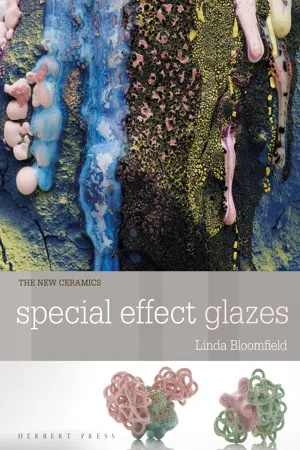
From drippy and crackle to ash and lichen glazes, experienced ceramicist Linda Bloomfield guides you through the world of special effect glazes. Beautifully illustrated with pieces from both emerging and established potters that showcase stunning copper oxide-blues, metallic bronzes and manganese-pink crystal glazes, Special Effect Glazes is packed full of recipes to try out: from functional oilspot glazes using iron oxide, to explosive lava glazes.
In this informative handbook discover how you can create these fantastic effects and learn the basic chemistry behind glazes in order to adjust and experiment with your unique pieces. Discussed are materials and stains, how to find them and how they affect the colour and texture of the glaze, alongside practical fixes to familiar glaze-making problems.
Special Effect Glazes is essential if you are interested in creating eye-catching glazes and wanting to develop your knowledge of glaze-making, or experiment with your own formulas to achieve the perfect finish.
- 160 pages
- English
- ePUB (mobile friendly)
- Available on iOS & Android
eBook - ePub
Special Effect Glazes
About this book
Trusted by 375,005 students
Access to over 1 million titles for a fair monthly price.
Study more efficiently using our study tools.
Information
SECTION 1
Glaze principles and application

David Tsabar, stoneware bowl thickly glazed with a Chun-type ‘Peacock’ glaze containing copper carbonate and fine 1000 mesh silicon carbide, fired in oxidation in an electric kiln to cone 6.
| 1 | Understanding glazes |

Diagram showing the alumina and silica range of various special-effect glazes. The effect of changing the alumina and silica in porcelain glazes fired to cone 11 with constant flux 0.3 K2O and 0.7 CaO. The ratio of 1:5 alumina to silica gives a semi-matt glaze, while 1:8 gives a shiny glaze. The straight lines on the chart represent alumina:silica ratios of 1:4 (matt), 1:5 (semi-matt) and 1:12 (shiny, crazed glaze). The dashed line is 1:8 Al2O3:SiO2 (bright, shiny glaze). The hatched area shows crazed glazes. The pale pink area shows Cooper and Royle’s limits for stable glazes from cones 5 to 8. The special effects shown may move to the left for lower temperatures or to the right for higher temperatures. Data from R.T. Stull 1912. Graphics by Henry Bloomfield.
Recipe books can be very useful but if, owing to numerous variables, the glaze doesn’t turn out how you expected, you need to understand the underlying principles in order to correct it. The many variables affecting glazes include clay body colour and texture, glaze materials used, glaze specific gravity, glaze application thickness, kiln type and size, firing temperature, firing time and atmosphere inside the kiln. All these factors contribute to the final appearance of the glaze.
This book is arranged in two sections: glaze principles including understanding and using glazes, and special-effect glazes including glaze recipes and explanations of how the special effects are created.
Special-effect glazes often lie outside the limits of what makes a glossy, transparent, functional glaze. On the diagram shown, the horizontal axis represents the number of molecules of silica in the glaze and the vertical axis shows alumina, found in clay and added to glaze to increase viscosity. The pale pink area shows the relative amounts of silica and alumina needed to make glossy glazes (together with the appropriate amount of fluxes needed to melt them at 1200–1260°C/2192–2300°F). Silica is the main glass former in a glaze, while alumina increases the viscosity and prevents the glaze from running off the pot. The proportion of silica to alumina needs to be balanced: if too much alumina is added, the glaze will become matt; too much silica and the glaze will not melt. Many of the various types of special-effect glaze lie outside the boundaries, such as crawl glazes, which can be cracked like a dry river bed or melted into beads. Volcanic glazes also lie in or near the semi-matt area; they need to be viscous enough to trap the bubbles of carbon dioxide gas coming from the silicon carbide added to the glaze. Shino glazes are often crawled as they are very high in clay, which shrinks on drying and forms cracks. Other special-effect glazes lie within the glossy area, such as oil-spot and drippy Chun glazes. These glazes are relatively high in silica, which enables any bubbles to escape and heal over. When the amount of flux in the glaze is high relative to the silica and alumina, the glaze becomes very runny and crystals can form during cooling, such as in crystalline glazes. Glazes with low silica are often crazed as they have a higher expansion than the clay body, which causes a network of fine cracks to appear upon cooling.
Many of these special-effect glazes are only for use on decorative or sculptural pieces, but oil-spot and drippy glazes can be used on functional tableware. Crawl glazes and lava glazes can be used on the outside of vases and bowls.

Paul Wearing, Cylinders, 2018. Handbuilt stoneware, brushed on slip and glazes containing magnesium carbonate, barium carbonate, vanadium pentoxide and silicon carbide, 10 x 15cm (4 x 6in.).

Katrina Pechal, Dented Vase, thrown stoneware, biscuit slip, volcanic glazes, height: 15cm (6 in.).

Chalk from south-east England (at top) and limestone (smaller pieces) from the Alps.
| 2 | Glaze materials and minerals |
The main material used in glazes is silica, in the form of ground flint or quartz. This is pure silicon dioxide (also known as silica) and is a glass former. The melting point of silica is too high for it to melt in a kiln, so fluxes are added to reduce the melting temperature. The main flux in stoneware glazes is feldspar, which contains sodium and potassium oxides. These are alkali metal oxides, which react with the acidic silica and break down the structure, helping it to melt. However, a simple mixture of sodium and silica, sodium silicate, would make a glaze which was soluble in water and likely to wash off, so a second flux is added to make the fired glaze insoluble. This secondary flux is usually whiting (calcium carbonate), found in chalk and limestone. Other secondary fluxes include the alkaline earths magnesium, barium, strontium and zinc. They help to strengthen the glaze and make it more stable. However, the resulting glaze would be very runny, so clay is added to make it more viscous in the melt. Clay contains aluminium oxide (known as alumina) and silica. China clay, ball clay and bentonite can all be used as glaze materials and are supplied in powdered form. These also help to suspend the heavier ingredients in water in the glaze bucket, preventing them from settling.

Quartz from rock vein.
| Silica (flint, quartz) Flux (feldspar, whiting) Alumina (clay) | Glass former Melter Stiffener |  | Essential glaze materials |
Stoneware glaze recipe,
transparent glossy (1280°C/2336°F)
Potash feldspar 27
Whiting 21
Quartz 32
China clay 20

Earthenware glaze recipe,
transparent glossy (1100°C/2012°F)
Calcium borate frit 39
Soda feldspar 27
Whiting 5
Quartz 23
China clay 6

Basic glaze recipes; transparent glossy.
In the earthenware glaze recipe above, some frit has been added. This is a kind of man-made feldspar, containing fluxes such as sodium, calcium and boron oxides, as well as silica. The reason for making frits is that some glaze materials such as borax are water-soluble, eventually forming crystals i...
Table of contents
- Cover
- Title Page
- Contents
- Acknowledgements
- Introduction
- Section 1. Glaze principles and application
- Section 2. Special effect glazes
- Conclusion
- References
- Bibliography
- Appendices
- Suppliers
- Laboratories for leach testing of glazes
- Index
- eCopyright
Frequently asked questions
Yes, you can cancel anytime from the Subscription tab in your account settings on the Perlego website. Your subscription will stay active until the end of your current billing period. Learn how to cancel your subscription
No, books cannot be downloaded as external files, such as PDFs, for use outside of Perlego. However, you can download books within the Perlego app for offline reading on mobile or tablet. Learn how to download books offline
Perlego offers two plans: Essential and Complete
- Essential is ideal for learners and professionals who enjoy exploring a wide range of subjects. Access the Essential Library with 800,000+ trusted titles and best-sellers across business, personal growth, and the humanities. Includes unlimited reading time and Standard Read Aloud voice.
- Complete: Perfect for advanced learners and researchers needing full, unrestricted access. Unlock 1.4M+ books across hundreds of subjects, including academic and specialized titles. The Complete Plan also includes advanced features like Premium Read Aloud and Research Assistant.
We are an online textbook subscription service, where you can get access to an entire online library for less than the price of a single book per month. With over 1 million books across 990+ topics, we’ve got you covered! Learn about our mission
Look out for the read-aloud symbol on your next book to see if you can listen to it. The read-aloud tool reads text aloud for you, highlighting the text as it is being read. You can pause it, speed it up and slow it down. Learn more about Read Aloud
Yes! You can use the Perlego app on both iOS and Android devices to read anytime, anywhere — even offline. Perfect for commutes or when you’re on the go.
Please note we cannot support devices running on iOS 13 and Android 7 or earlier. Learn more about using the app
Please note we cannot support devices running on iOS 13 and Android 7 or earlier. Learn more about using the app
Yes, you can access Special Effect Glazes by Linda Bloomfield in PDF and/or ePUB format, as well as other popular books in Technology & Engineering & Art General. We have over one million books available in our catalogue for you to explore.