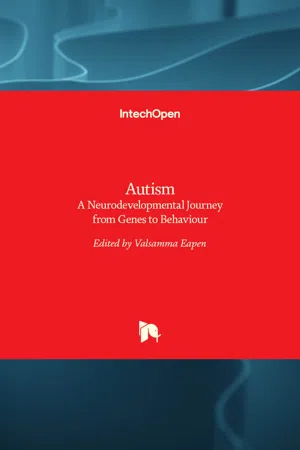
The book covers some of the key research developments in autism and brings together the current state of evidence on the neurobiologic understanding of this intriguing disorder. The pathogenetic mechanisms are explored by contributors from diverse perspectives including genetics, neuroimaging, neuroanatomy, neurophysiology, neurochemistry, neuroimmunology, neuroendocrinology, functional organization of the brain and clinical applications from the role of diet to vaccines. It is hoped that understanding these interconnected neurobiological systems, the programming of which is genetically modulated during neurodevelopment and mediated through a range of neuropeptides and interacting neurotransmitter systems, would no doubt assist in developing interventions that accommodate the way the brains of individuals with autism function. In keeping with the multimodal and diverse origins of the disorder, a wide range of topics is covered and these include genetic underpinnings and environmental modulation leading to epigenetic changes in the aetiology; neural substrates, potential biomarkers and endophenotypes that underlie clinical characteristics; as well as neurochemical pathways and pathophysiological mechanisms that pave the way for therapeutic interventions.
- 504 pages
- English
- PDF
- Available on iOS & Android
eBook - PDF
About this book
Information
Table of contents
- Autism - A Neurodevelopmental Journey from Genes to Behaviour
- Contents
- Preface
- Chapter 1 Abnormal Developmental Trajectories of White Matter in Autism - The Contribution of MRI
- Chapter 2 GABAergic Dysfunction in Autism and Epilepsy
- Chapter 3 GABA and Glutamate Receptors of the Autistic Brain
- Chapter 4 The Biochemical Basis of Autistic Behavior and Pathology
- Chapter 5 Serotonergic Neurotransmission in Autism Spectrum Disorders
- Chapter 6 Adenosine and Autism - Recent Research and a New Perspective
- Chapter 7 Nicotinic Acetylcholine Receptor Alterations in Autism Spectrum Disorders – Biomarkers and Therapeutic Targets
- Chapter 8 Identifying Variations Within Unstable€Regions€ of the Genome Reveal€Autism Associated Patterns 147€ Abdullah Alqallaf and Ali Hajjiah {end page}
- Chapter 9 Genome-Wide Association Studies of€ Copy Number Variation in Autism Spectrum Disorder 165€ Hae-Jin Hu and Yeun-Jun Chung Chapter 10 A Missense Mutation in CD38 Associated with Autism Spectrum Disorder in Three Pedigrees
- Chapter 11 Brain Oxytocin is a Main Regulator of Prosocial Behaviour - Link to Psychopathology
- Chapter 12 Environmental Factors in the Aetiology of Autism – Lessons from Animals Prenatally Exposed to Valproic Acid
- Chapter 13 Environmentally Induced Oxidative Stress and Disruption of Brain Thyroid Hormone Homeostasis in Autism Spectrum Disorders
- Chapter 14 Perinatal Immune Activation and Risk of Autism
- Chapter 15 Immune System and Neurotrophic Factors in Autism
- Chapter 16 Autoimmunity in Autism Spectrum Disorders
- Chapter 17 Vaccines and Autism – An Unlikely Connection
- Chapter 18 Immune Dysfunction in Autism Spectrum Disorder
- Chapter 19 Impaired Oral Tolerance in ASD Children with Food Protein Induced Enterocolitis Syndrome (FPIES) – Altered Innate and Adaptive Immune Responses in ASD Children Recovered from FPIES in Comparison with non-ASD/FPIES and ASD/non-FPIES Children
- Chapter 20 Clinical Evaluations on the Diagnosis of Autism
- Chapter 21 Loneliness and Silence in Autism - Implications for Psychotherapy
- Chapter 22 Mnesic Imbalance and the Neuroanatomy of Autism Spectrum Disorders
- Chapter 23 Behavioral and Electrophysiological Characterization of Induced Neural Plasticity in the Autistic Brain
- Chapter 24 Connecting Electroencephalography Profiles with the Gamma-Amino-Butyric Acid (GABA) Neuropathology of Autism as a Prelude to Treatment
Trusted by 375,005 students
Access to over 1.5 million titles for a fair monthly price.
Study more efficiently using our study tools.
Frequently asked questions
Yes, you can cancel anytime from the Subscription tab in your account settings on the Perlego website. Your subscription will stay active until the end of your current billing period. Learn how to cancel your subscription
No, books cannot be downloaded as external files, such as PDFs, for use outside of Perlego. However, you can download books within the Perlego app for offline reading on mobile or tablet. Learn how to download books offline
Perlego offers two plans: Essential and Complete
- Essential is ideal for learners and professionals who enjoy exploring a wide range of subjects. Access the Essential Library with 800,000+ trusted titles and best-sellers across business, personal growth, and the humanities. Includes unlimited reading time and Standard Read Aloud voice.
- Complete: Perfect for advanced learners and researchers needing full, unrestricted access. Unlock 1.5M+ books across hundreds of subjects, including academic and specialized titles. The Complete Plan also includes advanced features like Premium Read Aloud and Research Assistant.
We are an online textbook subscription service, where you can get access to an entire online library for less than the price of a single book per month. With over 1.5 million books across 990+ topics, we’ve got you covered! Learn about our mission
Look out for the read-aloud symbol on your next book to see if you can listen to it. The read-aloud tool reads text aloud for you, highlighting the text as it is being read. You can pause it, speed it up and slow it down. Learn more about Read Aloud
Yes! You can use the Perlego app on both iOS and Android devices to read anytime, anywhere — even offline. Perfect for commutes or when you’re on the go.
Please note we cannot support devices running on iOS 13 and Android 7 or earlier. Learn more about using the app
Please note we cannot support devices running on iOS 13 and Android 7 or earlier. Learn more about using the app
Yes, you can access Autism by Valsamma Eapen in PDF and/or ePUB format, as well as other popular books in Biological Sciences & Neuroscience. We have over 1.5 million books available in our catalogue for you to explore.