![]()
Figure 1. Tight Lacing, or Fashion before Ease, c. 1777; John Callet (1725–1780). Courtesy of the Lewis Walpole Library, Yale University.
History of pockets
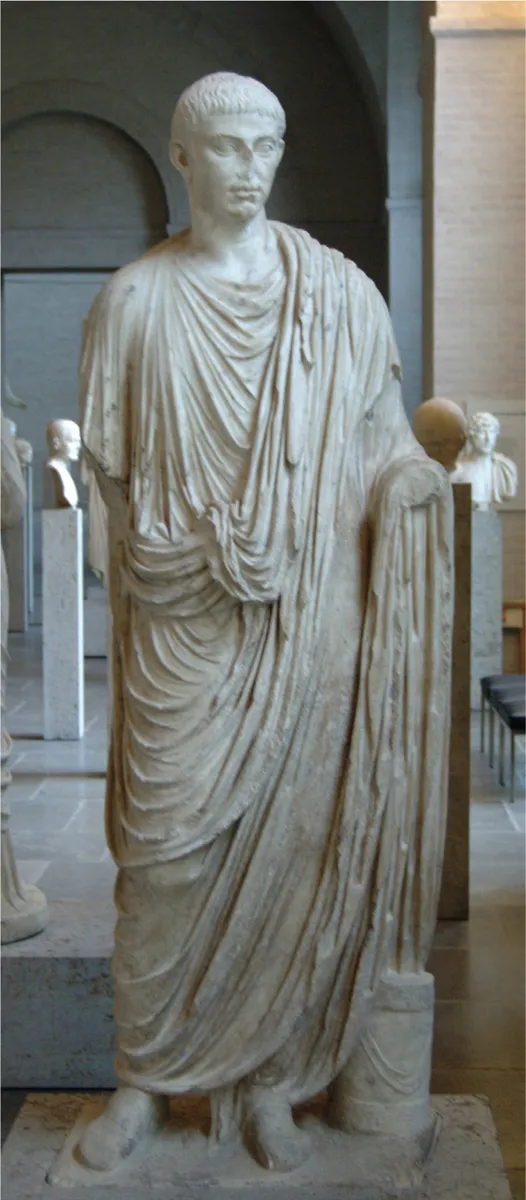
Pockets made their first appearance in garments in ancient Rome. Part of the Roman toga, the pocket, or sinus, was created from the complex folds of fabric. It was used to carry items such as the sudarium, an ancient Roman version of a modern handkerchief.
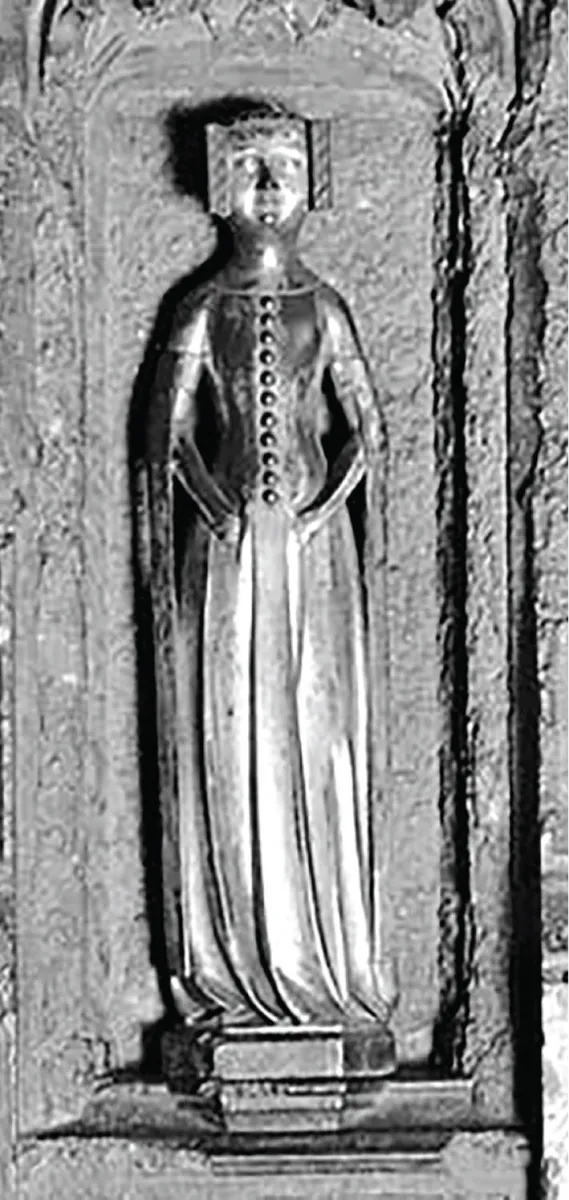
An early example of pockets featured in women’s dress dates from the Middle Ages (Figure 3). Although pockets had not become a consistent design element in women’s clothing, this example of 14th-century royal dress foreshadows their practical use.
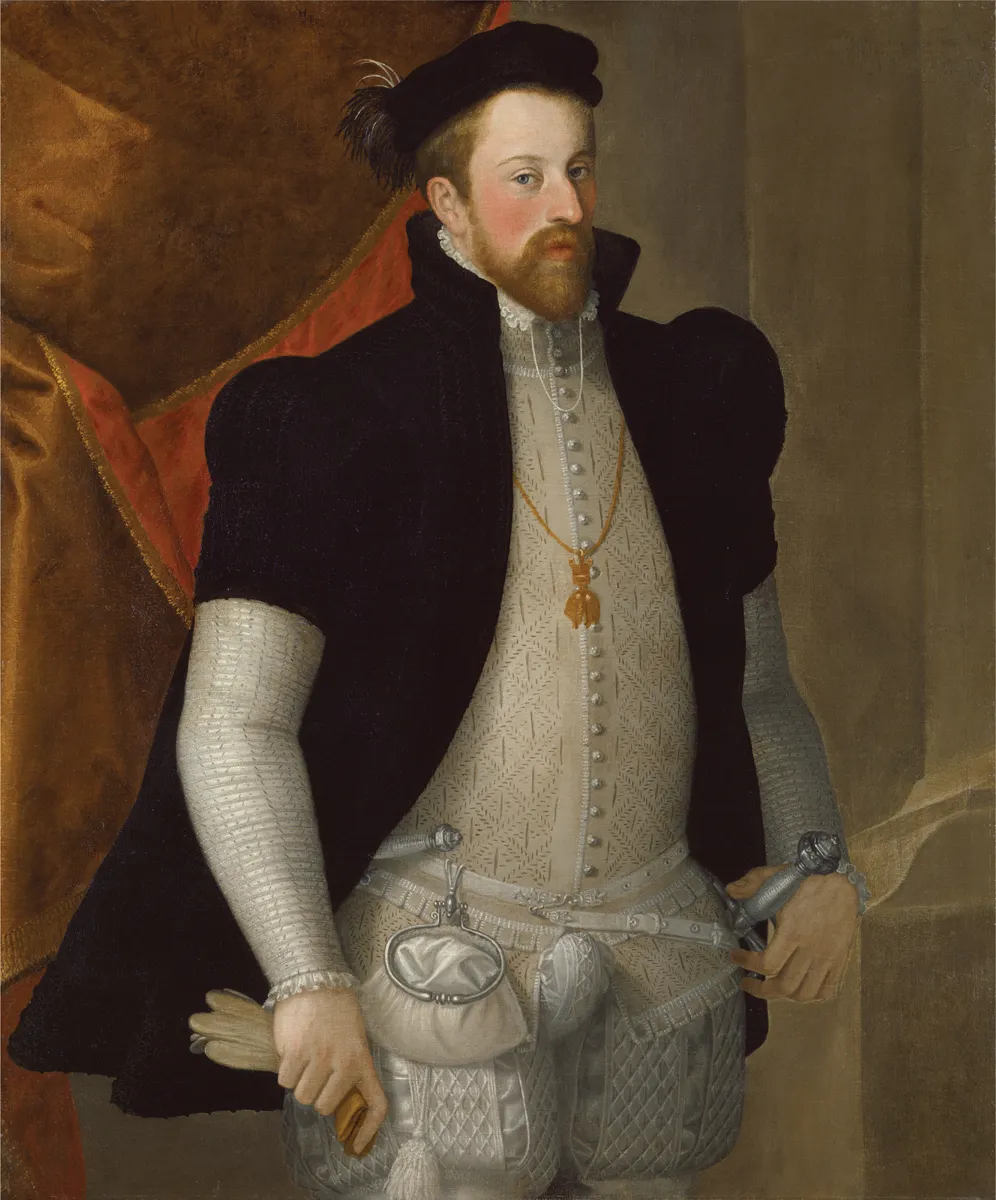
From the 15th until the mid-16th century, men and women carried essential items and currency in a pouch that was typically tied around the waist or hung from a belt.
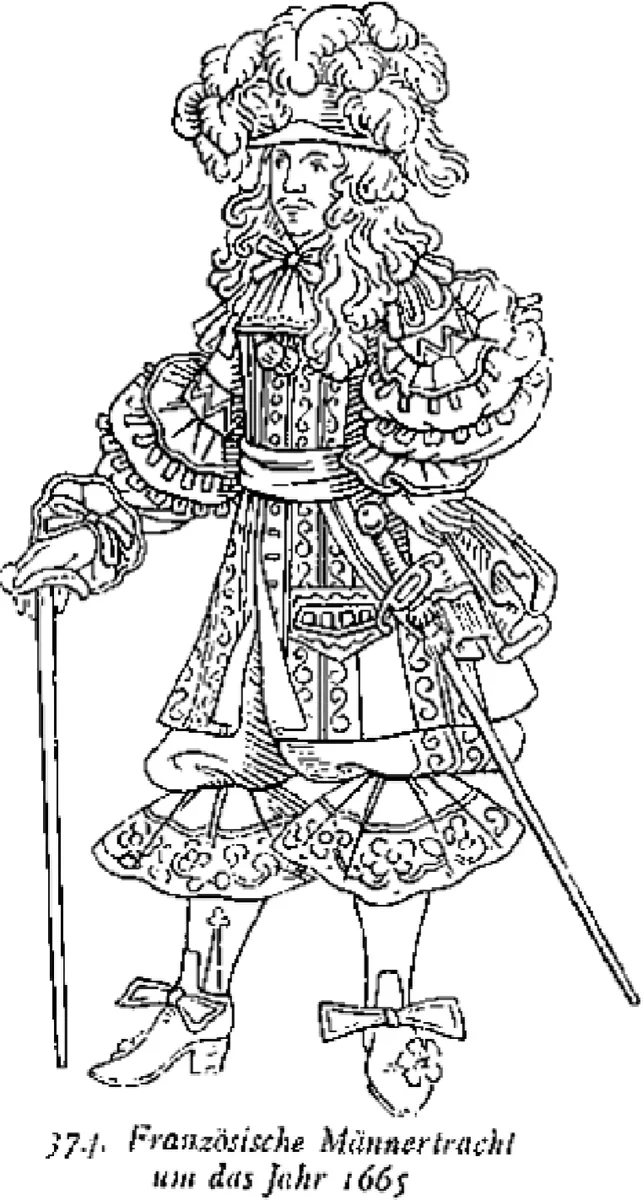
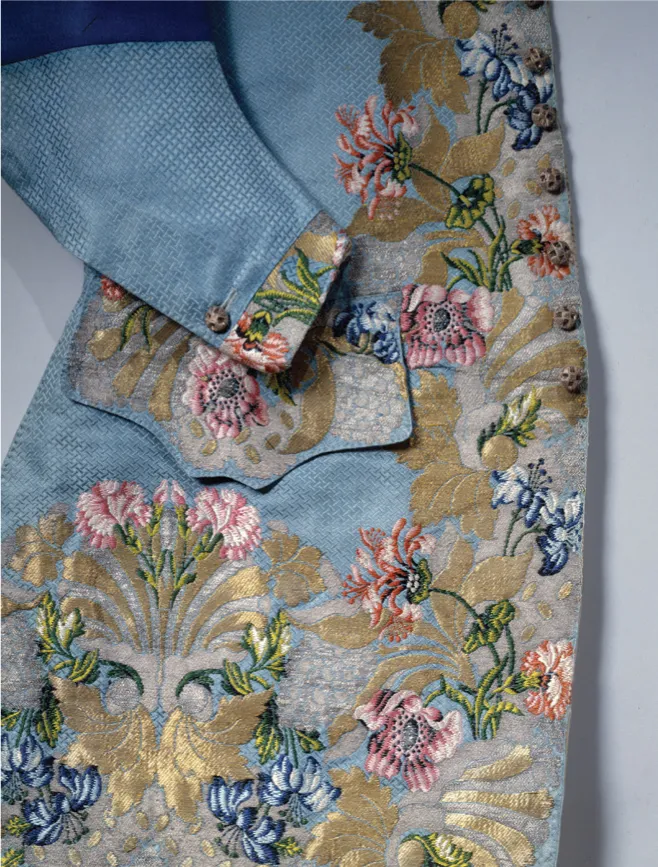
However, the modern pocket as we know it today really began in late 17th-century France with men’s jackets. The justaucorps was a long jacket worn by men of wealth and social standing. The fitted jacket had long flared peplum, which featured horizontal welt pockets with flaps. These welt pockets featured intricately embroidered flaps and curved or scalloped edges. The pocket flaps were embroidered as separate pieces, then assembled into pockets.
Figure 2. Statue of a young Roman wearing a toga, 20–30 CE; the Glyptothek, Munich, Germany by Bibi Saint-Pol / CC BY.
Figure 3. Joan de la Tour, part of the effigy of Edward III; Westminster Abbey, England (14th century). Courtesy of unknown / CC BY
Figure 4. Hanging waist pouch, Portrait of Archduke Ferdinand II of Austria, 1557, oil on canvas. Courtesy of Habsburger.net / CC BY
Figure 5. Illustration of French men’s dress, or justaucorps, dating from 1665; Carl Köhler, artist (1828–1876). Dover Publications, New York.
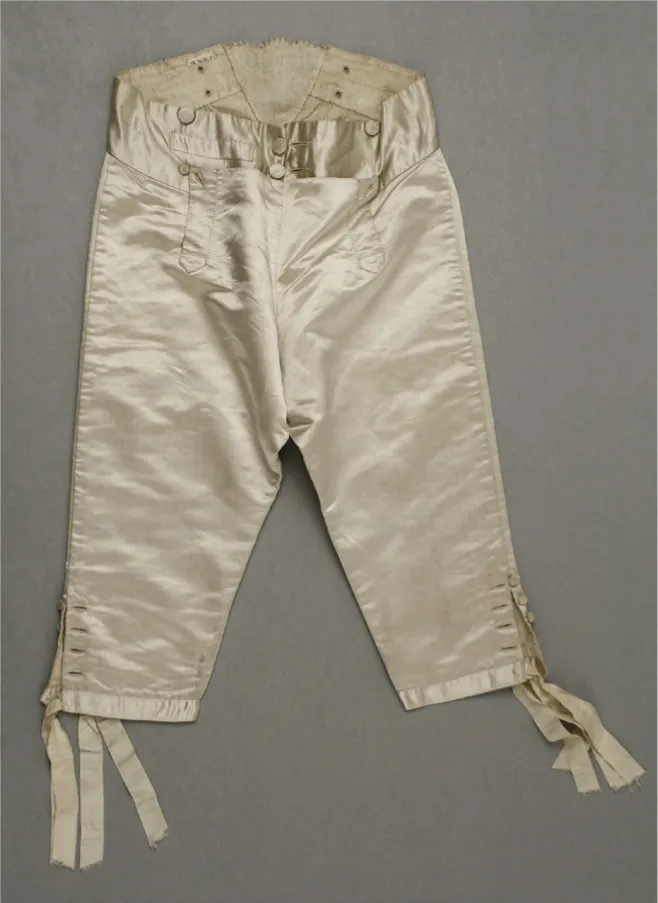
Early pocket options on pants were fairly limited and straightforward: they were created in the waistband, straight across the top, or on the sides. Most likely used to carry coins or other small objects, men’s trousers, or breeches, had fairly small inseam pockets right below the waistband area, or welt pockets at the waist area.
Welt and inseam pockets continued to appear in men’s clothing from the late 17th century onward, as men’s fashion evolved to include the vest, the doublet, and the waistcoat through to the modern day suit.
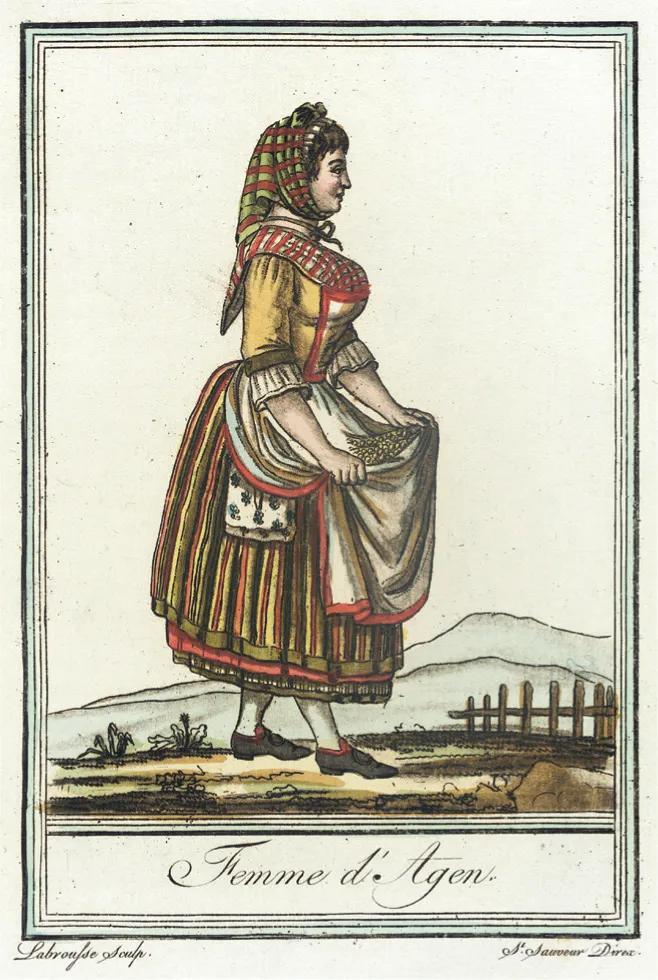
As evinced by illustrations from the 17th century, pockets may have featured regularly in the utilitarian clothing of the working class. However, the word “pocket” literally means “a small bag-like attachment.” Early examples of pockets were small pouches that hung from the waist or belt. These hanging pouches were very similar to the modern handbag, and were used to carry small objects and valuables, such as coins. Beginning in the 17th century, there are illustrations of women’s dress that include these hanging pouches, tied at the waist and worn under skirts or aprons.
The hanging pocket evolved into a flattened shape, made from two pieces of cloth, one side rectangular and one side gathered and shaped like a U. The pocket could be simple, from plain cloth, or feature elaborate embroidery and decoration according to the wearer’s dress.
The shape and opening of these pockets had slight variations, and depending on the social status of their wearer, they had more or less embellishments. Hand embroidery and contrast piping was quite popular. In Figure 10, a pair of pockets made of linen highlight the thin straps and perfectly bound edges.
Figure 6. Waistcoat designer: textile by Anna Maria Garthwaite (British, 1690–1763). Manufacturer: textile by Peter Lekeux (British, 1716–1768). 1747, silk, wool, metallic. Metropolitan Museum of Art, New York
Figure 7. Breeches, 1804–1814, French. Silk and linen. Metropolitan Museum of Art, New York. Gift of Mrs. John W. Grout, 1956.
Figure 8. Costumes de différent pays, “Femme d’Agen,” Jacques Grasset de Saint-Saveur, France, c. 1797, LACMA. Costume Council Fund (M.83.190.26).
Figure 9. Embroidered hanging pockets, 1700–1750, British. Silk, height 15 1/4 inches (387 mm). Purchase, Irene Lewisohn Bequest, 1974.
Figure 10. Linen pocket, 1800–1810, American. Brooklyn Museum Costume Collection at the Metropolitan Museum of Art; gift of the Brooklyn Museum, 2009;gift of the Pierrepontfamily, 1941.
The “saccoccia,” or the loose pocket, was well-known as a 17th-century costume detail. It was also worn in the Renaissance, in the second half of the 16th century. The saccoccia was reached through a slip in the skirt, often where the bodice laced up. It could be decorated with embroidery or with trims, and came in various shapes and colors, though the semi-round shape seems to have been predominant.
As fashion historian Barbara Burman writes in Pockets of History: The Secret Life of an Everyday Object, pockets used to do more than just decorate garments. Owners thought of them as meaningful pieces of clothing in their own right. They would often spend years embroidering and embellishing them—after all, for many people who shared close quarters, a pocket was one of the few truly private places to keep personal possessions.
S...