- English
- ePUB (mobile friendly)
- Available on iOS & Android
About this book
Master the fundamentals of planning, preparing, conducting, and presenting engineering research with this one-stop resource
Engineering Research: Design, Methods, and Publication delivers a concise but comprehensive guide on how to properly conceive and execute research projects within an engineering field. Accomplished professional and author Herman Tang covers the foundational and advanced topics necessary to understand engineering research, from conceiving an idea to disseminating the results of the project.
Organized in the same order as the most common sequence of activities for an engineering research project, the book is split into three parts and nine chapters. The book begins with a section focused on proposal development and literature review, followed by a description of data and methods that explores quantitative and qualitative experiments and analysis, and ends with a section on project presentation and preparation of scholarly publication.
Engineering Research offers readers the opportunity to understand the methodology of the entire process of engineering research in the real word. The author focuses on executable process and principle-guided exercise as opposed to abstract theory. Readers will learn about:
- An overview of scientific research in engineering, including foundational and fundamental concepts like types of research and considerations of research validity
- How to develop research proposals and how to search and review the scientific literature
- How to collect data and select a research method for their quantitative or qualitative experiment and analysis
- How to prepare, present, and submit their research to audiences and scholarly papers and publications
Perfect for advanced undergraduate and engineering students taking research methods courses, Engineering Research also belongs on the bookshelves of engineering and technical professionals who wish to brush up on their knowledge about planning, preparing, conducting, and presenting their own scientific research.
Tools to learn more effectively

Saving Books

Keyword Search

Annotating Text

Listen to it instead
Information
Part I
Overview, Proposal, and Literature Review
1
Research Overview
1.1 Introduction to Research
1.1.1 What Is Research?
1.1.1.1 Seeking New Knowledge
- Simply gathering information
- Merely rummaging around for hard-to-locate information
- Transfer of facts from on location to another
1.1.1.2 A Systems Viewpoint
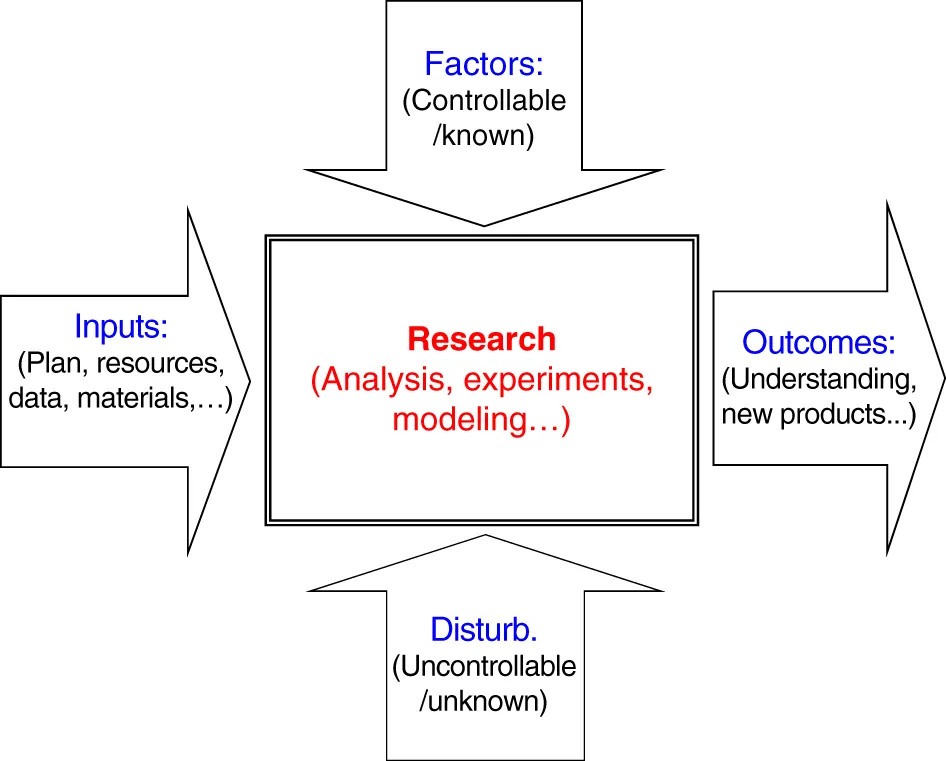

Table of contents
- Cover
- Table of Contents
- Title Page
- Copyright
- About the Author
- Preface
- Acknowledgments
- Part I: Overview, Proposal, and Literature Review
- Part II: Quantitative and Qualitative Methods
- Part III: Management, Writing, and Publication
- Epilogue
- Index
- Appendix A: Instruction Material Samples
- Appendix B: Research Prospectus Development Guidelines
- Appendix C.1: Research Prospectus: Designing a Process of using Virtual Reality for Accelerated Prototyping
- Appendix C.2: Research Prospectus: Influence of Organizational Culture on Adoption of Digital Substation Technology in North American Electric Utilities
- Appendix C.3: Research Prospectus: Metal Oxide Development on Fly Ash from Thermal Power Plant and Its Possible Usages
- Appendix D: Typical Structures of Academic Articles
- End User License Agreement
Frequently asked questions
- Essential is ideal for learners and professionals who enjoy exploring a wide range of subjects. Access the Essential Library with 800,000+ trusted titles and best-sellers across business, personal growth, and the humanities. Includes unlimited reading time and Standard Read Aloud voice.
- Complete: Perfect for advanced learners and researchers needing full, unrestricted access. Unlock 1.4M+ books across hundreds of subjects, including academic and specialized titles. The Complete Plan also includes advanced features like Premium Read Aloud and Research Assistant.
Please note we cannot support devices running on iOS 13 and Android 7 or earlier. Learn more about using the app