No-Waste Kitchen Gardening
eBook - ePub

No-Waste Kitchen Gardening

Regrow Your Leftover Greens, Stalks, Seeds, and More

  1. 144 pages
  2. English
  3. ePUB (mobile friendly)
  4. Available on iOS & Android
eBook - ePub

No-Waste Kitchen Gardening

Regrow Your Leftover Greens, Stalks, Seeds, and More

About this book

The debut book in the internationally successful No-Waste Gardening series, No-Waste Kitchen Gardening is a fun and colorful exploration of the amazing results you can get by re-growing vegetable cutoffs and scraps into harvestable, edible plants.

Stop tossing your carrot stumps, loose cilantro sprigs, lettuce and cabbage stalks, and apple cores in the trash! The expert advice in No-Waste Kitchen Gardening, gives you all the instruction and tricks you’ll need to grow and re-propagate produce from food waste. You’ll be astonished at how much food waste you can re-grow.

You’ll also find some helpful general information about growing indoors and maintaining your re-grown plants. Two-part photo instructions show first what the root, chunk seed, or leaf should look like when you re-plant it, and second, when to harvest or re-plant it in soil to continue growing. 

Edibles big and small, quick to grow and those that take a big longer, are included, so you can pick and choose which projects to take on. A few of the many plants profiled include:

  • Green onions
  • Tomatoes
  • Melons
  • Avocadoes
  • Potatoes
  • Carrots

Cut back on your food waste, cultivate your own food easily, and maybe even share gardening with a new generation, all with the advice from No-Waste Kitchen Gardening. For more no-waste gardening advice, explore the second book in the No-Waste Gardening seriesNo-Waste Organic Gardening. 

Frequently asked questions

Yes, you can cancel anytime from the Subscription tab in your account settings on the Perlego website. Your subscription will stay active until the end of your current billing period. Learn how to cancel your subscription.
No, books cannot be downloaded as external files, such as PDFs, for use outside of Perlego. However, you can download books within the Perlego app for offline reading on mobile or tablet. Learn more here.
Perlego offers two plans: Essential and Complete
  • Essential is ideal for learners and professionals who enjoy exploring a wide range of subjects. Access the Essential Library with 800,000+ trusted titles and best-sellers across business, personal growth, and the humanities. Includes unlimited reading time and Standard Read Aloud voice.
  • Complete: Perfect for advanced learners and researchers needing full, unrestricted access. Unlock 1.4M+ books across hundreds of subjects, including academic and specialized titles. The Complete Plan also includes advanced features like Premium Read Aloud and Research Assistant.
Both plans are available with monthly, semester, or annual billing cycles.
We are an online textbook subscription service, where you can get access to an entire online library for less than the price of a single book per month. With over 1 million books across 1000+ topics, we’ve got you covered! Learn more here.
Look out for the read-aloud symbol on your next book to see if you can listen to it. The read-aloud tool reads text aloud for you, highlighting the text as it is being read. You can pause it, speed it up and slow it down. Learn more here.
Yes! You can use the Perlego app on both iOS or Android devices to read anytime, anywhere — even offline. Perfect for commutes or when you’re on the go.
Please note we cannot support devices running on iOS 13 and Android 7 or earlier. Learn more about using the app.
Yes, you can access No-Waste Kitchen Gardening by Katie Elzer-Peters in PDF and/or ePUB format, as well as other popular books in Biological Sciences & Horticulture. We have over one million books available in our catalogue for you to explore.

CHAPTER
1

No-Waste Kitchen Gardening: How It Works and How to Do It
Plants are pretty incredible living things. The tiniest of seeds contains everything needed to grow tall oak trees and long squash vines. You can cut pieces off of some plants, stick the pieces in water, and watch them grow roots. Some plants grow, flower, produce seeds, and then die back, only to emerge again the following year from their roots. Some of these perennial plants may last for many decades; other short-lived annuals live their lives in a flash, barely lasting a single growing season before fading and wilting.
Image
To regrow kitchen scraps, you’ll need to get a handle on some basic plant science (botany). Depending on the vegetable, it may be the seeds, the roots, the leaves, the stems, or some modified version of stems that you are eating, so you’ll need to be able to identify which part you’re trying to regrow and where that plant part fits in the plant life cycle. That information will help you know what to expect from your regrowing efforts.
There are many plants that are possible to regrow that aren’t covered in this book. I’m focusing on those that are easier and more productive, because the goal here is not only to eat well, but to have fun doing it. But with the information in this chapter, you’ll have a foundation for regrowing plants I don’t cover as well as those I do.
Image

PARTS OF THE PLANT: ROOT YOUR SHOOTS AND EAT YOUR LEAVES

As you learn about the finer points of no-waste kitchen gardening, there’s one overarching principle to keep in mind: any plant part you want to regrow must have some type of stem-growing tip in it or on it.
What is called the “growing tip” can take different forms across different types of plants and different parts of plants. Roots have growing tips and so do stems. You’ll hear more about this in the individual plant-part descriptions. When you’re looking at a plant part and trying to determine whether you can regrow it at all, the key is to find a point that can expand into more stems, more branches, more leaves, and/or eventually, flowers.
Image
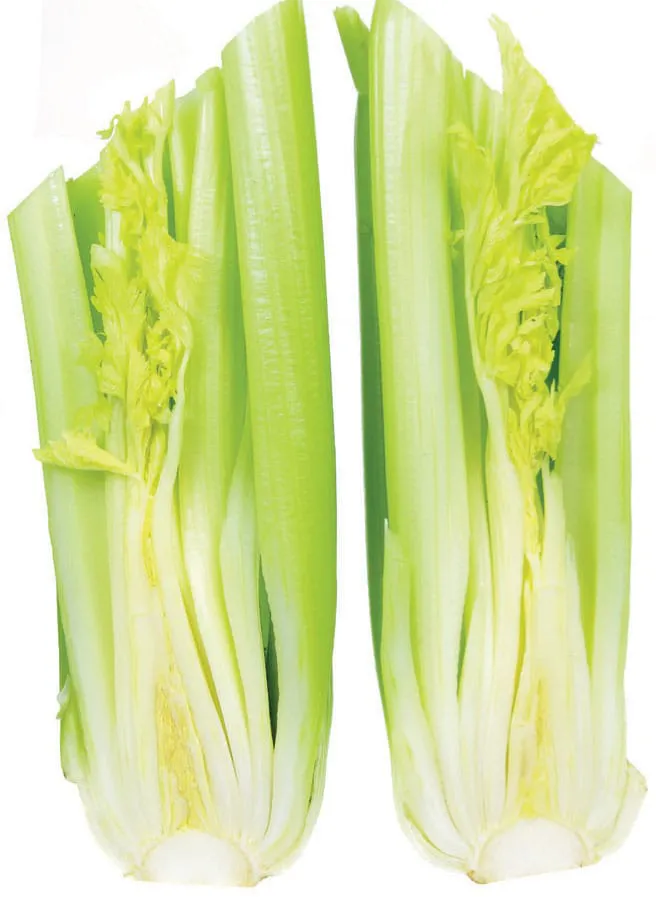
The growing tip in a bunch of celery is actually buried deep within the stalks that we eat.
Image

Roots

Roots are the underground parts of the plant from which the plant takes up food and water. Roots have growing tips at their ends so that the roots will keep growing down into the soil, but they do not have stem-growing tips anywhere along the roots. If you want to regrow these vegetables you have to look for root vegetables with the tops intact or, if there are no leaves, at least plant parts where the tops have been not sliced off.
Root vegetables include:
• Beets
• Carrots
• Parsnips
• Radishes
• Rutabagas
• Sweet potatoes
• Turnips
• Yams
Image
Some of our favorite vegetables for regrowing are roots: beets, carrots, turnips, parsnips, and radishes. You won’t get full new carrots to eat, but you’ll get some delicious greens.
There are two main types of roots that we eat: taproots and tuberous roots. Most of the root vegetables we eat fall into the taproot category, including carrots, turnips, and radishes. If the top of the taproot where the leaves sprout is still intact, you can regrow some leaves to enjoy, but you cannot regrow the taproot itself.
Sweet potatoes and cassava are plants that have tuberous roots. The difference between these plants and those with taproots is that you can grow a whole new plant from a piece of the tuberous root. This is not a difficult process but it does involve many steps (see Chapter 2).
Image
One sweet potato plant produces multiple tuberous roots.

Stems

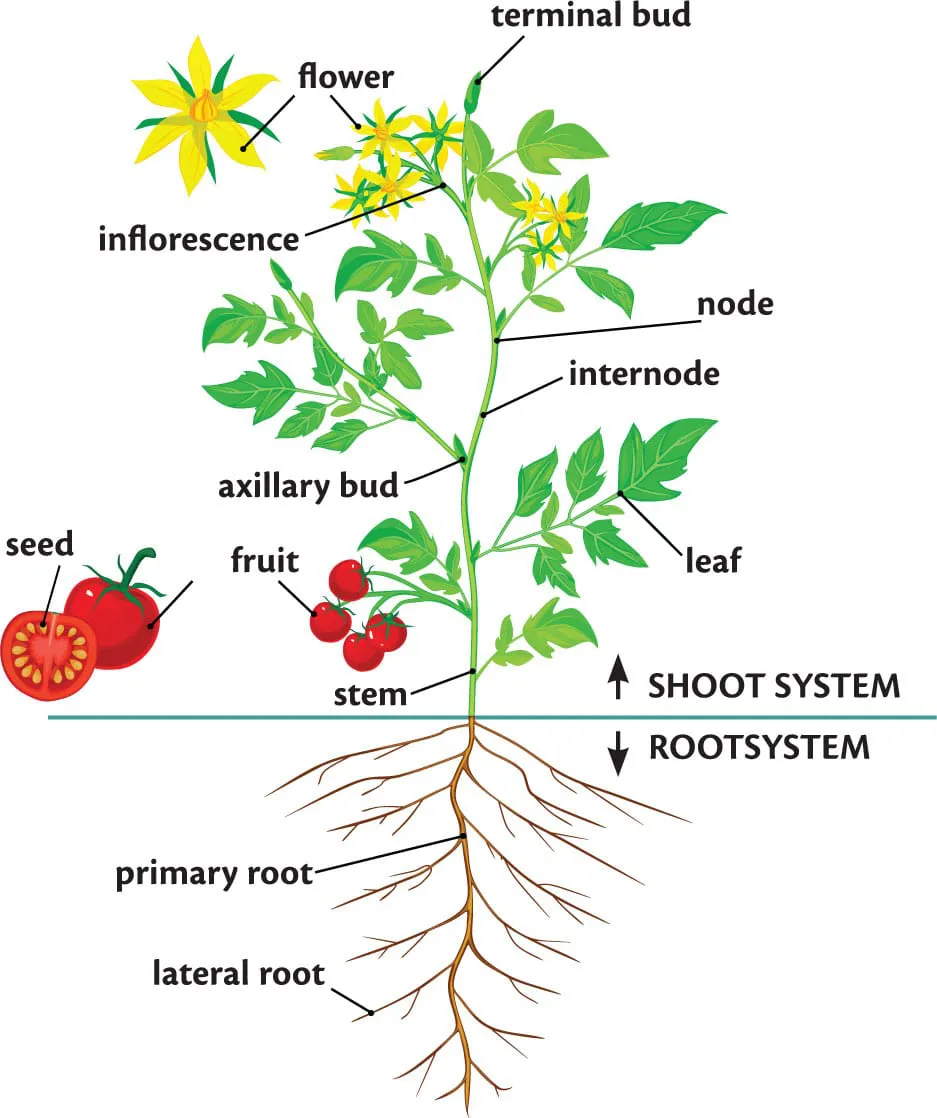
Stems are usually aboveground, but there are modified stems that grow belowground or half aboveground and half belowground. What distinguishes a stem from a root is that it has a growing tip and buds that can sprout new branches that will eventually form flowers (and then fruits and seeds). The stem is the structure that supports the leaves, flowers, seeds, fruits, and other aboveground plant parts. Collectively, all of these parts are called the shoot.
A tree trunk is essentially a big stem with branches and leaves. How does that relate to what you’re eating? If there are branches or leaves coming out of the plant part that you’re eating, that’s the stem. If ther...

Table of contents

  1. Cover
  2. Title Page
  3. Contents
  4. Introduction
  5. 1. No-Waste Kitchen Gardening: How It Works and How to Do It
  6. 2. Regrow Roots and Underground Stems in Soil
  7. 3. Regrow Stems and Modified Stems in Soil
  8. 4. Grow Seeds in Soil and Water
  9. 5. Regrow Whole Plants and Stems in Water
  10. Resources
  11. Index
  12. Acknowledgments
  13. Photo Credits
  14. About the Author
  15. Dedication
  16. Copyright