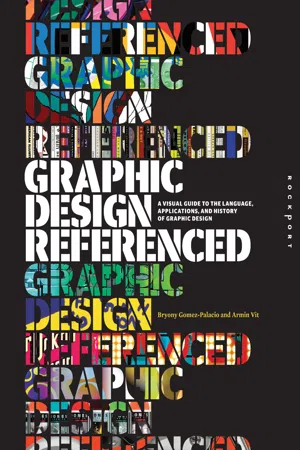
Graphic Design, Referenced is a visual and informational guide to the most commonly referenced terms, historical moments, landmark projects, and influential practitioners in the field of graphic design. With more than 2,000 design projects illustrating more than 400 entries, it provides an intense overview of the varied elements that make up the graphic design profession through a unique set of chapters: “principles" defines the very basic foundation of what constitutes graphic design to establish the language, terms, and concepts that govern what we do and how we do it, covering layout, typography, and printing terms; “knowledge" explores the most influential sources through which we learn about graphic design from the educational institutions we attend to the magazines and books we read; “representatives" gathers the designers who over the years have proven the most prominent or have steered the course of graphic design in one way or another; and “practice" highlights some of the most iconic work produced that not only serve as examples of best practices, but also illustrate its potential lasting legacy. Graphic Design, Referenced serves as a comprehensive source of information and inspiration by documenting and chronicling the scope of contemporary graphic design, stemming from the middle of the twentieth century to today.
eBook - ePub
Graphic Design, Referenced
A Visual Guide to the Language, Applications, and History of Graphic Design
- 400 pages
- English
- ePUB (mobile friendly)
- Available on iOS & Android
eBook - ePub
Graphic Design, Referenced
A Visual Guide to the Language, Applications, and History of Graphic Design
About this book
Information
Topic
DesignSubtopic
Graphic Design
Of Design
Of Letterforms
Of Writing
Of Groups
As graphic design has evolved over the course of the twentieth century and into the twenty-first century from a craft focusing on the finer aspects of printing and typesetting into a multifaceted profession thriving on the communication of messages through a variety of means and mediums, there have been numerous individuals, and groups of individuals, that have helped not only define each milestone but propel the next one forward through outstanding and innovative work upon which future generations can build upon. These individuals are representative of a specific time in the history of graphic design, but at the same time transcend any given period or style by being exemplary models for how graphic design can be practiced and of the kind of work that can be produced within any cultural, political, economical and technological context.
REPRESENTATIVES
Of Design
1920s–1960s
1960s–1980s
1980s–2000s
It’s difficult to establish hard-edged boundaries around the years in which designers make an impact, in part because many of the individuals and groups noted in this section stretch across numerous decades. However, certain developments help establish broad timelines where they thrived or made their biggest impact.
Spurred by the graphic innovations and new visual languages developed through Constructivism in Russia, de Stijl in the Netherlands, and Bauhaus in Germany, it’s possible to see the genesis of graphic design, as is known today, with imagery and typography coming together more clearly and with more defined purposes, whether for matters of commerce or protest. In the 1950s, the rise of the International Typographic Style made Switzerland the center of attention; this remains one of the most influential epochs. Meanwhile, in the United States, the influx of European and Russian immigrants and a growing group of Americans gave shape to the publishing and advertising industries from the 1930s onward. What these designers shared, more than geographic location or stylistic approach, was a pioneering spirit that established the potential of graphic design.
During the late 1950s and 1960s there was a precipitous rise in the discipline of corporate identity, as many of the world’s largest corporations began a vigorous growth period fueled by highly industrialized processes and more viable communication and transportation methods. In these early years, indivi...
Table of contents
- Cover
- Title Page
- Contents
- Introduction
- Principles
- Knowledge
- Representatives
- Practice
- Recommended Reading
- Index
- Contributor Directory
- Copyright
Trusted by 375,005 students
Access to over 1.5 million titles for a fair monthly price.
Study more efficiently using our study tools.
Frequently asked questions
Yes, you can cancel anytime from the Subscription tab in your account settings on the Perlego website. Your subscription will stay active until the end of your current billing period. Learn how to cancel your subscription
No, books cannot be downloaded as external files, such as PDFs, for use outside of Perlego. However, you can download books within the Perlego app for offline reading on mobile or tablet. Learn how to download books offline
Perlego offers two plans: Essential and Complete
- Essential is ideal for learners and professionals who enjoy exploring a wide range of subjects. Access the Essential Library with 800,000+ trusted titles and best-sellers across business, personal growth, and the humanities. Includes unlimited reading time and Standard Read Aloud voice.
- Complete: Perfect for advanced learners and researchers needing full, unrestricted access. Unlock 1.5M+ books across hundreds of subjects, including academic and specialized titles. The Complete Plan also includes advanced features like Premium Read Aloud and Research Assistant.
We are an online textbook subscription service, where you can get access to an entire online library for less than the price of a single book per month. With over 1.5 million books across 990+ topics, we’ve got you covered! Learn about our mission
Look out for the read-aloud symbol on your next book to see if you can listen to it. The read-aloud tool reads text aloud for you, highlighting the text as it is being read. You can pause it, speed it up and slow it down. Learn more about Read Aloud
Yes! You can use the Perlego app on both iOS and Android devices to read anytime, anywhere — even offline. Perfect for commutes or when you’re on the go.
Please note we cannot support devices running on iOS 13 and Android 7 or earlier. Learn more about using the app
Please note we cannot support devices running on iOS 13 and Android 7 or earlier. Learn more about using the app
Yes, you can access Graphic Design, Referenced by Armin Vit,Bryony Gomez Palacio in PDF and/or ePUB format, as well as other popular books in Design & Graphic Design. We have over 1.5 million books available in our catalogue for you to explore.