![]()
Section 1 Just MESSING AROUND
SKETCHBOOK PLAY AND OTHER NONSENSE
“Time you enjoy wasting is not wasted time. “ —Marthe Troly-Curtin
This first section consists of drawing exercises and painting prompts that I typically do just for fun. Sometimes these exercises influence my “real” work, but often they don’t seem to make much practical sense at all.
I do them because I know that “time-wasters” (such as one-liners or blind drawings) help inform the new animals I create. Sometimes the things that seem to make the least sense at the outset provide inspiration for the very thing you particularly like the most.
The more you can open yourself up to new and silly ways of drawing and painting, the more primed you are to approach your “real” artwork with a spirit of relaxation that, ironically, often leads to the most satisfying results.
![]()
1 Blobs and Sidewalk Cracks
Finding Animals Around You
I SEE ANIMALS EVERYWHERE!
Because I live in the City of Seattle, I am fortunate to have access to lots of city blocks that have oil stains, trash, and other random “blobs” to draw from. When I lived in Colorado, I was fortunate to live in a very small town with plenty of run-down walkways that provided tons of inspiration: sidewalk cracks.
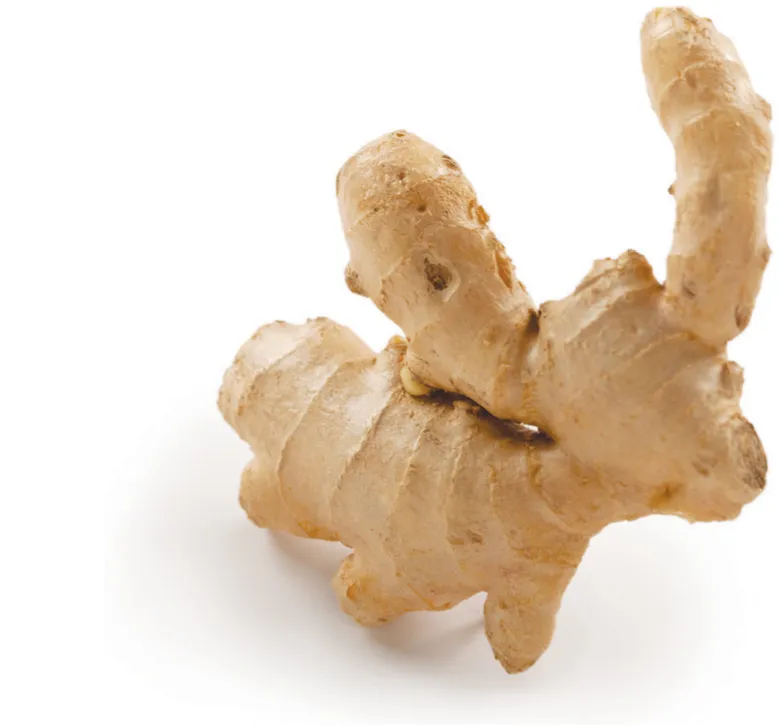
Wherever I’ve lived, during the fall months I’m fortunate to see leaves on the ground that become fish, birds, elephants, and other creatures as I pass by. And in the produce section yesterday I was fortunate to run across a huge pile of ginger roots, er . . . fluffalumps, cats, elehorses, and toads.
The point is, I see animals everywhere and so can you. It’s just a matter of training your eyes!
It turns out that tinfoil and ginger roots make excellent animal references.
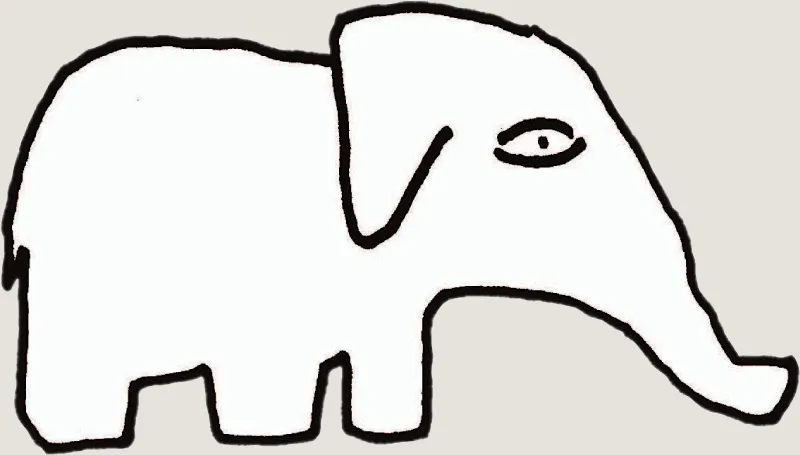
For example, if asked to draw an elephant from my “head,” my first impulse is to draw something like this:
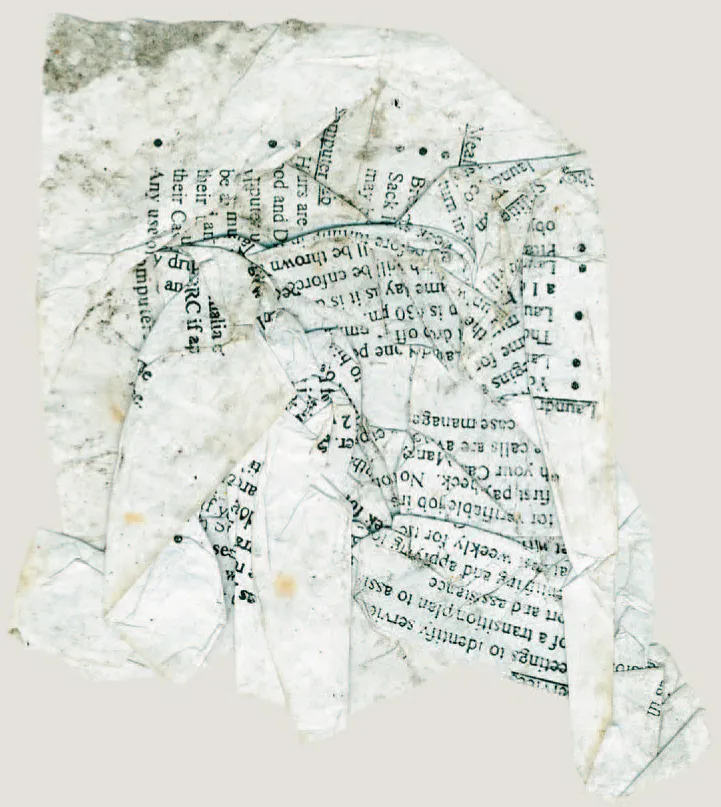
It’s okay. Cute, I guess. But if I “find” an elephant in a found shape, such as a sidewalk crack, a leaf, or a smashed-down piece of paper . . .
. . . then I can turn it into an elephant that looks like this:
Cuter. More unique. And in a pose I would never have thought of on my own!
In this chapter we will practice pulling out animals and other imaginary creatures from textures, patterns, and shapes that are all around us.
Line Blobs
I started creating “blobs” in order to solve a problem I was having: the blank page scared me! So a few years ago I decided to prefill my sketchbook pages with shapes found in sidewalk cracks, tree bark, leaves, and the like. I could do this when going about my day, with no pressure to draw on the spot—just a quick shape. Then, when I felt like sitting down to draw, I had something already on the page to bounce off from. A problem was there for me to solve.
materials
• paper or sketchbook
• fine-point permanent marker
• walking shoes
To begin, go outside and take a walk around your garden or neighborhood.
1 Record shapes you see that interest you. It’s not necessary (or even desirable) that you see an animal in these shapes now; just record about six to ten shapes that you find interesting or that you think might have the potential of becoming an animal.
2 Some ideas of where to find shapes include bricks, dirt and soil, stones, water marks, leaves, sidewalk cracks, oil stains, a child’s chalk drawing, bark on trees, dying flowers, snow, bird excrement, peeling paint, rust stains, trash, and food.
3 Go back to your studio or a quiet place and pick one shape to work with.
4 Look at and see if you can see an animal; if so, great! But before you continue, turn your paper (or sketchbook) around and around all the way. Perhaps there is an even more appealing creature waiting for you.
5 Add eyes, feet, a tail or any other characteristic needed to finish your blob animal.
6 Add cross-hatch marks (shading) under the eyes, chin, ears, or...