1
STARTING RIGHT
Keeping bees is an adventure, an avocation, and an investment, much like preparing for a garden. You must plan what you will raise, be aware of harvest dates, prepare for how to preserve the bounty, and plan what needs to be done in the off-season.
GETTING STARTED
Your first step is to order as many beekeeping catalogs as you can find. They’re free, and they contain a wealth of information. There are also magazines dedicated to beekeeping. Look particularly at those companies that offer preassembled products.
PROVIDING WATER
Providing fresh water for bees is mandatory. A summer colony needs at least a quart (liter) of water every day and as much as a gallon (4 L) when it’s very warm. Making sure that water is continuously available in your yard will make your bees’ lives easier, and it helps ensure that they do not wander where they are not welcome—such as the neighbor’s child’s swimming pool—in search of water.
Whatever watering technique you choose for your bees, the goal is to provide a continuous supply of fresh water. This means while you are on vacation for a couple of weeks, when you forget to check, and especially when it’s really hot—bees always need water. To make water accessible to bees, try the following:
Float pieces of cork or small pieces of wood in pails of fresh water for the bees to rest on while drinking.
Install a small pool or water garden or have birdbaths that fill automatically when the water runs low.
Set outside faucets to drip slowly (great for urban beekeepers) or hook up automatic pet or livestock waterers.
Be careful not to raise mosquitoes. Standing water, even for a week or so, can produce a whole brood of these often disease-carrying pests. A water source that is cycled by a pump or is changed on a regular basis is what’s needed. It’s a trade-off. The choice can’t be water for the bees and mosquitoes. It has to be water and no mosquitoes.
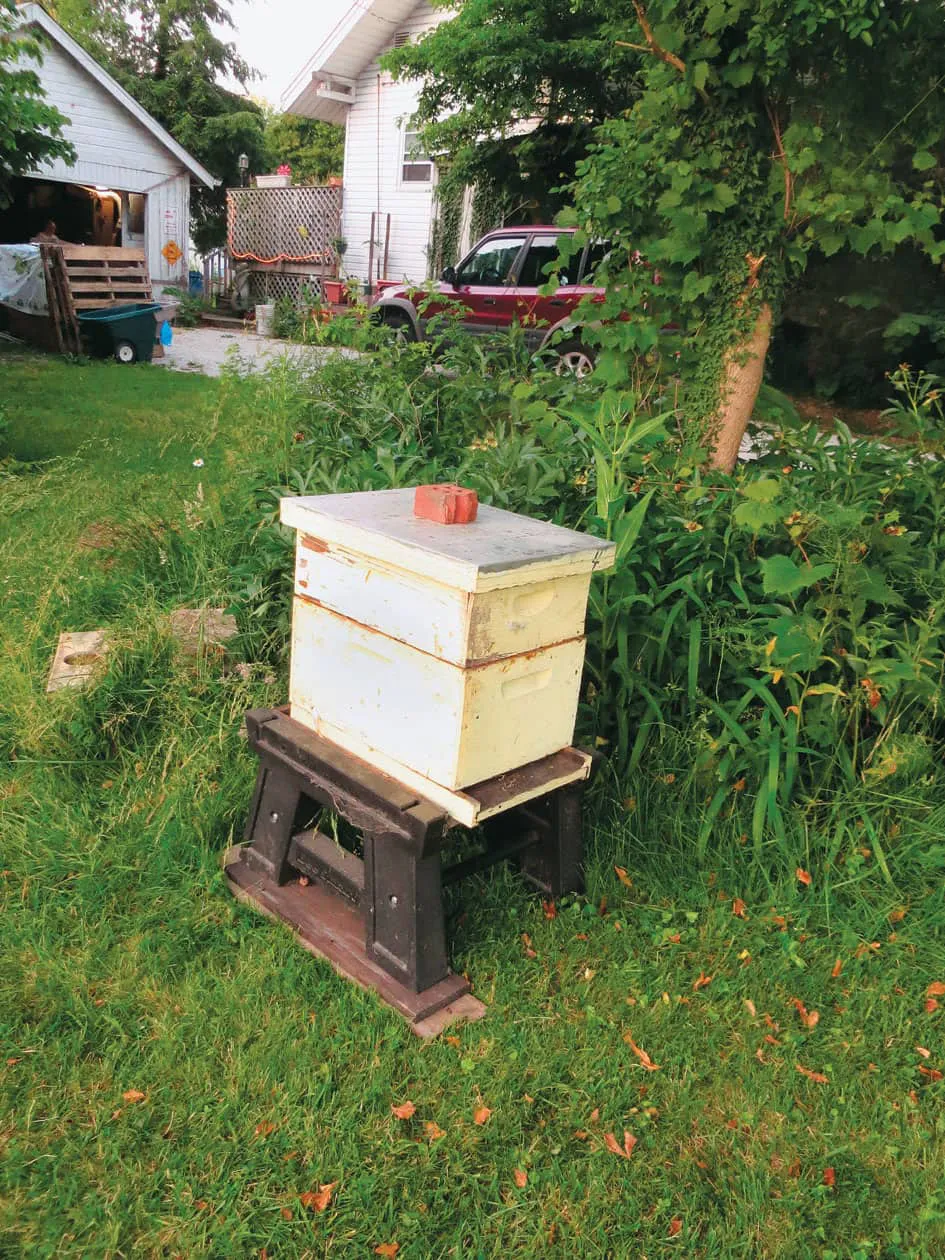
A beehive should be visually screened from the public. The site should have some afternoon shade, lots of room to work, and a low-maintenance landscape. Notice that the white hive seen here is highly visible. Stark white beehives with little or no screening will draw attention and invite trouble. Out of sight and out of mind is the goal. This site doesn’t work.
FIND OUT ABOUT KEEPING BEES IN YOUR NEIGHBORHOOD
Some areas have restrictions on beekeeping. You need to find out about the ordinances of your city or town, because local zoning may limit your ability to keep bees. There are seldom regulations that do not allow any beehives on a suburban lot, but there are often specific, restrictive guidelines for managing them. And some places do strictly forbid having bees.
It is also important to investigate your neighbors’ take on your new hobby. It may be completely legal to have bees on your property, but if your neighbors have an extremely negative opinion of insects that sting and swarm, you’ll have to make some compromises.
Often these neighbors are concerned because of someone in the family being allergic, or more often, thinking they are allergic to bee stings. Without being confrontational, find out if that person is really allergic to bees or if they just have the standard non-allergic reaction, which includes slight swelling at the site of the sting, itching, and redness.
An automatic watering device is an ideal way to provide water and not have to worry about the effects of a drought. (In winter, watering devices need to be unhooked and drained.)
POSITIONING YOUR HIVES
Once you have considered everyone else’s comfort level, it is a good idea to consider the comfort and happiness of your bees. Every family pet, including bees, needs a place that’s protected from the afternoon sun and sudden showers and provides access to ample fresh water. Place colonies where they’ll have a little protection from the hot afternoon sun, but don’t place them in full shade. The more sun your hive is exposed to, the better it can handle some pests. All day sun is alright, but a bit of light afternoon shade also affords comfort for the beekeeper on a hot summer day.
Your hive stand should be level end to end but just a tiny bit lower in the front than the back. Put the cinder blocks on cement paving stones to reduce the chance of them sinking into the soil. If all goes well this year, and certainly in the next few years, with two or three hives on a stand, the total weight could reach 600 pounds (273 kg) or more. Finally, leave room on the stand for additional equipment while examining your hives. Place the cover directly on the stand, then the inner cover slightly askew, then any supers on the inner cover. This is so any young bees or the queen won’t fall to the ground and be lost.
STILL IN THE BACKYARD
If having bees is legal where you live, but extenuating circumstances prevent them from being kept in the backyard, there are alternatives.
“Beeyards” can be on back porches, with the hives cleverly disguised as furniture; on front porches, painted the same colors as the house and porch; and in storage sheds with an open window or other entrance for the bees.
If you have a small yard, live on a corner, have a lot of foot traffic, or live near a school, check your roof. You may have a flat garage roof accessible from an upstairs window in your house. Problem solved.
Alternatively...