CHAPTER 1
Tools and Materials
Types of colored pencil
The main difference between types of colored pencil is whether or not they are water-soluble. The latter can be used wet or dry, providing a high degree of textural variation. Both these and any of the softer, waxier pencils create subtle shading effects and color gradations.
Line work, hatching, and shading with any degree of intricacy requires a finer pencil, which retains a sharp point for longer, even if the preliminary work is done with a water-soluble one. In fact, some of these pencils perform extremely well on a surface previously worked with water-soluble pencil—wet or dry.
Working with a combination of both types of pencil provides an opportunity for a greater range of marks and layering of color, although the variations may be slight.
Watercolor effects
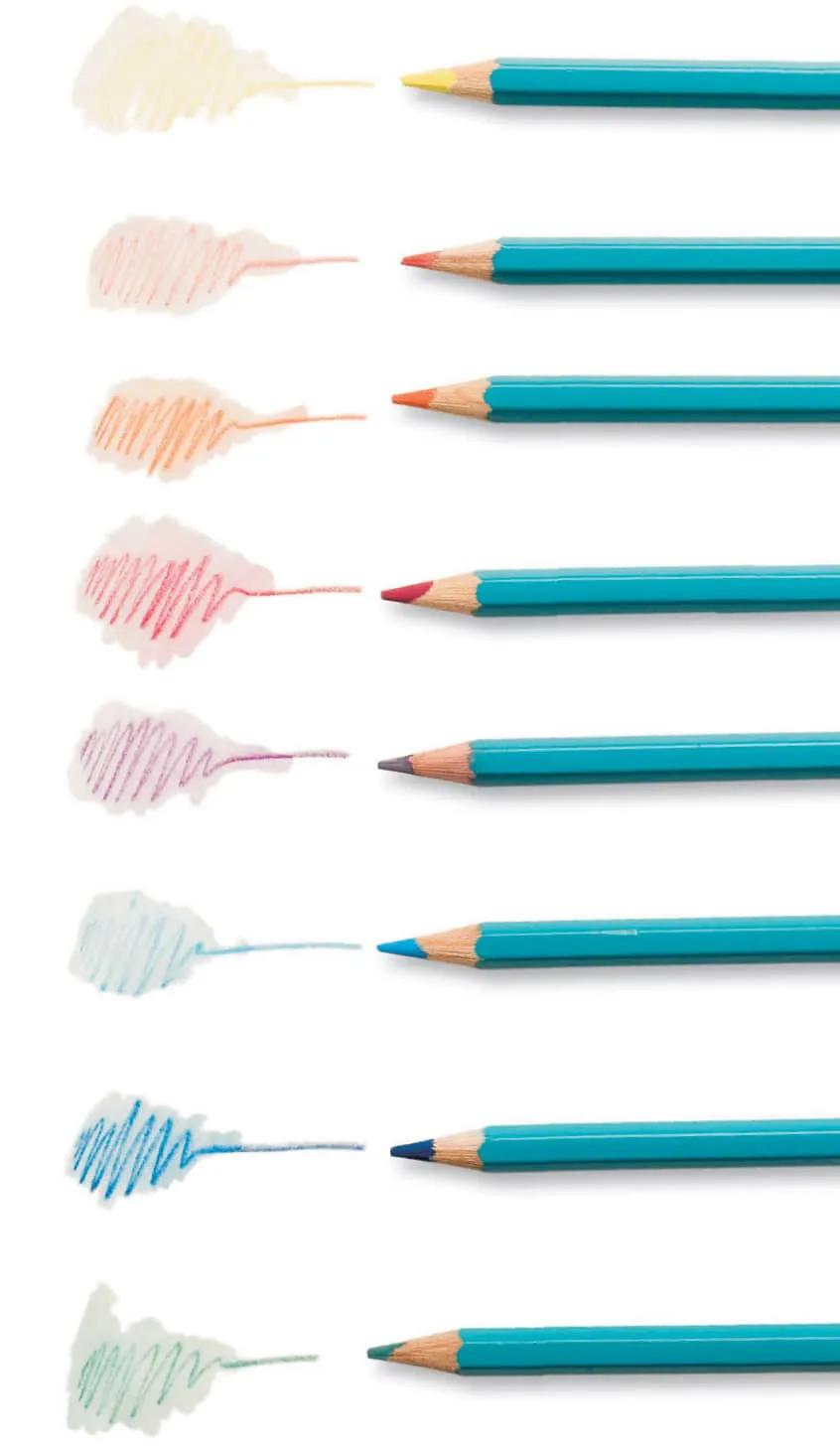
Water-soluble pencils, such as those shown on the right, are easy and convenient to use. Used wet or dry, the pencils can be used to create a variety of effects from bold, vibrant colors to delicate watercolor washes.
Color ranges
There are a number of color ranges available, and the pencils vary in character from chalky and opaque or soft and waxy, to hard and translucent. These variations are caused by the different proportions of binder—the substance that holds the pigment together.
Specific sets
Sets of pencils can vary from as few as 12, to as many as 120. A good choice, initially, could be the special landscape and portrait sets, which include a balanced range of muted “natural” colors in warm and cool hues, and light and dark tones. Glimpse of the Harbor (shown above) uses a fairly neutral “drawing set” (shown right), specifically designed for both landscape and portrait work. The initial shading shows a grainy texture on cartridge paper, subsequent work binds the layers together producing the soft, creamy blend seen in the foreground, or the dark blue-brown of the house on the right.
ARTIST’S TIP
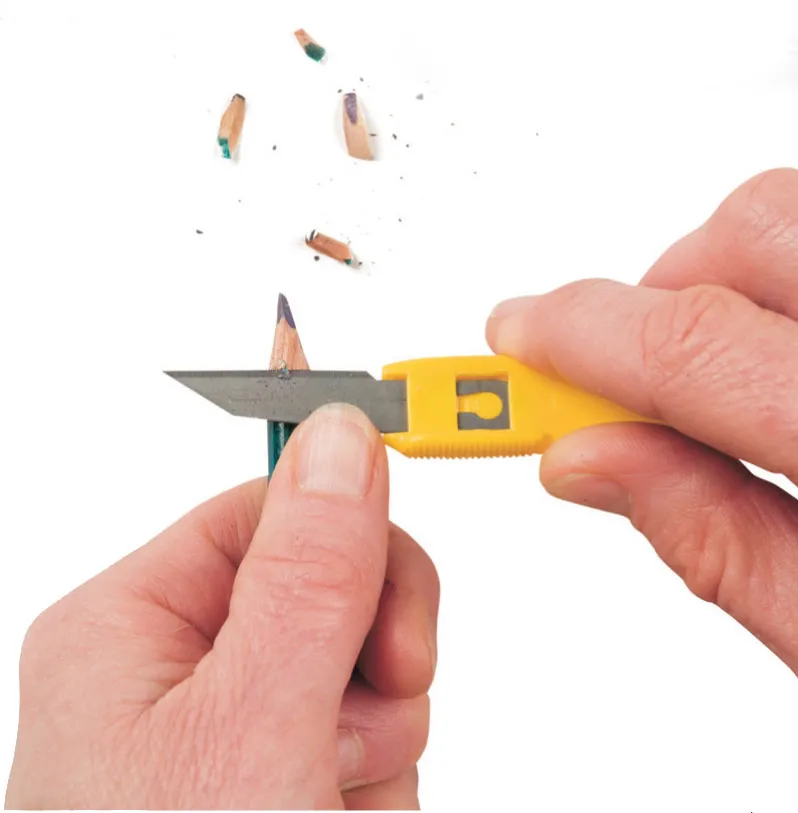
Pencils need to be sharpened regularly, so include a craft knife and a pencil sharpener in your tool kit. Generally the knife is the most useful as it stays sharp for far longer. The blade is made in sections, and when it becomes blunt, you simply remove the top section with a pair of pliers. Reserve the pencil sharpener for reclaiming points rather than for shaving off the wood.
Paper types
The paper you choose will influence your drawing style, so it is important to go for something sympathetic to the marks you intend to make, or allow the paper itself to dictate a particular quality in your drawing.
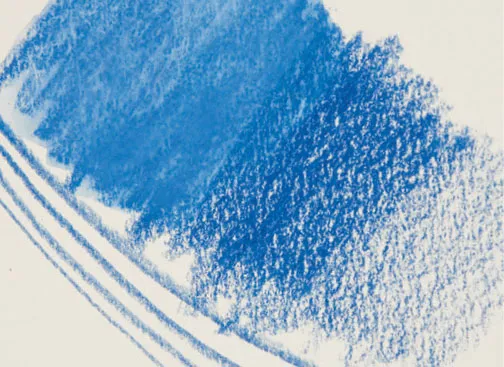
Drawing (cartridge) paper is a good all rounder. It is relatively smooth, but has a slight tooth that gives a grainy quality to lighter strokes. With increased pressure, the grain will fill in, and either become less obtrusive or totally lose its effect. For fine or detailed work, a smooth surface is essential, but not too smooth. It is impossible to build up any density without some tooth to hold the pigment; pencils will skid on a shiny, slippery surface. As a rule, the more heavily textured the paper grain, the longer it stays open and allows the build-up of pigment.
Pastel paper
The pronounced grain of pastel paper is evident in Moonlit Table. The regular patterned appearance is reflected in the flat, blocked-in shapes; a more detailed, fluid image would be less suitable for this paper.
Drawing papers
From left to right: Absorbent heavyweights in green, cream, and two tones of buff (1–4); lightweight, mold-made Ingres paper (5–6); medium-weight, hot pressed papers in cream, green, and gray (7-9); heavy, hot-pressed paper (10); rough white paper (11); rough paper with a pronounced tooth (12); handmade heavyweight paper (13); small-sized sketchbook (14).
Drawing paper
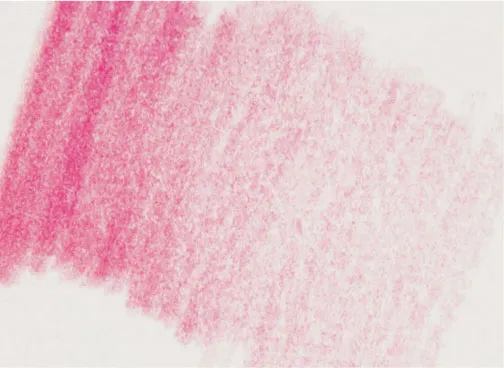
This has a relatively smooth surface, but the texture can vary. The example shown here has a relatively defined grain; texture is evident even when heavy pressure is used. On a lighter-grained paper, texture will be less evident as the grain fills with pigment.
Watercolor paper
Standard watercolor paper, known as cold-pressed, can be too heavily textured for colored pencils—shading over the surface will leave the “dips and troughs” free of pigment. The more suitable types have texture but little obvious grain, and will allow a considerable build-up of pigment when shaded.
Colored pastel paper
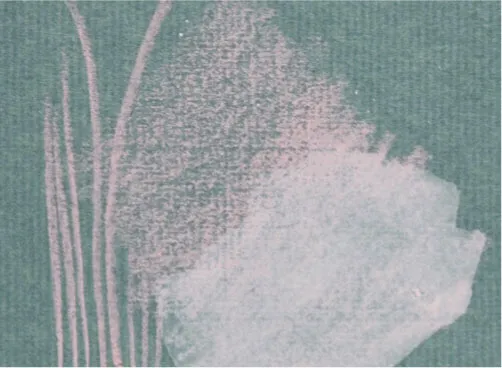
A relatively pronounced texture is needed to grip the loose, powdery pigment. This paper would not be suitable for detailed colored-pencil work, but works well for some styles, for example, those used in Moonlit Table here.
Shiny paper
If the paper is too smooth, the pigment simply sits on the surface. If you try to deepen a pale color, you will see an immediate waxy build-up wherever heavy pressure has been used, reminiscent of children’s wax crayo...