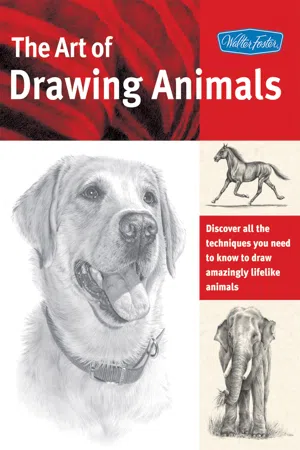
eBook - ePub
Available until 23 Dec |Learn more
Art of Drawing Animals
Discover all the techniques you need to know to draw amazingly lifelike animals
- 144 pages
- English
- ePUB (mobile friendly)
- Available on iOS & Android
eBook - ePub
Available until 23 Dec |Learn more
Art of Drawing Animals
Discover all the techniques you need to know to draw amazingly lifelike animals
About this book
Featuring an array of adorable pets and majestic wildlife, this exceptional 144-page book offers simple, step-by-step instructions for creating dozens of incredibly lifelike animal drawings.
Inside, five talented artists reveal their professional secrets for drawing all the features that are unique to our furry and feathered friends—from wet noses and expressive eyes to thick fur and delicate whiskers. The book opens with essential information about drawing tools and materials, followed by instruction on how to approach and render a subject––such as transferring a photo reference, building up forms with basic shapes, creating perspective, and pencil techniques such as shading and blending.
Then the authors demonstrate their unique approaches to drawing through an array of inspiring projects, guiding you from initial sketches through the detailed shading process to the finishing touches. As you progress from project to project, you will find a range of helpful topics, such as portraying accurate proportions, creating dynamic compositions, and using colored pencils. Each section features a different artist, with the themes:
Inside, five talented artists reveal their professional secrets for drawing all the features that are unique to our furry and feathered friends—from wet noses and expressive eyes to thick fur and delicate whiskers. The book opens with essential information about drawing tools and materials, followed by instruction on how to approach and render a subject––such as transferring a photo reference, building up forms with basic shapes, creating perspective, and pencil techniques such as shading and blending.
Then the authors demonstrate their unique approaches to drawing through an array of inspiring projects, guiding you from initial sketches through the detailed shading process to the finishing touches. As you progress from project to project, you will find a range of helpful topics, such as portraying accurate proportions, creating dynamic compositions, and using colored pencils. Each section features a different artist, with the themes:
- Baby animals in graphite pencil, including a bunny, foal, bear cub, and lamb
- Dogs and cats in graphite pencil, including a husky, Dalmation, Maine Coon cat, and Ocicat
- Horses and ponies in graphite pencil, including a an Arabian, Appaloosa, and Dappled pony
- Wild animals in graphite pencil, including an elephant, owl, tiger cub, and koala
- Animals in colored pencil, including a rooster, leopard, box turtle, and cow
Frequently asked questions
Yes, you can cancel anytime from the Subscription tab in your account settings on the Perlego website. Your subscription will stay active until the end of your current billing period. Learn how to cancel your subscription.
At the moment all of our mobile-responsive ePub books are available to download via the app. Most of our PDFs are also available to download and we're working on making the final remaining ones downloadable now. Learn more here.
Perlego offers two plans: Essential and Complete
- Essential is ideal for learners and professionals who enjoy exploring a wide range of subjects. Access the Essential Library with 800,000+ trusted titles and best-sellers across business, personal growth, and the humanities. Includes unlimited reading time and Standard Read Aloud voice.
- Complete: Perfect for advanced learners and researchers needing full, unrestricted access. Unlock 1.4M+ books across hundreds of subjects, including academic and specialized titles. The Complete Plan also includes advanced features like Premium Read Aloud and Research Assistant.
We are an online textbook subscription service, where you can get access to an entire online library for less than the price of a single book per month. With over 1 million books across 1000+ topics, we’ve got you covered! Learn more here.
Look out for the read-aloud symbol on your next book to see if you can listen to it. The read-aloud tool reads text aloud for you, highlighting the text as it is being read. You can pause it, speed it up and slow it down. Learn more here.
Yes! You can use the Perlego app on both iOS or Android devices to read anytime, anywhere — even offline. Perfect for commutes or when you’re on the go.
Please note we cannot support devices running on iOS 13 and Android 7 or earlier. Learn more about using the app.
Please note we cannot support devices running on iOS 13 and Android 7 or earlier. Learn more about using the app.
Yes, you can access Art of Drawing Animals by Patricia Getha,Cindy Smith,Nolon Stacey,Linda Weil,Debra Kauffman in PDF and/or ePUB format, as well as other popular books in Art & Art General. We have over one million books available in our catalogue for you to explore.
Information
CHAPTER 1
INTRODUCTION TO
DRAWING ANIMALS
DRAWING ANIMALS
Welcome to the exciting world of drawing animals in pencil! This compilation of projects from some of the most popular Walter Foster titles provides inspiration and instruction for creating a variety of animal drawings, including lovable cats and dogs, majestic horses and ponies, and the wondrous animals of the wild. From the fundamentals of drawing to special tips and advanced techniques, The Art of Drawing Animals is filled with step-by-step demonstrations to guide aspiring artists through the drawing process. There’s even a section on drawing animals in colored pencil, so you can try your hand at another medium. The five artists in this collection have developed their own approach to pencil drawing, so there are countless lessons to be learned from their individual and distinct perspectives. Discover how fun and easy drawing animals can be!
TOOLS & MATERIALS
Drawing is not only fun, but it also is an important art form in itself. Even when you write or print your name, you are actually drawing! If you organize the lines, you can make shapes; and when you carry that a bit further and add dark and light shading, your drawings begin to take on a three-dimensional form and look more realistic. One of the great things about drawing is that you can do it anywhere, and the materials are very inexpensive. You do get what you pay for, though, so purchase the best you can afford at the time, and upgrade your supplies whenever possible. Although anything that will make a mark can be used for some type of drawing, you’ll want to make certain your magnificent efforts will last and not fade over time. Here are some materials that will get you off to a good start.
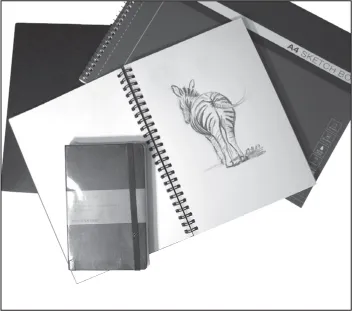
Sketch Pads You can buy spiral-bound, stitched, or gum-bound sketchbooks in a variety of sizes. The paper in most sketchbooks is not designed for finished works—sketching is a form of visual note taking, and you should not worry about producing masterpieces with them. You may want to carry a small notebook-sized sketchbook with you so you can sketch whenever the mood strikes. It’s a good idea to carry a larger sketchbook when drawing on location.
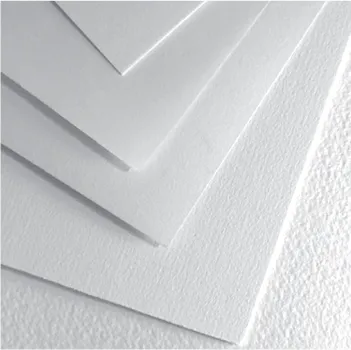
Paper Drawing paper is available in a range of surface textures: smooth grain (plate finish and hot pressed), medium grain (cold pressed), and rough to very rough. Rough paper is ideal when using charcoal, whereas smooth paper is best for watercolor washes. The heavier the weight of the paper, the thicker it is. Thicker papers are better for graphite drawings because they can withstand erasing far better than thinner papers can. Be sure to purchase acid-free paper, as acid causes paper to turn yellow over time.
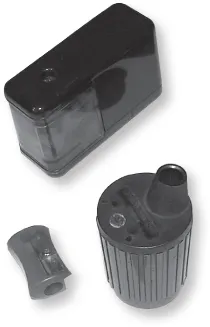
Sharpeners Clutch pencils (see page 7) require special sharpeners, which you can find at art and craft stores. A regular handheld sharpener can be used for wood-cased and woodless pencils, but be sure to have several sharpeners on hand as these pencils can become dull. You can also purchase an electric sharpener, but it affords less control over the shape of the pencil tip.
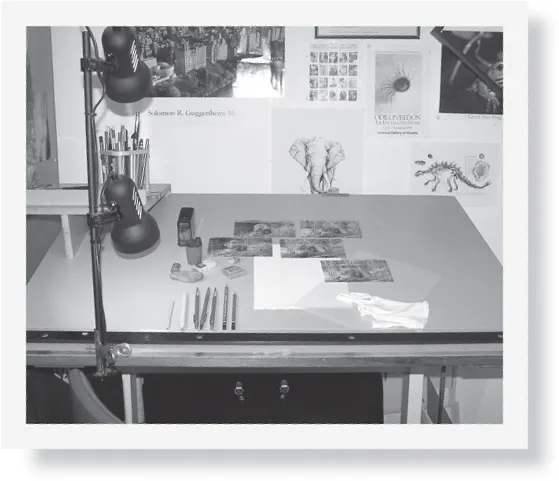
Work Station You don’t need a professional drafting table to start drawing—many brilliant drawings have been created on a kitchen table! You’ll need a hard surface to use as a drawing board (or purchase a drawing board from an art supply store), and something to prop up the board with, such as a brick or a stack of books. Good lighting is essential—it’s best to work in natural light, but you also can purchase a daylight bulb, which gives off a good white light and eliminates the yellow glare of standard bulbs. Make sure the lighting is direct and that there are no shadows falling across your work area. Also, you’ll want to have a comfortable chair that supports your back.
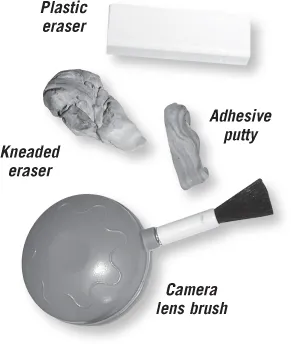
Erasers Mistakes are inevitable, so it’s good to have a few erasers on hand. Plastic art erasers are good for removing harder pencil marks and for erasing large areas. Be careful when using this type of eraser, as rubbing too hard will damage the surface of the paper. This eraser also leaves crumbs, so be sure to softly brush them away with a makeup or camera lens brush. Kneaded erasers are very pliable; you can mold them into different shapes. Instead of rubbing the kneaded eraser across the paper, gently dab at the area to remove or lighten tone. Another great tool is adhesive putty, made for tacking posters to a wall. Like a kneaded eraser, it can be molded and won’t damage the paper.
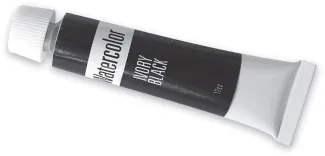
Watercolor Paint Black watercolor paint can add dynamism to your artwork. Dilute the paint with water to apply a thin, light gray tone, called a “wash.” (See “Watercolor Washes” on page 7 for more information.)
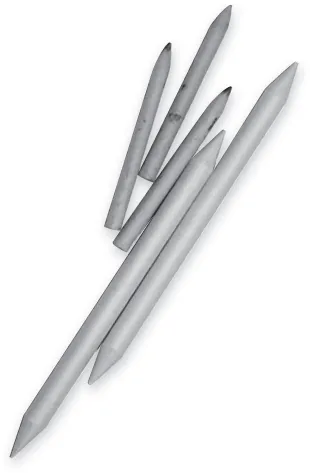
Blending Tools Paper stumps (also called “tortillons”) are used to blend or smudge areas of graphite into a flat, even tone. Be careful when using blending tools, as they tend to push the graphite into the paper, making the area difficult to erase. Another good way to blend is to wrap a chamois cloth around your finger. Never use your finger alone for blending—your skin contains oils that could damage the paper.
PENCILS
Soft pencils (labeled “B”) produce strong, black tones; hard pencils (labeled “H”) create lighter marks. The higher the number that accompanies the letter, the harder or softer the lead. (For example, a 4B pencil is softer than a 2B pencil.) HB and F pencils are used for middle grades. We recommend starting with the following range of wood-cased pencils: 2H, H, HB, F, B, and 2B. As your skills develop, you can experiment with different types of pencils. Some artists like to use clutch pencils (also called “mechanical pencils”), which require special sharpeners (see page 6). You can also purchase woodless graphite penc...
Table of contents
- Cover
- Title Page
- Contents
- Chapter 1: Introduction to Drawing Animals
- Chapter 2: Baby Animals with Cindy Smith
- Chapter 3: Dogs & Cats with Nolon Stacey
- Chapter 4: Horses & Ponies with Patricia Getha
- Chapter 5: Wild Animals with Linda Weil
- Chapter 6: Animals in Colored Pencil with Debra Kauffman Yaun
- Index
- Copyright Page