This book provides state of the art description of various approaches, techniques and some basic fundamentals of bioremediation to manage a variety of organic and inorganic wastes and pollutants present in our environment. A comprehensive overview of recent advances and new development in the field of bioremediation research are provided within relevant theoretical framework to improve our understanding for the cleaning up of polluted water and contaminated land. The book is easy to read and language can be readily comprehended by aspiring newcomer, students, researchers and anyone else interested in this field. Renowned scientists around the world working on the above topics have contributed chapters. In this edited book, we have addressed the scope of the inexpensive and energy neutral bioremediation technologies. The scope of the book extends to environmental/agricultural scientists, students, consultants, site owners, industrial stakeholders, regulators and policy makers.
eBook - ePub
Bioremediation Science
From Theory to Practice
- 360 pages
- English
- ePUB (mobile friendly)
- Available on iOS & Android
eBook - ePub
Bioremediation Science
From Theory to Practice
About this book
Trusted by 375,005 students
Access to over 1.5 million titles for a fair monthly price.
Study more efficiently using our study tools.
Information
1. Introduction—Environmental degradation and approaches for environmental repairs
An ecologically healthy and equilibrated environment is the foundation of human life. It provides us with the goods and services that we need to survive and prosper. However, the planet is becoming more and more degraded (Diehl 2018, IPCC 2019). Environmental degradation is any process that reduces the aptitude of a given ecosystem to sustain life. This process is related to biological and/or physical vicissitudes that affect ecological stability.
Such alterations usually modify natural fauna and flora, sometimes causing biodiversity loss, in terrestrial or aquatic systems (Figures 1 and 2). Although they may occur due to natural factors, problems concerning environmental degradation are habitually associated with anthropogenic actions, modifying the trajectory of the evolution of the environment (Tripathi et al. 2017).
Aiming to maintain the ecological health and the quality of the ecosystems services provided by the forests, oceans, rivers, and others ecosystems, currently, there are two options: (i) conserving the remaining original, pristine ecosystems (natural capital), and (ii) restoring the degraded ones (Silva and Rodgers 2018, Arponen 2019).
Several techniques and approaches have been developed in order to fulfill the second option (restore or repair degraded ecosystem): stop the degradation process and/or repair the degradation by means of interventions that might restore the original ecological conditions of the degraded ecosystem, reclaim it, or rehabilitate it. The conceptual differences between these three approaches are depicted in Figure 3.
_______________
1 Department of Environmental Engineering–Institute of Sciences and Technology of Sorocaba – São Paulo State University (UNESP).
2 Department of Environmental Sciences – Federal University of São Carlos – Campus Sorocaba.
3 ITEPEC Enterprise – Environmental Technology and Consulting.
4 University of Sorocaba.
* Corresponding author: [email protected]
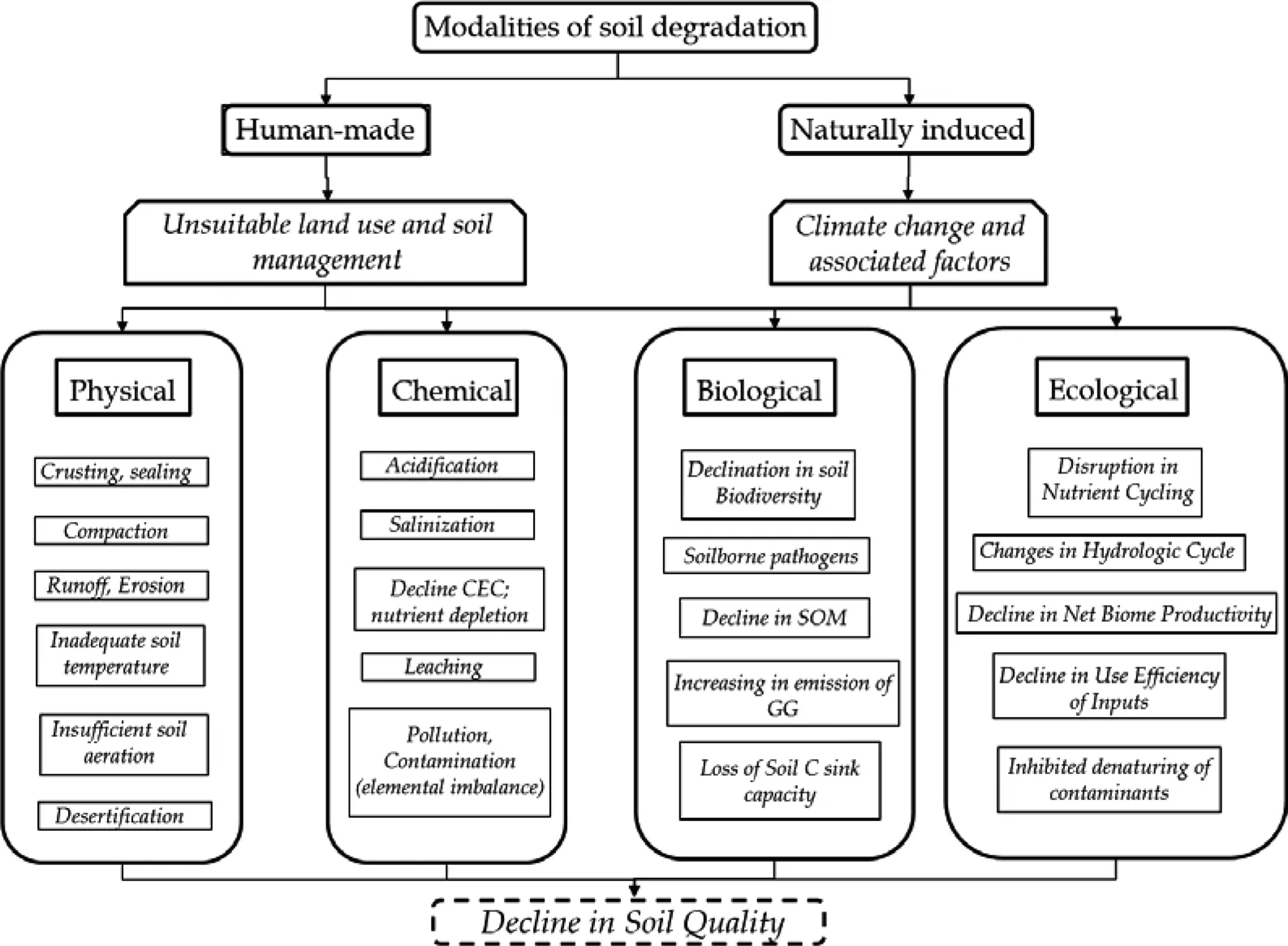
Figure 1. Types of degradation in soil-related systems. Source: (Lal 2015) – modified.
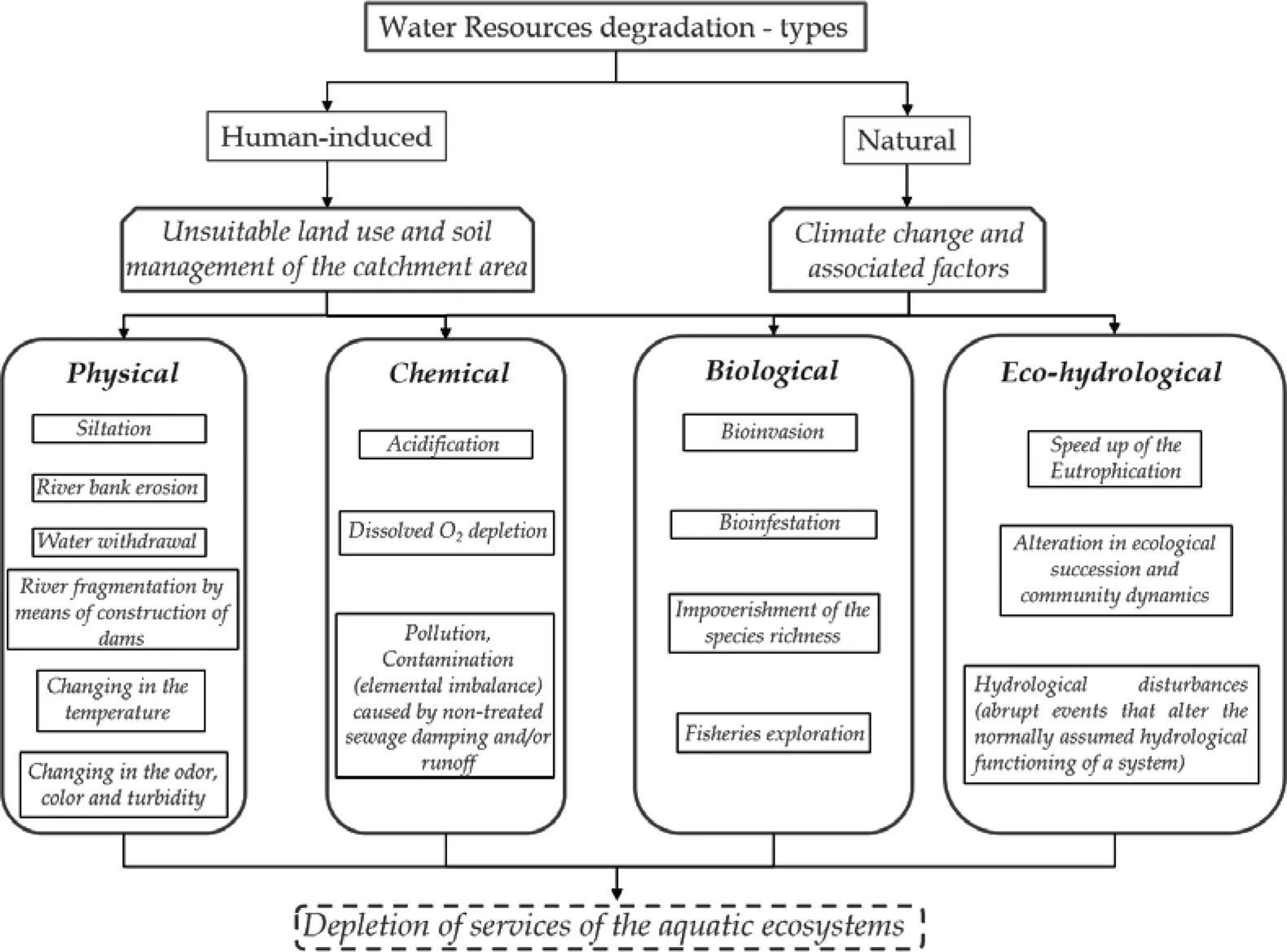
Figure 2. Types of degradation in water recourses-related systems. Original figure inspired by the work of Lal (2015).

Figure 3. Conceptual differences between the three approaches. Source: modified from (SER 2017).
Activities that aim to repair damaged ecosystems may range from (a) local to (b) regional scale, and from (i) efforts of benevolent volunteers to (ii) logistical projects of the multi-agencies. We find interventions varying from (a) the “do nothing” attitude (i.e., just removing the degradation factor(s) and allowing the natural succession of the environment) to (b) a variety of abiotic and biotic interventions designed at speeding up or shifting the course of ecosystem recovery (Trujillo-Miranda et al. 2018, Rydgren et al. 2019). However, even in very resilient ecosystems, when degradation is severe, advanced or prolonged (or both), the ecosystem may be impotent to entirely recover on its own. This is when restoration practitioners can step in Aronson et al. (2016).
One of the most important options for repair degraded ecosystems is a set of techniques and approaches named bioremediation. Such set of techniques consist chiefly in using biological organism (several species of plants, as well as numerous species of microorganisms) as an agent of extraction, accumulation, and/or transformation (complexation or degradation) of chemical composites, in order to diminish or eradicate the toxicity of the compost. Recovery of contaminated soils, effluent and waste treatment, and cleaning of pipelines and equipment, constitute some examples of the wide application of the bioremediation.
2. Concept and categories of bioremediation
The central point of the bioremediation process is the mechanism of transformation of a contaminant performed by a microorganism or plant (Varjani et al. 2018). Bioremediation embraces a set of biotreatment processes that cover diverse types of biochemical mechanisms that may lead to a humification, target’s mineralization, the partial transformation of a composite or altered redox state for metallic elements, for example (Bharagava and Saxena 2020). It is viewed as the safest method to combat some kinds of degraded environments with anthropogenic composites in ecosystems (Paliwal et al. 2012). Environmentally responsive and advantageous cost-saving feature are amongst the major advantages of bioremediation related to both chemical and physical approaches of remediation (Azubuike et al. 2016).
The primal role in bioremediation is that of the interplay of metabolic features of the plant or microbial communities living within that hampered ecosystem (Paliwal et al. 2012). Nonbiological remediation technologies (e.g., excavation, pump-and-treat systems) and bio/phytoremediation might complement each other and they’re not mutually exclusive (Pilon-Smiths 2005).
The central difference between bio, phyto, and phycoremediation is the category of living organisms used in each method (Adams et al. 2015, Biswas et al. 2015, Azubuike et al. 2016). Normally the literature considers as bioremediation the microbiological-related processes of remediation, and due to this, the phytoremediation and phycoremediation are placed in a different category. However, the term bioremediation is here considered as the overall set of techniques that might be sub-divided into three categories: phytoremediation and phycoremediation and micro bioremediation (Figure 4).
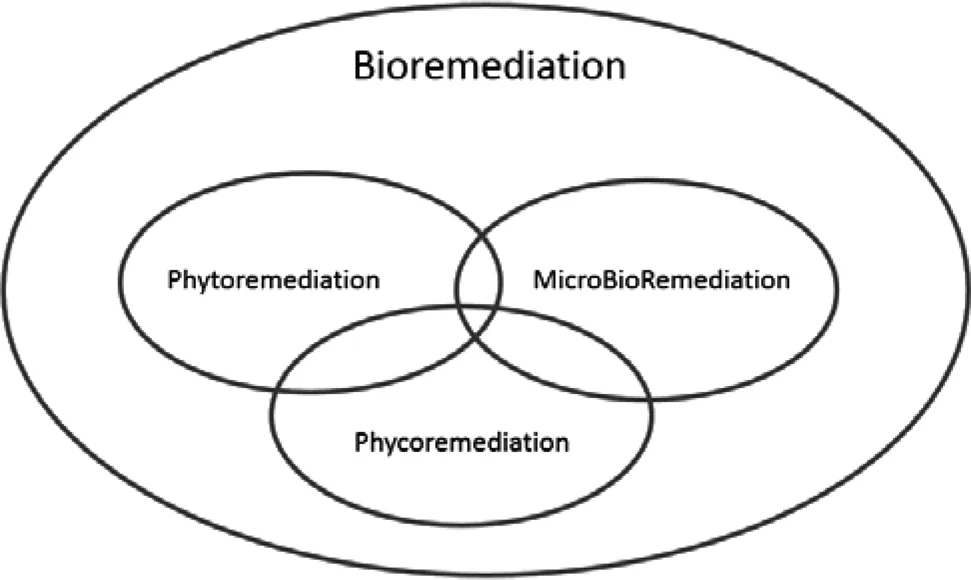
Figure 4. Graphical depiction of the concept of bioremediation and its sub-groups. Diagram elaborated with data provided by Velázquez-Fernández and Muñiz-Hernández (2014).
We have four major biological agents in bioremediation: (i) vegetation, especially the root system of vascular plants, and the microbiological community, especially (ii) bacteria, (iii) algae, and (iv) fungi. Especially in opened sites and in situ techniques (concept explained ahead) the vegetation has been considered, under the variability of environmental conditions, as an agent of acceleration of the process of degradation of organic chemical residues in soils normally in association with a microorganism community (Burges et al. 2018).
2.1 In situ and ex situ techniques
Currently, we have techniques and approaches designed to remediate both terrestrial and aquatic environments considered degraded (Lal2015, Shishir et al. 2019). In general terms, the techniques are categorized as ex situ and in situ (Gomes et al. 2013, Lal2015, Azubuike et al. 2016) (Figure 5).
In situ bioremediation technologies encompass the treatment and manipulation of the contaminants in the local itself (Wadgaonkar et al. 2019). Amidst the most common techniques categorized as in situ, we mention the passive remediation or monitored natural attenuation, also named as “do nothing” approach as mentioned earlier. Furthermore, another major group of in situ techniques is constituted by a set of techniques that are embraced in a category named “enhanced techniques” (Table 1).

Figure 5. Illustrations of the two major groups of remediation technologies.
Ex situ techniques are the actions and treatments that eliminate contaminants at a distinct and separate treatment facility (Wadgaonkar et al. 2019). In works involving the ex-situ bioremediation approach, we might cite the bioreactors as a usual technique (Table 2). Also, nutrients may be added in order to accelerate the chemical or physical decomposition of environmental pollutants. For instance, the ex situ remediation of heavy metals in soil is further improved by the addition of organic amendments like biosolid, compost, and municipal solid waste, which is used as both nutrients and conditioners (Varjani et al. 2018).
Table 1. Explanations of the two main categories of techniques of in situ bioremediat...
Table of contents
- Cover
- Title Page
- Copyright
- Dedication
- Preface
- Acknowledgement
- Table of Contents
- 1. Bioremediation: Concepts, Management, Strategies and Applications
- 2. Bioremediation: Current Status, Prospects and Challenges
- 3. Integrative Approaches for Understanding and Designing Strategies of Bioremediation
- 4. Ecological Tools for Remediation of Soil Pollutants
- 5. Phytoremediation: A Green Approach for the Restoration of Heavy Metal Contaminated Soils
- 6. Soil Heavy Metal Pollution and its Bioremediation: An Overview
- 7. Mechanism of Heavy Metal Hyperaccumulation in Plants
- 8. Biological Indicators for Monitoring Soil Quality under Different Land Use Systems
- 9. Aromatic Plants as a Tool for Phytoremediation of Salt Affected Soils
- 10. Microbial Mediated Biodegradation of Plastic Waste: An Overview
- 11. Agrochemical Contamination of Soil: Recent Technology Innovations for Bioremediation
- 12. Bioremediation of Pesticides with Microbes: Methods, Techniques and Practices
- 13. Compost-assisted Bioremediation of Polycyclic Aromatic Hydrocarbons
- 14. Petroleum Hydrocarbon-Contaminated Soils: Scaling Up Bioremediation Strategies from the Laboratory to the Field
- 15. Heavy Metal Pollution in Agricultural Soils: Consequences and Bioremediation Approaches
- 16. Arsenic Toxicity in Water-Soil-Plant System An: Alarming Scenario and Possibility of Bioremediation
- 17. Bioremediation of Fluoride and Nitrate Contamination in Soil and Groundwater
- 18. Soil Degradation in Mediterranean and Olive Mill Wastes
- 19. Membrane Bioreactor for Perchlorate Treatment
- 20. Nanobioremediation Technologies for Clean Environment
- 21. Biochar—An Imperative Amendment for Soil and Environment
- 22. Endophytic Microorganisms from Synanthropic Plants—A New Promising Tool for Bioremediation
- 23. Bioremediation of Chlorinated Organic Pollutants in Anaerobic Sediments
- 24. Bioremediation of Wastewater by Sulphate Reducing Bacteria
- Index
- About the Editors
Frequently asked questions
Yes, you can cancel anytime from the Subscription tab in your account settings on the Perlego website. Your subscription will stay active until the end of your current billing period. Learn how to cancel your subscription
No, books cannot be downloaded as external files, such as PDFs, for use outside of Perlego. However, you can download books within the Perlego app for offline reading on mobile or tablet. Learn how to download books offline
Perlego offers two plans: Essential and Complete
- Essential is ideal for learners and professionals who enjoy exploring a wide range of subjects. Access the Essential Library with 800,000+ trusted titles and best-sellers across business, personal growth, and the humanities. Includes unlimited reading time and Standard Read Aloud voice.
- Complete: Perfect for advanced learners and researchers needing full, unrestricted access. Unlock 1.5M+ books across hundreds of subjects, including academic and specialized titles. The Complete Plan also includes advanced features like Premium Read Aloud and Research Assistant.
We are an online textbook subscription service, where you can get access to an entire online library for less than the price of a single book per month. With over 1.5 million books across 990+ topics, we’ve got you covered! Learn about our mission
Look out for the read-aloud symbol on your next book to see if you can listen to it. The read-aloud tool reads text aloud for you, highlighting the text as it is being read. You can pause it, speed it up and slow it down. Learn more about Read Aloud
Yes! You can use the Perlego app on both iOS and Android devices to read anytime, anywhere — even offline. Perfect for commutes or when you’re on the go.
Please note we cannot support devices running on iOS 13 and Android 7 or earlier. Learn more about using the app
Please note we cannot support devices running on iOS 13 and Android 7 or earlier. Learn more about using the app
Yes, you can access Bioremediation Science by Amitava Rakshit, Manoj Parihar, Binoy Sarkar, Harikesh B. Singh, Leonardo Fernandes Fraceto, Amitava Rakshit,Manoj Parihar,Binoy Sarkar,Leonardo Fernandes Fraceto,HB Singh,Harikesh B. Singh, Amitava Rakshit, Manoj Parihar, Binoy Sarkar, Leonardo Fernandes Fraceto, HB Singh in PDF and/or ePUB format, as well as other popular books in Technology & Engineering & Ecology. We have over 1.5 million books available in our catalogue for you to explore.