- 637 pages
- English
- PDF
- Available on iOS & Android
About this book
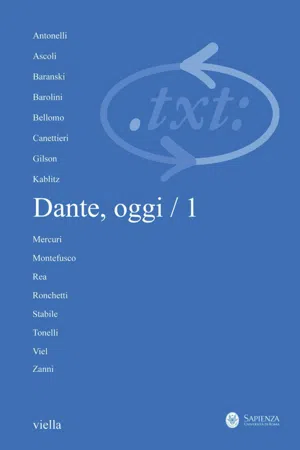
Premessa di Roberto Antonelli (p. vii-ix)ProblematicheRoberto Antonelli, Come (e perché) Dante ha scritto la Divina Commedia? (p. 3-23)Andreas Kablitz, Die Ethik der Göttlichen Komödie (p. 25-79)Zygmunt G. Baranski, Dante poeta e lector: «poesia» e «riflessione tecnica» (con divagazioni sulla Vita nova) (p. 81-110)Roberto Mercuri, Il metodo intertestuale nella lettura della Commedia (p. 111-151)Albert Russell Ascoli, Tradurre l'allegoria: Convivio II, i (p. 153-175)Teodolinda Barolini, Dante's Sympathy for the Other, or the Non-Stereotyping, Imagination: Sexual and Racialized Others in the Commedia (p. 177-204)Le opere e la ricezioneNatascia Tonelli, Le rime (p. 207-232)Roberto Rea, La Vita nova: questioni di ecdotica (p. 233-277)Raffaella Zanni, Il De vulgari eloquentia fra linguistica, filosofia e politica (p. 279-343)Giorgio Stabile, Dante oggi: il Convivio tra poesia e ragione (p. 345-399)Antonio Montefusco, Le Epistole di Dante: un approccio al corpus (p. 401-457)Riccardo Viel, Sulla tradizione manoscritta della Commedia: metodo e prassi in centocinquant'anni di ricerca (p. 459-518)Paolo Canettieri, Il Fiore e il Detto d'Amore (p. 519-530)Saverio Bellomo, «La natura delle cose aromatiche» e il sapore della Commedia: quel che ci dicono gli antichi commenti a Dante (p. 531-553)Alessia Ronchetti, Da Beatrice a Fiammetta. Prime risposte boccacciane al modello autobiografico dantesco (p. 555-580)Simon A. Gilson, «La divinità di Dante»: The Problematics of Dante's Critical, Reception from the Fourteenth to the Sixteenth Centuries (p. 581-603)Riassunti – Summaries (p. 605-615)Biografie degli autori (p. 617-620)
Frequently asked questions
- Essential is ideal for learners and professionals who enjoy exploring a wide range of subjects. Access the Essential Library with 800,000+ trusted titles and best-sellers across business, personal growth, and the humanities. Includes unlimited reading time and Standard Read Aloud voice.
- Complete: Perfect for advanced learners and researchers needing full, unrestricted access. Unlock 1.4M+ books across hundreds of subjects, including academic and specialized titles. The Complete Plan also includes advanced features like Premium Read Aloud and Research Assistant.
Please note we cannot support devices running on iOS 13 and Android 7 or earlier. Learn more about using the app.
Information
Table of contents
- Copertina
- Frontespizio
- Indice
- Premessa di Roberto Antonelli
- Roberto Antonelli Come (e perché) Dante ha scrittola Divina Commedia?
- Andreas Kablitz Die Ethik der Göttlichen Komödie
- Zygmunt G. Baranski Dante poeta e lector: «poesia» e «riflessione tecnica» (con divagazioni sulla Vita nova)
- Roberto Mercuri Il metodo intertestuale nella lettura della Commedia
- Albert Russell Ascoli Tradurre l’allegoria: Convivio II, i
- Teodolinda Barolini Dante’s Sympathy for the Other, or the Non-Stereotyping Imagination: Sexual and Racialized Others in the Commedia
- Natascia Tonelli Le rime
- Roberto Rea La Vita nova: questioni di ecdotica
- Raffaella Zanni Il De vulgari eloquentia fra linguistica, filosofia e politica
- Giorgio Stabile Dante oggi: il Convivio tra poesia e ragione
- Antonio Montefusco Le Epistole di Dante: un approccio al corpus
- Riccardo Viel Sulla tradizione manoscritta della Commedia: metodo e prassi in centocinquant’anni di ricerca
- Paolo Canettieri Il Fiore e il Detto d’Amore
- Saverio Bellomo «La natura delle cose aromatiche» e il sapore della Commedia: quel che ci dicono gli antichi commenti a Dante
- Alessia Ronchetti Da Beatrice a Fiammetta. Prime risposte boccacciane al modello autobiografico dantesco
- Simon A. Gilson «La divinità di Dante»: The Problematics of Dante’s Critical Reception from the Fourteenth to the Sixteenth Centuries
- Riassunti – Summaries
- Biografie degli autori