- 160 pages
- English
- ePUB (mobile friendly)
- Available on iOS & Android
eBook - ePub
About this book
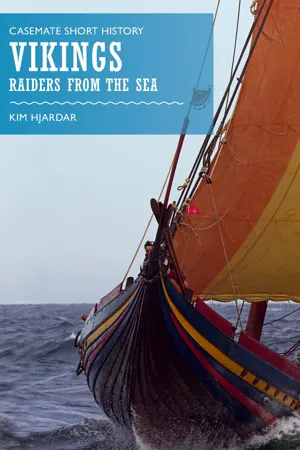
A concise history of the Vikings and their time by the Norwegian historian and author of Vikings at War.
From the ninth to the eleventh century, Viking ships landed on almost every shore in the Western world. Viking ravages united the Spanish kingdoms and stopped Charlemagne and the Franks' advance in Europe. Employing sail technology and using unpredictable strategies, the Vikings could strike suddenly, attack with great force, then withdraw with stolen goods and captives. Wherever Viking ships roamed, enormous suffering followed in their wake, but the encounters between cultures changed both European and Nordic societies.
This short history of the Vikings introduces readers to this highly influential medieval society. Here you will learn how Vikings raided across Europe and even America, with fascinating information about their ships, weapons and armor, and unique way of life.
Trusted by 375,005 students
Access to over 1 million titles for a fair monthly price.
Study more efficiently using our study tools.
Information
CHAPTER 1

VIKING SOCIETY
AT THE BEGINNING OF THE VIKING AGE a more or less homogeneous population inhabited the areas from southern Denmark to as far north as Troms in Norway and eastward to the Baltic coast of Sweden. The territory was divided into a range of smaller kingdoms, lands, counties and legal districts.
The most prosperous area, economically and population-wise, was the realm of the Danish kings. The most important reason for the kings’ power was that they could control trade between the Baltic region and western Europe. From time to time the Danes also controlled the regions on both sides of the Oslo Fjord, from Agder, Vestfold and the Oslo area in Norway, southwards into modern-day Sweden to the mouth of the River Göta where the city of Gothenburg now stands. To the south, the River Eider in today’s Germany formed a natural border between the kingdoms on the continent and those on the Danish peninsula. The great forests in Schleswig and Holstein also made an effective barrier towards the south. To the east, the forests and marshes in what is today Småland separated the Danish territory of Skåne from the people of Götaland.
In the Viking Age Sweden consisted of two ‘peoples’, the Svea and a Gothic tribe known as the Geats. These two peoples were physically separated from each other by big lakes and forests which formed a natural boundary. The Svea lived along the east coast of Sweden and in the region around Lake Mälaren. The islands of Öland and Gotland also belonged to the Svea. Estland (modern Estonia) and parts of modern Finland on the other side of the Baltic also came under the influence of the Svea. The Geats dwelt on the large plains of southern Sweden. Götaland was divided into two large regions, East Götland and West Götland.
In Norway the main population areas were in the eastern part and in the areas around the Trondheim Fjord, where agriculture was possible on a larger scale. On the west coast, the populations lived on small strips of land along the coast and fjords. The mountain areas inland were mostly uninhabited. In the northern parts of Norway the Norse population also lived along the coast. In most areas of central and northern Norway the Norse population co-existed with the Sami people, who they taxed for goods like fur, downs and walrus hide and tusks. At the end of the Viking Age, around AD 1000, the total population of Scandinavia (both free and slave) was around 1.2 million people.
Social structure
The Vikings lived in a stratified agricultural society where membership of a family, bonds of friendship and control of land were the most important determinants of status and rights. A religion largely based on war and a focus on strength and skill in combat set the framework for individual achievement. The different social layers within the population were perceived as ordained by the gods. This did not however exclude the possibility of a degree of social mobility. A person could rise to a higher social level, or sink to a lower one. Life was often a hard battle against nature and against each other.
At the top of Viking society were the kings, earls and chieftains. In the internal order of rank among these, the kings and earls sat highest and the chieftains were lowest. Chieftains could advance to become earls and even further to become kings if their family relationships allowed. This group were the absolute rulers of society, and they were admired and credited with qualities, which others did not have. Those who could claim princely or divine kinship were considered to have a number of inborn qualities. Unusually high intelligence was one such quality. They were also considered to be better qualified to lead religious ceremonies. But only a few could stand on top.
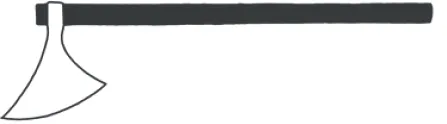
The word Viking was used in the Viking Age, but not as the name of a nation. There are several theories about what ‘Viking’ really means and its origin. It is found both on Scandinavian rune stone inscriptions and in European reports. Probably the word emerged before the Viking era as the name of a sea warrior or member of a warrior brotherhood. In the Anglo-Saxon Chronicle, Viking means ‘pirates’ or ‘robbers’, and as such, it was negatively charged. This is also how it is used in the sagas. Today it has become more neutral in meaning and also refers to peaceful traders and settlers from Scandinavia.
In England, the Vikings were called Dani or Northmen. In the east they were known as Rus and Varjager, and in Spain they were called al-Madjus – fire worshippers – meaning they were gentiles. No distinction was made between Norwegians, Swedes and Danes such as we have today. The term Viking covers the Norse (Norwegians), Danes, Swedes, Rus (Russian Vikings), Anglo-Danes, Anglo-Norse, Hiberno-Norse, Icelanders and Greenlanders.
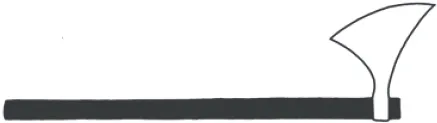
In the year 1020 a young man named Asbjørn lived at the farm site of Trondenes in Troms, in the far north of Norway. He was one of the best-liked chiefs in the north because he held great feasts several times a year where he shared a large amount of food, drink and gifts. One year, when the crops failed, he was forced to buy grain and other foods. However, Asbjørn had no plans to end the feasts, as it would mean loss of honour and status. In the end, he saw no other way but to travel to the south and buy grain from his uncle, the great farmer and chieftain Erling Skjalgsson, who was almost as powerful as the king himself. Asbjørn brought twenty men and went in a big cargo ship. At Karmøy Asbjørn was stopped by Tore Sel. Tore was a man of low status who had been granted power over the area by King Olav the Holy. He told Asbjørn that the king did not want people down south to sell their grain. But Asbjørn defied the king and bought grain anyway. On his way back he was again stopped by Tore Sel, who confiscated all the grain and goods. Asbjørn did not manage to hold any feasts that winter, and many whispered and laughed at him behind his back. This was a shame Asbjørn could not live with. The following year he went south with a warship to seek out Tore Sel and take his revenge. When Asbjørn came to Tore, both King Olav and Skjalg, the son of Erling Skjalgsson, were there to celebrate Easter. Tore bragged to the king and the onlookers how he had taken grain and equipment from Asbjørn. Then Asbjørn drew his sword and struck Tore Sel so he fell dead in front of the king. Asbjørn was arrested and King Olav wanted to kill him for what he had done. But Skjalg asked the king to wait to kill Asbjørn until after the Easter holy season was over. By then Asbjørn’s uncle arrived with more than 1,000 warriors and forced the king to let Asbjørn go free. Asbjørn received a lot of praise for his revenge killing and was given the surname Selsbane – which means ‘Killer of Sel’. But the result was that a war broke out between King Olav and Erling Skjalgsson, which led to Erling’s death. Also the king’s men later killed Asbjørn. Finally, Asbjørn’s cousin, Tore Hund, killed King Olav at the Battle of Stiklestad as revenge for the assassination of Asbjørn, thus changing the history of Norway.
The struggle for power between the mightiest men of the Viking era, the kings and the chieftains was fierce. The chiefs who lost such power struggles often lost all support, were killed or had to escape abroad with their warriors in order to gain new wealth to fight again.
Under the rulers and kings were the free farmers. The farmers and the chiefs supported and helped each other. For example, a chief could help a farmer with food in bad times or protect him from other rulers and robbers. The farmer had to support his chief when he asked for it. For instance, they were important participants and supporters of the chiefs in parliamentary assemblies at the things, and it was from the ranks of the farmers that young men were recruited into the chiefs’ armies of followers. The farmers grew all types of produce, but corn and cattle were especially important. Between ploughing and harvest times, farmers who had the means and opportunity could themselves organise voyages of plunder and/or trade. There were both rich and poor farmers. The farmer who had the highest rank was called a hauld. His family had lived in a farm for six generations or more and he could own many large estates. Asbjørn’s uncle, Erling Skjalgsson, was both a hauld and a chieftain, and had many servants and slaves on his farms. However, most of the farmers owned smaller farms, which they worked themselves with help from slaves and family members. The farmers were responsible for protecting those who lived on the farm.
At the bottom of the social ladder were the slaves. They were seen as real estate, similar to domestic animals. The Vikings captured a significant number of people whom they sold as slaves, both at home and abroad. There was a very long tradition of slave ownership in Scandinavia, and by the Viking Age it was a well-developed institution of great importance to the community. Somewhere between 20 and 30 per cent of the population of Scandinavia in the Viking Age were slaves. To hold them in check, society developed a system of very harsh punishments for rebellion. Most of the small farmers did not have slaves to work their land. A medium-sized farm might have up to three slaves, and bigger farms could have many more. They did most of the heavy work. Many treated their slaves well, became friends with them and gave them enough food and protected them. A slave could win his freedom by being loyal, a good friend or by defending his master. Freed slaves formed a class between freemen and slaves, with strictly defined rights and strong obligations towards whoever had granted them freedom. Many farms made use of freed slaves and their descendants, and of landless peasants without political rights. Slaves and freed slaves could in extreme circumstances be armed to take part in the protection of their owner’s or liberator’s home and possessions. It could take between two and four generations before the descendants of freed salves were counted as freemen.

A Norse knight from the 12th century representing the elite of Norse society at the end of the Viking Age. From the Baldishol Church tapestry. CC-BY-CA
Marking time
In the Viking age, individual years were not fixed as they are today. People used a relative chronology, with reference to so-and-so many years after important events, for example, ‘four winters after Håkon became king’. The year was divided into two equally long periods, summer and winter, and a man’s age was counted in number of winters. October 14 was the first day of the winter season, with Gormánuður, the month of slaughter, being the first winter month. April 14 begins the harpa-month and marks the beginning of summer. The year was again divided into moon phases – from new moon to new moon or from full moon to full moon. According to some sources, the Danes sometimes added a month – the late month – so that some years had 13 months instead of 12.
Remnants of the Viking week can be found in the names of the days of the week. Emperor Constantine introduced the seven-day week in AD 321, and Germanic tribes adopted the concept. Many of the names they gave the traditional Roman days are still in use, and show a clear connection between Roman and Norse gods: Sunday is the day of the sun, Monday is the moon’s day, Tuesday is Tyr’s day, or Martis dies (Mars’s day); Wednesday (onsdag) is Odin’s day, corresponding to the Roman Mercurii dies (Mercury’s day). Thursday is Thor’s day, or Jovis dies (Jupiter’s day). This was the last day of the week in the Viking Age. Blots (sacrifices) were normally held on this day and the law assembly opened on a Thursday. The first day of the Viking week was Friday. This was Frigg’s/Freya’s day, in the Roman empire called Veneris dies (Venus’ day). Saturday (lørdag) was bath day (laugardag), while the Romans called it Saturni dies (Saturn’s day).
Instead of dividing the day into hours, the Vikings determined the time after the sun’s position. The ‘sun ring’ (24h) was divided into eight equal parts that marked the sun’s position in the sky relative to the farm. Each of these times was called a ‘day mark’ and had its own name. One spot was marked in the terrain where the position of the sun correlated to the position of the ‘sun ring’, and most people used this to tell the time. The main daymark was noon (midday). That is, when the sun stood in the south, corresponding to the point when the sun is highest in the sky and the time is noon.
Gender roles
At first glance, gender roles in the Viking Age seem clear and distinct. Men and women each relate to their own symbolic world with its rights, values and attributes. A free man had weapons as his symbol; with these he would defend himself, his kin and his property. The woman had the keys to the farm as her main symbol. Another symbolic distinction was dress and appearance, signalling both status and gender. The ideal was that the free landowner should be well-dressed and well-groomed, with hair and beard cut, while the woman should be well-dressed and have pale, almost white skin. The import and purchase of beautiful clothes and fabrics, weapons and jewellery were important prerequisites for living up to the ideals.
An Icelandic law stipulated that women who dressed like men and cut their hair or carried weapons could be outlawed. The same applied for men who wore women’s clothes. However, gender and gender roles can be perceived as two different things in the Viking era. Symbols usually associated with specific gender roles are found in the context of both sexes, such as keys, weapons and jewellery. This means that a traditional stereotyped view of gender may not ha...
Table of contents
- Front Cover
- Half-Title Page
- Title Page
- Copyright Page
- Table Of Contents
- Introduction
- Timeline
- Chapter 1: Viking Society
- Chapter 2: A Culture of Combat
- Chapter 3: Religion, Myth and Cult
- Chapter 4: Plunder, Explorations and Settlements
- Chapter 5: Expansion in the North and West
- Chapter 6: The Onslaught in England
- Sources
Frequently asked questions
Yes, you can cancel anytime from the Subscription tab in your account settings on the Perlego website. Your subscription will stay active until the end of your current billing period. Learn how to cancel your subscription
No, books cannot be downloaded as external files, such as PDFs, for use outside of Perlego. However, you can download books within the Perlego app for offline reading on mobile or tablet. Learn how to download books offline
Perlego offers two plans: Essential and Complete
- Essential is ideal for learners and professionals who enjoy exploring a wide range of subjects. Access the Essential Library with 800,000+ trusted titles and best-sellers across business, personal growth, and the humanities. Includes unlimited reading time and Standard Read Aloud voice.
- Complete: Perfect for advanced learners and researchers needing full, unrestricted access. Unlock 1.4M+ books across hundreds of subjects, including academic and specialized titles. The Complete Plan also includes advanced features like Premium Read Aloud and Research Assistant.
We are an online textbook subscription service, where you can get access to an entire online library for less than the price of a single book per month. With over 1 million books across 990+ topics, we’ve got you covered! Learn about our mission
Look out for the read-aloud symbol on your next book to see if you can listen to it. The read-aloud tool reads text aloud for you, highlighting the text as it is being read. You can pause it, speed it up and slow it down. Learn more about Read Aloud
Yes! You can use the Perlego app on both iOS and Android devices to read anytime, anywhere — even offline. Perfect for commutes or when you’re on the go.
Please note we cannot support devices running on iOS 13 and Android 7 or earlier. Learn more about using the app
Please note we cannot support devices running on iOS 13 and Android 7 or earlier. Learn more about using the app
Yes, you can access Vikings by Kim Hjardar in PDF and/or ePUB format, as well as other popular books in History & European History. We have over one million books available in our catalogue for you to explore.