- 384 pages
- English
- ePUB (mobile friendly)
- Available on iOS & Android
eBook - ePub
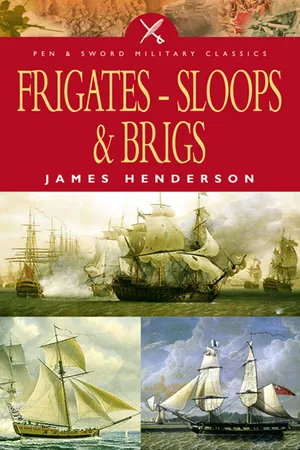
Frigates-Sloops & Brigs
About this book
Admiral Nelson's most frequent cry was for more frigates. Though not ships of the line these fast and powerful warships were the 'eyes of the fleet'. They enabled admirals to find where the enemy lay and his likely intentions, as well as patrolling vital trade routes and providing information from far-flung colonies. Together with their smaller cousins, the sloops and brigs of the Royal Navy, they performed a vital function.Generally commanded by ambitious young men, these were the ships that could capture enemy prizes and earn their officers and men enough prize-money to set them up for life. The fictional characters Horatio Hornblower and Jack Aubrey hardly surpassed some of the extraordinary deeds of derring-do and tragedy described in these pages.Originally published in two volumes, this book is a bargain for all who want the factual low-down on the Brylcreem Boys of Nelson's navy.
Trusted by 375,005 students
Access to over 1 million titles for a fair monthly price.
Study more efficiently using our study tools.
Information
The Frigates was first published in Great Britain in 1970 Sloops and Brigs was first published in Great Britain in 1972, both by Adlard Coles Ltd
Reprinted in 2005 by Pen & Sword Military Classics
Published in this format in Great Britain in 2011 by
Pen & Sword Maritime
an imprint of
Pen & Sword Books Ltd
47 Church Street
Barnsley
South Yorkshire
S70 2AS
Copyright © Estate of James Henderson CBE, 1970, 1972, 2005, 2011
ISBN 978-1-84884-526-8
eISBN 9781844682690
The right of James Henderson CBE to be identified as Author of this Work has been asserted by him in accordance with the Copyright, Designs and Patents Act 1988.
A CIP catalogue record for this book is available from the British Library.
All rights reserved. No part of this book may be reproduced or transmitted in any form or by any means, electronic or mechanical including photocopying, recording or by any information storage and retrieval system, without permission from the Publisher in writing.
Typeset in 10.5pt Ehrhardt by
Mac Style, Beverley, E. Yorkshire
Printed and bound in the UK by CPI
Pen & Sword Books Ltd incorporates the imprints of Pen & Sword Aviation, Pen & Sword Maritime, Pen & Sword Military, Wharncliffe Local History, Pen & Sword Select, Pen & Sword Military Classics, Leo Cooper, Seaforth Publishing and Frontline Publishing.
For a complete list of Pen & Sword titles please contact
PEN & SWORD BOOKS LIMITED
47 Church Street, Barnsley, South Yorkshire, S70 2AS, England
E-mail: [email protected]
Website: www.pen-and-sword.co.uk
To Captain James Rowland, DSO and bar,
RN (retd) whose feats of warfare in command
of HMS Wolverine and her consorts in the
North Atlantic showed that the lights kindled
by the frigate captains still burn undiminished
Contents
Author’s Notes
Foreword
| Chapter 1 | The Frigates | |
| Chapter 2 | Success Story | |
| Chapter 3 | Mutiny and Retribution | |
| Chapter 4 | Invasion | |
| Chapter 5 | The East India Station: The Far East | |
| Chapter 6 | The East India Station: Bay of Bengal | |
| Chapter 7 | Inglorious Defeat | |
| Chapter 8 | Successful Defeat | |
| Chapter 9 | The Young Star-Captains | |
| Chapter 10 | The Last Viking | |
| Chapter 11 | Prize Money | |
| Chapter 12 | Squadron Action | |
| Chapter 13 | The Big Frigates | |
| Chapter 14 | Challenge Encounter | |
| Chapter 15 | South Pacific | |
| Chapter 16 | Shipwreck |
Glossary
Appendix I: Notes on the Plates
Appendix II: Tonnage
Tables
Plates
| 1 | Droits de l’Homme engaged by INDEFATIGABLE: AMAZON coming up | |
| 2 | AMBUSCADE boarded and captured by Bayonnaise | |
| 3 | SAN FIORENZE and Piémontaise | |
| 4 | FISGARD and Immortalité | |
| 5 | Boats of the SURPRISE cutting out the Hermione | |
| 6 | SYBILLE taking the Forte | |
| 7 | Basque Roads, IMPERIEUSE leading in | |
| 8 | IMPERIEUSE and Calcutta | |
| 9 | SAN FIORENZE taking possession of Piémontaise | |
| 10 | ALCESTE and ACTIVE capturing the Potnone | |
| 11 | Constitution escaping from a British squadron | |
| 12 | GUERRIERE captured by Constitution | |
| 13 | MACEDONIAN captured by United States | |
| 14 | JAVA captured by Constitution | |
| 15 | Chesapeake boarded and captured by SHANNON | |
| 16 | Essex (left) engaged and captured by PHOEBE and CHERUB |
Notes on the plates, are on Appendix I.
The author is indebted to the Trustees of the National Maritime Museum, Greenwich for their kind permission to publish the plates reproduced in this book.
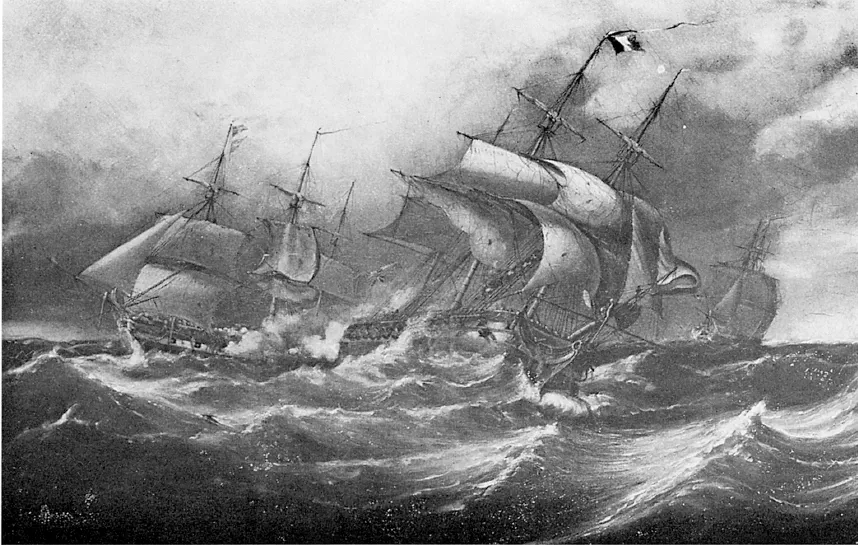
Plate 1: Droits de l’homme engaged by INDEFATIGABLE: AMAZON coming up.
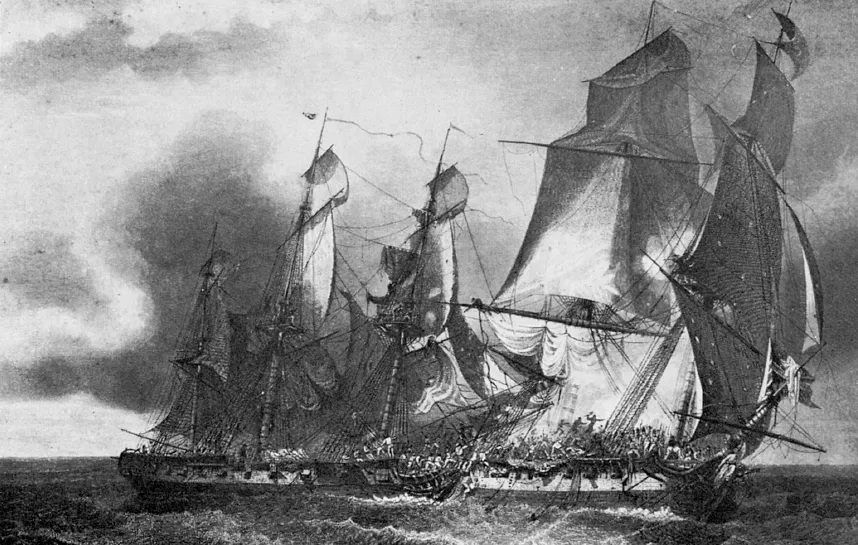
Plate 2: AMBUSCADE boarded and captured by Bayonnaise.
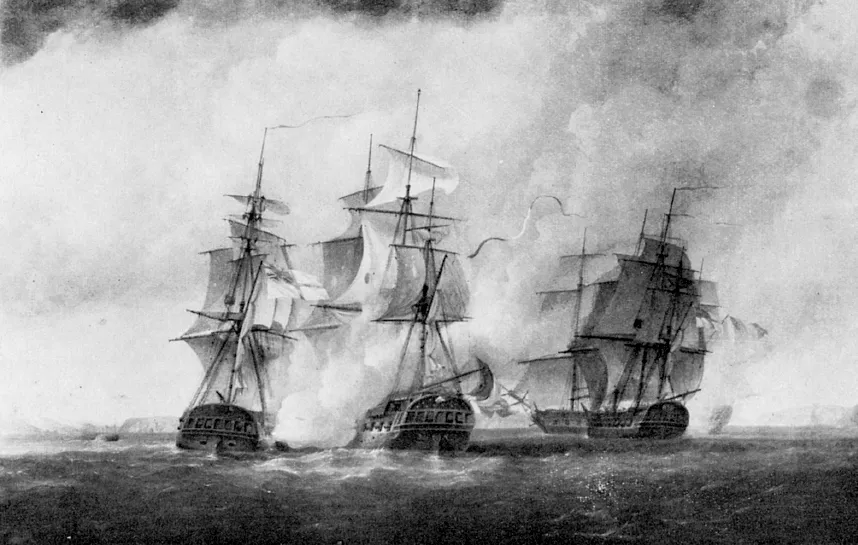
Plate 3: SAN FIORENZE and Piémontaise.
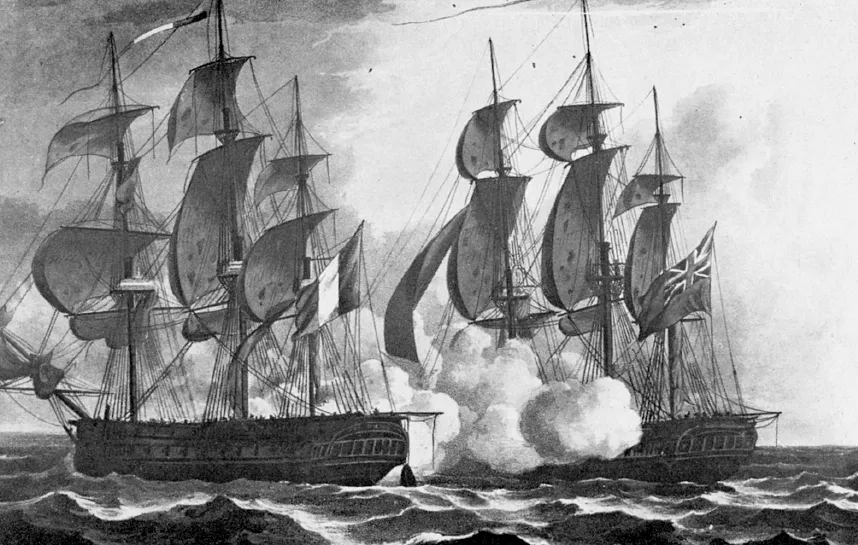
Plate 4: FISGARD and Immortalité.
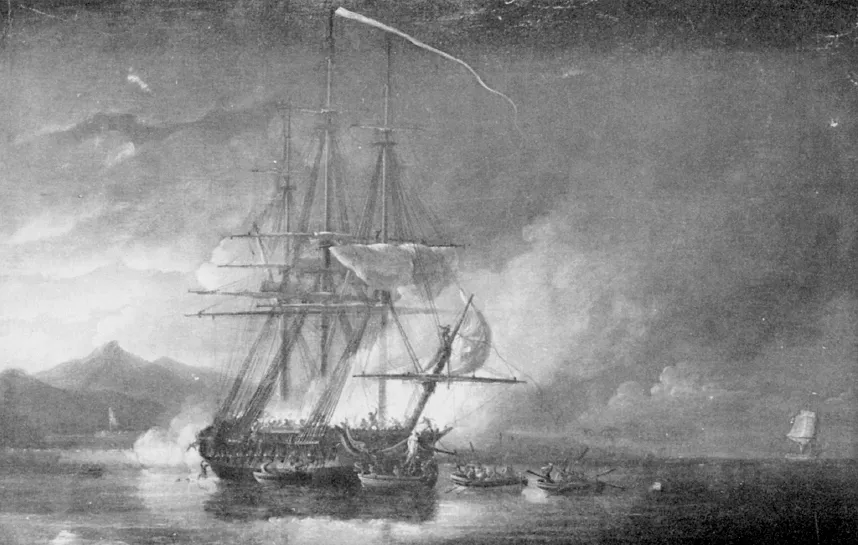
Plate 5: Boats of the SURPRISE cutting out the Hermione.
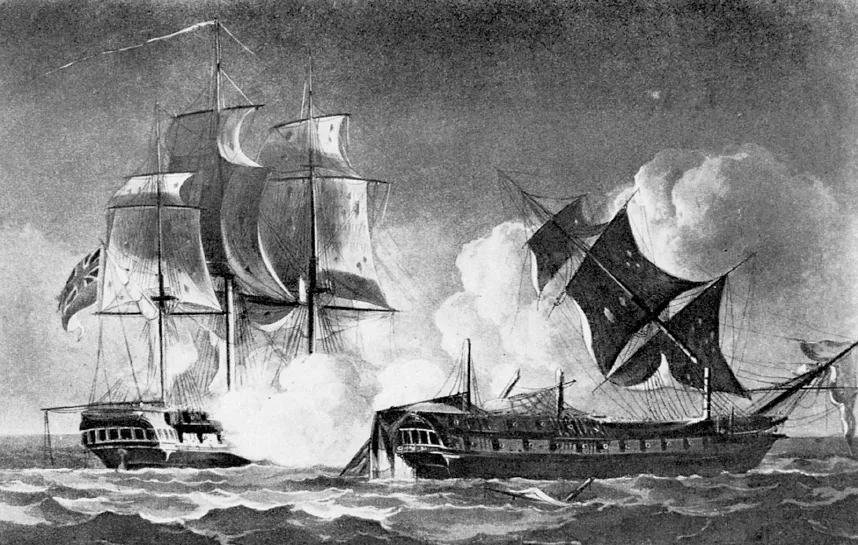
Plate 6: SYBILLE taking the Forte.
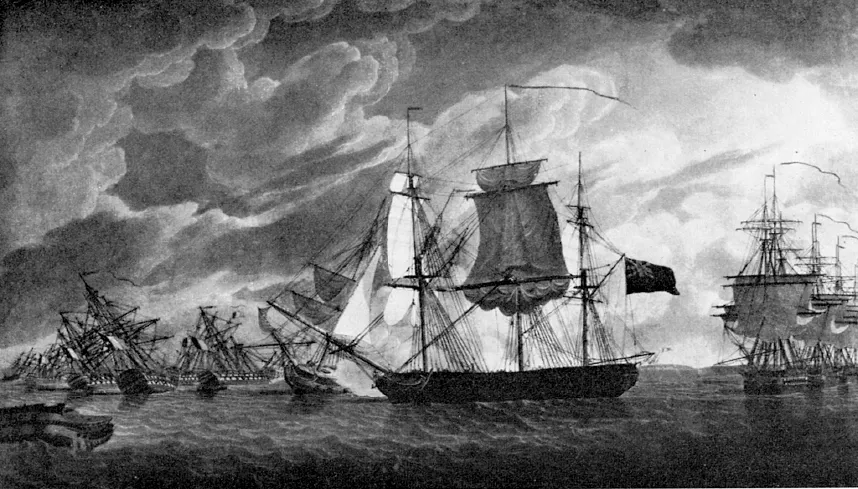
Plate 7: Basque Roads. IMPERIEUSE leading in.
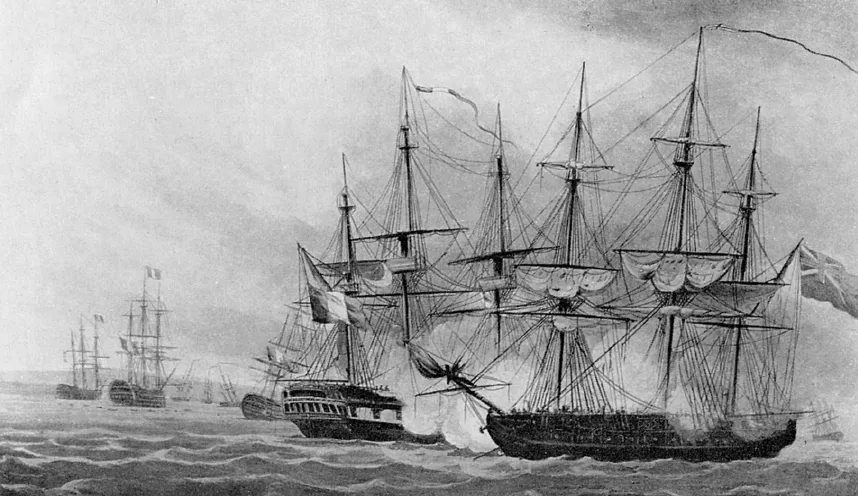
Plate 8: IMPERIEUSE and Calcutta.
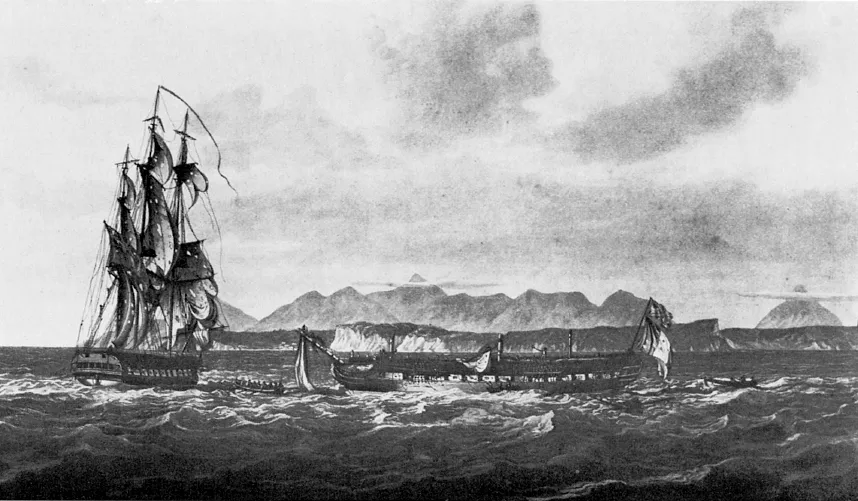
Plate 9: SAN FIORENZE taking possession of Piémontaise.
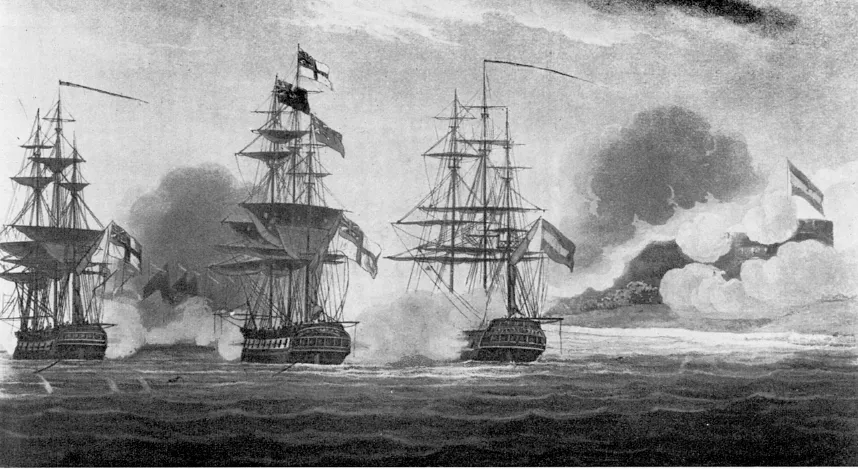
Plate 10: ALCESTE and ACTIVE capturing the Pomone.
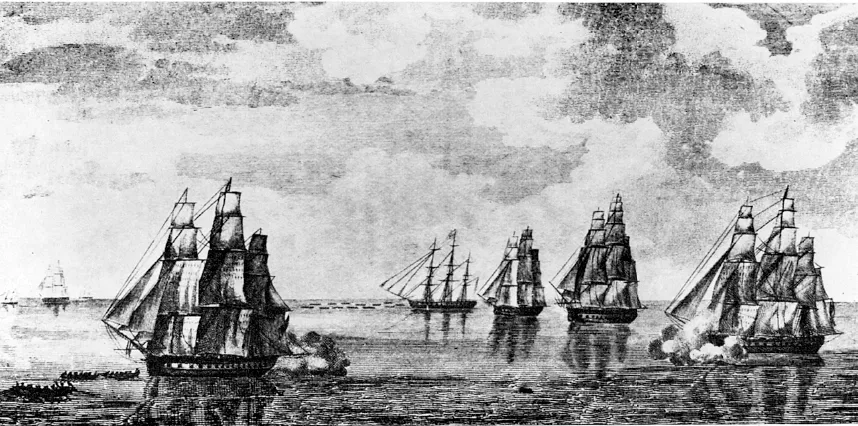
Plate 11: Constitution escaping from a British squadron.
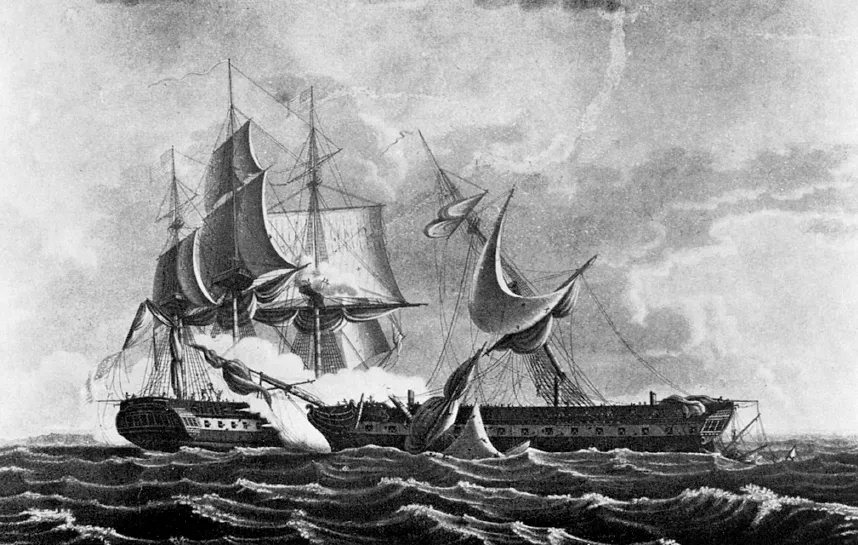
Plate 12: GUERRIERE captured by Constitution.
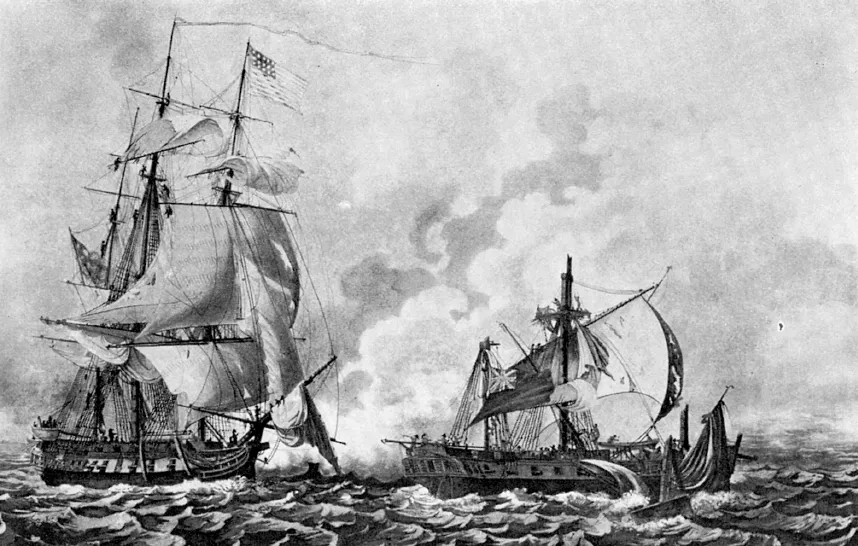
Plate 13: MACEDONIAN captured by United States.
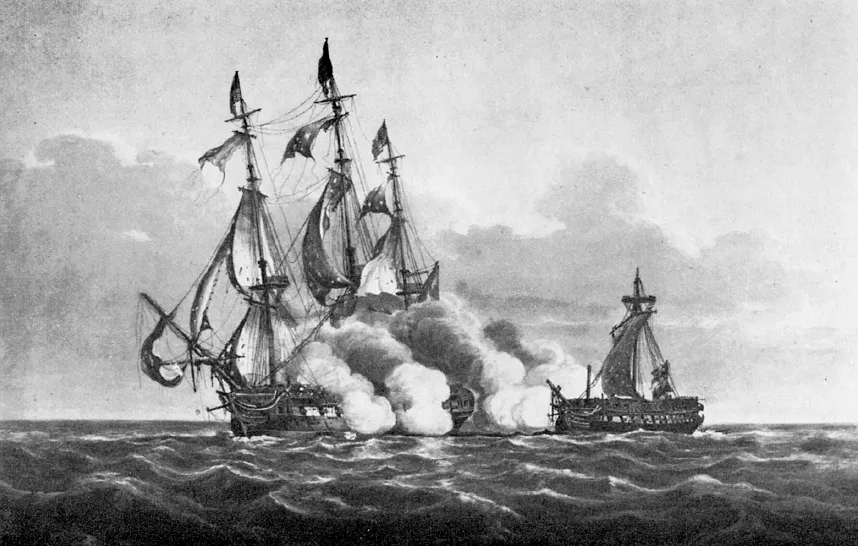
Plate 14: JAVA captured by Constitution.
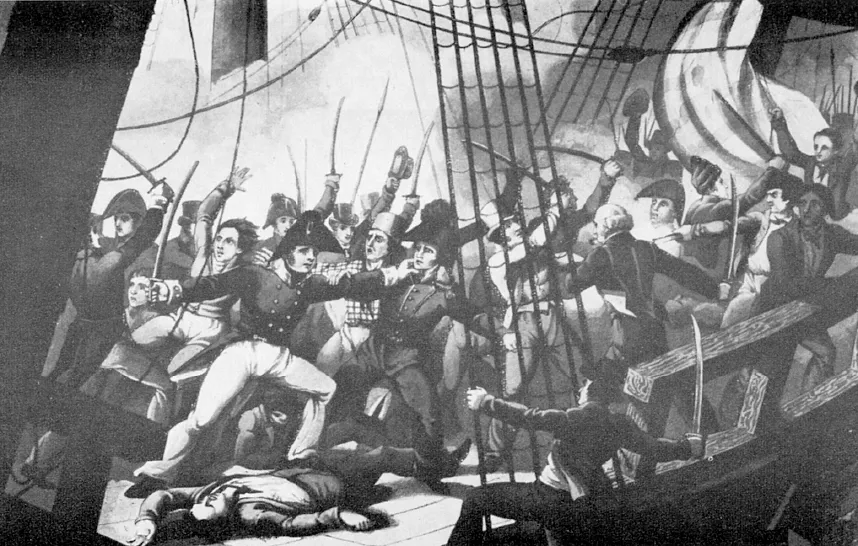
Plate 15: Chesapeake boarded and captured by SHANNON.
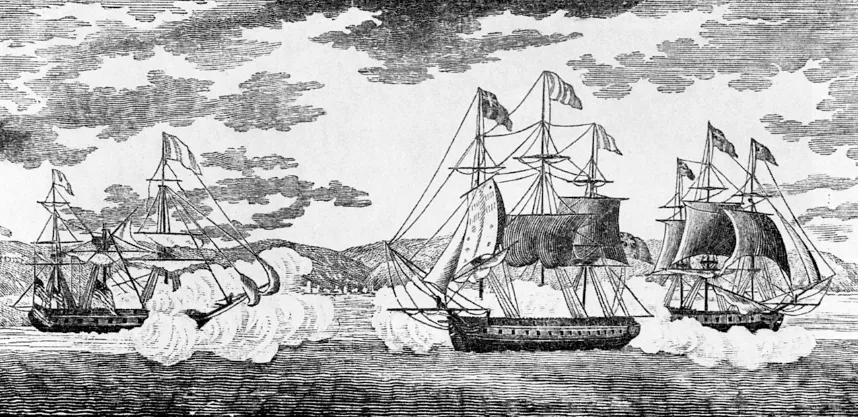
Plate 16: Essex (left) engaged and captured by PHOEBE and CHERUB.
Author’s Notes
A good deal of confusion often arises in reading early accounts of this period, due to the fact that so many ships were captured from the enemy and put into service under the same name. Thus at Trafalgar there were both an English and a French ‘Swift-Sure’, an English and a French ‘Neptune’, with a Spanish ‘Neptuno’ to make it more difficult. To avoid all difficulty, the name of any ship under British command is printed in SMALL CAPITALS, while the ships of all other nations are printed in italics. At the moment a ship changes hands it changes typography. Thus there is no difficulty in knowing immediately under which command the BONNE-CITOYENNE was in May 1798.
An awkwardness often arises from the fact that many of the best early histories are compiled directly from the log of the ship engaged, an excellent method up to a point. The log noted the change of the year on 1 st January, and the month on its first day but no other day; this was reasonable in a log which was intended to be read through, when submitted to Admiralty; but it can be intensely annoying when one reads, ‘On the 21st., at 6 a.m., sighted a large sail, ENE about 8 leagues’, and then has to turn back page after page to find out what month it was, and as many more to find out what year. I have therefore been particular in writing the full date unless obviously redundant.
The term ‘starboard’ has always been used for that side of the ship which is on your right as you face forward; at the time about which I write, and earlier, the other side was called ‘larboard’. During most of the nineteenth century this was the name, but owing to the verbal difficulty of distinguishing larboard from starboard, it became customary to call larboard ‘port’; this was easier, since not only was the port light red, but after dinner one passed the port to the left. However, I have retained ‘larboard’, because in print there is no confusion, and it corresponds with the contemporary accounts.
In helm orders one has to recall that all ships were steered by a tiller; in small ships this might appear on deck, and the sweep of deck-space required for the tiller was quite a serious tactical consideration. In larger ships the tiller was well below decks, perhaps twelve or fifteen feet long, operated by rope and tackle from the wheel on the quarterdeck, but still a tiller. Hence if one put the tiller over to starboard, the rudder and consequently the ship’s head went round to larboard; therefore the helm order ‘starboard’ meant that the ship was to go to larboard. Much later, after steam and steam steering became almost universal, helm orders were changed by international agreement; the order ‘port’ meant ‘turn to port’ and the order ‘starboard’ meant ‘turn to starboard’. I have retained the helm orders of the period, but have done what I can to avoid confusion.
The most important moment in an officer’s career was his promotion to post captain; from this point on his seniority was assured. No other post captain could get ahead of him, however strong his ‘interest’. At the same time, a lieutenant commanding a small ship, or promoted ‘Commander’ into a ship of less than post rank (twenty guns) was called ‘Captain’ so long as he was in command. To avoid confusion between an actual post captain, on the ladder which must inevitably lead him to flag rank if he survived long enough, and a junior officer in temporary command; I have used the substantive ranks of commander and lieutenant to indicate non-post captains, and ‘Mr’ to denote a warrant officer in temporary command. This is only of interest as regards ancillary ships, as a frigate could only be commanded by a post captain except in case of incapacity (wounds or death) in which case the lieutenants assumed command according to seniority. It was usual that after a meritorious action the first lieutenant of the British ship should be promoted commander, and given some ship of less than post force to show what he could do in actual command; thus gradually, as the war went on, was built the best cadre of naval officers that the world has ever seen.
It is a difficult point to determine how far a writer should interrupt himself to explain terms that are probably familiar to most of his readers. This I have dealt with by a fairly copious first chapter giving a sufficiently detailed general description of the frigates; an indexed sail plan (see endpapers) and a glossary. Thus the reader new to the period can inform himself as fully as he wishes, while those who know it well are not irritated by incessant explanations in the text.
Foreword
by Admiral of the Fleet
Sir Algernon Willis G.C.B., K.B.E., D.S.O., D.L.
Sir Algernon Willis G.C.B., K.B.E., D.S.O., D.L.
This book by Mr James Henderson is particularly commended to those interested in the sea and in national defence.
In the 22 years of the Revolutionary and Napoleonic Wars (1793 to 1815) this country was engaged almost continuously in hostilities with France and, at times, with Spain, the Netherlands, and America as well. Our survival depended on supremacy at sea and this island produced a magnificent body of fighting seamen, who raised the efficiency of the British Navy to a state which has seldom been equalled. While the great victories over the enemy’s battle fleets, such as St Vincent, the Nile and Trafalgar, gave us command of the sea, it was the smaller ships, notably the frigates, which exercised the control of sea communications enabling our trade to flow freely while cutting off most of that of the enemy.
These efforts led to countless frigate actions which our sailors fought with success, often against odds.
The graphic accounts of these actions and of other activities of the frigates related by Mr Henderson in this book make stirring reading, and take one back to the great days when, in the words of the younger Pitt: ‘England saved herself by her exertions and Europe by her example.’ Pitt, of course, intended to include the Scots, the Welsh and the Irish in this eulogy!
I wish this book the success it certainly deserves.
| A. U. WILLIS | |||
| Petersfield | Admiral of the Fleet | ||
| Hampshire | August 1970 |
Chapter One
The Frigates
‘Frigates!’ cried Nelson, ‘Were I to die this moment, want of frigates would be found engraved on my heart!’ He was chasing round the Mediterranean in search of the French expedition to Egypt, the biggest overseas invasion ever mounted, with 75 warships, 400 transports, 10,000 sailors and 36,000 troops, horse, foot and artillery. Had Nelson had the four frigates which were originally detailed to join his squadron, he would inevitably have caught the expedition on the high seas and the whole of history would have been different; General Buonaparte would have ended his career,...
Table of contents
- Front Cover
- The Frigates
- The Sloops and Brigs
Frequently asked questions
Yes, you can cancel anytime from the Subscription tab in your account settings on the Perlego website. Your subscription will stay active until the end of your current billing period. Learn how to cancel your subscription
No, books cannot be downloaded as external files, such as PDFs, for use outside of Perlego. However, you can download books within the Perlego app for offline reading on mobile or tablet. Learn how to download books offline
Perlego offers two plans: Essential and Complete
- Essential is ideal for learners and professionals who enjoy exploring a wide range of subjects. Access the Essential Library with 800,000+ trusted titles and best-sellers across business, personal growth, and the humanities. Includes unlimited reading time and Standard Read Aloud voice.
- Complete: Perfect for advanced learners and researchers needing full, unrestricted access. Unlock 1.4M+ books across hundreds of subjects, including academic and specialized titles. The Complete Plan also includes advanced features like Premium Read Aloud and Research Assistant.
We are an online textbook subscription service, where you can get access to an entire online library for less than the price of a single book per month. With over 1 million books across 990+ topics, we’ve got you covered! Learn about our mission
Look out for the read-aloud symbol on your next book to see if you can listen to it. The read-aloud tool reads text aloud for you, highlighting the text as it is being read. You can pause it, speed it up and slow it down. Learn more about Read Aloud
Yes! You can use the Perlego app on both iOS and Android devices to read anytime, anywhere — even offline. Perfect for commutes or when you’re on the go.
Please note we cannot support devices running on iOS 13 and Android 7 or earlier. Learn more about using the app
Please note we cannot support devices running on iOS 13 and Android 7 or earlier. Learn more about using the app
Yes, you can access Frigates-Sloops & Brigs by James Henderson in PDF and/or ePUB format, as well as other popular books in History & 19th Century History. We have over one million books available in our catalogue for you to explore.