
eBook - ePub
Surviving and Thriving on the Land
How to Use Your Spare Time and Energy to Run a Successful Smallholding
- 328 pages
- English
- ePUB (mobile friendly)
- Available on iOS & Android
eBook - ePub
Surviving and Thriving on the Land
How to Use Your Spare Time and Energy to Run a Successful Smallholding
About this book
Looks at ways in which self-sufficiency projects can be designed that care for the people involved in them as well as the earth that they are trying to protect. Offers a framework, backed up by real life examples, of issues to consider when setting up a new project, or for overcoming human-energy-based problems in existing projects.
Frequently asked questions
Yes, you can cancel anytime from the Subscription tab in your account settings on the Perlego website. Your subscription will stay active until the end of your current billing period. Learn how to cancel your subscription.
At the moment all of our mobile-responsive ePub books are available to download via the app. Most of our PDFs are also available to download and we're working on making the final remaining ones downloadable now. Learn more here.
Perlego offers two plans: Essential and Complete
- Essential is ideal for learners and professionals who enjoy exploring a wide range of subjects. Access the Essential Library with 800,000+ trusted titles and best-sellers across business, personal growth, and the humanities. Includes unlimited reading time and Standard Read Aloud voice.
- Complete: Perfect for advanced learners and researchers needing full, unrestricted access. Unlock 1.4M+ books across hundreds of subjects, including academic and specialized titles. The Complete Plan also includes advanced features like Premium Read Aloud and Research Assistant.
We are an online textbook subscription service, where you can get access to an entire online library for less than the price of a single book per month. With over 1 million books across 1000+ topics, we’ve got you covered! Learn more here.
Look out for the read-aloud symbol on your next book to see if you can listen to it. The read-aloud tool reads text aloud for you, highlighting the text as it is being read. You can pause it, speed it up and slow it down. Learn more here.
Yes! You can use the Perlego app on both iOS or Android devices to read anytime, anywhere — even offline. Perfect for commutes or when you’re on the go.
Please note we cannot support devices running on iOS 13 and Android 7 or earlier. Learn more about using the app.
Please note we cannot support devices running on iOS 13 and Android 7 or earlier. Learn more about using the app.
Yes, you can access Surviving and Thriving on the Land by Rebecca Laughton in PDF and/or ePUB format, as well as other popular books in Technology & Engineering & Agronomy. We have over one million books available in our catalogue for you to explore.
Information
Chapter One
The Human Energy Equation
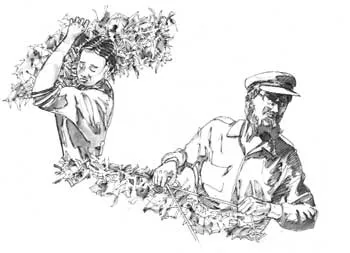
A new generation of small-scale, land-based initiatives is establishing itself throughout the United Kingdom. These include smallholdings, organic farms, land-based communities, forestry initiatives, permaculture projects and community-supported agriculture schemes. The people starting these initiatives are usually driven by a desire to address some of the pressing environmental problems of the twenty-first century, such as climate change, biodiversity loss and soil erosion. Often those wishing to work on the land see their domestic arrangements as part of an integrated endeavour to minimise their personal environmental impact. Alongside organic farming or forestry, they choose to build energy-efficient homes from local or recycled materials; harvest rainwater from their roofs; generate electricity using wind generators, solar panels or hydroelectric turbines and use firewood for cooking and heating their homes. Some smallholders wish to meet the growing demand for food which has been produced locally to high environmental standards. Others are motivated by the belief that their quality of life will improve if their own basic needs are met directly by living and working on the land. Their food will be fresher and taste better, their water cleaner, their environment more pleasant, they will be able to work from home and spend more time with their families, and they will have the freedom to choose how to use their time.
The price of bucolic bliss
Such an idyllic rural existence is entirely achievable, but it comes at a price – hard work. To generate a livelihood from the land in modern Britain, whilst minimising your environmental impact, is demanding. Firstly, for the aspiring self-sufficient or commercial smallholder, finding an affordable property is a challenge. Buying a bare land holding, let alone a house with enough land to grow your own vegetables and keep a few chickens, is an expensive business, unless you have large reserves of capital or a well-paid job. Secondly, despite the recent increase in demand for local and organic food, it is still hard for farmers to charge prices that realistically value their time as well as covering the cost of production. The establishment of a successful agricultural enterprise requires skill and efficiency, imaginative marketing skills and the willingness to work extremely long hours for very low pay. Thirdly, government bureaucracy and manifold regulations – including DEFRA paperwork, organic certification, planning laws and environmental health legislation – result in time-consuming and sometimes expensive extra work. Without some forethought and care, the rural idyll can turn into a slog through a never-ending list of chores or a stressful succession of bureaucratic battles with various authorities.
At best, these clouds in the blue sky of bucolic bliss are frustrating and tedious. At worst they can lead to exhaustion-related ill health or injury, marital breakdown and sometimes, tragically, suicide. It can be hard to maintain motivation and harmony with your nearest and dearest when the work is relentless, financial viability uncertain, and security on the land or in your home tenuous. I know smallholders who have had to give up their dreams due to work-induced back problems, or the energy-sapping inconvenience of not being allowed by the planning authorities to live on their land. Others have come to grief when long working hours regularly disrupt family life, or stress and over-tiredness cause couples to get irritable with one another. Sometimes running a smallholding is more a matter of surviving than thriving.
Yet such discomforts and disasters are not inevitable. Organic farmers, market gardeners and self-sufficient smallholders have been enjoying the benefits of a land-based lifestyle for years. Some are running successful businesses selling fresh, high quality food to local individuals, shops and restaurants. Others are content to produce vegetables, eggs, cheese or meat solely for their own consumption, alongside other income-generating professions. There are those who operate alone or with their partner and family, and those who choose to live and work in a community, sharing responsibility for land and its produce. Sometimes life is tough for them, but they survive and on the whole they are happy and fulfilled.
I have written this book to help aspiring and existing, but struggling,smallholders find a way to thrive, rather than merely survive. My aim in visiting the smallholdings, farms and communities featured in this book, was to learn how I could maximise the chances of maintaining my own health, enthusiasm and energy while establishing an organic market garden. On the way I have discovered that there are many ingredients in the recipe for landbased projects which successfully meet the needs of the humans running them. I have used the term ‘Human Energy’ as a shorthand way of referring to the precious entity that enables people to maintain their physical and mental health, and remain motivated, happy and harmonious with their family and fellow workers, despite hard physical work, long hours and stressful times, when every job is demanding to be done immediately. Like a natural resource, such as fish or wild herbs, human energy requires careful stewardship in order to prosper and multiply.
What is ‘Human Energy’?
The word energy has a variety of meanings, depending on the context in which it is being used. It is defined in the Oxford English Dictionary firstly as, “force, vigour (of speech, action, person etc); active operation, individual powers in use; latent ability”.1 Secondly, there is a scientific definition, “the ability of matter or radiation to do work” before the dictionary goes on to define the different types of energy – kinetic, potential and mass energy. We are interested in how to maintain the ability of humans to work on smallholdings – an occupation which requires considerable vigour, force and active operation!
Whilst physical energy is a vital ingredient in the ability to run a smallholding, equally important for the farmer are mental and emotional energy. Without these, quality of life is diminished and the length of time the smallholder will continue is likely to be curtailed. Scientifically speaking, human energy comes from the chemical energy contained in food, but the definition of human energy used in the context of this book is broader and includes:
• Physical energy – Energy required to perform work and play; physical health.
• Mental energy – Ability to engage mentally in the project, juggling several tasks, such as gardening, animal husbandry, marketing and childcare. Decision-making and problem-solving both require mental energy.
• Emotional energy – Feeling happy, or at least content; support from those around you; being appreciated for the role you play.
• Spiritual energy – Feeling of fulfilling one’s role on Earth, vocation; opportunities to be creative; integrating spiritual values into daily life.
Physical energy
This is the energy used when humans work, and is the result of respiration; the ‘burning’ at cellular level of the chemical energy contained in food. Respiration is a combustion reaction, akin to burning wood or oil, which produces carbon dioxide and water as by-products of heat, light and the ability to perform work. Hence, food can be seen as the ‘fuel’ which enables muscles to contract and provides physical human energy – the ability to run, dig, lift or do anything else that requires exertion.
A balanced diet, composed of carbohydrates, proteins and lipids, or fats, should provide a healthy human being with sufficient energy to undertake some degree of physical work, depending on one’s level of fitness. Most of the energy liberated in aerobic respiration comes from the oxidation of hydrogen to water. The energy density of different food types depends, therefore, on the number of hydrogen atoms in the food substrate molecule. Lipids, or fats, have more hydrogen atoms per molecule than carbohydrates, and so lipids have a greater energy value per unit mass, or energy density, than carbohydrates or proteins, as shown in table 1.1 below.2 In practical terms this is evident when hard physical work increases our desire to eat thick slabs of butter or cheese. The high energy density of lipids is reflected by the traditional diets of land-based labourers, which often contained significant amounts of fatty foods such as bacon, suet, lard and cheese, whenever they were available. Although proteins have a higher energy density than carbohydrates, they tend to be used for growth and repair of cells rather than as an energy provider, except in the absence of carbohydrates and lipids.
Respiratory Substrate | Energy Density (kJ g-1) |
Carbohydrate Lipid Protein | 15.8 39.4 17.00 |
Table 1.1 – Typical energy values of different food types.
Refined sugar in cakes, biscuits, drinks and cereals can give an instant energy boost because it can quickly be broken down into glucose and transported to cells via the bloodstream. It is the complex carbohydrates (rice, millet and root vegetables) that provide sustained and stable energy levels, as sugars are released more slowly. Over-consumption of highly processed sugary foods and cereals has led to increased incidence of diet-related illnesses, such as diabetes. Other conditions, such as food intolerances related to gluten, are more controversial. The symptoms of gluten intolerance include fatigue or tiredness, and many people who have cut out gluten from their diets claim to have significantly more energy and motivation. However, many health professionals and organisations are sceptical about whether the prevalence of gluten intolerance is on the increase, and caution against exclusion diets which they believe can lead to poorer nutrition.
Closely related to physical energy is injury. Back pain, slipped discs, repetitive strain injury, broken bones, sprained joints and other injuries can temporarily, and sometimes permanently, impair our ability to do physical work. Such problems can have a severe impact on the viability of businesses, especially when they put someone out of action at a critical time like hay-making or lambing. Their cause may be something other than land-based work, but the physical nature of farming exposes people to the risk of injury, especially when they are unaccustomed to manual labour. Injuries are sometimes caused by over-exertion or loss of concentration, due to fatigue. In other cases, wear and tear on joints as a result of age and prolonged strain is the main culprit. It is possible to reduce the risk of injury by learning techniques, such as how to lift heavy weights, and by adopting a mindful attitude to the way we use our bodies. Likewise, the thoughtful design of systems to avoid excess carrying of, for example, bales or manure, combined with the appropriate choice of equipment, can ease strain on joints and muscles. Investment of time and attention in such skills and details of design is invaluable, since an injury which could have been avoided can return to haunt you over years and may eventually put an end to dreams of a land-based lifestyle.
Mental energy
By mental energy, I mean the energy that is required to think clearly and solve problems. In some ways it is easier to describe the absence of mental energy. All readers will at some time or another have experienced the very specific kind of exhaustion which comes from mental over-exertion. It is the feeling you get when you’ve worked at a computer for hours, or endured a long and intense meeting. It is a very different fatigue from that experienced after physical exertion, which can be quite pleasant as long as you have got the time to rest and enjoy it. Compared with the mildly aching muscles and sense of having stretched yourself that comes from a day’s gardening, hay-making or a long walk, mental tiredness results in people feeling less alert, indecisive and downright lethargic. From time to time, such a feeling of fatigue is perfectly normal. However, when it becomes a chronic condition that impairs people’s ability to make decisions, plan each day’s activities or engage mentally in their work, mental exhaustion can reduce quality of life. It can even lead to illnesses such as depression, anxiety or chronic fatigue syndrome.
Smallholders need mental energy as much as physical energy. An alert mind and an ability to make decisions and solve problems are needed to plan crop rotations, care for animals, maintain infrastructure and equipment, and make a smallholding work financially. Management of a piece of land, especially for your livelihood, usually involves juggling several projects simultaneously which, like juggling balls, requires extra concentration. Few people are smallholders in isolation. They will have other responsibilities, roles and perhaps other employment. It may be necessary to integrate the demands of the land and its livestock alongside domestic duties, another job, or looking after dependents such as children or elderly relatives.
As the number of ‘balls’ which are in the air increase, so do the mental demands of the project and above a certain threshold, the stress of ‘keeping them in the air’ starts to become apparent. This threshold varies greatly between individuals. Some people like to focus on doing one or two things well, while others enjoy the diversity of managing multiple enterprises simultaneously. The latter seem to take a more relaxed approach to ‘dropping balls’, believing that the projects which are meant to succeed will survive whilst the others will fall by the wayside. For the former, it can be a cause of stress if too many projects are taken on and ‘letting something go’ involves a patch of garden getting covered in weeds or an animal’s routine being neglected. They may sacrifice their own needs (to rest or spend time with the family) to the needs of their farm, only to realise too late that their health or relationships have suffered.
Mental energy should not be seen in isolation from physical energy. Stress in itself is not harmful, but prolonged stress results in the body producing copious amounts of stress hormones called cortisols. These clog up cells and result in a lack of well-being and that ‘tired all the time’ feeling, which even sleep will not resolve. Our judgement becomes clouded, we become less efficient and we are prone to make mistakes and faulty decisions. Such mistakes can result in more work and stress, drawing the overtired smallholder into a vicious cycle of crisis and reaction. Continuous flooding of the body with stress hormones may impair the immune system, and render the individual vulnerable to a host of diseases.3
Such mental and physical disintegration can be avoided when a positive mental attitude is cultivated and the smallholder knows when to take a break and re-evaluate the situation. By consciously observing energy levels, it is more likely that stress or exhaustion is noticed in its early stages, and action can be taken to alleviate it, by re-organising responsibilities or asking for help.
Emotional energy
The way we feel undoubtedly affects our energy levels and zest for life. When we feel happy, optimistic or fulfilled, we are likely to have more energy than when we feel disappointed, frustrated or overwhelmed. Other emotions, such as anger or anxiety, seem briefly to intensify high energy levels before leaving a person feeling tired and ‘spent’. Hence, our feelings or emotions are an important influence on the overall amount of energy we are able to invest in the land. Cultivating the necessary conditions to encourage ‘energy-creating emotions’ can increase the likelihood of the project being successful and long-lived.
The optimal conditions for promoting emotional energy for most people include healthy and nurturing relationships with friends, family and work colleagues; a pleasant environment; meaningful work; and security of home or land tenure. Feel...
Table of contents
- Cover
- Half Title
- Title Page
- Copyright
- Contents
- Dedication
- Acknowledgements
- Introduction
- Chapter One: The Human Energy Equation
- Chapter Two: Energy Use Through the Ages
- Chapter Three: The Role of the Modern Smallholder
- Chapter Four: Land-based Livelihoods and Low-impact Lifestyles
- Chapter Five: Energy-efficient Design
- Chapter Six: Wise Choice of Tools
- Chapter Seven: Domestic Energy
- Chapter Eight: Livelihood Strategies
- Chapter Nine: Living and Working Together
- Chapter Ten: Together or Alone?
- Chapter Eleven: The Seven Ages of Men and Women
- Chapter Twelve: Siestas and Fiestas: Balancing work, rest and celebration
- Chapter Thirteen: Surviving or Thriving?
- Appendix 1: Interview questions
- Appendix 2: Resources
- References
- Index