Fast Facts: Long-Chain Fatty Acid Oxidation Disorders for Patients
eBook - ePub

Fast Facts: Long-Chain Fatty Acid Oxidation Disorders for Patients

  1. 24 pages
  2. English
  3. ePUB (mobile friendly)
  4. Available on iOS & Android
eBook - ePub

Fast Facts: Long-Chain Fatty Acid Oxidation Disorders for Patients

About this book

Long-chain fatty acid oxidation disorders (LC-FAODs) are rare, inherited conditions. With an LC-FAOD, the body has trouble breaking down fat for energy, which can lead to symptoms such as low blood sugars, muscle pain/weakness, and heart problems. LC-FAODs are diagnosed by newborn screening or symptoms later in life. Management includes a specialized nutrition plan, and prevention of fasting, especially during illness. A person with an LC-FAOD can live a full, active and healthy life with lifestyle changes and close coordination with, and support from, an expert healthcare team. Table of Contents: • Fats and fatty acids • Fatty acids for energy • Long-chain fatty acid oxidation disorders • Diagnosis • Genetic testing • Living with an LC-FAOD • Monitoring • What can I do to help my child? • Genetic counseling • How many people are affected? • Who's who?

Tools to learn more effectively

Saving Books

Saving Books

Keyword Search

Keyword Search

Annotating Text

Annotating Text

Listen to it instead

Listen to it instead

Information

Fats and fatty acids

You are probably reading this booklet because you or your child has been diagnosed with a long-chain fatty acid oxidation disorder (LC-FAOD) or this diagnosis is suspected.
With an LC-FAOD, the body is unable to properly break down fats in the diet.

Fat as an energy source

Our bodies need energy to keep muscles, organs and normal processes working.
The three types of food that provide energy are carbohydrates (in the form of sugars and starches), protein and fats.
The body stores fat under the skin and around the organs so that it can be used to provide energy when needed.

Fatty acids are building blocks

Fats are made up of building blocks called fatty acids. Fatty acids are usually joined in groups of three (tri) to a glycerol backbone – this is called a triglyceride. Each fatty acid is made up of a chain of carbon atoms with hydrogen atoms attached.
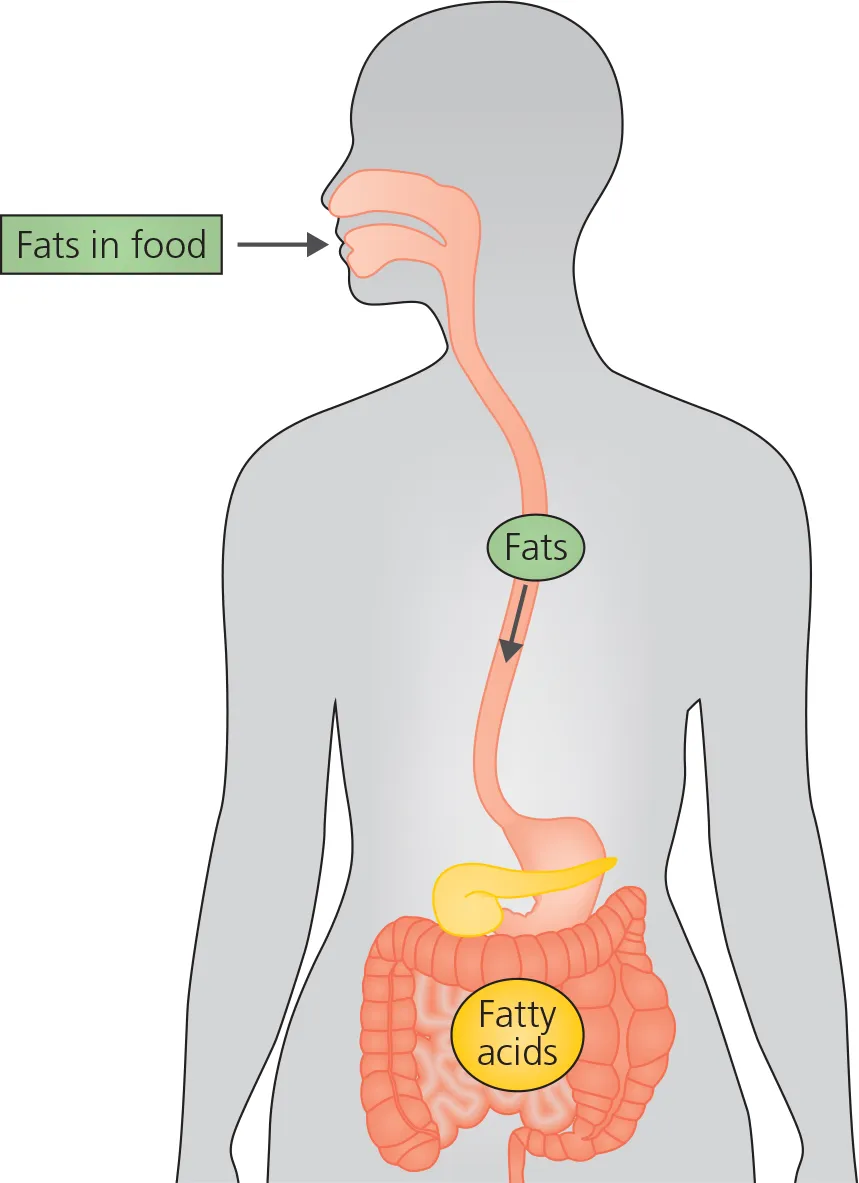
Fats enter the body from our diet. Fatty acids are released from triglycerides. They are either stored as fat or used as a source of energy in the body.
The number of carbon atoms varies between different fatty acids; for example…
Palmitic acid has 16 carbons and is found in palm oil
Oleic acid has 18 carbons and is found in olive oil
Arachidonic acid has 20 carbons and is found in meat and dairy products

Fatty acids for energy

When the body needs to use fat as an energy source, it breaks down the triglyceride and releases fatty acids. These fatty acids then travel in the blood to the muscles and organs where they can be used for energy.

Introducing beta oxidation

Once the fatty acids are in the muscle or organ where they will be used for energy, they go through a complicated process called beta oxidation. This takes place in mitochondria, which are specialized areas in cells.
What is an enzyme?
Enzymes are special proteins that help with a wide range of crucial tasks in the body. Each enzyme – and there are thousands in an average human cell – has a specific task. Examples of enzymes that help digest food are:

Long-chain fatty acid oxidation disorders

As shown on page 2, each fatty acid contains a chain of carbons. The length of this chain varies, with most fatty acids having between 4 and 24 carbons.
Enzymes are needed to move long-chain fatty acids into the mitochondria and process them for energy.
LC-FAODs happen when one of the enzymes involved in breaking down long-chain fatty acids for energy is not made or is not working properly.
As a result, the body is unable to use these fatty acids for energy in the usual way. This can lead to problems with energy supplies.
Not being able to use energy from stored fat can cause harmful effects. Having partially digested fatty acids in the body may also cause problems.
LC-FAODs are named according to the enzyme that is affected. The most common types of LC-FAOD are:
Carnitine palmitoyltransferase 1 or CPT1 deficiency (sometimes written as CPT I)
Carnitine acylcarnitine translocase or CACT deficiency
Carnitine palmitoyltransferase 2 or CPT2 deficiency (sometimes written as CPT II)
Very-long-chain acyl-CoA dehydrogenase or VLCAD deficiency
Long-chain 3-hydroxy-acyl-CoA dehydrog...

Table of contents

  1. Cover
  2. Contents
  3. 1. Fats and fatty acids
  4. 2. Fatty acids for energy
  5. 3. Long-chain fatty acid oxidation disorders
  6. 4. Diagnosis
  7. 5. Genetic testing
  8. 6. Living with an LC-FAOD
  9. 7. Monitoring
  10. 8. What can I do to help my child?
  11. 9. Genetic counseling
  12. 10. How many people are affected?
  13. Who’s who?
  14. Guide to words and phrases
  15. Useful resources
  16. Sources used in the preparation of this publication
  17. Copyright

Frequently asked questions

Yes, you can cancel anytime from the Subscription tab in your account settings on the Perlego website. Your subscription will stay active until the end of your current billing period. Learn how to cancel your subscription
No, books cannot be downloaded as external files, such as PDFs, for use outside of Perlego. However, you can download books within the Perlego app for offline reading on mobile or tablet. Learn how to download books offline
Perlego offers two plans: Essential and Complete
  • Essential is ideal for learners and professionals who enjoy exploring a wide range of subjects. Access the Essential Library with 800,000+ trusted titles and best-sellers across business, personal growth, and the humanities. Includes unlimited reading time and Standard Read Aloud voice.
  • Complete: Perfect for advanced learners and researchers needing full, unrestricted access. Unlock 1.4M+ books across hundreds of subjects, including academic and specialized titles. The Complete Plan also includes advanced features like Premium Read Aloud and Research Assistant.
Both plans are available with monthly, semester, or annual billing cycles.
We are an online textbook subscription service, where you can get access to an entire online library for less than the price of a single book per month. With over 1 million books across 990+ topics, we’ve got you covered! Learn about our mission
Look out for the read-aloud symbol on your next book to see if you can listen to it. The read-aloud tool reads text aloud for you, highlighting the text as it is being read. You can pause it, speed it up and slow it down. Learn more about Read Aloud
Yes! You can use the Perlego app on both iOS and Android devices to read anytime, anywhere — even offline. Perfect for commutes or when you’re on the go.
Please note we cannot support devices running on iOS 13 and Android 7 or earlier. Learn more about using the app
Yes, you can access Fast Facts: Long-Chain Fatty Acid Oxidation Disorders for Patients by B.K. Burton,A. Daly in PDF and/or ePUB format, as well as other popular books in Medizin & Endokrinologie & Stoffwechsel. We have over one million books available in our catalogue for you to explore.