This book is based on an in-depth conversation between Howard Burton and Artur Ekert, Professor of Quantum Physics at the Mathematical Institute at the University of Oxford and Director of the Centre for Quantum Technologies and Lee Kong Chian Centennial Professor at the National University of Singapore. Artur Ekert is best known as one of the pioneers of quantum cryptography. This wide-ranging conversation provides detailed insights into his research and covers many fascinating topics such as mathematical and physical intuition, a detailed history of cryptography from antiquity to the present day and how it works in practice, the development of quantum information science, the nature of reality, and more.This carefully-edited book includes an introduction, Putting the Pieces Together, and questions for discussion at the end of each chapter: I. Beginnings - Mathematics, physics and intuitionII. Cryptographic Essentials - From the ancient Greeks to the Cold WarIII. Public Key Cryptosystems - Harnessing the difficulty factorIV. Harnessing Interference - The power of quantum computersV. Quantum Sociology - What is quantum information science, anyway?VI. Quantum Metaphysics - And its concrete effectsVII. The Joy of Questioning - And the merits of being rebelliousAbout Ideas Roadshow Conversations: This book is part of a series of 100 Ideas Roadshow Conversations. Presented in an accessible, conversational format, Ideas Roadshow books not only explore frontline academic research featuring world-leading researchers but also reveal the inspirations and personal journeys behind the research.
- English
- ePUB (mobile friendly)
- Available on iOS & Android
eBook - ePub
Cryptoreality - A Conversation with Artur Ekert
About this book
Trusted by 375,005 students
Access to over 1 million titles for a fair monthly price.
Study more efficiently using our study tools.
Information
Subtopic
Computer Science GeneralIndex
Computer ScienceThe Conversation
I. Beginnings
Mathematics, physics and intuition
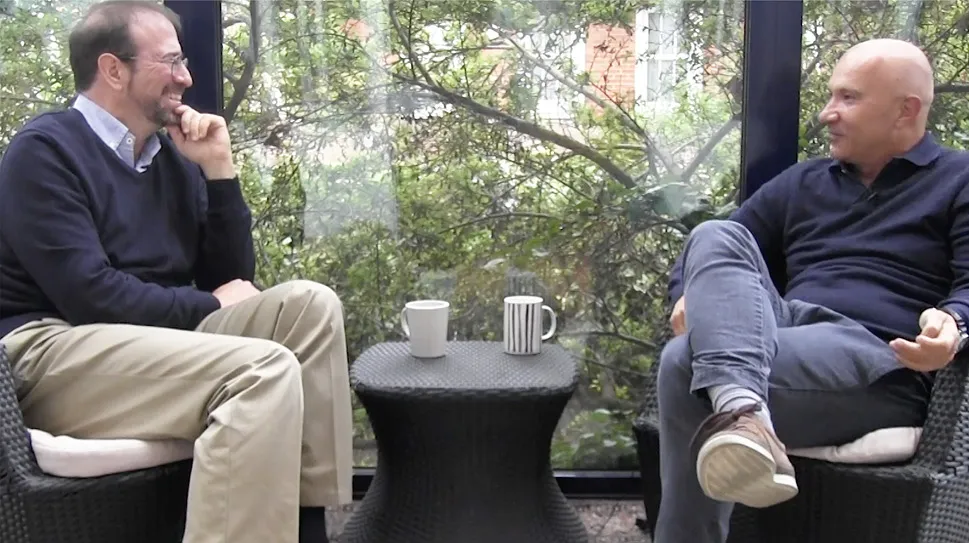
HB: I’d like to start with your scientific beginnings. Did you think you were going to be a professional scientist when you were a little boy?
AE: Actually, I’m not sure. It’s certainly not the case that I was always exclusively focused on science. You know, you go through these different stages—you want to be a policeman, you want to work for the fire brigade, then you want to be a film star. So, I think I went through all of this and then at some point two or three books made an impact on me. One of them certainly was The Feynman Lectures on Physics. That’s probably a cliché, I realize—probably many guys in the field tell the same story.
HB: Well, if it’s true, it’s true.
AE: You know, like him or not, Feynman certainly had a big impact on me, a certain degree of clarity while showing that you can have both intuition and mathematics coming together nicely in order to understand something about the world out there. It was very good, it was quite impressive.
Another book, which I liked a lot was The First Three Minutes by Steven Weinberg. What is particularly amazing about that is that at some point you appreciate that you can learn about something that is not given to your senses: we were not there when the big bang occurred, but somehow, in your mind, you can reconstruct with a certain degree of certainty what happened.
So it was really a sense of the power of science, the power of scientific methodology: we can develop these bold conjectures and then sometimes refute them and come up with other conjectures, somehow all the while giving us a much broader perspective on the world. Isn’t that amazing?
HB: It’s remarkable. How old were you when you were first exposed to these ideas?
AE: I think I was about 16 or so.
HB: Was there any particular orientation towards science in your upbringing and family environment, or did you just stumble upon it by accident to a certain extent?
AE: I think I was certainly encouraged to do science, but there was no pushing in any direction. In fact for a long period of time, I was much more interested in all kinds of sporting activities.
HB: Which sports?
AE: Well, just about everything, I did everything. I’m one of those characters who played football, hockey, swimming, I did judo for a long period of time. I’m a very outdoorsy kind of person. I’m not so much an urban person. I like to pop into town every now and then and benefit from cultural life and interesting cafés and so on, but generally speaking I feel much better outdoors. I’m really a country boy deep down.
HB: And there’s also the scuba diving, which I know is a big deal for you.
AE: Yes, I do scuba diving, I fly light airplanes, I do all these kinds of crazy things but, you know, some people say I do it because I like risky things, but it’s not so much about taking a risk; it’s more about trying to concentrate on something, and this is the best way to forget about some other things.
If you do things that are a little bit on the edge, an activity that requires a certain degree of attention—be it scuba diving or flying airplanes or wakeboarding or whatever—then it’s very relaxing because you focus on something, and then you don’t have to think about other things, like some mathematical problems you’re working on.
Every now and then you need to reformat your brain; and for me the best way to do it is to do something that I have to devote all my attention to. This usually can only happen when you do something that is critical: that if you don’t do it properly, then you die. So, there’s no special predilection for risky things. I may be adventurous, but I’m certainly not trying to take unnecessary risks.
HB: Do you find that when you’re focusing on something like this—when you’re flying a plane or scuba diving or what have you—by focusing your mind in a different direction, does it sometimes lead to breakthroughs in understanding, in the same way that sometimes people find the solution to a problem in their dreams?
Do you ever come back after scuba diving or flying a plane and find that you have a slightly different, more productive, perspective to a physics problem?
AE: Sometimes after, but not during. There’s this moment of concentration and then you relax.
Many people have these stories about good ideas that they’ve had when they were in the shower or something. That’s never really happened to me, but what is certainly true is that this period of time after you’ve been concentrating on necessary procedural things associated with diving or scuba diving, when you can relax and engage in lateral thinking and let your brain make all these kinds of random connections, that can be very productive.
Sometimes you don’t even realize that it’s a productive period of time, but it is: your brain goes into some kind of a different mode and many good ideas that I have happen when, after a period of concentration, I was just relaxed and tried to do nothing.
Maybe that’s a good thing: trying to do nothing rather than something. Sometimes doing nothing can be really creative, right?
HB: I think so. Bertrand Russell wrote a typical thoughtful and insightful essay called In Praise of Idleness, and quite a few others have held forth on a similar theme.
AE: Yes. And in Japanese, there’s a classic book called Essays in Idleness: The Tsurezuregusa of Kenkō. I also think that there are some aspects of idleness or even laziness, which are definitely conducive to creativity, like looking for shortcuts.
HB: Right. It’s also worth mentioning that it’s not so easy these days, being idle. It’s often difficult to get people to sit still for a sufficiently long period of time that would constitute idleness—they’re constantly looking at this or that.
AE: Yes, you’re right. I don’t know what it is. Maybe because our attention span is not what it used to be with the internet and everything—you try to dose knowledge in some kind of digestible quanta to keep your attention so that it lasts no longer than a few minutes—perhaps even less than that, actually—since everyone is so rapidly jumping or clicking from one thing to another.
HB: Right. But—he says, rapidly changing the subject—let’s get back to your story. You’ve read a couple of interesting and motivating books such as The Feynman Lectures and Weinberg’s The First Three Minutes.
Now you’re in high school. What happens then? Do you start thinking more about science as a career at some point? First of all, are you primarily focused on physics at this point? Presumably that’s the case, given the two books you mentioned, but perhaps not.
AE: I would say more mathematics than physics; I was (and am still) much more attracted to mathematics, but it was much more recreational mathematics. I really like those mathematical puzzles where you have to find this nice solution to a problem.
That is certainly something I still do, especially on long flights when it’s often not so convenient to read another book. The great thing is to pick up a problem—a simple problem, a mathematical problem, one of those nice, recreational problems—and you try to solve it. There are two options: either you solve it and then find another one, or you fall asleep, which is equally good on a long flight.
I love those mathematical problems. So mathematics was certainly the first thing, however, physics seemed to be much more mysterious, because in mathematics you think, We set up the rules of the game. We can design a formal system and try to prove things within this formal system.
It’s very interesting that this formal system is usually, somehow, related to what is going on in the real world—but that’s another story, maybe we’ll get to that later—
HB: I expect so.
AE: But, at least at some superficial level, you reach the following conclusion: In mathematics, we set up the rules of the game, but in physics, they are set up for us and it is our job to d...
Table of contents
- A Note on the Text
- Introduction
- The Conversation
- Continuing the Conversation
Frequently asked questions
Yes, you can cancel anytime from the Subscription tab in your account settings on the Perlego website. Your subscription will stay active until the end of your current billing period. Learn how to cancel your subscription
No, books cannot be downloaded as external files, such as PDFs, for use outside of Perlego. However, you can download books within the Perlego app for offline reading on mobile or tablet. Learn how to download books offline
Perlego offers two plans: Essential and Complete
- Essential is ideal for learners and professionals who enjoy exploring a wide range of subjects. Access the Essential Library with 800,000+ trusted titles and best-sellers across business, personal growth, and the humanities. Includes unlimited reading time and Standard Read Aloud voice.
- Complete: Perfect for advanced learners and researchers needing full, unrestricted access. Unlock 1.4M+ books across hundreds of subjects, including academic and specialized titles. The Complete Plan also includes advanced features like Premium Read Aloud and Research Assistant.
We are an online textbook subscription service, where you can get access to an entire online library for less than the price of a single book per month. With over 1 million books across 990+ topics, we’ve got you covered! Learn about our mission
Look out for the read-aloud symbol on your next book to see if you can listen to it. The read-aloud tool reads text aloud for you, highlighting the text as it is being read. You can pause it, speed it up and slow it down. Learn more about Read Aloud
Yes! You can use the Perlego app on both iOS and Android devices to read anytime, anywhere — even offline. Perfect for commutes or when you’re on the go.
Please note we cannot support devices running on iOS 13 and Android 7 or earlier. Learn more about using the app
Please note we cannot support devices running on iOS 13 and Android 7 or earlier. Learn more about using the app
Yes, you can access Cryptoreality - A Conversation with Artur Ekert by Howard Burton in PDF and/or ePUB format, as well as other popular books in Computer Science & Computer Science General. We have over one million books available in our catalogue for you to explore.