"Martin Bailey has written some of the most interesting books on Vincent’s life in France, where he produced his greatest work” - Johan van Gogh, grandson of Theo, the artist’s brother
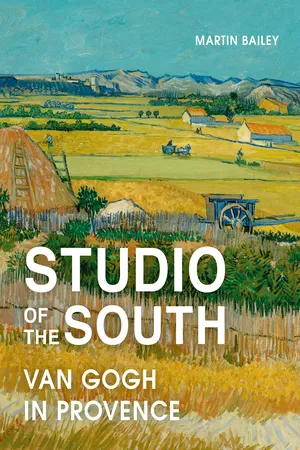
Studio of the South tells the story of Van Gogh’s stay in Arles, when his powers were at their height.
For Van Gogh, the south of France was an exciting new land, bursting with life. He walked into the hills inspired by the landscapes, and painted harvest scenes in the heat of summer. He visited a fishing village where he saw the Mediterranean for the first time, energetically capturing it in paint. He painted portraits of friends and locals, and flower still life paintings, culminating in the now iconic Sunflowers. He rented the Yellow House, and gradually did it up, calling it ‘an artist’s house’, inviting Paul Gauguin to join him there. This encounter was to have a profound impact on both of the artists. They painted side by side, their collaboration coming to a dramatic end a few months later. The difficulties Van Gogh faced led to his eventual decision to retreat to the asylum at Saint-Remy.
Based on extensive original research, the book reveals discoveries that throw new light on the legendary artist and give a definitive account of his fifteen months in Provence, including his time at the Yellow House, his collaboration with Gauguin and its tragic and shocking ending.
- 224 pages
- English
- ePUB (mobile friendly)
- Available on iOS & Android
eBook - ePub
About this book
Trusted by 375,005 students
Access to over 1.5 million titles for a fair monthly price.
Study more efficiently using our study tools.
Information
Topic
ArteSubtopic
Monografie di artistiCHAPTER ONE
DISCOVERING ARLES
‘The coquettish little town of pretty women’1

Detail of fig. 40 Arles seen from the Wheatfields, Musée Rodin, Paris
Van Gogh arrived in Provence at an extraordinary moment. Having taken the overnight train from Paris he awoke on the morning of 20 February 1888 to find the countryside blanketed with snow, although Arles normally enjoys mild Mediterranean winters. He described the scene to Theo: ‘The landscape under the snow with the white peaks against a sky as bright as the snow was just like the winter landscapes the Japanese did.’2 The white hills were the Alpilles (the Little Alps), a chain with craggy peaks which begins just north of Arles – and which would soon appear in the background of many of his landscapes. A local newspaper reported that the snow was 45 centimetres deep, ‘enormous for the land of the sun’.3
In Arles the station lies just to the north of the centre so Van Gogh would have needed a porter to help him with his luggage (see the upper right corner of the map, fig. 10). He soon reached Place Lamartine, which was named after Alphonse de Lamartine, the poet and politician who had campaigned for the construction of the Paris-Marseille railway. After crossing the public garden ( Jardin de la Cavalerie) Van Gogh reached the Porte de la Cavalerie, a gateway with its pair of sixteenth-century circular towers, part of the ramparts which once surrounded Arles. He then entered the historic centre of the town, which dates back to Roman times.
Van Gogh found a room at the Hotel Carrel at 30 Rue Amédée Pichot (fig. 7).4 Run by Albert and Cathérine Carrel, it was a middle-range establishment, with a restaurant on the ground floor and bedrooms on two upper levels. Having checked in, Van Gogh set off to explore the town. To a northerner who had never ventured south of Paris, Provence must have seemed exotic, even in the melting snow.
With 23,500 inhabitants, Arles was then a market town. Its compact size meant that the facilities Van Gogh needed were conveniently close at hand. The shops, cafés and restaurants were all around and the riverside promenade was only two minutes’ away. However, the medieval labyrinth of narrow, cobbled alleys seemed dark in winter and shabby. ‘It’s dirty, this town, with its old streets’, Vincent wrote back to Theo. But although appearing ‘sickly and faded’, once one got to know it, ‘the old charm reveals itself.’5
The best overall visual impression of nineteenth-century Arles is captured in a print showing the view from a balloon, from the east (fig. 9). The Roman arena dominates the town and the ramparts still delineate the urban area. The Rhône’s importance as a shipping route is emphasised by the boats plying their trade, although the new railway line in the foreground would soon take most of the traffic. The station lies just off the right edge of the print, and the green area on the right side is the public garden in Place Lamartine.
Arles had two main claims to fame, its classical antiquities and the renowned beauty of its women. The town had been the largest Roman settlement in southern France and three important sites survived: the arena, the theatre and the Alyscamps. Surprisingly, in view of his cultured background, Van Gogh was uninterested in them, although they attracted the attention of many artists. He never painted the impressive ruins of the Roman theatre or mentioned them in his letters, although he did once refer to the famous Venus of Arles sculpture which had been excavated there.6 The arena, the largest outside Rome, had been brought back into use for bullfights. It was the bulls and the excited crowds which eventually caught his imagination, not its ancient origins or weathered stones. The burial ground of the Alyscamps was lined with sarcophagi, but when Van Gogh eventually painted there, he focused not on the tombs, but the avenue of trees.
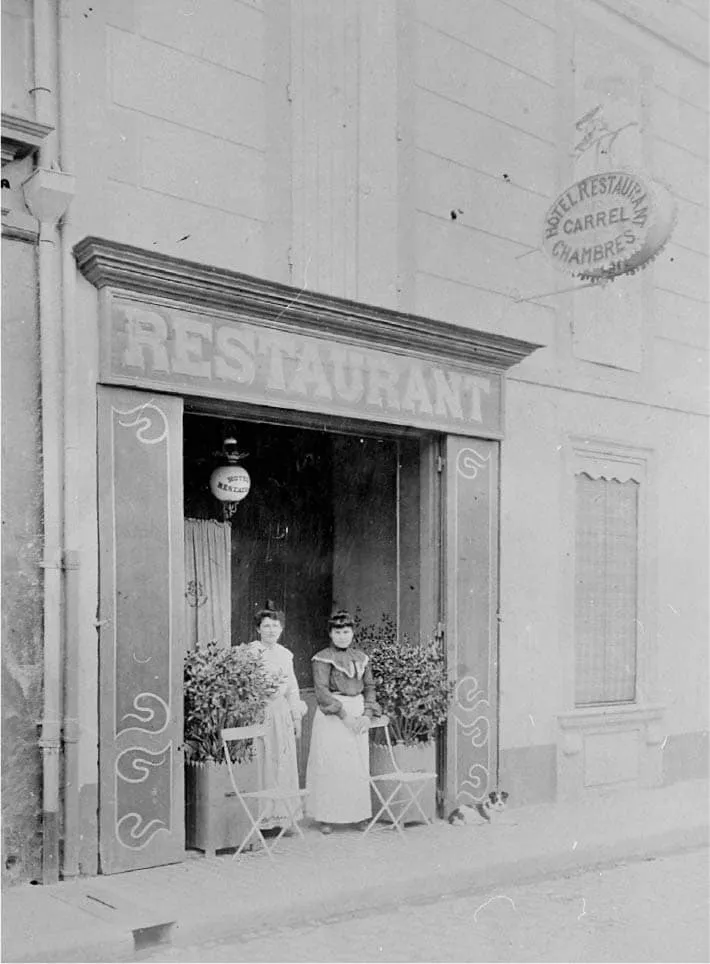
fig. 7 Hotel Carrel, c.1920s, photograph7
Van Gogh was far more interested in the women of Arles, the famed Arlésiennes renowned for their striking looks and distinctive costume. Celebrated in Alphonse Daudet’s 1869 short story L’Arlésienne, they too were a favourite subject for artists. Soon after his arrival Van Gogh began searching for an Arlésienne to portray, but models were disinclined to pose for him and finding one would take months.
One of Van Gogh’s first outings was to visit the town’s two museums. Paintings were displayed at the Musée Réattu, established in 1868 with works acquired from the daughter of the Arles artist Jacques Réattu. Set in a Renaissance mansion, the museum housed Réattu’s own work and other pictures he had owned. The collection soon came to be poorly regarded, with many paintings being dismissed as copies of the masters. Van Gogh concurred, describing the museum ‘dreadful and a joke’.8

fig. 8 View of a Butcher’s Shop, February 1888, oil on canvas, 40 x 32 cm, Van Gogh Museum, Amsterdam (Vincent van Gogh Foundation) (F389)
Van Gogh was rather more enthusiastic about the Musée Lapidaire, with antiquities he described as ‘genuine’. It held one of France’s finest collections of Roman sculptures and stone inscriptions. These were displayed in the deconsecrated Church of St Anne in Place de la République. Just across the square lies the Church (and former cathedral) of St Trophime, famed for its magnificent portal with figures of apostles, saints and bizarre creatures. Van Gogh described its twelfth-century facade as ‘admirable’, although the figures were ‘so cruel, so monstrous’.9

fig. 9 Alfred Guesdon, Balloon View of Arles, c.1850, coloured lithograph, 29 x 44 cm10

fig. 10 Map of A...
Table of contents
- Cover
- Title Page
- Contents
- Preface
- Prologue: Paris
- 1. Discovering Arles
- 2. Blossoming Orchards
- 3. An Artist’s House
- 4. Heights of Montmajour
- 5. Seascapes
- 6. Harvest Time
- 7. The Rhône and its Canals
- 8. Portraits of Friends
- 9. Flowers
- 10. Colours of the Night
- 11. Gauguin’s Arrival
- 12. Elysian Fields
- 13. Street of the Kind Girls
- 14. Collaboration
- 15. Postman Roulin
- 16. Out of his Mind
- 17. Doctor Rey
- 18. Spring
- Postscript: Van Gogh’s Bed
- On the Trail of Van Gogh
- Chronology
- Endnotes
- Select Bibliography
- A Note to the Reader
- Index
- Picture credits
- Acknowledgements
- Copyright
Frequently asked questions
Yes, you can cancel anytime from the Subscription tab in your account settings on the Perlego website. Your subscription will stay active until the end of your current billing period. Learn how to cancel your subscription
No, books cannot be downloaded as external files, such as PDFs, for use outside of Perlego. However, you can download books within the Perlego app for offline reading on mobile or tablet. Learn how to download books offline
Perlego offers two plans: Essential and Complete
- Essential is ideal for learners and professionals who enjoy exploring a wide range of subjects. Access the Essential Library with 800,000+ trusted titles and best-sellers across business, personal growth, and the humanities. Includes unlimited reading time and Standard Read Aloud voice.
- Complete: Perfect for advanced learners and researchers needing full, unrestricted access. Unlock 1.5M+ books across hundreds of subjects, including academic and specialized titles. The Complete Plan also includes advanced features like Premium Read Aloud and Research Assistant.
We are an online textbook subscription service, where you can get access to an entire online library for less than the price of a single book per month. With over 1.5 million books across 990+ topics, we’ve got you covered! Learn about our mission
Look out for the read-aloud symbol on your next book to see if you can listen to it. The read-aloud tool reads text aloud for you, highlighting the text as it is being read. You can pause it, speed it up and slow it down. Learn more about Read Aloud
Yes! You can use the Perlego app on both iOS and Android devices to read anytime, anywhere — even offline. Perfect for commutes or when you’re on the go.
Please note we cannot support devices running on iOS 13 and Android 7 or earlier. Learn more about using the app
Please note we cannot support devices running on iOS 13 and Android 7 or earlier. Learn more about using the app
Yes, you can access Studio of the South by Martin Bailey in PDF and/or ePUB format, as well as other popular books in Arte & Monografie di artisti. We have over 1.5 million books available in our catalogue for you to explore.