eBook - ePub
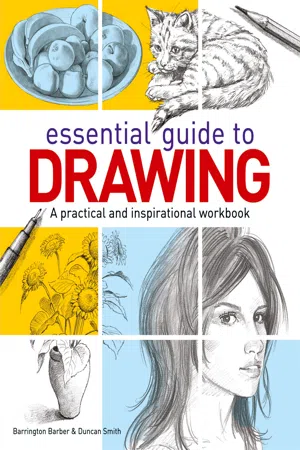
Essential Guide to Drawing
A practical and inspirational workbook
- English
- ePUB (mobile friendly)
- Available on iOS & Android
eBook - ePub
About this book
This comprehensive guide to simple, effective drawing techniques encourages the reader to focus on expression and style to achieve artistic 'truth'. Rather than copying every element of a subject, the reader is urged to develop his or her own way of seeing subjects to produce an individual, expressive style of drawing. While offering demonstrations on matters such as proportion, perspective, light sources and mark-making, authors Barrington Barber and Duncan Smith inspire readers to become confident in their own abilities as artists.
Tools to learn more effectively

Saving Books

Keyword Search

Annotating Text

Listen to it instead
Information

Introduction
The human face is often the most attractive subject for an artist. In a way, producing a good portrait of another human being proves to yourself how well you are progressing; it is the hardest area in which your skills will be tested, because everyone can see at once whether you have attained a resemblance to the individual or not.

There have been many brilliant portrait painters and therefore no dearth of examples to look at. Friends and relatives will be quite keen to sit for their portraits because it is a kind of compliment that their face is thought worth drawing by an artist, though you will be taken to task if they think you have missed their likeness. However, as any good artist knows, the likeness of an individual is by no means the whole story, or why are we so impressed by the Old Masters’ paintings of people that we have never seen? One thing you must appreciate when attempting a portrait is that the whole head is the key to getting a good result, a fact that many beginners fail to realize. Don’t forget to refer to the proportions of the head (pages 112–113), otherwise the final result might look like a face lacking the foundation of a properly constructed skull.
Proportions of the Head
Here we look at some of the classic rules of drawing portraits: the proportions of the human head. These are useful guidelines for any artist, and learning them will help to inform your drawings and make them more accurate.
Profile view
This view of the head can be seen proportionately as a square which encompasses the whole head. When this square is divided across the diagonal, it can be seen immediately that the mass of the hair area is in the top part of the diagonal and takes up almost all the space, except for the ears.
When the square is divided in half horizontally it is also clear that the eyes are halfway down the length of the head. Where the horizontal halfway line meets the diagonal halfway line is the centre of the square. The ears appear to be at this centre point, but just behind the vertical centre line.
A line level with the eyebrow also marks the top edge of the ear. The bottom edge of the ear is level with the end of the nose, which is halfway between the eyebrow and the chin. The bottom edge of the lower lip is about halfway between the end of the nose and the chin.

Front view
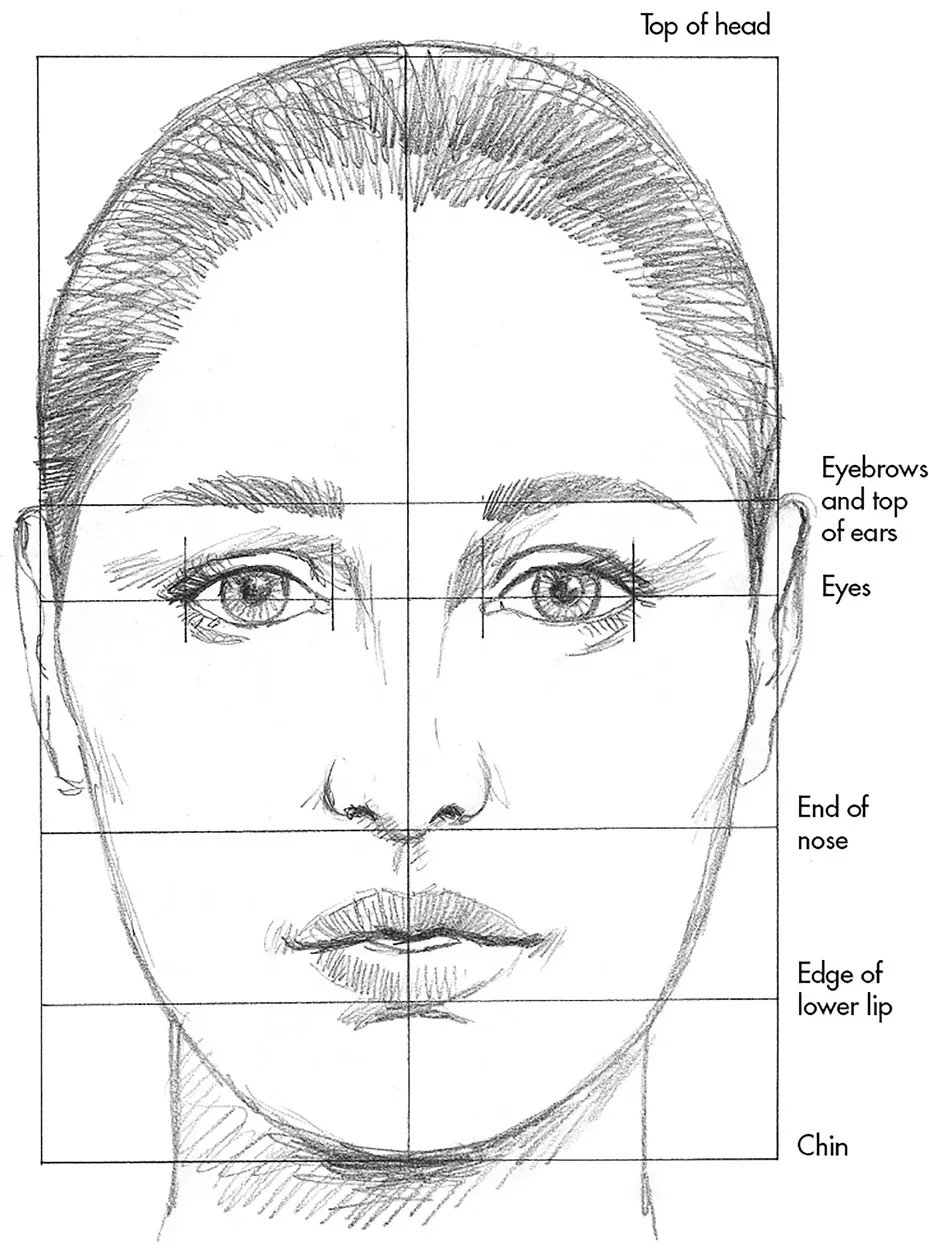
From the front, as long as the head isn’t tilted, it is about one and a half times as long as it is wide. The widest part is just above the ears.
As in the side view, the eyes are halfway down the length of the head and the end of the nose is halfway between the eyebrows and the chin; the bottom edge of the lip is about halfway between the end of the nose and the chin.
The space between the eyes is the same as the length of the eye. The width of the mouth is such that the corners appear to be the same distance apart as the pupils of the eyes, when looking straight ahead.
These are very simple measurements and might not be quite accurate on some heads, but as a rule you can rely on them – artists have been doing so for many centuries.
Measuring the Head
When you draw a portrait, measuring the head as accurately as you can before you start will help you to reach a successful result; you’ll have the proportions clear in your mind before you begin making marks.
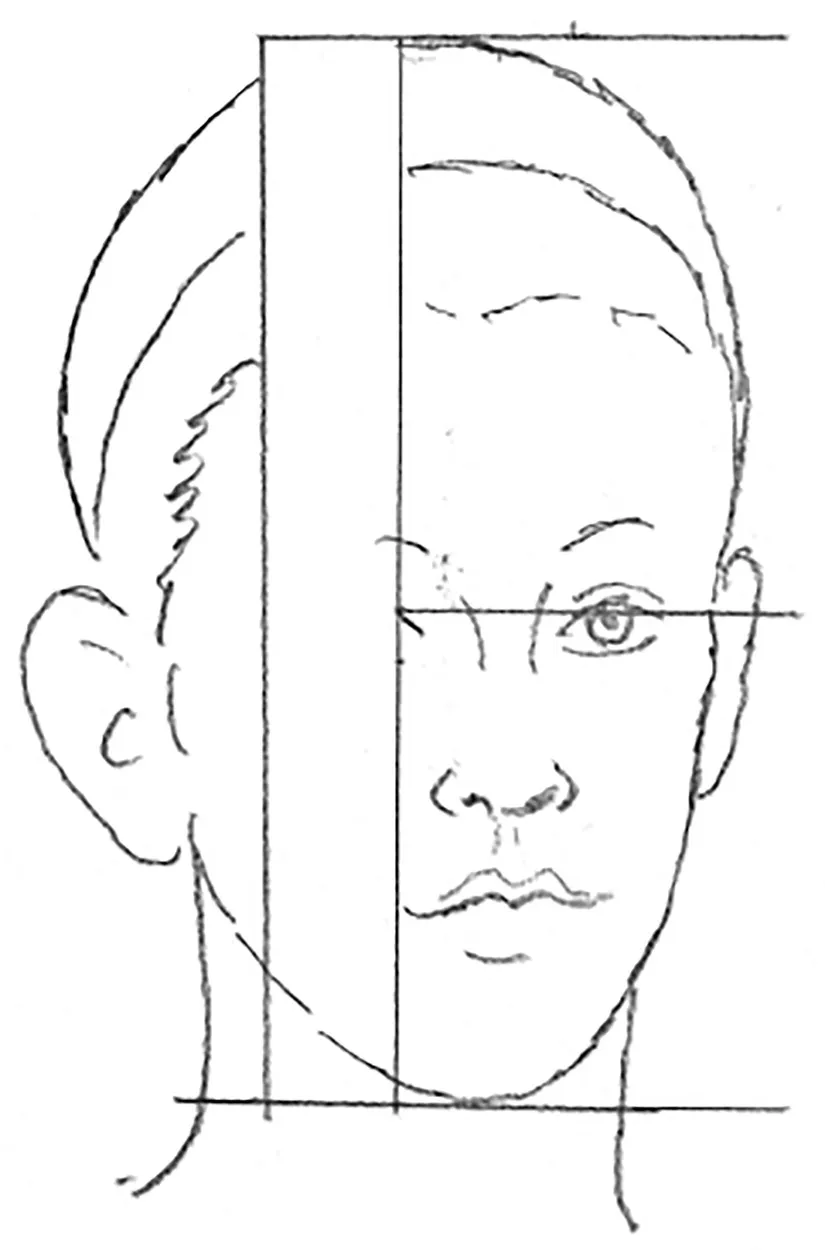
Using a ruler, first measure the length of the head and establish the position of the eyes.
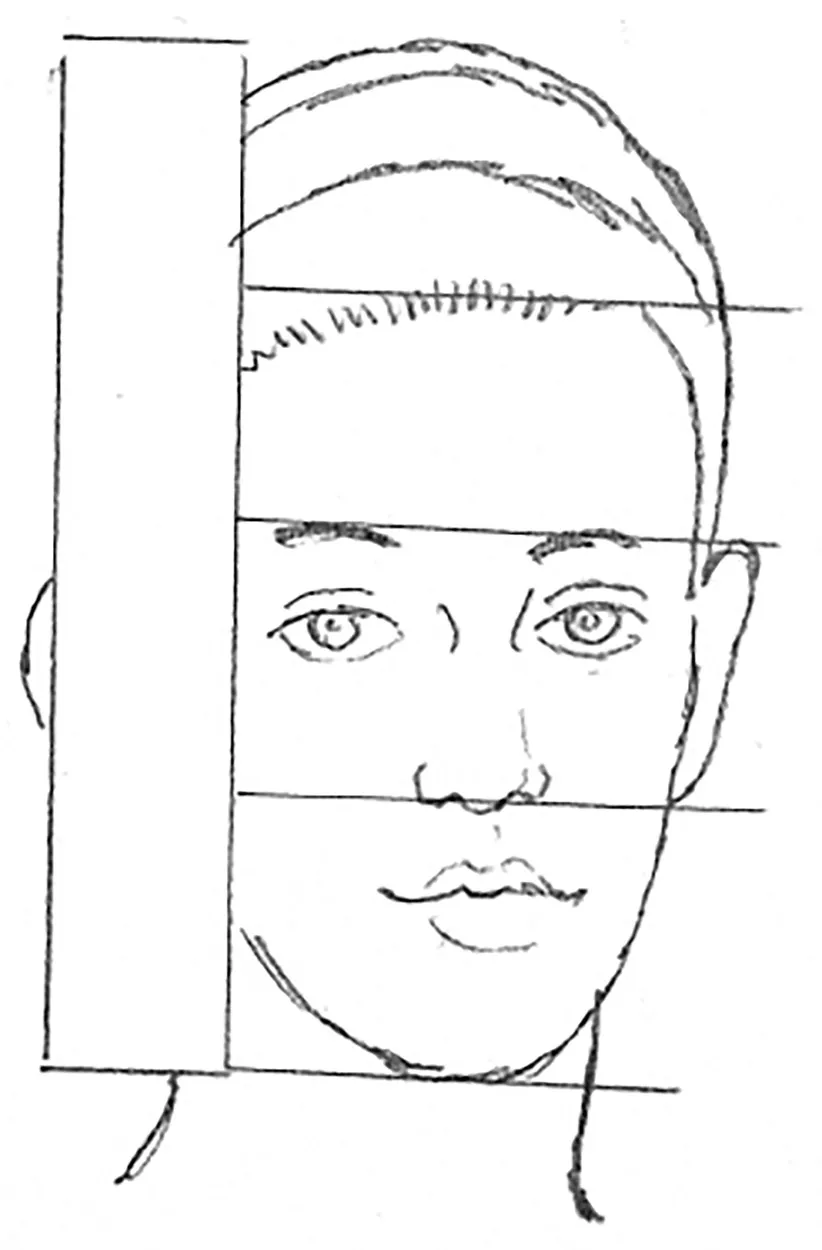
Next mark the distance from the top of the head to ...
Table of contents
- Title Page
- Contents
- Introduction
- Materials and Equipment
- Basic Mark-making
- Shading Practice
- Still Life
- Perspective and Composition
- Landscapes
- Animals
- Portraits
- Life Drawing
- Copyright
Frequently asked questions
Yes, you can cancel anytime from the Subscription tab in your account settings on the Perlego website. Your subscription will stay active until the end of your current billing period. Learn how to cancel your subscription
No, books cannot be downloaded as external files, such as PDFs, for use outside of Perlego. However, you can download books within the Perlego app for offline reading on mobile or tablet. Learn how to download books offline
Perlego offers two plans: Essential and Complete
- Essential is ideal for learners and professionals who enjoy exploring a wide range of subjects. Access the Essential Library with 800,000+ trusted titles and best-sellers across business, personal growth, and the humanities. Includes unlimited reading time and Standard Read Aloud voice.
- Complete: Perfect for advanced learners and researchers needing full, unrestricted access. Unlock 1.4M+ books across hundreds of subjects, including academic and specialized titles. The Complete Plan also includes advanced features like Premium Read Aloud and Research Assistant.
We are an online textbook subscription service, where you can get access to an entire online library for less than the price of a single book per month. With over 1 million books across 990+ topics, we’ve got you covered! Learn about our mission
Look out for the read-aloud symbol on your next book to see if you can listen to it. The read-aloud tool reads text aloud for you, highlighting the text as it is being read. You can pause it, speed it up and slow it down. Learn more about Read Aloud
Yes! You can use the Perlego app on both iOS and Android devices to read anytime, anywhere — even offline. Perfect for commutes or when you’re on the go.
Please note we cannot support devices running on iOS 13 and Android 7 or earlier. Learn more about using the app
Please note we cannot support devices running on iOS 13 and Android 7 or earlier. Learn more about using the app
Yes, you can access Essential Guide to Drawing by Barrington Barber,Duncan Smith in PDF and/or ePUB format, as well as other popular books in Art & Art Techniques. We have over one million books available in our catalogue for you to explore.