Follow the Columbia River on this historic drive that marks the climax of Lewis and Clark’s cross-continental 1805 journey as they stumbled toward the Pacific and instant immortality.
TRIP HIGHLIGHTS
3–4 DAYS
385 MILES/620KM
GREAT FOR…
BEST TIME TO GO
Year-round – if you don’t mind frequent rain, the Columbia River valley is always open.
ESSENTIAL PHOTO
Indian Beach, Ecola State Park – the Oregon coast personified.
BEST FOR HISTORY
The Lewis & Clark Interpretive Center in Cape Disappointment State Park.
It would take most people their combined annual leave to follow the Lewis and Clark trek in its entirety from St Louis, MO, to Cape Disappointment. Focusing on the final segment, this trip documents the contradictory mix of crippling exhaustion and building excitement that the two explorers felt as they struggled, car-less and weather-beaten, along the Columbia River on their way to completing the greatest overland trek in American history.
Top of Chapter
1 Tri-Cities
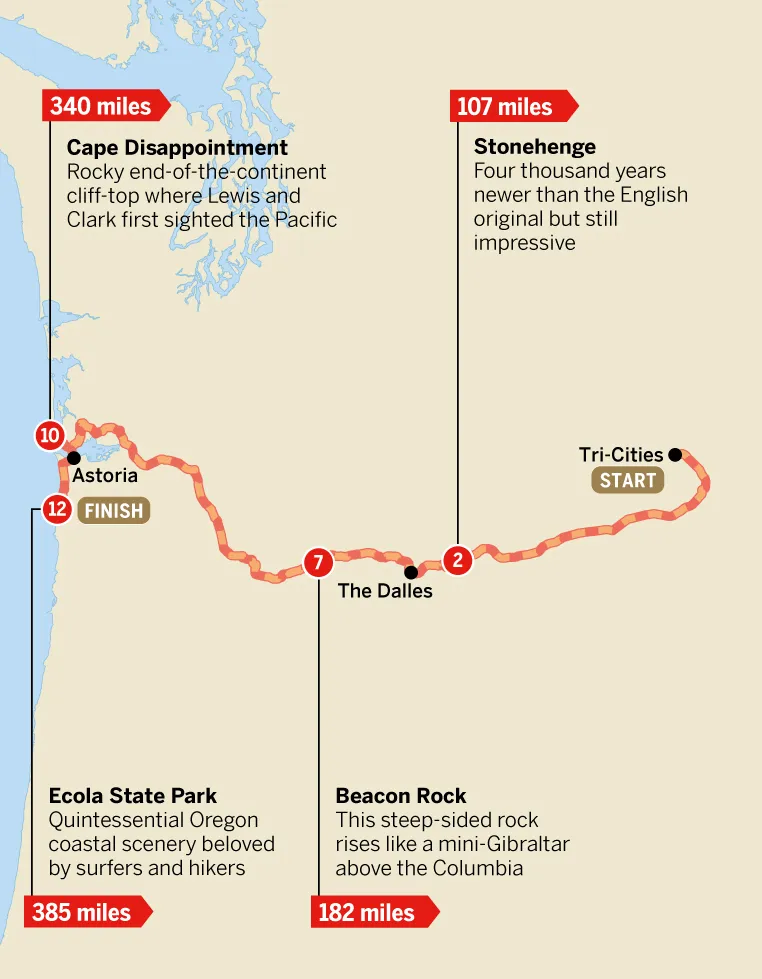
This trip’s start point has a weighty historical significance. The arrival of Lewis and Clark and the Corps of Discovery at the confluence of the Snake and Columbia Rivers on October 16, 1805, marked a milestone achievement on their quest to map a river route to the Pacific. After a greeting by 200 Indians singing and drumming in a half circle, the band camped at this spot for two days, trading clothing for dried salmon. The Sacajawea Interpretive Center(
509-545-2361; http://parks.state.wa.us/250/sacajawea; Sacajawea State Park, Pasco, WA; suggested donation $1;
10am-5pm late Mar–Nov 1;
) situated at the river confluence 5 miles southeast of present-day Pasco, relates the story of the expedition through the eyes of Sacajawea, the Shoshone Native American guide and interpreter the Corps had recruited in North Dakota.
5click here
The Drive » Head south on I-82 before switching west at the Columbia River on SR-14, aka the Lewis & Clark Hwy. Here, in dusty sagebrush country, you’ll pass a couple of minor sites – Wallula Gap, where the Corps first spotted Mt Hood, and the volcanic bluff of Hat Rock, first named by William Clark. The next stop is 107 miles from Tri-Cities.
Top of Chapter
TRIP HIGHLIGHT
2 Maryhill
Conceived by great Northwest entrepreneur and road builder Sam Hill, the Maryhill Museum of Art(
509-773-3733; www.maryhillmuseum.org; 35 Maryhill Museum Dr, WA; adult/child $9/3;
10am-5pm mid-Mar–mid-Nov) occupies a mansion atop a bluff overlooking the Columbia River. Its eclectic art collection is enhanced by a small Lewis and Clark display, while its peaceful gardens are perfect for a classy picnic punctuated by exotic peacock cries. Interpretive signs point you to fine views down the Columbia Gorge to the riverside spot (now a state park) where Meriwether Lewis and William Clark camped on October 21, 1805. The park is just one of several along this trip where you can pitch a tent within a few hundred yards of the Corps’ original camp.
Another of Hill’s creations, a life-sized unruined replica of Stonehenge(US Hwy 97), lies 2 miles to the east.
The Drive » Continue west from Maryhill on SR-14 for 5 miles to the site of the now submerged Celilo Falls.
LINK YOUR TRIP
5 Graveyard of the Pacific Tour
Lewis and Clark survived, but others didn’t. Find out about the tumultuous maritime history of southwest Washington’s coast.
11 Washington Wine Tour
After all that Lewis and Clark history you’ll need a glass of wine. Break off in the Tri-Citi...