
Lonely Planet Tibet
eBook - ePub

Lonely Planet Tibet

,
  1. English
  2. ePUB (mobile friendly)
  3. Available on iOS & Android
eBook - ePub

Lonely Planet Tibet

,

About this book

Lonely Planet: The world's leading travel guide publisher Lonely Planet Tibet is your passport to the most relevant, up-to-date advice on what to see and skip, and what hidden discoveries await you. Hike around sacred Mt Kailash, join pilgrims at the Jokhang, Tibet's holiest sanctum, or view Mt Everest unobstructed from Rongphu Monastery -all with your trusted travel companion. Get to the heart of Tibet and begin your journey now! Inside Lonely Planet's Tibet Travel Guide: Colour maps and images throughout Highlights and itineraries help you tailor your trip to your personal needs and interests Insider tips to save time and money and get around like a local, avoiding crowds and trouble spots Essential info at your fingertips - hours of operation, phone numbers, websites, transit tips, prices Honest reviews for all budgets - eating, sleeping, sight-seeing, going out, shopping, hidden gems that most guidebooks miss Cultural insights give you a richer, more rewarding travel experience - including customs, religion, history, art, architecture, literature, music, dance, landscapesCovers Lhasa, Tsang, Kham, Ngari, U, Rawok, Bayi, Tashigang, Gyantse, Shigatse, Lhatse, Tingri, Nyalam, Pomi, Ganzi, Kangding, Lithang, Bathang, Baber, Zhangmu, Gongkar, Kathmandu, Chengdu, and more The Perfect Choice: Lonely Planet Tibet, our most comprehensive guide to Tibet, is perfect for both exploring top sights and taking roads less travelled.About Lonely Planet: Since 1973, Lonely Planet has become the world's leading travel media company with guidebooks to every destination, an award-winning website, mobile and digital travel products, and a dedicated traveller community. Lonely Planet covers must-see spots but also enables curious travellers to get off beaten paths to understand more of the culture of the places in which they find themselves. eBook Features: (Best viewed on tablet devices and smartphones) Downloadable PDF and offline maps prevent roaming and data charges Effortlessly navigate and jump between maps and reviews Add notes to personalise your guidebook experience Seamlessly flip between pages Bookmarks and speedy search capabilities get you to key pages in a flash Embedded links to recommendations' websites Zoom-in maps and images Inbuilt dictionary for quick referencing Important Notice: The digital edition of this book may not contain all of the images found in the physical edition.

Frequently asked questions

Yes, you can cancel anytime from the Subscription tab in your account settings on the Perlego website. Your subscription will stay active until the end of your current billing period. Learn how to cancel your subscription.
No, books cannot be downloaded as external files, such as PDFs, for use outside of Perlego. However, you can download books within the Perlego app for offline reading on mobile or tablet. Learn more here.
Perlego offers two plans: Essential and Complete
  • Essential is ideal for learners and professionals who enjoy exploring a wide range of subjects. Access the Essential Library with 800,000+ trusted titles and best-sellers across business, personal growth, and the humanities. Includes unlimited reading time and Standard Read Aloud voice.
  • Complete: Perfect for advanced learners and researchers needing full, unrestricted access. Unlock 1.4M+ books across hundreds of subjects, including academic and specialized titles. The Complete Plan also includes advanced features like Premium Read Aloud and Research Assistant.
Both plans are available with monthly, semester, or annual billing cycles.
We are an online textbook subscription service, where you can get access to an entire online library for less than the price of a single book per month. With over 1 million books across 1000+ topics, we’ve got you covered! Learn more here.
Look out for the read-aloud symbol on your next book to see if you can listen to it. The read-aloud tool reads text aloud for you, highlighting the text as it is being read. You can pause it, speed it up and slow it down. Learn more here.
Yes! You can use the Perlego app on both iOS or Android devices to read anytime, anywhere — even offline. Perfect for commutes or when you’re on the go.
Please note we cannot support devices running on iOS 13 and Android 7 or earlier. Learn more about using the app.
Yes, you can access Lonely Planet Tibet by in PDF and/or ePUB format. We have over one million books available in our catalogue for you to explore.

Information

Publisher
Lonely Planet
Year
2019
Print ISBN
9781786573759
eBook ISBN
9781788685832

Lhasa ལྷ་ས་ 拉萨

Around Lhasa

Drepung Monastery

Nechung Monastery

Sera Monastery

Pabonka Monastery

Ganden Monastery

Drak Yerpa

Drölma Lhakhang

Shuksip Nunnery

Lhasa ལྷ་ས་ 拉萨
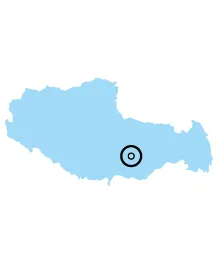
11-lhasa-loc-tib10-jpg
%0891 / POP 530,000 / ELEV 3650M

Why Go?

The centre of the Tibetan Buddhist world for over a millennium, Lhasa (ལྷ་ས་; 拉萨; Lāsà; literally the ‘Place of the Gods’) remains largely a city of wonders. Your first view of the red-and-white Potala Palace soaring above the Holy City raises goosebumps and the charming whitewashed old Tibetan quarter continues to preserve the essence of traditional Tibetan life. It is here in the Jokhang, an otherworldly mix of flickering butter lamps, wafting incense and prostrating pilgrims, and the encircling Barkhor pilgrim circuit, that most visitors first fall in love with Tibet.
These days the booming boulevards of the modern city threaten to overwhelm the winding alleyways and backstreet temples of the Tibetan old town, but it is in the latter that you should focus your time. If possible, budget a week to acclimatise, see the sights and roam the fascinating backstreets before heading off on a grand overland adventure.

When to Go

A Temperatures are comfortable from April to September, with days surprisingly warm and nights pleasantly cool. Sunlight is strong at this altitude, so always wear sunscreen.
A The major festival of Saga Dawa (spring) brings huge numbers of pilgrims to the city, and the August Shötun festival is also a major draw.
A Accommodation can be tight during the first weeks of May and October and the high-season months of July and August, when Chinese tourists flock to the city.
A Consider a winter visit (November to February) for few crowds and big accommodation discounts, but bring warm clothes.

Best Places to Eat

A Snowland Restaurant
A Woeser Zedroe Tibetan Restaurant
A Lhasa Kitchen

Best Places to Stay

A House of Shambhala
A Kyichu Hotel
A Yak Hotel
A Songtsam Choskyi Linka Lhasa

Lhasa Highlights

11-lhasa-ch-tib10-jpg
1 Barkhor Circuit Following monks, mendicants and pilgrims around this medieval pilgrim path.
2 Jokhang Temple Joining the lines of awed pilgrims at the glowing shrines of Tibet’s holiest sanctum.
3 Potala Palace Shuffling past murals and stupas in the impressive citadel of the Dalai Lamas.
4 Sera Monastery Taking in a prayer meeting or some monk-debating at this great monastic centre.
5 Ganden Monastery Taking a day trip out to this important monastery and its kora (pilgrim path).
6 Dropenling Visiting this top-notch crafts centre on a walk past the architecture and workshops of Lhasa’s old town.
7 Meru Nyingba Monastery Tracking down one of Lhasa’s most delightful off-the-beaten-track temples, located in a hidden courtyard.

History

Lhasa rose to prominence as an important administrative centre in the 7th century AD, when King Songtsen Gampo (c 618–49) moved his capital from the Yarlung Valley to Lhasa and built a palace on the site now occupied by the Potala. It was at this time that the temples of Ramoche and Jokhang were founded to house the priceless first Buddha statues brought to Tibet as the dowries of Songtsen Gampo’s Chinese and Nepali wives.
With the break-up of the Yarlung empire 250 years later, Tibet’s centre of power shifted to Sakya, Nedong (Ü) and then Shigatse (Tsang). No longer the capital, Lhasa languished in the backwaters...

Table of contents

  1. Table of Contents
  2. Preface
  3. Welcome to Tibet
  4. Tibet’s Top 20
  5. Need to Know
  6. If You Like…
  7. Month by Month
  8. Itineraries
  9. Qīnghǎi–Tibet Railway
  10. Tours & Permits
  11. Regions at a Glance
  12. Lhasa
  13. Ü
  14. Tsang
  15. Ngari
  16. Eastern Tibet
  17. Tibetan Treks
  18. Gateway Cities
  19. Understand Tibet
  20. Tibet Today
  21. History
  22. Tibetan Landscapes
  23. The People of Tibet
  24. Tibetan Buddhism
  25. Tibetan Art
  26. Food & Drink
  27. The Future of Tibet
  28. Directory A-Z
  29. Transport
  30. Health
  31. Language
  32. Behind the Scenes
  33. Our Writers