- English
- ePUB (mobile friendly)
- Available on iOS & Android
eBook - ePub
Trusted by 375,005 students
Access to over 1.5 million titles for a fair monthly price.
Study more efficiently using our study tools.
Information
Print ISBN
9781788686495
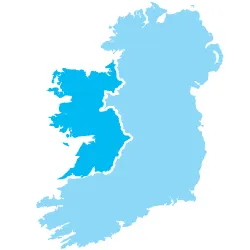
Destinations
County Galway
Ireland’s liveliest city hums through the night, while some of Ireland’s most picturesque scenery lies just outside the city limits.
Counties Mayo & Sligo
In these two counties you’ll find all of Ireland’s wild, romantic beauty but without the crowds.
County Clare
If the land is hard, Clare’s soul certainly isn’t: traditional Irish culture and music flourish here.

Street musicians performing in Galway City
JON CHICA/SHUTTERSTOCK ©
JON CHICA/SHUTTERSTOCK ©
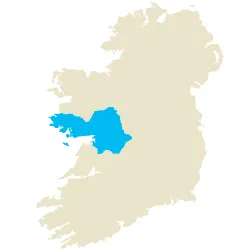
County Galway
County Galway’s exuberant namesake city is a swirl of colourful shop-lined streets, enticing old pubs, and an increasingly sophisticated food scene that celebrates local produce. And some of Ireland’s most picturesque scenery fans out from Galway’s city limits, from the breathtaking Connemara Peninsula to the wild and beautiful eroded swaths of the Aran Islands.
GALWAY CITY
Pop 79,934
Arty, bohemian Galway (Gaillimh) is one of Ireland’s most engaging cities. Brightly painted pubs heave with live music, while restaurants and cafes offer front-row seats for observing buskers and street theatre. Remnants of the medieval town walls lie between shops selling handcrafted Claddagh rings, books and musical instruments.
While it’s steeped in history, the city buzzes with a contemporary vibe, thanks in part to students, who make up around a fifth of the population. Its energy and creativity have seen it designated a European Capital of Culture for 2020.
History
From humble beginnings as the tiny fishing village Claddagh at the mouth of the River Corrib, Galway grew into an important town when the Anglo-Normans, under Richard de Burgo (also spelt de Burgh or Burke), captured territory from the local O’Flahertys in 1232. Its fortified walls were built from around 1270.
In 1396 Richard II granted a charter transferring power from the de Burgos to 14 merchant families or ‘tribes’ – hence Galway’s enduring nickname: City of the Tribes. (Each of the city’s roundabouts is named for one of the tribes.)
Galway maintained its independent status under the ruling merchant families, who were mostly loyal to the English Crown. Its coastal location encouraged a huge trade in wine, spices, fish and salt with Portugal and Spain. Its support of the Crown, however, led to its downfall; the city was besieged by Cromwell in 1651 and fell the following year. Trade with Spain declined and Galway stagnated for centuries.
The early 1900s saw Galway’s revival as tourists returned to the city and student numbers grew. In 1934 the cobbled stree...
Table of contents
- Contents
- Welcome to Galway & the West of Ireland
- Galway & the West of Ireland Map
- Galway & the West of Ireland Highlights
- Galway City Guide
- Need to Know
- Road Trips
- Destinations
- Road Trip Essentials
- Behind the Scenes
- Our Writer