This new edition explores and describes techniques of cupping in the context of TCM theory. It provides a clear and detailed set of practical guidelines to applying this technique for various common conditions, and looks closely at issues of safety, expectation and theoretical principles of action. This new edition includes new scientific research on cupping therapy and the effect on the immune system as well as new material on muscular pain, stress management and cupping therapy and sports medicine. Adedicated websitecomplements the text with video clips showing the eleven methods of cupping therapy.
DVD containing 12 video clips showing the use of cupping in practice.
Unique scienfitic research on cupping therapy and the effect on the immune system.
Cupping as a therapeutic medium is simple, safe and at the same time quite an effective treatment tool. Cupping therapy has been in practice for several thousand years. Perhaps the simplicity of cupping in application has been a major contributing factor for the cupping underuse in modern medicine, particularly during the early 20th century where complicated medical apparatus and medications were invented and introduced to the mainstream medicinal use. The earliest written evidence was by the ancient Egyptians and also by Chinese doctors. Cupping practice, however, was not limited to the above two cultures. From east to west and north to south, many civilizations adopted cupping as part of their ‘in-house’ medicine and, later, integrated cupping practice as part of their mainstream medicine (Chirali, 2007).
EARLY CUPPING METHODS (FIGS 1-1 to 1-5)
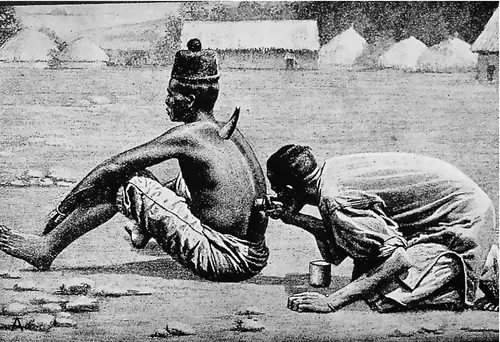
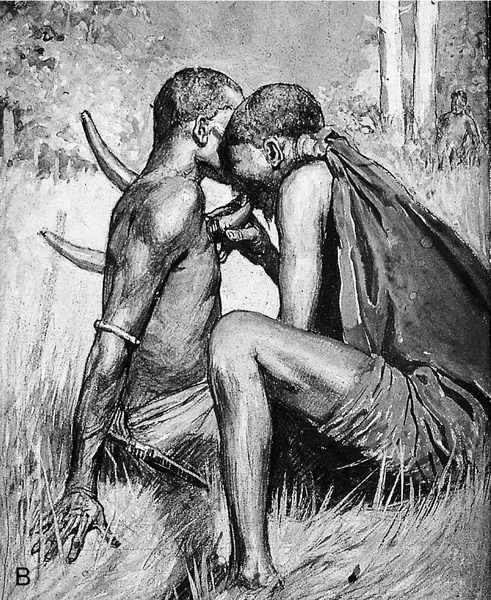
Cupping therapy has been used in China and some African countries for several thousand years. At first it was applied using cattle horn and consequently was also called ‘horn therapy’ (see Fig. 1-3). To create a negative pressure inside the horn, the cupping practitioner used his mouth to physically suck the air out from a hole on top of the horn, thus creating a negative suction inside the horn! With the introduction of bamboo, earthenware and later on the glass cups, fire was ignited to expel the air.
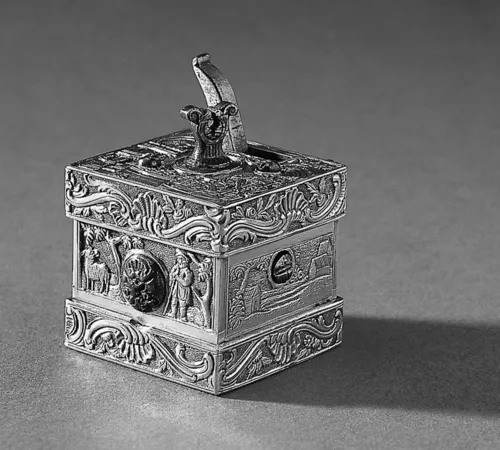
Figure 1-1 Scarificator with 13 lancets, 17th century, European. (Reproduced courtesy of the British Science Museum / Science and Society Picture Library.)
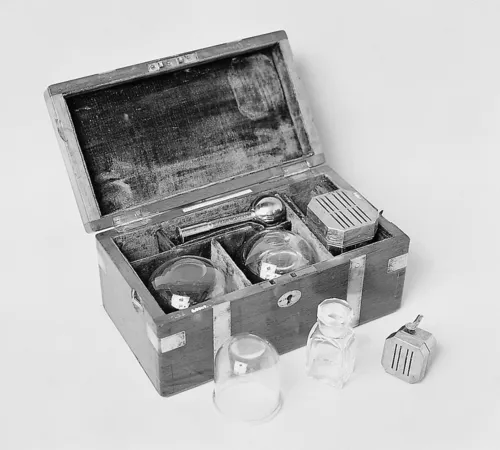
Figure 1-2 Cupping set, 1878. Cupping aimed to draw poisonous substances from the body and was popular from Roman times until the late 19th century. (Reproduced courtesy of the British Science Museum / Science and Society Picture Library.)
Figure 1-3 (A, B) An African medicine man or shaman applying the technique of cupping to a patient using animal horns; this involves drawing blood to the surface of the body. (Wellcome Institute Library, London.)
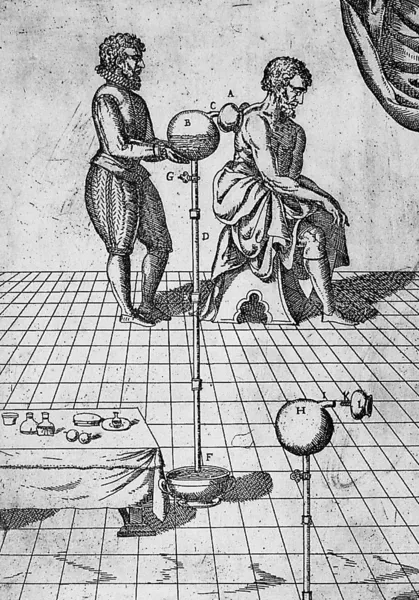
Figure 1-4 A surgeon applying the method of cupping to a patient. Etching by Brandini. (Wellcome Institute Library, London.)
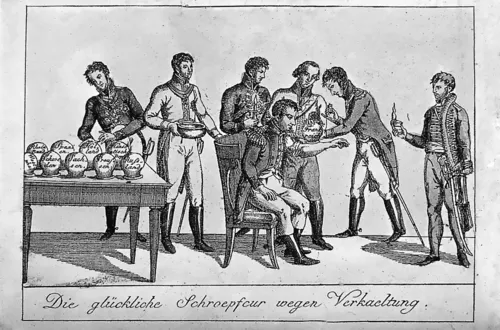
Figure 1-5 One of a group of soldiers having his arm cupped; this represents the political situation of France in relation to German states in 1820. (Wellcome Institute Library, London.)
As far as safety was concerned, the length of the horn would be the only protection afforded to the practitioner! This method is still employed in some rural developing countries for treating boils and carbuncles. Cupping was then used as an auxiliary method in traditional Chinese surgery. Later it was found to be effective in other diseases, and developed into a special therapeutic method.
The earliest record of cupping is in Bo Shu (an ancient book written on silk), which was discovered in an ancient tomb of the Han Dynasty in 1973 (Chen Bin, Dr He Chong, personal communications, 1995). Some therapeutic cupping methods were also introduced in a book by Zouhou Fang in about 28 AD (Chen Bin, Dr He Chong, personal communications, 1995). Cases of treatment of tuberculosis were recorded in Weitaimiyao in 755 AD. Three hundred years later, another ancient classic, Susen Liang Fang, recorded an effective cure for chronic cough and the successful treatment of poisonous snake bites using cupping therapy (Chen Bin, Dr He Chong, personal communications, 1995).
About 500 years ago, a famous surgeon called Wei Ke Zen Zong presented a detailed record of the cupping methods used in surgical practice (Chen Bin, Dr He Chong, private communications, 1995). Through several thousand years of accumulated clinical experience, the clinical applications of cupping have become increasingly wide. During the Jin dynasty, Ge Hong (281–341 AD), in his book A Handbook of Prescriptions for Emergencies, first mentioned the use of animal horns as a means of draining pustules (Chirali, 2007). Zhao Xueming of the Qing dynasty (1644–1911), in his Supplement to Outline of Herbal Pharmacopoeia, wrote a separate chapter on the subject under the heading ‘Fire-Jar Qi’. The original natural horn cup has been replaced by bamboo, ceramic or glass cups (some of my African patients report that horn cupping is still used today in rural Africa as the only way to expel poison from bites). Because cupping is widely used in Chinese folklore culture, the technique has been inherited by the modern Chinese clinical practitioner.
There is a saying in China: ‘acupuncture and cupping, more than half of the ills cured.’ Zhao Xue Ming, a doctor practising more than 200 years ago, compiled a book entitled Ben Cao Gang Mu She Yi, in which he describes in detail the history and origin of different kinds of cupping and cup shapes, functions and applications. In mainland China, the development of cupping therapy has been particularly rapid. In the 1950s the clinical efficacy of cupping was confirmed by further research in China and acupuncturists from the former Soviet Union, and was established as an official therapy practice in hospitals all over China. This issue substantially stimulated the development of further cupping research.
CUPPING IN THE WESTERN WORLD AND THE MIDDLE EAST (HEJAMA / HIJAMA)
Just how popular was cupping and to what extent was it used in the West? Were the applications and conditions similar to those in ancient China? To find an answer to these questions, I have examined a wealth of medical information and found useful data regarding cupping therapy in both ancient and contemporary clinical practice around the world. In particular, the Wellcome Institute for the History of Medicine in London has been an invaluable source.
‘Cupping is an art’ wrote the London cupper Samuel Bayfield in 1823, ‘the value of which every one can appreciate who has had opportunities of being made acquainted with its curative power by observing its effects on the person of others, or by realising them in his own.’ For thousands of years all medical authors have distinguished two forms of cupping: Dry and Wet. In Dry cupping no blood is actually removed from the body. A cup is drained of air and applied to the skin, causing the skin to tumefy (swell). In Wet cupping the process begins with Dry cupping and is followed by several incisions being made in the skin, in order to collect blood.
In 1826, the surgeon Charles Kennedy wrote:
The art of Cupping has been so well known, and the benefits arising from it so long experienced, that it is quite unnecessary to bring forward testimonials in favour of what has received not only the approbation of modern times, but also the sanction of the remotest antiquity.
Am...
Table of contents
Cover image
Title page
Table of Contents
Dedication
Copyright
Contributors
Foreword
Preface to the First Edition
Preface to the Second Edition
Preface to the Third Edition
Acknowledgements
Glossary
Acupuncture/Acupressure Points
1. History of Cupping Therapy
2. Cupping’s Folk Heritage: People in Practice
3. Cupping in Buddhist Medicine
4. Benefits of Cupping Therapy
5. Preparing the Patient for Cupping Treatment
6. Complementary and Alternative Medicine (CAM) Therapies that Can Safely Introduce Cupping to their Treatment Protocol
7. The Cupping Procedure
8. What to Expect During and after Cupping Therapy
9. Twelve Methods of Cupping Therapy
10. Cupping Therapy on Children and Adults
11. Cosmetic Cupping Therapy
12. Cupping Therapy in the Treatment of Common Disorders
13. Treating Miscellaneous Disorders with Cupping Therapy
14. Sports Injuries
15. Myofascial Trigger Points Cupping Therapy
16. Cupping Therapy Evidence-Based Research
17. Frequently Asked Questions and Precautions and Contraindications
Index
Frequently asked questions
Yes, you can cancel anytime from the Subscription tab in your account settings on the Perlego website. Your subscription will stay active until the end of your current billing period. Learn how to cancel your subscription
No, books cannot be downloaded as external files, such as PDFs, for use outside of Perlego. However, you can download books within the Perlego app for offline reading on mobile or tablet. Learn how to download books offline
Perlego offers two plans: Essential and Complete
Essential is ideal for learners and professionals who enjoy exploring a wide range of subjects. Access the Essential Library with 800,000+ trusted titles and best-sellers across business, personal growth, and the humanities. Includes unlimited reading time and Standard Read Aloud voice.
Complete: Perfect for advanced learners and researchers needing full, unrestricted access. Unlock 1.5M+ books across hundreds of subjects, including academic and specialized titles. The Complete Plan also includes advanced features like Premium Read Aloud and Research Assistant.
Both plans are available with monthly, semester, or annual billing cycles.
We are an online textbook subscription service, where you can get access to an entire online library for less than the price of a single book per month. With over 1.5 million books across 990+ topics, we’ve got you covered! Learn about our mission
Look out for the read-aloud symbol on your next book to see if you can listen to it. The read-aloud tool reads text aloud for you, highlighting the text as it is being read. You can pause it, speed it up and slow it down. Learn more about Read Aloud
Yes! You can use the Perlego app on both iOS and Android devices to read anytime, anywhere — even offline. Perfect for commutes or when you’re on the go. Please note we cannot support devices running on iOS 13 and Android 7 or earlier. Learn more about using the app
Yes, you can access Traditional Chinese Medicine Cupping Therapy - E-Book by Ilkay Z. Chirali in PDF and/or ePUB format, as well as other popular books in Medicine & Alternative & Complementary Medicine. We have over 1.5 million books available in our catalogue for you to explore.