Climate change, combined with the rapid and often unplanned urbanisation trends, is associated with a rising trend in the frequency and severity of disasters triggered by natural hazards. In order to face the impacts of such threats, it is necessary to have an appropriate Disaster Risk Assessment (DRA). Traditional DRA approaches for disaster risk reduction (DRR) have focused mainly on the hazard component of risk, with little attention to the vulnerability and the exposure components. To address this issue, this dissertation's main objective is to develop and test a disaster risk modelling framework that incorporates socioeconomic vulnerability and the adaptive nature of exposure associated with human behaviour in extreme hydro-meteorological events in the context of SIDS. To achieve the objective, an Adaptive Disaster Risk Assessment (ADRA) framework is proposed. ADRA uses an index-based approach (PeVI) to assess the socioeconomic vulnerability using three components: susceptibility, lack of coping capacities, and lack of adaptation. Furthermore, ADRA explicitly incorporates the exposure component using two approaches; first, a logistic regression model was built using the actual evacuation rates observed during Hurricane Irma, and second, an Agent-based model is used to simulate how households change their exposure levels in relation to different sources of information
eBook - ePub
Adaptive Disaster Risk Assessment
Combining Multi-Hazards with Socioeconomic Vulnerability and Dynamic Exposure
- 312 pages
- English
- ePUB (mobile friendly)
- Available on iOS & Android
eBook - ePub
Adaptive Disaster Risk Assessment
Combining Multi-Hazards with Socioeconomic Vulnerability and Dynamic Exposure
About this book
Trusted by 375,005 students
Access to over 1 million titles for a fair monthly price.
Study more efficiently using our study tools.
Information
Subtopic
Environmental ScienceIndex
Biological Sciences1
Introduction
1.1 Motivation
In a changing climate, disasters triggered by natural hazard events such as hurricanes, storm surges, and flash floods are projected to increase in severity and in frequency (Hoeppe, 2016; IPCC, 2014 ). Moreover, in addition to a changing climate, the rapid and often unplanned expansion of urban areas and in particular those located close to coastal regions is also exposing more people and economic assets to disasters triggered by natural hazards, and it is projected that more disasters associated with the expansion of urban coastal cities will continue in the near future (Harrison and Williams, 2016; Kundzewicz et al., 2013; Sterzel et al., 2020). This combination of urbanisation trends, increased numbers of natural hazard events and demographic growth are creating the perfect scenario to have more frequent and more severe disasters.
Changes in climate are of special importance in the context of Small Island Developing States (SIDS), because SIDS are especially vulnerable to the associated impacts of climate change due to their location, fragile economies with limited diversification, restricted resources, and more vulnerable habitats (CRED-UNISDR, 2015 ; Robinson, 2017; Turvey, 2007). Impacts of climate change on SIDS can turn into significant loss of life and damage to property and infrastructure, and an easily damage the entire economy of a small country (UNFCCC, 2005 ).
According with the Insurance Information Institute (2019), there is a rising trend regarding global weather-related disasters and their associated losses (Figure 1.1). In addition, as reported in (CRED-UNISDR, 2015 ), floods and storm have been the main accountable source of economic impact (Figure 1.2 (a)), and also amongst the most catastrophic in terms of loss of life (Figure 1.2 (b)). Hence, adaptation and mitigation of the effects of climate change in coastal urban areas and of SIDS is necessary for the sustainability of these regions and to minimise the losses associated with disasters.

Figure 1.1 Global weather-related natural catastrophes by disaster type and associated losses (1980-2018). Based on data from the Insurance Information Institute (2019).

Figure 1.2 Impacts of disasters triggered by natural hazards (1995-2015). (a) Recorded economic damage by disaster type (USD). (b) Number of deaths by disaster type. Source: (CRED-UNISDR, 2015 ).
Implementation of climate-change adaptation measures should include planning programs, such as community-based development strategies, disaster risk assessment, assessment of the critical physical, social, economic, and environmental issues in combination with raising awareness, and communicating existing and future risks to local communities (Nurse et al., 2014; Robinson, 2017). In that regard, disaster risk management (DRM) has been the pillar to address or mitigate the impacts of weather-related disasters. The next section describes current approaches and defines DRM as well as identifying some of the gaps in this field.
1.2 Disaster Risk Management – DRM
1.2.1 Definitions
Disaster risk management is defined as a method to identify, assess and reduce risk through a series of strategies, policies and measures that aim to promote improvement in disaster preparedness, response and recovery (IPCC, 2012b ). It is widely accepted by researchers and policy makers that the first step towards a sustainable DRM strategy is the proper assessment of the disaster risk (Samuels et al., 2009). In this thesis disaster risk assessment (DRA) is considered the first and an essential step in DRM, hence both terms DRM and DRA will be used interchangeably throughout this document.
According to UNDRR (2017), DRA is defined as “A qualitative or quantitative approach to determine the nature and extent of disaster risk by analysing potential hazards and evaluating existing conditions of exposure and vulnerability that together could harm people, property, services, livelihoods and the environment on which they depend.”
From the definition presented above, it is necessary to adopt and tailor some definitions to the scope of this thesis. According to IPCC (2012a) , disaster risk can be defined as the potential disruption of the normal functioning of a society or community with possible consequences for loss of life, injury, or destruction or damage of infrastructure, which can occur to a society in a specific period of time. In a technical sense, disaster risk is defined as the combination of three elements: hazard, exposure and vulnerability (Figure 1.3).
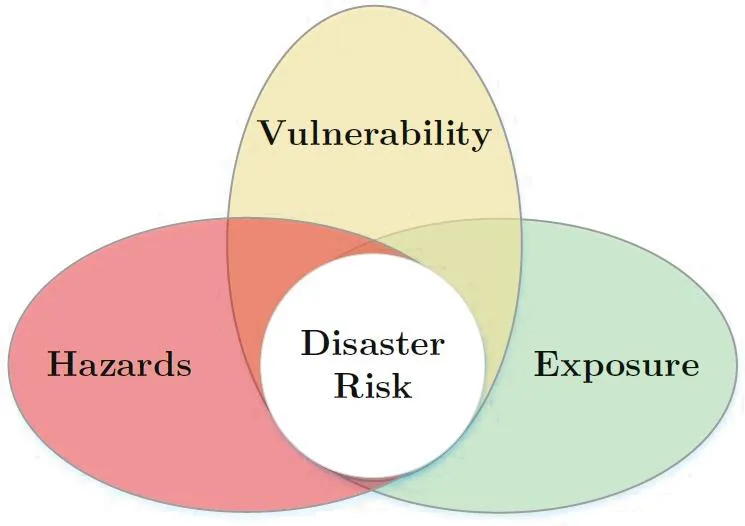
Figure 1.3 Elements of risk. *Adapted from (IPCC, 2012b ).
In the context of this research, the term hazards refers to the possible future occurrence of natural or human-induced physical events that may have adverse effects on vulnerable and exposed elements (Birkmann, 2006); exposure refers to the inventory of elements (people and/or goods) in an area in which the hazardous events may occur (Cardona et al., 2012); and vulnerability refers to the propensity of exposed elements such as human beings, their livelihoods, and assets to suffer adverse effects when being exposed to and impacted by hazard events (Birkmann, 2006).
1.2.2 DRM Approaches
Due to the very nature of disasters and the elements that compose disaster risk, DRA is not a fixed science; instead, it is a method that is in constant evolution based on new concepts and understanding of the different elements that constitute it (Cardona et al., 2012). Traditional methods of disaster risk assessment in water-related events have mainly focused on the natural and technical roots of risk, the focus has been on reducing the likelihood of the hazard to cause an impact through physical and structural defences, for which the hazard component is the centre (Sayers et al., 2013), and as such these methods are limited in comparison to current theories. Traditional approaches evaluate the system by looking at the parts and linearly combining these or simply assessing the individual components without any real integration (Vojinović, 2015). These conventional methods are known as Integrated Flood Risk Management approaches (PEARL, 2016 ; Vojinović and Abbott, 2012).
However, there are also other roots that need to be taken into account, such as social, economic and technological roots that are better suited to measuring the vulnerability and exposure components. A better alternative when dealing with DRA is a holistic risk assessment, which looks at risk as a whole, looking into the components but also seeking to understand the interactions, interrelatedness and interdependences between different kinds of processes or parts of the whole (Aerts et al., 2018; Cardona et al., 2012; Vojinović and Abbott, 2012).
1.2.3 DRM Gaps and Requirements
Traditional DRM approaches have failed to address risk analysis from a holistic point of view. Of the three elements that compose risk, hazard modelling can be considered to be the technical component; it is also the most studied one, as it is relatively easier to undertake in comparison with the other elements of disaster risk (Birkmann et al., 2013). In contrast, current vulnerability and exposure assessments require a more holistic approach (Cardona et al., 2012).
Vulnerability Assessment
There are a huge number of vulnerability assessments to natural hazards in the literature. Nguyen et al. (2016) present an extensive review of 50 studies on the use of vulnerability indices associated with the impacts of climate change on coastal areas across a range of hazards. However, Nguyen et al. (2016) concluded that there is a lack of standardisation of concepts and methods to assess vulnerability, making them difficult to compare for different areas; they call for the adoption of a consistent and standard methodology and justify pursuing indicator-based vulnerability assessments. The call for the use of indexes to have a consistent set of metrics to assess vulnerability is not new; similar recommendations are als...
Table of contents
- Cover
- Half Title
- Title Page
- Copyright Page
- Acknowledgments
- Summary
- Samenvatting
- Contents
- 1. Introduction
- 2. Capturing Elements Of Vulnerability, Exposure And Risk
- 3. Socioeconomic Vulnerability Assessment in SIDS
- 4. Multi-Hazard Modelling
- 5. Assessing Exposure To Hurricanes using Evacuation Behaviour
- 6. Agent-Based Models for Water-Related Disaster Risk Management
- 7. Dynamic Exposure Assessment Using ABM
- 8. ADRA -Adaptive Disaster Risk Assessment
- 9. A Web-Based Application for Emergency Management
- 10. Outlook
- References
- APPENDIX A. Household survey – Face-to-face interview
- APPENDIX B. Vulnerability index for each neighbourhood
- APPENDIX C. Review of evacuation predictors
- APPENDIX D. List of papers used in the literature review of ABM for WR-DRM
- APPENDIX E. ID Neighbourhoods - VROMI
- APPENDIX F. Attributes table for shelter management
- List of Acronyms
- List of Tables
- List of Figures
- About the Author
- List of publications
Frequently asked questions
Yes, you can cancel anytime from the Subscription tab in your account settings on the Perlego website. Your subscription will stay active until the end of your current billing period. Learn how to cancel your subscription
No, books cannot be downloaded as external files, such as PDFs, for use outside of Perlego. However, you can download books within the Perlego app for offline reading on mobile or tablet. Learn how to download books offline
Perlego offers two plans: Essential and Complete
- Essential is ideal for learners and professionals who enjoy exploring a wide range of subjects. Access the Essential Library with 800,000+ trusted titles and best-sellers across business, personal growth, and the humanities. Includes unlimited reading time and Standard Read Aloud voice.
- Complete: Perfect for advanced learners and researchers needing full, unrestricted access. Unlock 1.4M+ books across hundreds of subjects, including academic and specialized titles. The Complete Plan also includes advanced features like Premium Read Aloud and Research Assistant.
We are an online textbook subscription service, where you can get access to an entire online library for less than the price of a single book per month. With over 1 million books across 990+ topics, we’ve got you covered! Learn about our mission
Look out for the read-aloud symbol on your next book to see if you can listen to it. The read-aloud tool reads text aloud for you, highlighting the text as it is being read. You can pause it, speed it up and slow it down. Learn more about Read Aloud
Yes! You can use the Perlego app on both iOS and Android devices to read anytime, anywhere — even offline. Perfect for commutes or when you’re on the go.
Please note we cannot support devices running on iOS 13 and Android 7 or earlier. Learn more about using the app
Please note we cannot support devices running on iOS 13 and Android 7 or earlier. Learn more about using the app
Yes, you can access Adaptive Disaster Risk Assessment by Neiler Medina Pena in PDF and/or ePUB format, as well as other popular books in Biological Sciences & Environmental Science. We have over one million books available in our catalogue for you to explore.