- 128 pages
- English
- ePUB (mobile friendly)
- Available on iOS & Android
eBook - ePub
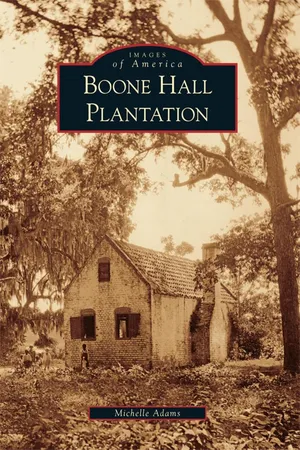
Boone Hall Plantation
About this book
Boone Hall Plantation is one of America's oldest working plantations, continually growing crops for over three centuries.
In 1681, Boone Hall Plantation began its long history in the Lowcountry. From the Boone family through the McRaes, the plantation's residents, black and white, all left a significant imprint upon the land as the plantation survived two wars and became the longest running brickyard in the area.
As a center of tourism, Boone Hall embodies the romance of the South while providing the resources necessary to understand the network of lives that has inhabited the plantation for over 300 years. The plantation is tightly linked with the community and draws upon that relationship in its many educational programs. Numerous festivals are celebrated at the plantation, including the Strawberry Festival and Happy Jack's Pumpkin Patch, and many seek the unique landscape for their social gatherings. Through these relationships and events, Boone Hall will endure well into the future.
Trusted by 375,005 students
Access to over 1.5 million titles for a fair monthly price.
Study more efficiently using our study tools.
Information
Three
THE STONES REBUILD
The Horlbecks sold the Boone Hall property in 1902 but retained the timber rights; John S. Horlbeck leased the timber rights to the Dorchester Land and Timber Company for five years. The company was allowed to cut any oak and pine trees measuring 10 inches or more in diameter except for the oaks and any ornamental trees near the house. After the original buyer was foreclosed, the property was returned to the Horlbecks. Then the Horlbecks sold the property to the South Atlantic Pecan Company in 1912, but the property was also returned to the Horlbecks in 1916 after the company was unable to pay the mortgage. John S. Horlbeck died in 1916, leaving his son and daughter in charge of his estate.
The Horlbeck family finally sold the property to Thomas and Alexandra Stone in 1935. The Stones were from the North and had driven through Charleston where they stopped at a roadside pecan seller. They were intrigued with the man’s story and became convinced that they could become successful at growing pecans. They scoured the area, looking for just the right plantation. After viewing many up and down the coast, the Stones purchased Boone Hall Plantation in 1935. They immediately set their plans into full swing, hiring new staff and laborers to pull down the old house, erect the current brick structure, and prepare the fields for planting. Thomas Stone kept a detailed scrapbook of these events, from which many of the pictures and captions for this book were taken. William Seabrook and his son, Bill, ran the farming aspect of the plantation, while Charlie Schroeder oversaw the financials and the selling of the produce.
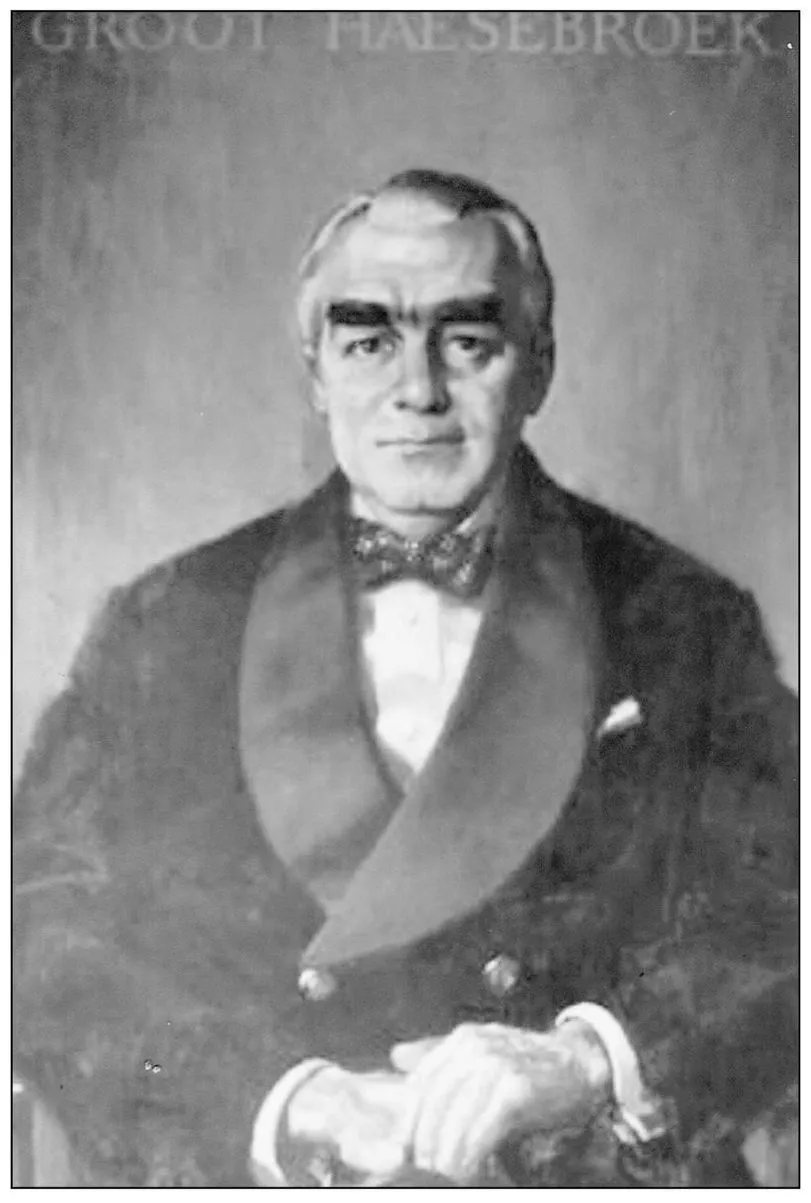
As a young diplomat, Thomas Stone once spent a crossing from New York to London playing backgammon with Winston Churchill. They played daily, and by the end of the journey, Churchill had lost £50 to Stone. Later, upon Stone’s request, a signed photograph arrived from Churchill along with a note stating there was no way he could forget the young Canadian who had won £50 from him. (Courtesy of Ellen Stone Devine.)
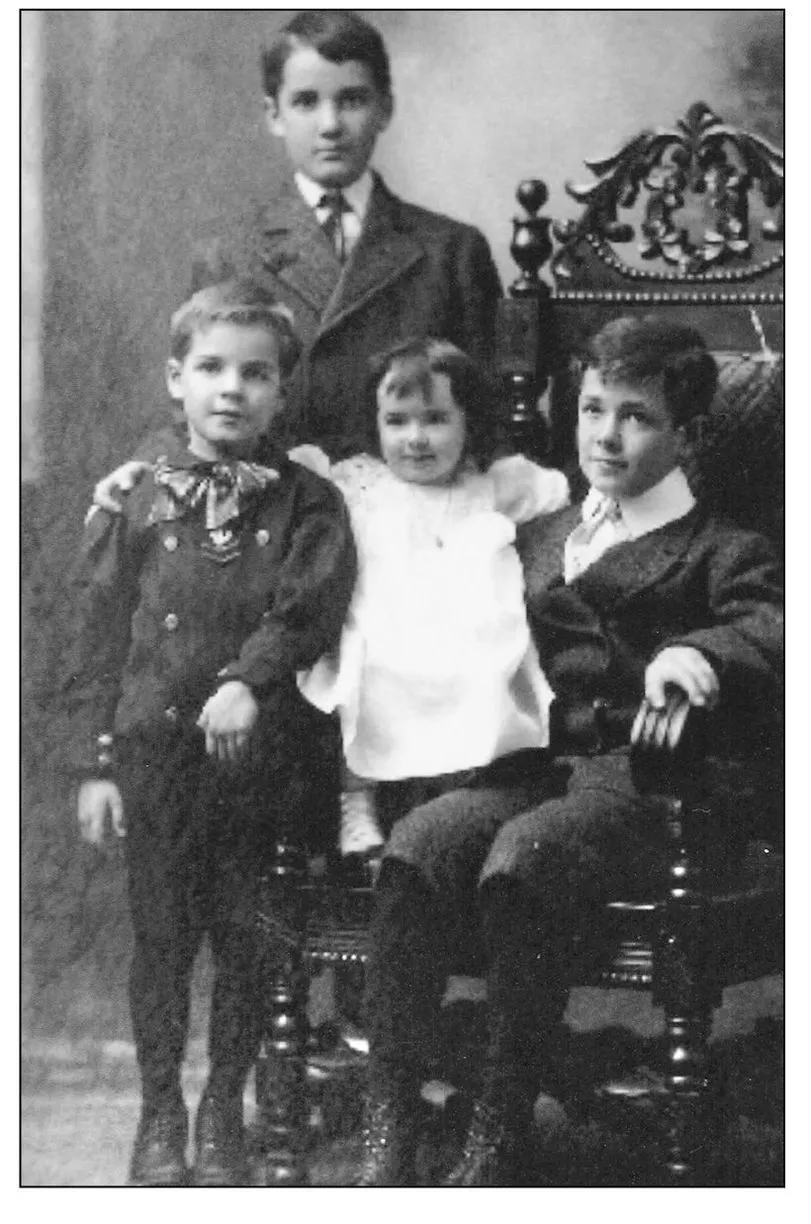
This picture is from around 1907 and shows, from left to right, Thomas Stone (standing) with his siblings John, Elizabeth, and Robert. He was the oldest child of Flora Maude Campbell Stone and Spencer Stone. Thomas was born in Chatham, Ontario, and attended school in Ontario and Paris. He received his degree from the University of Toronto. (Courtesy of Ellen Stone Devine.)

Stone was the Canadian ambassador to exiled governments, including France, Belgium, and Holland during World War II. Afterwards, he was the Canadian ambassador to Sweden and then Holland. This photograph reflects Stone’s status in Europe. He is shown on the left next to Queen Elizabeth II of the United Kingdom and her husband, His Royal Highness Prince Philip, Duke of Edinburgh. Stone’s duties as ambassador took him from Mexico to Europe throughout his career. (Courtesy of Ellen Stone Devine.)
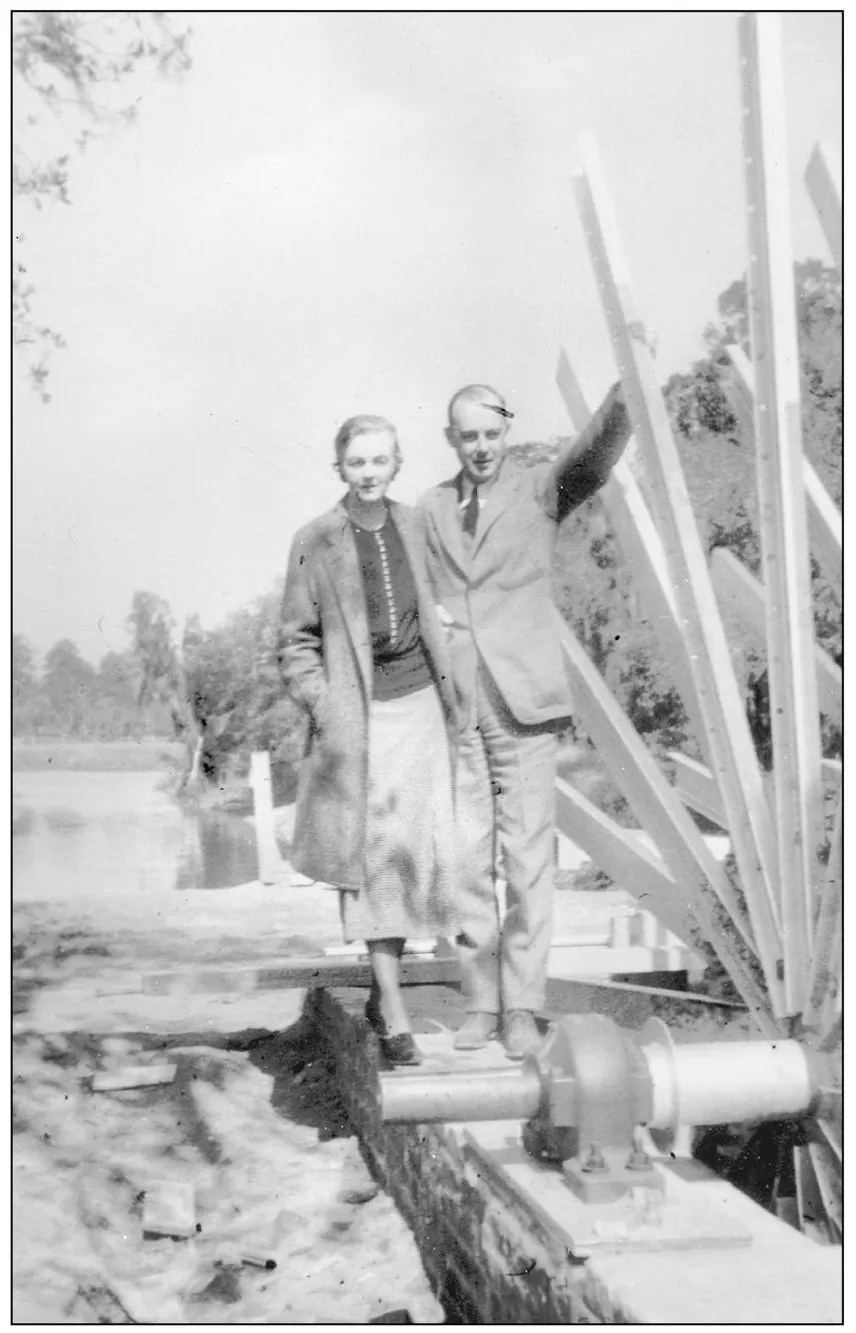
In 1935, Thomas and his wife, Alexandra, (pictured) purchased and restored Boone Hall. After first becoming intrigued with pecan production in the Charleston area, the Stones saw several plantations in the area that were for sale. The Stones ultimately decided upon Boone Hall and immediately set to work clearing the fields and hiring new workers. (Courtesy of the South Carolina Historical Society.)

On October 7, 1395, Thomas Stone wrote, “This time we remained in Charleston about ten days, Alex joining us four days after our arrival. During these ten days we did not once stop thinking about plantations.... Alex favoured Boone Hall: I favoured Dixie. Boone Hall finally won and as I write . . . I am more pleased than ever that it did. We paid for it and took title on July 5th.” (Courtesy of the South Carolina Historical Society.)

Stone continued, “The old building started to come down, trees came down, we speeded up work on Wampancheone, commenced work on the roads, and the whole place generally became a hive of activity. We purchased a Case tractor, harrow plough, harrow, mower, and rake, two horses and two mules. The farm work got immediately under way and now the main ditches are almost cleared. Last week our payroll was 56 men.” (Courtesy of the South Carolina Historical Society.)

The Stones were able to quickly renovate and move into an existing house on the plantation. They named the building Wampancheone, and it was used by the Stones as their main residence throughout the remaining part of 1935 and 1936. After that, the Stones would use this building for plantation...
Table of contents
- Title Page
- Copyright Page
- Table of Contents
- ACKNOWLEDGMENTS
- INTRODUCTION
- One - THE BOONES
- Two - THE HORLBECKS
- Three - THE STONES REBUILD
- Four - FARMING
- Five - THE LOCAL COMMUNITY
- Six - BOONE HALL CONTINUES ON
Frequently asked questions
Yes, you can cancel anytime from the Subscription tab in your account settings on the Perlego website. Your subscription will stay active until the end of your current billing period. Learn how to cancel your subscription
No, books cannot be downloaded as external files, such as PDFs, for use outside of Perlego. However, you can download books within the Perlego app for offline reading on mobile or tablet. Learn how to download books offline
Perlego offers two plans: Essential and Complete
- Essential is ideal for learners and professionals who enjoy exploring a wide range of subjects. Access the Essential Library with 800,000+ trusted titles and best-sellers across business, personal growth, and the humanities. Includes unlimited reading time and Standard Read Aloud voice.
- Complete: Perfect for advanced learners and researchers needing full, unrestricted access. Unlock 1.5M+ books across hundreds of subjects, including academic and specialized titles. The Complete Plan also includes advanced features like Premium Read Aloud and Research Assistant.
We are an online textbook subscription service, where you can get access to an entire online library for less than the price of a single book per month. With over 1.5 million books across 990+ topics, we’ve got you covered! Learn about our mission
Look out for the read-aloud symbol on your next book to see if you can listen to it. The read-aloud tool reads text aloud for you, highlighting the text as it is being read. You can pause it, speed it up and slow it down. Learn more about Read Aloud
Yes! You can use the Perlego app on both iOS and Android devices to read anytime, anywhere — even offline. Perfect for commutes or when you’re on the go.
Please note we cannot support devices running on iOS 13 and Android 7 or earlier. Learn more about using the app
Please note we cannot support devices running on iOS 13 and Android 7 or earlier. Learn more about using the app
Yes, you can access Boone Hall Plantation by Michelle Adams in PDF and/or ePUB format, as well as other popular books in History & Architecture General. We have over 1.5 million books available in our catalogue for you to explore.