The small rural community of Bonita is nestled in the fertile valley of the Sweetwater River. For over a century, families from nearby San Diego and Chula Vista have built secluded homes on large lots carved from the pioneer ranches that emerged in the 1870s on Rancho de la Nacion. Ulysses S. Grant Jr. and the Marstons and Allens built homes designed by architects such as Irving Gill and William S. Hebbard. They relished the rural equestrian lifestyle of their valley, and resisted the modernization that began after World War II with highways, shopping centers, and subdivisions.
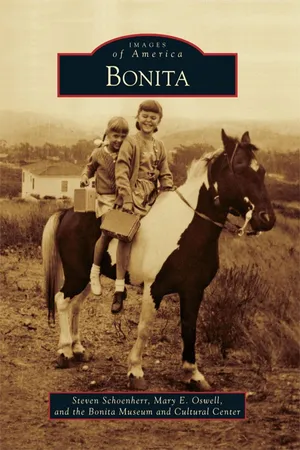
- 128 pages
- English
- ePUB (mobile friendly)
- Available on iOS & Android
eBook - ePub
Bonita
About this book
Trusted by 375,005 students
Access to over 1.5 million titles for a fair monthly price.
Study more efficiently using our study tools.
Information
Seven
LIFE IN THE BELOVED VALLEY
Gloria Esterbloom called Bonita her “beloved valley” when she wrote about her life on Esterbloom Hill above Willow Street on the north side of the valley. Although the population was small when she came to the valley in 1910 at age 14, she held fond memories of what she called the “simple country life” of a close-knit community. In the 1920s and 1930s, orchards and ranches would be developed by those who later would be called the old-timers. Fred Higgins and Albert Campbell started in the Keen Valley. Charles Favel, Clarence Bevel, and the Margaret Clemmens family would settle out east on the San Miguel Road. DeWitt Williams, Charles Scott, William Dolan, and Jesse Carne would build ranches along Sweetwater Road and around the old Bonnie Brae ranch. Ed Burnell, George Norton, and the Pappas family from Greece would settle on Bonita Mesa in the west valley. The homes built by these families were simple and utilitarian. Mary Allen and her husband, Sam Sherman, hired local carpenters to build their redwood Craftsman house on Bonita Mesa. Cliff May designed four buildings in the valley in the 1930s when he was developing the California ranch house style. May was a descendant of the Estudillos, who built the classic adobe ranch house in Old Town San Diego in 1835 that was restored in 1909 by Hazel Waterman for its new owner, John D. Spreckels. Waterman gave her blueprints to Cliff May, and he sought to replicate the old ranch house style. In Bonita from 1934 to 1936, he built the Dittenhaver, Whelan, and Stephens homes and the Sweetwater Woman’s Club house. The Woman’s Club changed during this era as the status of women changed in the nation with suffrage and new opportunities. Led by suffragette Ella B. Allen and Olive Norton, who was the first woman elected to the school board in 1921, they formed committees to pave Bonita Road and turned the old Bonita school into a community center. The beloved valley may have been rural and simple, but the people were builders of a dynamic community.
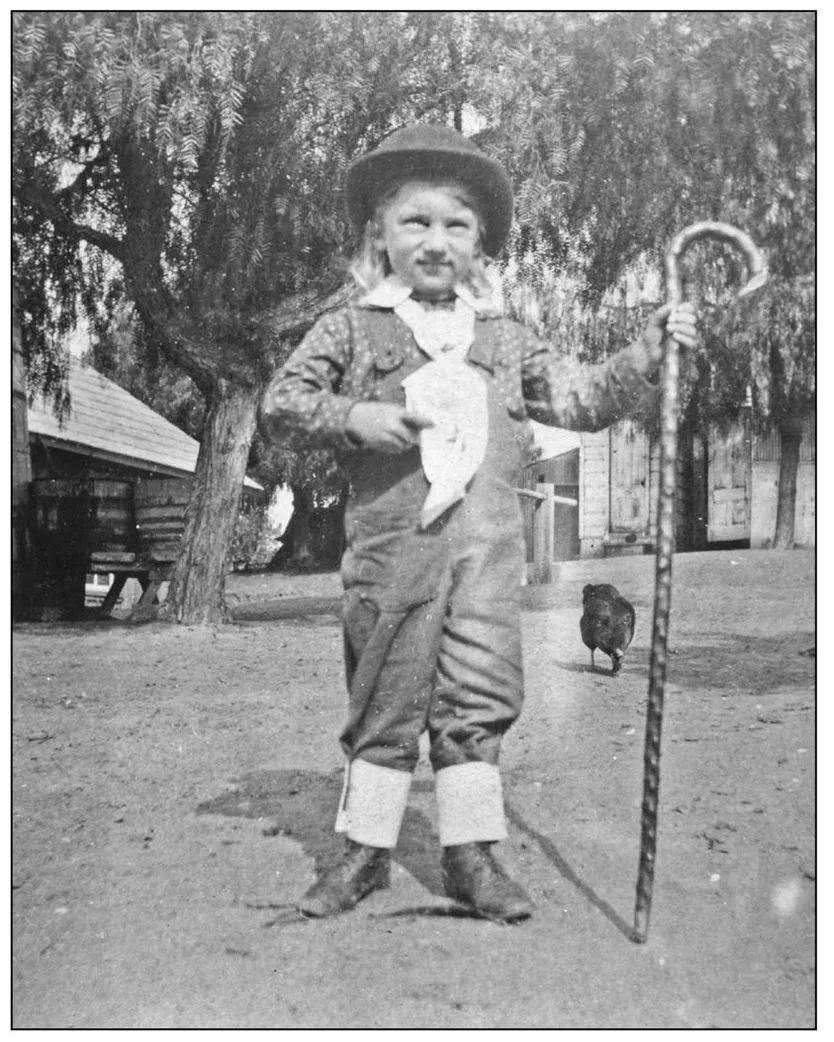
Fred Higgins (no relation to Hiram M. Higgins) was born in England and came to America at age one in 1899 with his mother, Bertha E. Higgins, to join his father, Charles Higgins, who had found a job in Bonita on the NC&O Railroad. Charles bought a lemon ranch in the Keen Valley, and Fred grew up on this ranch where, at age 4, he posed for this picture.

Fred is shown in a carriage on Revolucion Avenue in Tijuana in 1904, seated between his father, Charles (right), and a Mr. Parsonage of Sutton-Codfield, England, with their wives in back. Tijuana was a favorite day-trip destination for Americans living near the border before the revolutions of 1910–1911 made border crossing much more dangerous.

Horse riding and racing were popular in the South Bay. There were several racetracks along the border in Tijuana and Siempre Viva. Ralph Granger built the Sweetwater Race Track along the southern edge of National City, and in this photograph, Fred Higgins is racing a sulky at this track in 1912 behind his horse named Prince.
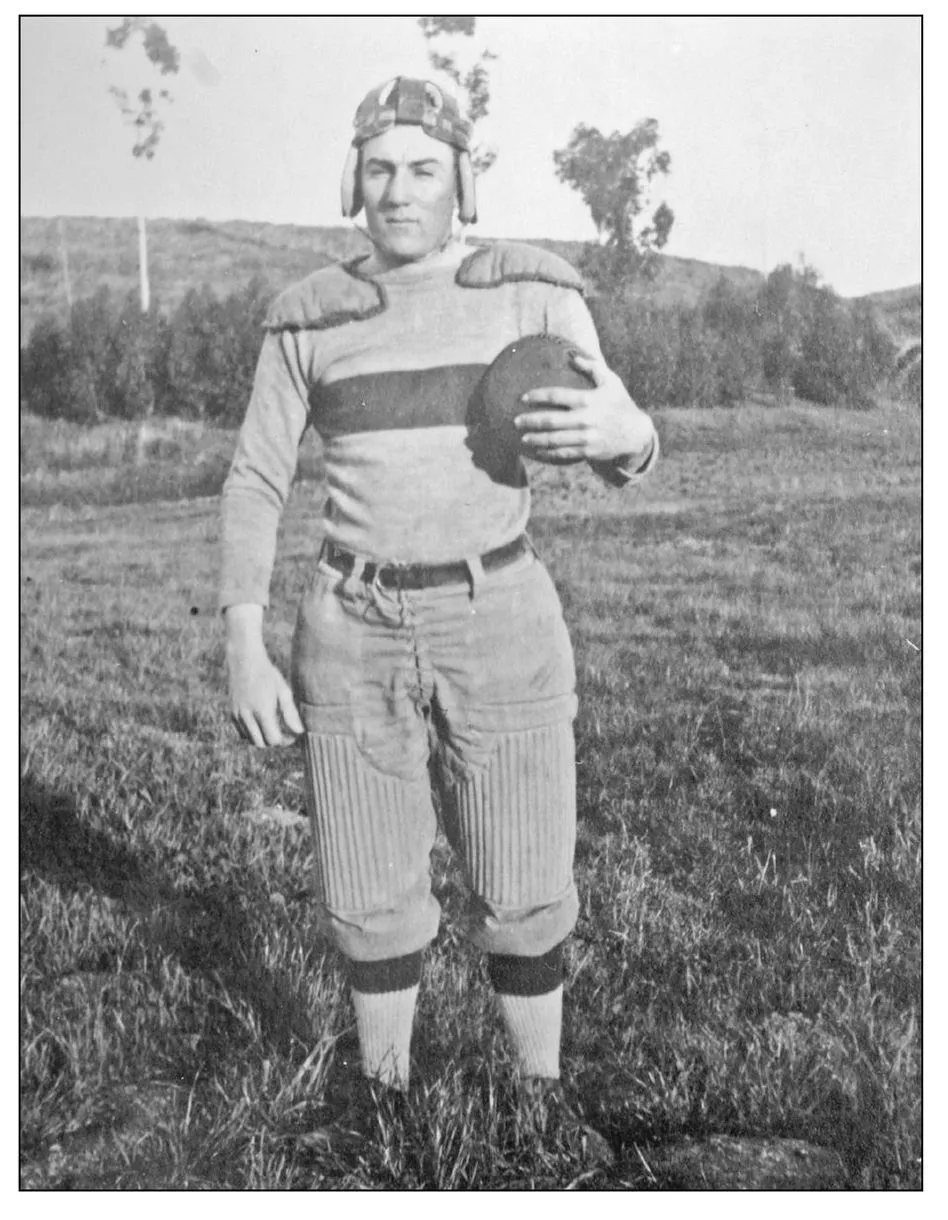
Fred Higgins played football at National City High School and in this picture wears his uniform on his Keen Valley ranch. He joined the army in World War I but did not go overseas or see any action. His mother was a founder of the Sweetwater Woman’s Club, which served as a Red Cross Auxiliary during the war.

After the 1916 flood destroyed the NC&O Railroad, the only transportation in and out of the valley were the dirt roads west into Chula Vista and National City, southeast by Otay Lakes Road to Campo and El Centro, and northeast by Sweetwater Road to Spring Valley. Fred Higgins began a transport service in 1921 with this Republic truck.

Fred Higgins (right) stands with a fellow worker in 1923 ready to haul hay in his Republic truck. The sign on the side reads “Higgins Sweetwater Valley Truck Line and Intermediate Points Daily Service Phone Nati’l 137 W....
Table of contents
- Title Page
- Copyright Page
- Dedication
- Table of Contents
- ACKNOWLEDGMENTS
- INTRODUCTION
- One - THE SWEETWATER VALLEY
- Two - LAND AND TOWN COMPANY
- Three - SWEETWATER FRUIT COMPANY
- Four - BONITA’S STORES
- Five - FLOOD OF 1916
- Six - SCHOOLS AND CHURCHES
- Seven - LIFE IN THE BELOVED VALLEY
- Eight - DAIRIES AND HORSES
- Nine - MODERN MANORS
- Ten - BONITAFEST
Frequently asked questions
Yes, you can cancel anytime from the Subscription tab in your account settings on the Perlego website. Your subscription will stay active until the end of your current billing period. Learn how to cancel your subscription
No, books cannot be downloaded as external files, such as PDFs, for use outside of Perlego. However, you can download books within the Perlego app for offline reading on mobile or tablet. Learn how to download books offline
Perlego offers two plans: Essential and Complete
- Essential is ideal for learners and professionals who enjoy exploring a wide range of subjects. Access the Essential Library with 800,000+ trusted titles and best-sellers across business, personal growth, and the humanities. Includes unlimited reading time and Standard Read Aloud voice.
- Complete: Perfect for advanced learners and researchers needing full, unrestricted access. Unlock 1.5M+ books across hundreds of subjects, including academic and specialized titles. The Complete Plan also includes advanced features like Premium Read Aloud and Research Assistant.
We are an online textbook subscription service, where you can get access to an entire online library for less than the price of a single book per month. With over 1.5 million books across 990+ topics, we’ve got you covered! Learn about our mission
Look out for the read-aloud symbol on your next book to see if you can listen to it. The read-aloud tool reads text aloud for you, highlighting the text as it is being read. You can pause it, speed it up and slow it down. Learn more about Read Aloud
Yes! You can use the Perlego app on both iOS and Android devices to read anytime, anywhere — even offline. Perfect for commutes or when you’re on the go.
Please note we cannot support devices running on iOS 13 and Android 7 or earlier. Learn more about using the app
Please note we cannot support devices running on iOS 13 and Android 7 or earlier. Learn more about using the app
Yes, you can access Bonita by Steven Schoenherr,Mary E. Oswell in PDF and/or ePUB format, as well as other popular books in History & North American History. We have over 1.5 million books available in our catalogue for you to explore.