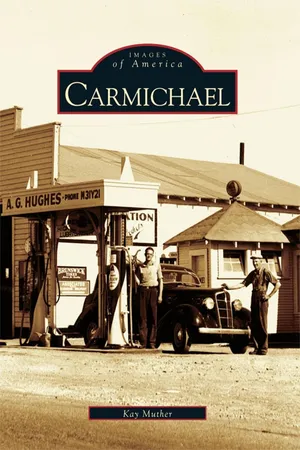
The early inhabitants of the Mexican land grant known as Rancho San Juan, sprawling alongside the American River, could never guess that their humble settlement would someday become a bustling and scenic suburb with some of Californias most desirable real estate. Yet that is the tale of Carmichael, which evolved from an initial 2, 000-acre purchase by founder Daniel W. Carmichael to the busy section of homes and businesses we know today. Showcased in this engaging volume of more than 200 vintage images are many aspects of life in Carmichael, from the wide-open pastures where roadside stands once offered fruits, vegetables, and eggs along todays Fair Oaks Boulevard to the 1920s service stations that sprang up, along with schools, churches, and shopping centers, to serve the burgeoning population of that era. The development of other important aspects of civic life, including road construction, community educational facilities, and shopping centers such as Crestview are explored in these pages as well.
eBook - ePub
Carmichael
About this book
Trusted by 375,005 students
Access to over 1.5 million titles for a fair monthly price.
Study more efficiently using our study tools.
Information
One
SETTLERS AND LATER FAMILIES
The first settlers in this area were Maidu Indians. We know they settled here because they left behind remnants of their culture, such as arrowheads, pottery, and even an old sweat house that coexisted with the farmers for many years. Spanish explorers may have passed through the area in the 18th century, and perhaps some fur trappers did so as well in the early 19th century. In the 1850s there were trails from Sacramento to the gold fields although the main gold rush traffic was south of the American River.
Two Mexican land grants accounted for much of the land north of the American River and east of the Sacramento River. The two shared a common boundary that went through what became the heart of Carmichael. Some settlers lived closer to Auburn Road, but there were few on the lower part of the grants. Not until Daniel W. Carmichael bought 2,000 acres for Carmichael Colony No.1 in 1909 did significant growth begin.
“Lots for sale in Carmichael, California—10 acre tracts for $1,500 with 10 percent down on terms of $10 a month at 6 percent interest.” Ads like this ran in newspapers across the country. The claim was that a farmer could be self-sufficient and make enough profit to pay off his land in just a few years. Midwesterners who were tired of the cold winters read about California and decided to come. Service industries sprang up. Some folks began commuting to Sacramento from Carmichael, setting a pattern followed to this day.
But whatever their occupations, those who settled in Carmichael were family people with family values. The stories of some of these families and their descendants are told in the following pictures.
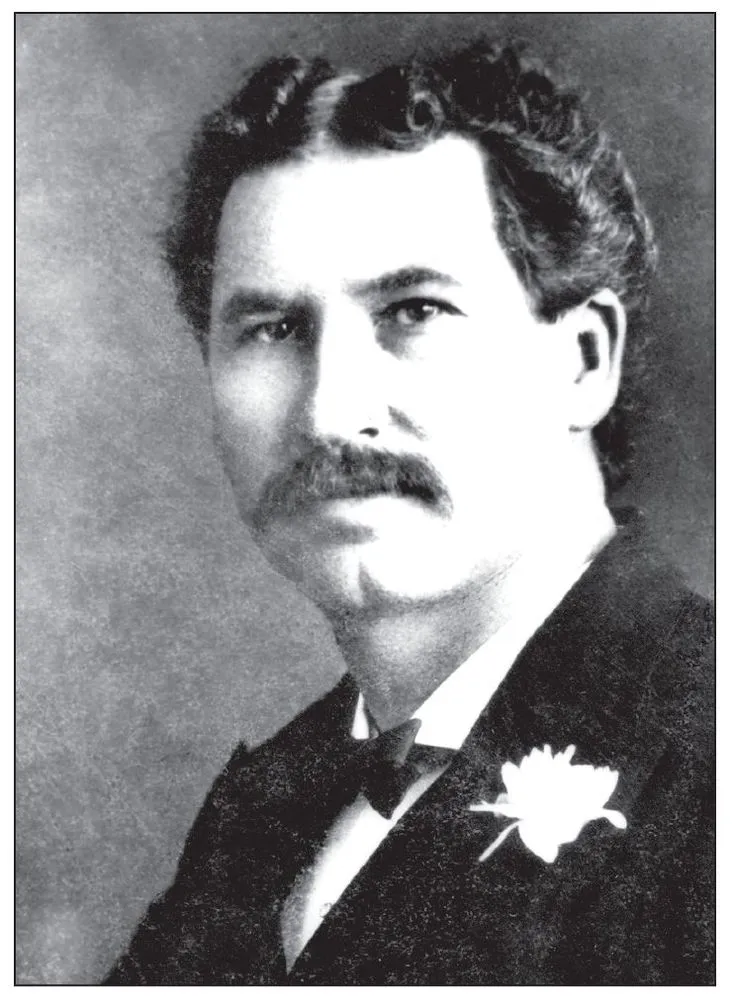
Daniel W. Carmichael, born in Atlanta, Georgia, in 1867, moved to California in 1885. In 1895 he formed the real estate firm of Curtis, Carmichael, and Brand, a business devoted to the acquisition and development of the Sacramento Valley. In 1909 he purchased land for Carmichael Colony No. 1, then added 1,000 acres to his holdings in 1911 for Colony No. 2. Carmichael served as mayor of Sacramento from 1917 to 1919. While he never actually lived in Carmichael, he greatly influenced its development. (Courtesy of Carmichael Chamber of Commerce.)

This is a map of Carmichael Colony No. 1. The western boundary is Fair Oaks Boulevard (then known as H Street) and its continuation, Manzanita Drive. The southern and part of the eastern boundary is the American River. San Juan Avenue makes up the rest of the eastern boundary. The northern boundary lies just north of Lincoln Avenue. These 2,000 acres were offered in 10-acre parcels, but many families bought more than one parcel. (Courtesy of Elsie Gibbons Cosans.)

This is a map of Carmichael Colony No. 2, which extended Carmichael west to Walnut Avenue but went north only as far as North Avenue in the original 1,000-acre purchase. Again, parcels were offered in 10-acre lots. (Courtesy of Elsie Gibbons Cousans.)

Charles W. Deterding was born in 1857 to parents who emigrated to California in 1851 in a covered wagon. The senior Mr. Deterding tried several occupations before buying 520 acres of land that he farmed and used as a base for a hotel along the Sacramento to Virginia City, Nevada route. Charles followed in his father’s footsteps by farming 425 acres on the north side of the American River. (Courtesy of Russell Deterding.)

Mary A. Shields, born in 1860, grew up on a farm planted in grapes and other fruit near Mills Station. She married Charles Deterding in 1884, moved to San Juan Meadows, and had three children. Mary Deterding was one ...
Table of contents
- Title Page
- Copyright Page
- Table of Contents
- ACKNOWLEDGMENTS
- INTRODUCTION
- One - SETTLERS AND LATER FAMILIES
- Two - CARMICHAEL AT WORK
- Three - HOMES
- Four - CHURCH LIFE
- Five - SCHOOLS
- Six - RECREATION AND COMMUNITY LIFE
- REFERENCES
Frequently asked questions
Yes, you can cancel anytime from the Subscription tab in your account settings on the Perlego website. Your subscription will stay active until the end of your current billing period. Learn how to cancel your subscription
No, books cannot be downloaded as external files, such as PDFs, for use outside of Perlego. However, you can download books within the Perlego app for offline reading on mobile or tablet. Learn how to download books offline
Perlego offers two plans: Essential and Complete
- Essential is ideal for learners and professionals who enjoy exploring a wide range of subjects. Access the Essential Library with 800,000+ trusted titles and best-sellers across business, personal growth, and the humanities. Includes unlimited reading time and Standard Read Aloud voice.
- Complete: Perfect for advanced learners and researchers needing full, unrestricted access. Unlock 1.5M+ books across hundreds of subjects, including academic and specialized titles. The Complete Plan also includes advanced features like Premium Read Aloud and Research Assistant.
We are an online textbook subscription service, where you can get access to an entire online library for less than the price of a single book per month. With over 1.5 million books across 990+ topics, we’ve got you covered! Learn about our mission
Look out for the read-aloud symbol on your next book to see if you can listen to it. The read-aloud tool reads text aloud for you, highlighting the text as it is being read. You can pause it, speed it up and slow it down. Learn more about Read Aloud
Yes! You can use the Perlego app on both iOS and Android devices to read anytime, anywhere — even offline. Perfect for commutes or when you’re on the go.
Please note we cannot support devices running on iOS 13 and Android 7 or earlier. Learn more about using the app
Please note we cannot support devices running on iOS 13 and Android 7 or earlier. Learn more about using the app
Yes, you can access Carmichael by Kay Muther in PDF and/or ePUB format, as well as other popular books in History & North American History. We have over 1.5 million books available in our catalogue for you to explore.